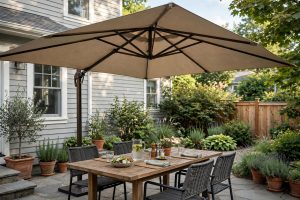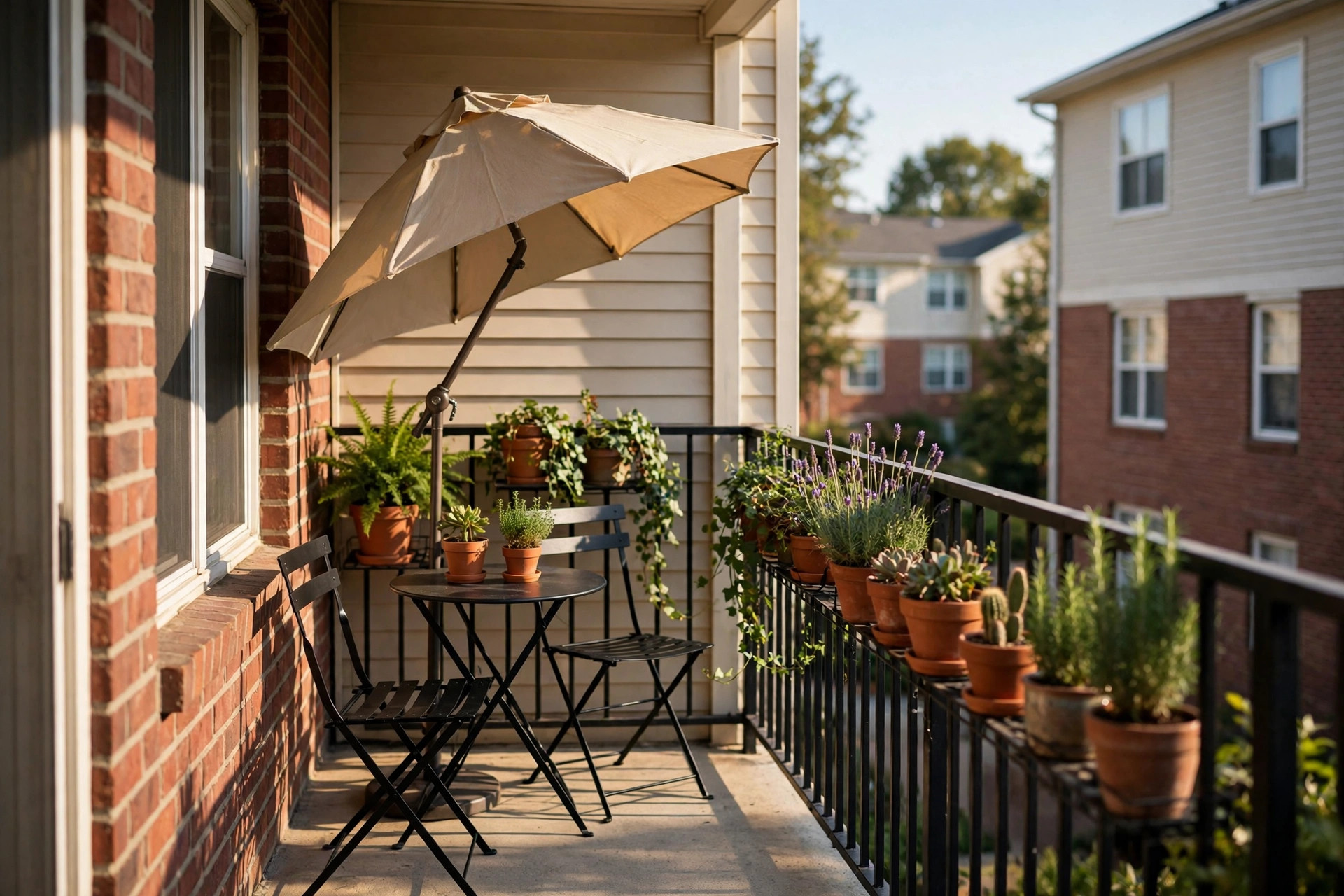

A small balcony can be the best room of a home in summer. Yet the sun can make it too hot to use. A good shade can change that. The best patio umbrella for small balcony spaces gives cool shade without eating up floor room. It turns a narrow slab of concrete into a place for coffee, for reading, or for a quiet meal.
Many people buy an umbrella that is too big. It hangs over the rail. It hits the wall. It crowds the chairs. A better result comes from matching the umbrella to the balcony. This guide walks through size, style, tilt, fabric, bases, cost, care, and safety. It uses plain words. It helps a buyer choose once and choose right.
Why the Right Shade Matters on a Small Balcony
A balcony is small. Every square foot counts. The wrong umbrella takes more than it gives. It blocks the path to the door. It knocks over plants. It turns a calm space into an obstacle course.
The right umbrella does the opposite. It adds comfort. It cuts glare on a laptop. It keeps drinks cool. It lets a person sit outside at noon instead of hiding inside. On a balcony, shade also protects. Sun beats down on chair cushions. It fades them. It cracks cheap plastic. A canopy that blocks the hot hours can add years to the rest of the outdoor furniture for small balcony ideas a person already owns.
Privacy is another gain. Many balconies face other balconies. A tall umbrella canopy can screen a seating corner from the view across the way. It gives a small sense of being closed in. That small sense is worth a great deal in an apartment building.
What Size Umbrella Fits a Small Balcony: Best Patio Umbrella for Small Balcony
Size is the first and most important choice. A balcony is often four to eight feet deep. A standard seven and a half foot patio umbrella, the kind made for a big backyard, will overwhelm it.
Measure before you shop
Take a tape measure to the balcony. Write down the width and the depth. Note where the door opens. Note where the rail runs. The umbrella canopy should sit above the seating area and leave a path clear. For most small balconies, a canopy between five and seven feet across is right. Retailers such as Home Depot and Lowe’s list the exact canopy span on each product page, so check that number and do not guess from the photo.
Match the canopy to the chairs
A bistro set with two small chairs needs about five feet of shade. A narrow bench or a pair of folding chairs needs about six feet. If the balcony holds a small dining table, measure the table and add two feet. That sum is the canopy size to look for. A side table with an umbrella hole is a smart partner for a small setup, since it holds the pole and gives a place for a cup at the same time.
Leave room for the pole
The pole sits somewhere. It needs floor space or a base. Leave at least two feet between the pole spot and the rail. That way the canopy edge stays inside the balcony and does not drip water onto the floor below in a storm.
How to Choose: The Features That Count
Once the size is set, look at features. A few small details decide whether the umbrella is a pleasure or a nuisance.
Pole and crank
A center pole is the common type. It stands in the middle of the canopy. A crank handle opens and closes it with ease. For a small balcony, look for a pole that breaks into two parts. Two-part poles pack small for winter storage. Some poles tilt. Tilt is useful on a balcony because the sun moves along the building face. A tilt lets the shade follow the sun without moving the base.
Fabric and UV rating
The fabric should block most of the sun. Look for the words UV protection or UPF on the label. Polyester and olefin are common canopy fabrics. Olefin holds color longer in the sun. Solution-dyed fabric keeps its color the longest of all. Light colors reflect heat. Dark colors give denser shade but hold heat. A medium tone, such as a soft blue or sand color, is a good middle choice.
Wind rating and ribs
Balconies are windy. A building channels wind up the face. Eight ribs beat six ribs for strength. Flexible fiberglass ribs bend instead of snapping. A vented top, where a small cap floats above the main canopy, lets hot air and wind escape. The wind-focused umbrella reviews published by testing groups often praise vented canopies for gusty spots, and buyers who read the best patio umbrella for wind reviews will see the same pattern.
The base question
The base is the hidden problem of balcony umbrellas. A heavy freestanding base can weigh fifty pounds. That is too much for a small balcony and may exceed what the owner allows. Three answers work well. First, a railing clamp that grips the balcony rail and holds a small pole. Second, a half-round base that slides against the wall and uses less floor room. Third, a fillable base that ships light and fills with water or sand at home. Each one keeps the footprint small.
Types of Umbrellas for Small Balconies
Four styles suit tight spaces. Each has a clear use.
Half umbrellas
A half umbrella is cut flat on one side. It sits close to a wall or a rail. It gives full shade with half the depth. For a balcony that is only four feet deep, a half umbrella is often the best patio umbrella for small balcony life. It does not push out over the edge. It does not block the door.
Market umbrellas in small sizes
The classic market umbrella has a center pole and a round or octagon canopy. In a five or six foot size, it works well on a balcony. It is simple. It is cheap. It opens with a crank. Pair it with a compact base and it serves a two-chair set with ease. Design sites like HGTV show small market umbrellas in many balcony makeovers, and the look stays classic for years.
Cantilever umbrellas
A cantilever, or offset, umbrella hangs its canopy from a side arm. No pole sits in the middle of the seating area. That is a real gift on a small balcony. The drawback is the base. The side arm needs a heavy base to stay upright. On a small balcony, choose a compact cantilever made for balconies, and check the base weight before buying. Stores such as Wayfair and Article carry slim offset models with smaller footprints.
Railing and clamp umbrellas
The smallest option clamps right to the rail. These are beach-style umbrellas with a clamp or a deck mount. They cost little. They store in a closet. They are best for renters who cannot drill into the floor or rail. They do need a strong rail and a tight clamp, since a loose clamp in a gust can send the umbrella over the side.
Cost and Price
A small balcony umbrella need not cost much. Prices follow size and build. A basic clamp umbrella can cost twenty to forty dollars. A five or six foot market umbrella with a crank runs forty to ninety dollars. A half umbrella with a tilt runs sixty to one hundred twenty dollars. A compact cantilever starts near one hundred fifty dollars and rises with the base.
Fabric grade moves the price. Solution-dyed olefin costs more than plain polyester. It also lasts twice as long in the sun. A cheap canopy may fade in one season. A good one holds color for three to five years. Think of the umbrella as a purchase per summer. A sixty dollar umbrella that lasts three summers costs less per summer than a thirty dollar umbrella that dies in one.
Sales cluster in spring. Late summer clearance can cut prices by a third. Shopping early gives the best choice of color and size. Shoppers who compare across big retailers, from IKEA to Frontgate, will see the same spring price dip year after year.
Care and Upkeep
A little care keeps the canopy bright and the frame sound.
Close the umbrella when it is not in use. Wind is the main killer. A closed umbrella catches far less wind. If a storm is coming, bring a clamp model inside. A freestanding model should be closed and tied.
Clean the fabric twice a year. Mix mild soap with warm water. Scrub with a soft brush. Rinse well. Let it dry open in the sun before closing. A damp closed canopy grows mildew. Mildew spots can be scrubbed with a mix of water and white vinegar, then rinsed.
Check the moving parts each spring. Oil the crank with a drop of light machine oil. Tighten the tilt joint. Look for cracked ribs. A cracked rib can be taped as a short term fix, but it should be replaced. Guides on The Spruce give step-by-step photos for basic canopy cleaning, which helps a first-time owner.
Store the umbrella for winter. Take the pole apart if it comes apart. Slip on a cover. Keep it in a dry corner of a closet or a storage box. A cover costs little and blocks dust and damp.
Safety on Balconies
Safety matters more on a balcony than in a yard. A balcony is high up. A flying umbrella can hurt someone below.
Never leave the umbrella open in strong wind. Close it when leaving the flat. Close it at night. Check the building rules before buying. Some buildings ban umbrellas that stick out past the rail. Some ban clamp models on the rail face. Ask the manager or check the lease.
Keep the canopy clear of the building wall and of any heater or grill. Hot surfaces can scorch fabric. Keep the pole stable. Test the base by pushing the pole with one hand. If it rocks, the base is too light. Add weight or choose a clamp model.
Watch the drip line in rain. A canopy that hangs past the rail drips onto the balcony below. That is poor manners and may break building rules. A half umbrella against the wall avoids the problem.
Frequently Asked Questions
What is the best size patio umbrella for a small balcony? Five to seven feet across suits most small balconies. Measure the seating area and add two feet. That number is the canopy size to buy. Half umbrellas give the same shade with less depth.
Can I use a regular patio umbrella on a balcony? Yes, if it fits. A seven and a half foot market umbrella is too big for most balconies. A five or six foot model works well. Check the base weight and the building rules first.
How do I secure an umbrella on a windy balcony? Close it when it is not in use. Use a clamp model on a strong rail, or a base that fits the space and holds firm. Vented canopies handle gusts better. Never leave any umbrella open in a storm.
What fabric lasts longest in the sun? Solution-dyed olefin or acrylic lasts longest. It resists fading for years. Plain polyester costs less but fades faster. Look for a stated UV rating on the label.
Do I need a tilt on a balcony umbrella? Tilt is very useful. The sun moves along the building face during the day. A tilt lets the shade follow it. Without tilt, the shaded spot walks away from the chairs by afternoon.
Can renters use a balcony umbrella without drilling? Yes. Clamp models grip the rail with no holes. Freestanding models with a fillable base need no drilling either. Both come down in minutes at the end of the lease.
A Short Final Word
A small balcony deserves good shade. The best patio umbrella for small balcony spaces is not the biggest or the dearest. It is the one that fits the floor, stands firm in the wind, and tilts with the sun. Measure first. Choose the right style. Care for the fabric. Then sit out with a cold drink and enjoy the extra room the shade gives back.
References
Article. (n.d.). Modern furniture. https://www.article.com Consumer Reports. (n.d.). Product reviews and ratings. https://www.consumerreports.org Frontgate. (n.d.). Outdoor furniture and decor. https://www.frontgate.com HGTV. (n.d.). Home and garden ideas. https://www.hgtv.com IKEA. (n.d.). Home furnishings. https://www.ikea.com Lowe’s. (n.d.). Home improvement products. https://www.lowes.com The Home Depot. (n.d.). Home improvement products. https://www.homedepot.com The Spruce. (n.d.). Home and garden advice. https://www.thespruce.com Wayfair. (n.d.). Furniture and home goods. https://www.wayfair.com
Was this guide helpful?

About James Carter
The My Garden US editorial team writes practical, in-depth home and garden guides for American homeowners — tested advice, no fluff.
You May Also Like

Outdoor Conversation Set for Small Deck: A Practical Buying Guide
September 17, 2026 0 views
How to Waterproof Outdoor Furniture Cushions: A Plain Guide
June 23, 2026 0 views
Best Patio Sectional with Fire Table: A Buyer’s Guide
May 25, 2026 0 views