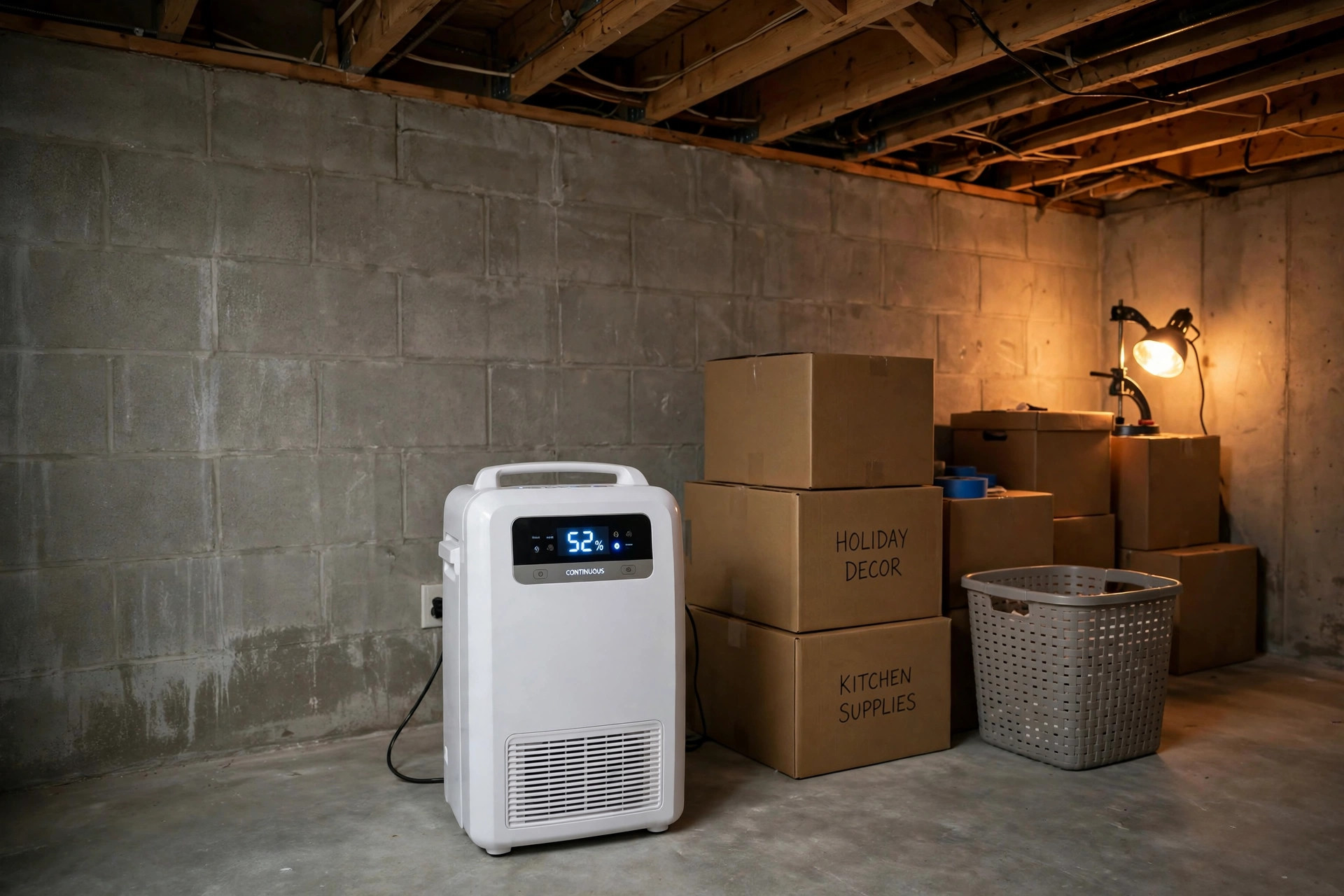

A damp basement is a common problem in American homes. It smells musty. It feels cool and heavy. It can harm the house and the things you store there. This article brings together reviews of dehumidifiers for basements and a full buying guide to help you choose the right one. You will learn why basement air matters, what to look for, which types to buy, what they cost, and how to keep them running.
Why a Damp Basement Matters
Basements sit partly or fully below ground. Cool earth presses against the walls and floor. Warm indoor air meets those cool surfaces. Moisture forms. In many homes the relative humidity in the basement rises above 60 percent in spring and summer. That is too high for comfort and for safety.
High humidity feeds mold and mildew. Mold grows on wood, drywall, carpet, and stored boxes. It can stain walls and rot wood trim. It can also make the air hard to breathe for people with asthma and allergies. The Environmental Protection Agency advises homeowners to keep indoor humidity between 30 and 50 percent and to fix moisture problems at the source before mold takes hold.
Damp air also draws pests. Silverfish, dust mites, and some insects thrive in moist rooms. A dry basement is less inviting to them. And dry air protects your belongings. Tools rust slower. Papers stay flat. Clothes do not grow that sour smell.
Finally, humidity climbs through the whole house. Moist air from the basement rises to the living areas. A dehumidifier in the basement can make the upper floors feel more comfortable too. That is why reviews of dehumidifiers for basements matter so much: the right unit protects more than one room.
What to Look for When You Choose: Dehumidifiers for Basements Reviews and Buying Guide
Buying guides in magazines like Consumer Reports test dehumidifiers on three main points: how much water they remove, how much energy they use, and how loud they are. You can use the same points at home. Start with size.
Tank Size and Pint Rating
Every dehumidifier carries a pint rating. The rating tells how many pints of water the unit can pull from the air in 24 hours. A 30-pint unit suits a small basement of up to 1,500 square feet. A 50-pint unit suits a medium basement. Large or very damp basements need 70 pints or more.
Measure your basement first. Walk the length and width with a tape measure. Multiply to get square feet. Then be honest about the dampness. A room that smells musty only in August is not the same as a room with wet walls after rain. When in doubt, buy one size up. An undersized unit runs all day and never catches up.
Drainage Options
A dehumidifier collects water in a tank. Small tanks fill in hours on humid days. You empty them by hand. That works if you visit the basement daily.
Better models offer two other options. A gravity drain uses a hose that runs downhill to a floor drain or sink. Water flows out on its own. A built-in pump pushes water uphill and across the room, even through a small window. The pump models cost more but free you from daily tank duty. Many ENERGY STAR certified models include both a tank and a hose connection, so you can switch methods by season.
Operating Temperature
Basements run cool. Some run below 60 degrees in winter. Standard dehumidifiers lose power in cool air. Their coils ice over. The unit stops and defrosts, then starts again. This cycle wastes energy.
Look for a unit rated for low temperatures if your basement stays cool. Many models now work down to 41 degrees. Check the spec sheet before you buy. A unit that handles cool air saves you trouble in spring and fall.
Noise matters too. A dehumidifier sits near living space in many homes. Ratings near 50 decibels sound like a quiet conversation. Ratings above 60 decibels sound like a running dishwasher. If the basement lies below a bedroom, choose the quieter model.
Types and Options
Three main designs serve home basements. Each has strengths.
Refrigerant dehumidifiers are the most common. They pull air over cold coils. Water condenses and drips into a tank. They work best between 65 and 90 degrees. Most basement models you see in stores use this design. Reviews praise them for speed: they can drop a damp room to a healthy level in days.
Desiccant dehumidifiers use a drying wheel filled with absorbent material. They shine in cool rooms. A basement at 50 degrees that defeats a refrigerant unit will not trouble a desiccant model. They cost more to buy and more to run, but for cold, damp cellars they are worth the price.
Whole-house dehumidifiers tie into the heating and cooling system. A contractor installs them near the furnace. They treat the whole home from one point. They cost far more up front, often over a thousand dollars, but they are quiet and automatic. They suit homes with constant moisture problems or valuable finished basements.
Shoppers also see portable mini units. These suit closets and small rooms, not basements. A mini unit cannot move enough air for a thousand square feet. Skip them for basement duty.
Smart features are worth a look. Built-in humidistats let you set a target humidity and let the machine run on its own. Auto-restart brings the unit back after a power cut. Washable filters cut running costs. Wi-Fi controls let you check humidity from your phone. These extras add to the price. Buy them if you travel often or heat with a tight schedule.
Cost and Price
Reviews show a clear price ladder. Small 30-pint models start near 200 dollars. Mid-size 50-pint models run 250 to 350 dollars. Large 70-pint models with pumps run 350 to 500 dollars. Desiccant units start higher. Whole-house systems cost 1,000 dollars and up, plus installation.
Energy cost matters as much as the price tag. A dehumidifier runs for long hours. An ENERGY STAR certified model uses about 15 percent less energy than a standard one. The Department of Energy notes that certified appliances save real money over their service life. Over three years, the efficient model can pay back its higher price in lower electric bills.
Watch for hidden costs. Replacement filters cost 10 to 30 dollars. A drain hose adds a few dollars. Extended warranties add 20 to 60 dollars. And if you need an electrician to add an outlet near the floor drain, that adds 100 dollars or more.
If your basement already takes on standing water after storms, a dehumidifier alone will not save it. You may need a wet-dry shop vacuum for water removal first. Handle the flooding, then let the dehumidifier manage the air.
Care and Upkeep
A dehumidifier is a simple machine, but it needs regular care. Clean machines last longer and run cheaper.
Empty the tank often if you do not use a drain hose. Letting water sit breeds mold inside the machine. Wipe the tank with a mild cleaner each month. The Family Handyman site reminds readers that a dirty tank can push musty smells back into the room.
Clean or replace the air filter every month during heavy use. A clogged filter forces the fan to work harder. That raises noise and energy use. Most filters slide out and rinse under a tap. Let them dry fully before you put them back.
Check the coils once a season. Dust on coils slows water removal. A soft brush or a vacuum with a brush tool clears the dust. Do this with the power off and the plug out of the wall.
Keep the unit level and give it room. Most models need six to twelve inches of clear space on all sides. Blocked air flow cuts performance. Keep it away from walls and stored boxes.
In winter, you may shut the unit off for months. Drain it fully. Clean it. Cover it. Store it upright in a dry corner. Come spring, plug it in and check that the fan and compressor start smoothly.
Some homeowners pair moisture control with clean water systems for the whole house. You can read our whole house water filters reviews and buying guide if you want cleaner tap water along with drier air.
Safety
Dehumidifiers are safe machines when used with care. Follow a few rules.
Place the unit on a firm, level floor. Water and electricity do not mix. A tipped unit can spill its tank. Keep cords away from walking paths where they can trip people.
Use a grounded outlet. Do not run the cord under a rug. Do not use a long extension cord if you can avoid it. If you must use one, choose a heavy-duty cord rated for the load.
Empty tanks before they overflow. Most units shut off when the tank is full. Trust that switch, but check anyway. Water on a concrete floor is a slip risk.
Keep the machine away from heaters and furnaces. Heat sources dry the air in one spot and fool the humidistat. The unit then runs too much or too little.
If you see frost on the coils in warm weather, something is wrong. Unplug the unit. Clean the filter. Make sure the room is above the rated temperature. If frost returns, call for service. Do not open the sealed refrigerant system yourself.
The Consumer Product Safety Commission has recalled some dehumidifier models for fire risk over the years. Check your model number against recall lists when you buy, especially if you buy used.
Frequently Asked Questions
What size dehumidifier do I need for my basement? Measure the square feet. For a moderately damp basement up to 1,500 square feet, choose 30 to 50 pints. For a very damp basement or one over 2,000 square feet, choose 70 pints or more. Larger is safer than too small.
What humidity level should I set? Aim for 30 to 50 percent. Most experts pick 45 percent as a good target. Below 30 percent, the air feels dry and wood can crack. Above 50 percent, mold gets a foothold. Set the humidistat and let the machine hold the line.
Can a dehumidifier stop mold? A dehumidifier controls moisture, which starves mold of the dampness it needs to grow. But it cannot kill mold that is already there. If walls show black or green patches, clean them or get help. Our guide on finding quiet mold remediation services near you explains when to call a pro.
Should I run it all year? Most basements need it from spring through fall. In winter, cold air holds less moisture, and many basements stay dry on their own. If your winter readings stay below 50 percent, shut the unit off and save energy.
Is a pump model worth the extra cost? If you cannot check the tank daily, yes. A pump sends water up and out through a hose, even to a sink on the next level. It costs 50 to 100 dollars more but saves daily trips down the stairs.
How long does a dehumidifier last? A good unit lasts five to ten years with regular care. Clean filters, empty tanks, and seasonal shutdowns stretch the life. Cheaper units tend to fail sooner, often at the compressor.
A Short Final Word
A dry basement protects your home, your health, and your stored goods. The best dehumidifiers for basements are sized to the room, rated for cool air, and easy to drain. Read reviews, compare pint ratings and noise levels, and check energy labels before you buy. Guides from The Spruce, Bob Vila, This Old House, and Good Housekeeping test new models each year and can help you narrow the field. Buy from a trusted retailer such as The Home Depot, set the humidistat near 45 percent, and keep up with simple care. Your basement will smell fresh, your walls will stay sound, and the whole house will feel more comfortable.
References
Bob Vila. (n.d.). Home improvement advice. https://www.bobvila.com Consumer Reports. (n.d.). Product reviews and ratings. https://www.consumerreports.org ENERGY STAR. (n.d.). Energy efficient products. https://www.energystar.gov Family Handyman. (n.d.). DIY home repair and maintenance. https://www.familyhandyman.com Good Housekeeping. (n.d.). Product reviews and home advice. https://www.goodhousekeeping.com The Home Depot. (n.d.). Home improvement products. https://www.homedepot.com The Spruce. (n.d.). Home and garden advice. https://www.thespruce.com This Old House. (n.d.). Home renovation guidance. https://www.thisoldhouse.com U.S. Consumer Product Safety Commission. (n.d.). Product safety information. https://www.cpsc.gov U.S. Department of Energy. (n.d.). Energy efficiency and renewable energy. https://www.energy.gov U.S. Environmental Protection Agency. (n.d.). Protecting human health and the environment. https://www.epa.gov
Was this guide helpful?

About Lisa Anderson
The My Garden US editorial team writes practical, in-depth home and garden guides for American homeowners — tested advice, no fluff.
You May Also Like

Buy Eco Friendly Cleaning Supplies Online in California: A Plain Guide
January 26, 2026 0 views
Professional Grade Eco Friendly Cleaning Supplies Buying Guide
April 5, 2026 0 views
How to Find Professional Grade Carpet Cleaning Service Companies Near Me
July 2, 2026 0 views