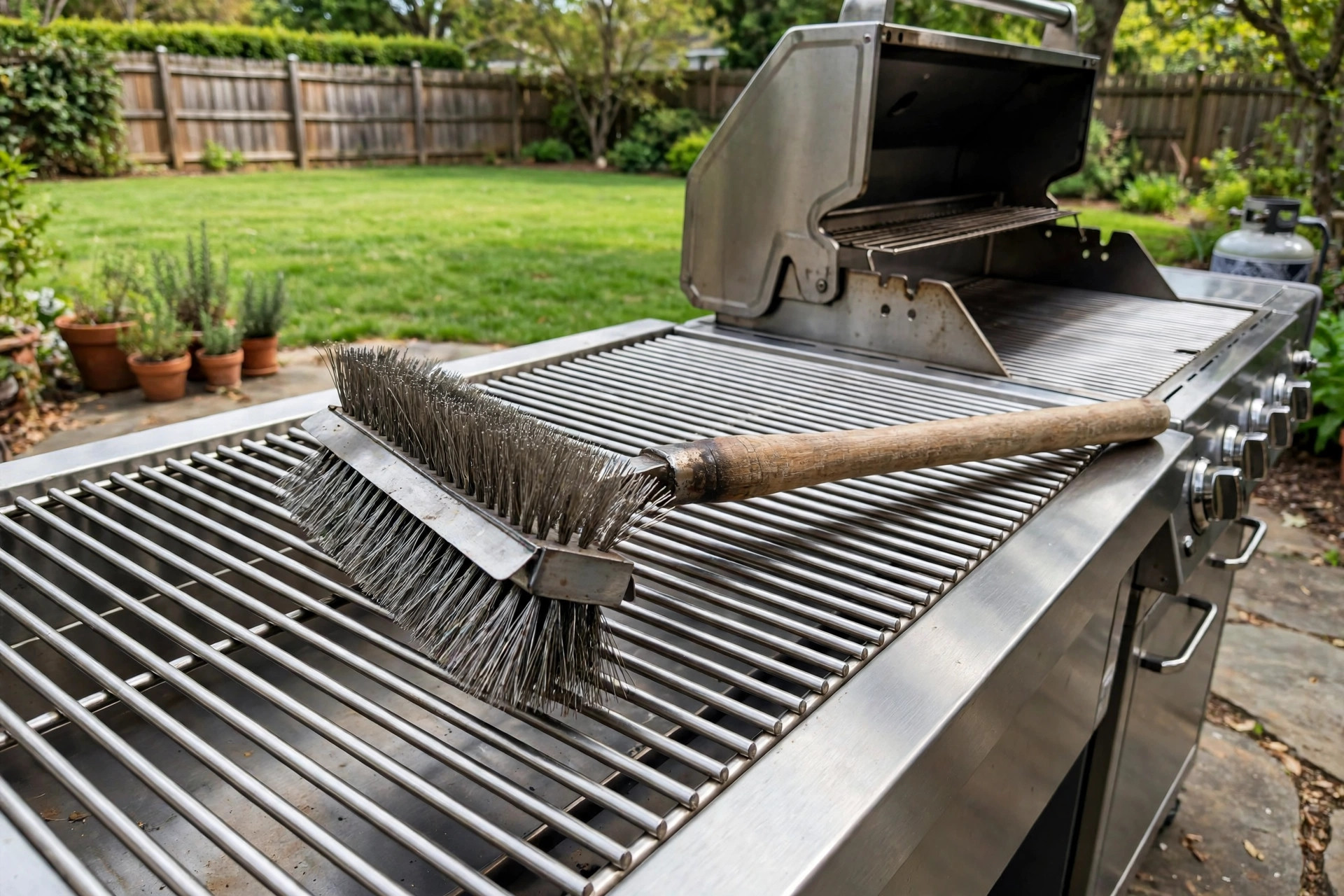

A dirty grill is more than an eyesore. Built-up grease and char can change the taste of food, cause sudden flare-ups, and shorten the life of the cooking grates. The good news is that strong, well-made tools make the job quick. This guide looks at powerful grill cleaning brushes for sale, how to choose one, what each type offers, and how to keep it in good shape. Whether you cook on a gas grill, a charcoal kettle, or a pellet smoker, the right brush will save you time and keep your food safe.
Why a Strong Brush Matters
Every time you cook, drippings from meat and sauce fall onto the hot grates. Heat burns this residue into a hard, black crust. If you leave it in place, it does three harmful things.
First, old char sticks to fresh food. Burgers tear when you flip them. Chicken skin pulls off. A clean grate gives you clean grill marks and food that lifts away easily.
Second, layers of grease can catch fire. Grease fires start fast and are hard to control. Home safety guides, such as the outdoor cooking advice on Weber’s official site, stress that a clean grill is a safer grill. The U.S. Environmental Protection Agency also notes that burning old grease residue can send extra smoke and fumes into the air around your yard.
Third, a crusted grate rusts faster. Moisture trapped under grease eats into the metal. A brush that removes residue after each cook can add years to a grate’s life. Reviewers at Consumer Reports have found that simple upkeep often matters more than the brand of the grill itself.
What to Look For When You Buy: Powerful Grill Cleaning Brushes for Sale
Not every brush on the shelf is worth your money. A few simple checks will steer you to a powerful tool that lasts.
Bristle Material
The bristles do the real work. Most quality brushes use stainless steel wire. Stainless steel is stiff enough to cut through char and resists rust. Brass bristles are softer. They suit porcelain-coated grates, which scratch more easily. Avoid brushes with loose, thin bristles. They bend on the first pass and shed wire pieces.
Handle and Reach
A good brush has a long handle, usually twelve inches or more. A long handle keeps your hands away from heat. It also gives you better leverage for scrubbing. Look for a handle that feels solid in your hand. Wood, heat-safe plastic, and metal grips all work. Some brushes add a hanging loop so you can store them on the grill’s side hooks.
Head Size and Shape
A wide head covers more grate in each stroke. A narrow head reaches between bars and into corners. Many owners keep both. A three-sided brush, which scrubs on two angles at once, can be a smart middle choice. Product testers at The Spruce often point out that head design matters as much as bristle strength.
Main Types of Grill Cleaning Brushes
Shoppers will find several designs of powerful grill cleaning brushes for sale. Each has strengths and limits.
Standard Wire Brushes
This is the classic tool. A block of twisted wire bristles set in a long handle. It costs little and scrubs hard. The drawback is wear. Over time, wires can break off and cling to the grates. Loose wires are a real hazard if they end up in food. Inspect a wire brush before every use and throw it away once bristles loosen.
Bristle-Free Brushes
Bristle-free designs use coiled metal wire, like a heavy spring, instead of straight bristles. They scrub well and cannot shed loose wires. They cost more than basic wire brushes. Many grill owners switch to this style for peace of mind. Guides on Bob Vila’s home site rank bristle-free heads among the safer options for families.
Steam Cleaning Brushes
These tools have a water chamber built into the handle. As you scrub, water meets the hot grates and turns to steam. The steam lifts grease faster than dry scrubbing alone. Steam brushes work best on grates that are still warm. They need refills and cost more than plain brushes, but they clean with little elbow grease.
Cordless Motorized Brushes
Battery-powered brushes spin a cleaning head so you do not have to scrub by hand. Shoppers often compare them with cordless grill cleaning brushes when looking for less work after each cook. They are handy for large grills and for cooks with sore wrists. The trade-off is weight, charging time, and a higher price. They still need a regular scrub head replacement.
A Simple Grate Cleaning Routine
A good brush works best as part of a short routine. Follow these steps each time you cook.
First, heat the grill before you scrub. Close the lid and let the burners or coals run hot for ten minutes. Heat turns grease soft and lifts char. Scrubbing a cold grate takes three times the effort and wears the bristles down fast.
Second, brush the grates in long, firm strokes. Work from front to back so debris falls into the drip pan, not onto you. Pass over each bar two or three times. For stubborn spots, hold the brush at a slight angle so the bristles dig under the edge of the crust.
Third, wipe the grates with a damp cloth or paper towel. Use tongs to hold the cloth so your hands stay clear of the heat. This last wipe picks up ash dust and any loose wire bits. It takes seconds and adds a real safety step.
Fourth, oil the clean grates lightly before you cook. Fold a paper towel, dip it in a small amount of cooking oil, and rub it across the bars with tongs. A thin oil layer keeps food from sticking and makes the next cleaning easier.
Fifth, brush again after you cook. Once the food comes off, run the brush over the warm grates for thirty seconds. Fresh grease comes off easily while it is warm. This habit keeps buildup from ever getting a foothold.
Cost and Price
Prices for grill brushes span a wide range. Basic wire brushes sell for under ten dollars. Mid-range bristle-free and steam brushes cost between fifteen and forty dollars. Motorized models can run fifty dollars or more. Remember that a brush is a wear item. Even a strong one needs replacement every season or two. Home project writers at This Old House advise buyers to weigh the replacement cost, not just the sticker price. A cheap brush that sheds bristles is no bargain.
Watch for bundles too. Many stores sell a brush with a grill cover or a set of tongs. A bundle can save money if you need both items. Large retailers such as Home Depot and Lowe’s carry wide selections, and their listings often include honest buyer reviews.
Another smart move is to shop at the end of summer. Grilling tools often go on sale in late August and September as stores clear seasonal stock. A twenty-dollar brush may drop to half price. Buying a spare at sale time means you always have a fresh brush ready when the old one wears out.
Care and Upkeep of Your Brush
A grill brush lasts longer when you treat it well. Rinse the head after each use to wash out grease and ash. Let it dry fully before you store it. A damp brush rusts fast. Hang it under a covered spot so rain does not soak the handle.
Check the bristles often. Run your fingers, gloved, across the head. If wires pull free or bend out of shape, replace the brush at once. For bristle-free coils, look for flat spots or stretched loops. Keep a spare brush on hand so you are never tempted to use a worn one. Cleaning experts at Good Housekeeping recommend a quick wipe of the handle too, since grease builds up there as well.
If you also deep-clean other parts of the grill, the same habits apply to cordless electric scrubbers. For a roundup of which models owners rate highest, see our list of top rated cordless electric scrubbers.
Safety Notes
A brush is safe when you use it with care. Start by scrubbing only when the grates are warm, not screaming hot. Very hot metal can melt plastic parts and burn hands through thin gloves.
Wear heat-safe gloves every time. Long grilling gloves protect your wrists from stray heat. Keep a spray bottle of water nearby for small flare-ups while you scrub.
The biggest safety topic is loose wire bristles. A broken wire can stick to the grate and later end up in food. Cases of swallowed wires have been reported in medical literature. To lower this risk, inspect the brush each time, replace it at the first sign of shedding, and wipe the grates with a damp cloth after brushing. Step-by-step advice on safe grill cleaning appears on Family Handyman, which covers grate care alongside other outdoor chores.
Store brushes where children cannot reach them. The bristles are sharp. A simple hook inside a shed or on the grill cart works well.
Frequently Asked Questions
How often should I brush the grates?
Brush the grates every time you cook. A quick scrub of warm grates before you place food on them takes less than a minute. A deeper clean, with the grill lid closed and heat on high for ten to fifteen minutes, works well once a month during heavy use.
Are bristle-free brushes really stronger?
They clean well and they solve the loose-wire problem. They are not always more aggressive than a fresh wire brush, but they hold up longer under daily use. Many cooks find them worth the higher price.
Can I use a grill brush on porcelain-coated grates?
Yes, but choose a softer bristle. Brass bristles or nylon tools made for warm grates are safer on coated surfaces. Steel wire can scratch through the coating and expose the metal under it.
When should I replace my grill brush?
Replace it when bristles bend, loosen, or fall out. For most owners, that means a new brush each grilling season. Heavy users may need two per year. A worn brush cleans poorly and raises the risk of loose wires.
Do I need to clean the brush itself?
Yes. Rinse it after use and let it dry. Once in a while, soak the head in hot soapy water to cut built-up grease. A clean brush grips the grates better and rusts more slowly.
Is a steam brush worth the extra money?
It depends on how you cook. If you grill often and hate scrubbing, a steam brush can cut cleaning time in half. If you cook rarely, a basic strong brush does fine for less money.
Where should I store my grill brush?
Keep it dry and off the ground. A hook under the grill cart, inside a shed, or on the garage wall works well. Do not leave it sitting on the grates, where rain and heat will break it down fast.
A Short Final Word
Powerful grill cleaning brushes for sale come in many styles, but the best one is the one you will actually use after every cook. Pick a strong bristle head, a long safe handle, and a design that fits your grates. Keep it clean, check it often, and replace it on time. A few minutes of brushing keeps food tasting right, keeps flare-ups down, and keeps your grill in service for years.
References
Bob Vila. (n.d.). Home improvement advice. https://www.bobvila.com Consumer Reports. (n.d.). Product reviews and ratings. https://www.consumerreports.org Family Handyman. (n.d.). DIY home repair and maintenance. https://www.familyhandyman.com Good Housekeeping. (n.d.). Product reviews and home advice. https://www.goodhousekeeping.com Lowe’s. (n.d.). Home improvement products. https://www.lowes.com The Home Depot. (n.d.). Home improvement products. https://www.homedepot.com The Spruce. (n.d.). Home and garden advice. https://www.thespruce.com This Old House. (n.d.). Home renovation guidance. https://www.thisoldhouse.com U.S. Environmental Protection Agency. (n.d.). Protecting human health and the environment. https://www.epa.gov Weber. (n.d.). Grills and outdoor cooking. https://www.weber.com
Was this guide helpful?

About James Carter
The My Garden US editorial team writes practical, in-depth home and garden guides for American homeowners — tested advice, no fluff.
You May Also Like

Eco Friendly Carpet Deep Cleaning Machines Buying Guide
July 29, 2026 1 views
Top Rated Same Day Appliance Repair Services Reviews
May 14, 2026 0 views
Top Rated Post Construction Cleaning Services Reviews: How to Read Them and Choose a Good Crew
September 10, 2026 0 views