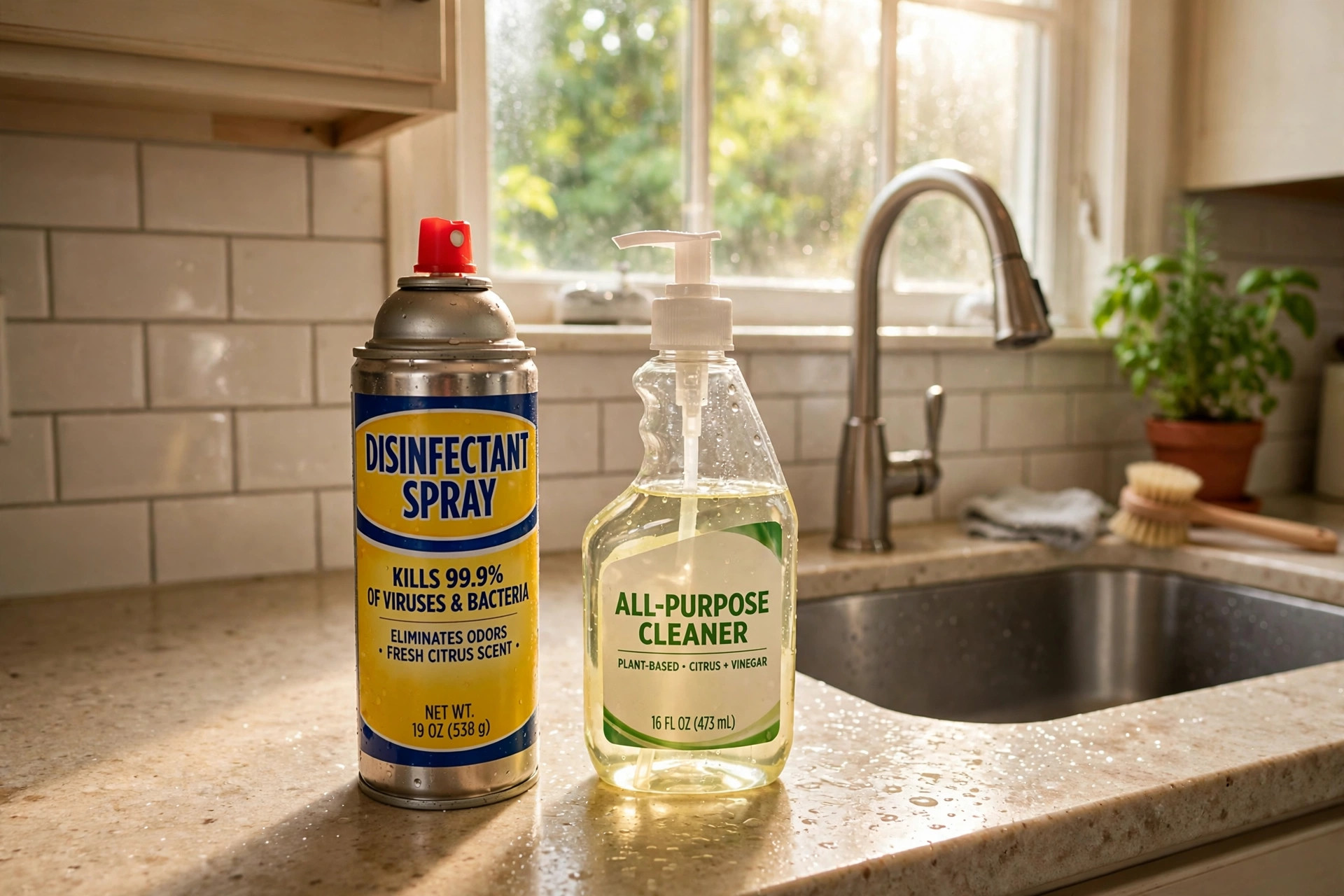

Homes in humid regions face a special problem. Warm, damp air helps bacteria and mold grow on counters, doorknobs, and bath fixtures. A reader who shops for the best antibacterial disinfectant sprays for humid climates wants a product that kills germs fast and keeps working when the air feels wet. This guide explains what to look for, which types exist, what they cost, and how to use them with care.
Why Humid Air Changes the Rules
Humidity feeds germs. In the South, along the Gulf Coast, and in Florida, indoor air often holds more moisture than in drier states. Bathrooms stay damp long after a shower. Kitchens hold steam from cooking. Basements and laundry rooms seldom dry out at all.
On these wet surfaces, bacteria and mold multiply at a rapid rate. A plain soap wipe removes dirt, but it does not kill germs. A disinfectant spray does. The EPA registers disinfectants sold in the United States and reviews the claims on their labels, so a listed product has passed tests for germ kill.
Humidity also shortens the working life of a spray. High heat in a garage or a closed cabinet can weaken the chemicals inside a can. Products stored in hot, damp places may lose strength before the can runs dry. Keeping one can at room temperature in a closet solves this problem.
Spray cans also react to damp storage in another way. Metal cans kept under a sink in a humid home may rust around the rim. Rust can clog the valve and cause leaks. Wipe the can dry before you store it, and keep it off bare concrete floors where moisture collects. A small shelf or a plastic tray under the sink gives the cans a dry home.
Public health guidance makes a clear point: cleaning comes first, then disinfection. Dirt and grease shield germs from the spray. A quick wipe with a damp cloth, followed by the disinfectant, gives the best result in a humid home.
What to Look for in a Disinfectant Spray: Best Antibacterial Disinfectant Sprays for Humid Climates
Not every spray on the shelf earns the name. The best antibacterial disinfectant sprays for humid climates share a few plain traits.
EPA registration. A registered product carries an EPA number on the back label. This number shows the formula passed laboratory tests. Unregistered sprays may smell fresh but prove little.
Kill claims on the label. Look for the names of germs the product kills: staphylococcus, salmonella, E. coli, and others. Some labels also list influenza virus or the germs that cause cold sores. Match the claims to your needs. A kitchen needs food-borne germ claims. A bath needs mold and mildew claims.
Contact time. Every disinfectant needs a wet contact time, the minutes the surface must stay wet to kill germs. Read this number before you buy. A spray that needs ten full minutes may fail in a warm home where liquid dries in four. Shorter contact times suit humid rooms where surfaces dry slowly but heat stays high.
Mold and mildew action. Humid-climate homes fight mold all year. A spray with a mold-killing claim does double duty in the bath, the laundry room, and under the sink. For heavy mold growth, pair a disinfectant spray with dedicated mold removal sprays meant for tough stains.
Surface safety. Some sprays bleach fabrics or dull stone counters. Check the label for your counters, tub, and tile before you spray. Tested product reviews often note which formulas prove gentle on common finishes.
Smell and fumes. Strong fumes annoy in closed, damp rooms. If you keep windows shut against summer heat, choose a spray with a light scent or none at all. Sprays marketed toward eco friendly cleaning supplies often run milder, though they must still show an EPA number to call themselves disinfectants.
Types of Antibacterial Disinfectant Sprays
Four main types fill store shelves. Each suits a different job.
Ready-to-Use Pump Sprays
These are the most common. A bottle with a trigger handle sprays liquid directly on a surface. They give good control and let you soak one spot at a time. Most cost little and come in many scents. They suit daily wiping of counters, sinks, and toilet seats.
Aerosol Disinfectant Sprays
Aerosol cans throw a fine mist over a wide area. They suit big jobs: whole shower walls, garbage can interiors, and pet areas. They use up faster than pump bottles and cost more per ounce. They also release more fumes, so open a window or run the bath fan while you spray. Pet owners who battle odor in damp rooms often pair these with pet odor eliminator sprays for daily freshness.
Bleach-Based Sprays
Bleach formulas kill a wide range of germs, including mold. They work well on tile, grout, and porcelain. They can stain fabrics and harm some metals. Their smell runs strong. Many homeowners in humid states keep one bleach spray for the bath alone and use a milder spray elsewhere.
Botanical and Plant-Based Sprays
These use ingredients such as thymol from thyme oil. Some carry EPA registration and proven kill claims. They appeal to homes with small children or pets. They may need longer contact times, so read the label with care. Home care guides list several registered options for sensitive homes.
How to Use Them in Humid Rooms
Method matters as much as product. Follow these steps for best results.
First, clear the surface. Remove dishes, towels, and toiletries. Then wipe away visible dirt with a wet cloth. Dirt blocks disinfectants, so this step cannot be skipped.
Second, spray evenly. Hold the bottle six to eight inches from the surface. Wet it fully. A light mist will dry before the contact time ends, and the germs will live.
Third, wait. Watch the clock. If the label says ten minutes, keep the surface wet for ten minutes. In a humid room, liquid stays wet longer, which helps. In a hot room with moving air, re-spray halfway through so the surface never dries early.
Fourth, wipe or rinse as the label directs. Some sprays need a rinse on food surfaces. Some ask for air drying. Follow the words on the label, not habit.
Fifth, let the room breathe. After spraying a bath or laundry room, run the exhaust fan or open a door for a while. Fresh air clears fumes and drops the moisture that feeds germs.
Homeowners who want a broader home plan can read maintenance advice for humid houses alongside these steps.
Cost and Price
Disinfectant sprays rank among the cheapest cleaning supplies. Prices vary by type and brand name.
– Pump spray bottles, 22 to 32 ounces: about three to seven dollars. – Aerosol cans, 12 to 19 ounces: about five to ten dollars. – Bleach-based sprays, 32 ounces: about four to eight dollars. – Plant-based sprays, 28 to 35 ounces: about six to twelve dollars.
Bulk packs of three or four bottles cut the per-ounce cost. Store brands often match name brands in germ kill, since both must pass the same EPA tests. Check the kill claims, not the price tag.
A busy family in a humid state may use one pump bottle per month in the kitchen and one per two months in the bath. Yearly cost stays under one hundred dollars for most homes. That is a small sum for germ control in damp air. Store-brand two-packs sold at warehouse clubs stretch the dollar further, and many humid-state shoppers buy one case in spring before the heavy season starts.
Care and Upkeep of the Products Themselves
Sprays need their own care. Heat and dampness weaken them.
Store cans and bottles at room temperature, away from the stove, the water heater, and sunny windows. A hall closet or a pantry shelf suits them best. Do not keep a spray in a hot garage through a Southern summer. The pressure in an aerosol can rise with heat, and the formula breaks down.
Check the date. Most sprays carry an expiration date on the can. An old spray may smell right but kill little. Replace bottles past their date, and mark the buy date with a marker on the cap so you remember.
Clean the nozzle. Dried spray clogs pump triggers. Rinse the nozzle under warm water when the spray turns weak or uneven. Shake aerosol cans before use, as the label directs.
Keep sprays out of reach of children and pets. A locked cabinet under the sink serves well. Never move a spray into a food or drink container. A child or guest could mistake it.
Cleaning schedules from family handyman guides help you plan how often each room needs disinfection in a humid climate.
Safety in a Humid Home
Disinfectants are safe when used as directed. Trouble starts when users mix products or ignore labels.
Never mix bleach sprays with ammonia or with other cleaners. The mix can release gases that harm the lungs. Never mix two disinfectants together for extra strength. The label lists the one safe way to use the product.
Wear gloves if you spray often or if your skin cracks in damp air. Open a window or run a fan while you work. Keep pets out of the room until surfaces dry. Rinse food-contact surfaces with water after the contact time, even if the label allows air drying, when small children eat at that counter.
If spray gets in the eyes, rinse with water for fifteen minutes and call a doctor if pain lasts. Keep the poison control number on the fridge. Health and safety explainers and home safety guides both stress reading the full label before the first use.
Frequently Asked Questions
How often should I disinfect in a humid climate? Disinfect high-touch surfaces, such as doorknobs, faucet handles, and light switches, once a week. Disinfect the bath and the kitchen counters twice a week in summer, when moisture runs highest. Increase the rate if someone in the home falls ill.
Do disinfectant sprays kill mold? Some do. Check the label for a mold or mildew kill claim. Light mold on tile and grout responds well. Thick mold on drywall or wood needs a dedicated mold remover and may need a repair worker to cut out the damaged part.
Can I use a disinfectant spray on a granite or marble counter? Only if the label lists stone as safe. Acidic sprays and bleach etch natural stone. Use a spray made for stone, or seal the stone and use a mild registered disinfectant the maker approves.
Is a longer contact time better? Not always. A longer time means the surface must stay wet longer, which takes patience and more spray. A product with a three-minute contact time that you use correctly beats a ten-minute product that dries in five.
Are plant-based sprays as good as bleach sprays? A registered plant-based spray kills the germs on its label. Bleach kills a wider range and fights mold harder. Match the product to the job. Many homes use a mild spray daily and a bleach spray weekly in the bath.
Should I spray the air to kill germs? No. Disinfectants work on surfaces, not in air. Air sprays waste product and fill the room with fumes. Open a window, run the fan, and fix the moisture source instead.
A Final Word
The best antibacterial disinfectant sprays for humid climates are not the strongest or the priciest. They are the ones with proven kill claims, a contact time you will truly honor, and a formula safe for your counters and your family. Read the label. Clean first. Keep the surface wet for the full time. Store the cans cool. In warm, damp air, steady habits beat any single product.
References
Bob Vila. (n.d.). Home improvement advice. https://www.bobvila.com Centers for Disease Control and Prevention. (n.d.). Cleaning and disinfecting your home. https://www.cdc.gov Consumer Reports. (n.d.). Product reviews and ratings. https://www.consumerreports.org Family Handyman. (n.d.). DIY home repair and maintenance. https://www.familyhandyman.com Good Housekeeping. (n.d.). Product reviews and home advice. https://www.goodhousekeeping.com The Spruce. (n.d.). Home and garden advice. https://www.thespruce.com This Old House. (n.d.). Home renovation guidance. https://www.thisoldhouse.com U.S. Environmental Protection Agency. (n.d.). Protecting human health and the environment. https://www.epa.gov
Was this guide helpful?

About David Wilson
The My Garden US editorial team writes practical, in-depth home and garden guides for American homeowners — tested advice, no fluff.
You May Also Like
Where to Buy Antibacterial Disinfectant Sprays in Colorado: A Plain Guide
June 6, 2026 0 views
Top Rated Robot Vacuum Cleaners for Southern States
April 22, 2026 0 views
Professional Grade Shower Door Descalers for Small Apartments: A Complete Guide
September 24, 2026 0 views