
Pet odor is a common problem in Texas homes. Dogs and cats leave smells on carpets, rugs, beds, and chairs. The Texas heat makes these smells stronger. Warm air carries odor farther and faster. A plain air freshener cannot fix this. It only adds perfume to the smell. The best pet odor eliminator sprays for Texas homes do more. They break odor down at the source. This guide explains what to buy, what to avoid, and how to use each bottle with care.
Why Pet Odor Is a Special Problem in Texas Homes
Texas weather works against pet owners. Summer heat rises past 100 degrees in many cities. Homes stay closed for months to keep the air conditioning in. Closed rooms trap smell. Carpets hold dog and cat odor like a sponge. Fabric sofas and curtains hold it too.
Tile floors are common in Texas. They do not trap smell the way carpet does. But grout lines hold odor well. A dog bed in a laundry room can fill a hallway with smell. Cat boxes in a bathroom do the same. Heat speeds up bacteria. Bacteria cause most pet odor. Warm air then spreads it through the whole house.
Renters face a second problem. Many Texas landlords charge for carpet odor at move out. A pet deposit may not cover deep cleaning. Sellers face the same issue. A buyer notices pet smell within seconds of a showing. A clean smell helps a home sell faster.
Good cleaning habits matter most. But even careful owners need help. That is where a quality spray fits in. It does not replace washing and vacuuming. It works with them. A good spray handles the spots between deep cleanings.
What to Look for in a Pet Odor Eliminator Spray: Best Pet Odor Eliminator Sprays for Texas Homes
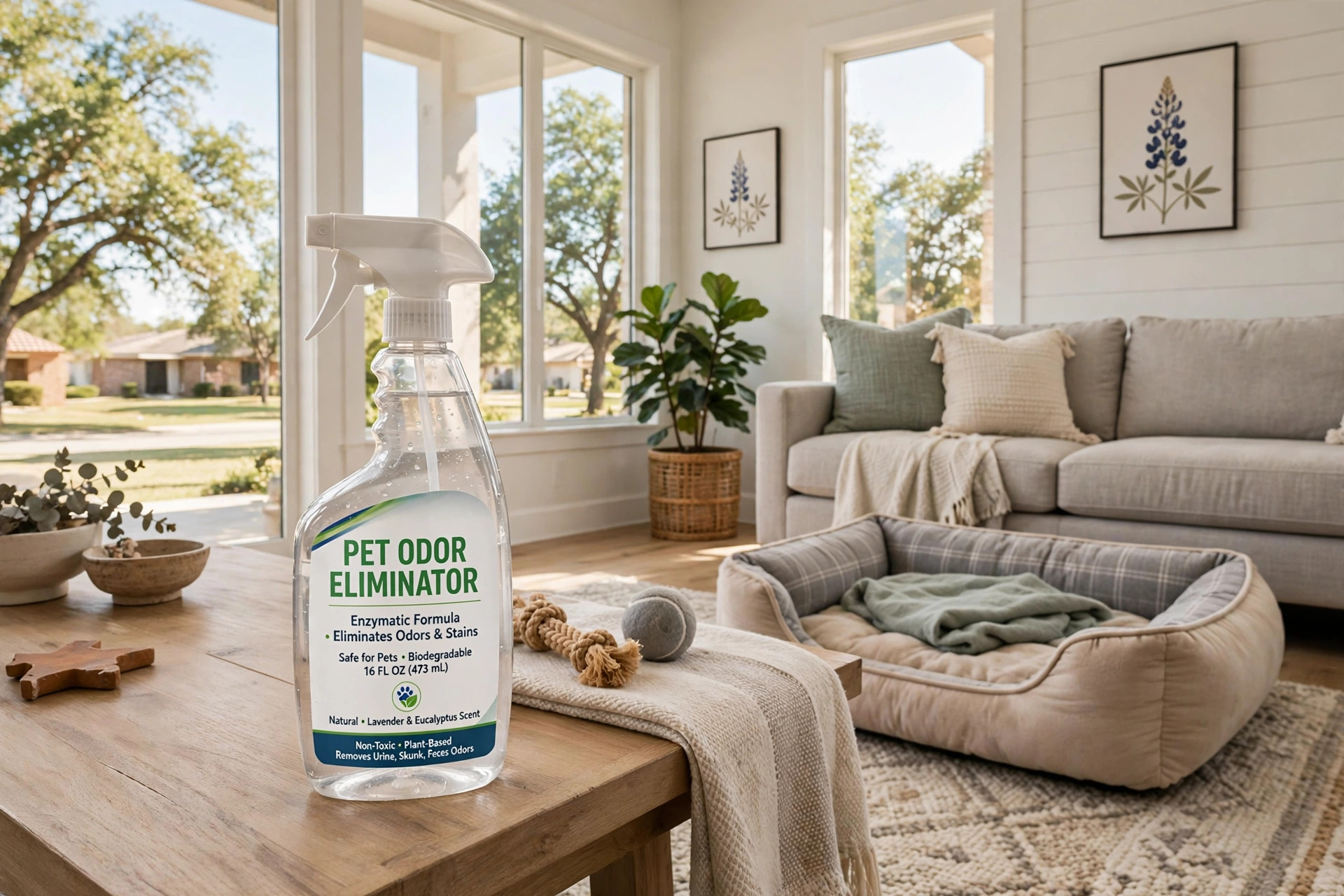
Not all sprays work the same way. Some mask odor. Some remove it. The label tells the story. Look for words like enzymatic, bio-based, or odor neutralizer. These products break down the proteins in urine, saliva, and dander. Masking sprays list fragrance first. They smell strong out of the bottle. The pet odor comes back in an hour.
Check the surface list. A spray made for carpet may harm wood or leather. Texas homes mix many surfaces. Tile, hardwood, laminate, and area rugs often sit in one room. Buy a spray rated for all of them. If you own leather chairs, buy a second product made for leather. One bottle rarely serves every surface.
Read the pet safety line. Labels should say safe for use around dogs and cats when used as directed. Small animals and birds react to strong chemicals. Fish tanks need care too. Keep spray mist away from aquariums. The EPA’s indoor air guidance notes that strong fragrances and solvents can lower indoor air quality. A mild formula is kinder to pets and people.
Choose unscented or lightly scented formulas for daily use. Heavy perfume irritates noses. It can bother pets with strong senses. Cats in particular dislike strong smells. An unscented enzymatic spray does the job without a cloud of perfume.
Test every new spray in a hidden spot. Dab a small amount behind a couch cushion or under a rug corner. Wait a full day. Check for color change or stiffness. Texas sun fades some fabrics faster. A tested spot saves an ugly surprise.
Enzymatic Versus Cover-Up Formulas
Enzymatic sprays use live bacteria or enzymes. They digest odor-causing matter. They work on old stains as well as fresh ones. They need time. Most need 10 to 30 minutes of damp contact. Do not blot them dry too soon. Let the enzymes work.
Cover-up formulas use fragrance and odor absorbers. They work fast. They fail on deep stains. Urine soaked into carpet padding returns in days. For Texas homes with wall-to-wall carpet, enzymatic is the better buy. For a quick freshen before guests, a light masking spray can help. Use it as a helper, not the main tool.
Types of Pet Odor Eliminator Sprays
Stores sell four main types. Each fits a different job.
Enzymatic sprays lead the field. They handle urine, vomit, and drool. They work on carpet, rugs, and pet beds. They cost more per bottle. They need fewer repeats. Most pet owners keep one on hand at all times.
Oxygen-based sprays use hydrogen peroxide or sodium percarbonate. They lift stains and kill odor bacteria. They can lighten dark fabrics. Never use them on wool or dark cotton without a test. They work well on tile grout and concrete patios. Texas garages and patios benefit from them.
Baking soda and plant-based sprays suit light daily use. They absorb odor on fabrics and in the air. They are gentle. They rarely harm surfaces. They do not fix deep urine stains. Use them between washings of pet beds and throws.
Scented air and fabric sprays only mask odor. They have a place. A light mist before a dinner party freshens a room fast. But they leave the real problem in place. Pair them with an enzymatic cleaner for the actual source. Reviews from testing labs like Consumer Reports show that masking products score lower for lasting results.
Cost and Price: What Texas Shoppers Should Expect
Prices vary by size and formula. A standard 24-ounce enzymatic spray costs between 8 and 15 dollars at Texas stores. Large 128-ounce refill jugs run 25 to 40 dollars. Refills cut the per-ounce price in half. They suit homes with several pets.
Budget sprays cost 5 to 8 dollars. Many work well for light daily use. Shoppers on a tight budget can compare budget friendly pet odor eliminator sprays for sale to find a low-cost bottle that still does the job. The cheapest option is not always the worst. Check the ingredient type first. An enzymatic budget bottle beats a pricey masking spray.
Oxygen-based cleaners cost 10 to 20 dollars. Plant-based and unscented formulas sit in the same range. Professional carpet cleaning in Texas costs 150 to 300 dollars per visit. A 12-dollar bottle that delays one visit pays for itself fast.
Buy at big home stores or pet supply shops. Texas has many of both. Online sellers ship refills to the door. Bulk buying helps large homes. One gallon covers a house with two dogs for several months. Store bottles in a cool cabinet. Texas garage heat shortens shelf life. A bottle baked at 110 degrees may lose strength.
Care and Upkeep: Getting the Most From Each Bottle
Good technique matters as much as the product. Blot fresh accidents first. Press a clean towel down hard. Lift, do not rub. Rubbing pushes the stain deeper. Remove as much liquid as possible before spraying.
Spray enough to reach the source. A light mist on top does little. Soak the spot to the same depth as the stain. For carpet, that means damp to the pad. Cover with a damp towel. Wait the time the label states. Then blot and let it air dry. Fans speed drying. Open a window if the Texas weather allows.
Wash pet beds weekly. Sprays work best on clean fabric. A dirty bed needs the washer first. Vacuum carpets twice a week in homes with shedding dogs. Vacuuming lifts dander that sprays cannot reach. Mop tile with a pet-safe floor cleaner. Grout lines hold odor. A steam mop helps here. Shoppers can read a steam mops for tile floors price comparison usa guide before buying one.
Replace spray nozzles that clog. Shake the bottle before each use. Enzymatic formulas settle over time. Check the date on the label. Most last one to two years unopened. Opened bottles keep strength for about a year in cool storage. Cleaning guides from The Spruce remind readers that old cleaners lose power long before they look bad.
For fabric furniture, a deeper machine clean helps once or twice a year. An upholstery cleaning machines reviews and buying guide can point to a machine for Texas homes with fabric sofas. Machines pull out what sprays leave behind.
Safety for Pets, Children, and Furniture
Safety comes first in every home. Keep pets out of the room until the spray dries. Wet paws pick up chemicals. Dogs lick their paws. Cats groom even more. Dry surfaces are safe for most products used as directed.
Read every label fully. Some formulas warn against use near birds or small mammals. Ferrets, rabbits, and guinea pigs have tender lungs. Move their cages to another room during spraying. Cover fish tanks. Turn off tank air pumps for a short time so mist does not enter the water.
Ventilation matters in Texas summers. Homes stay sealed against the heat. Open a door or run a vent fan after spraying. Fresh air clears fumes fast. Expert advice from Bob Vila stresses ventilation whenever chemical cleaners are used indoors.
Wood and leather need special care. Test sprays on a hidden edge first. Some enzymatic formulas spot finished wood. Wipe hard floors after the dwell time. Do not let liquid sit on hardwood seams. Water damage costs more than odor ever will. Home project guides at Family Handyman show safe test methods for cleaners on wood and fabric.
Keep bottles locked away from children. Bright labels attract curious hands. Store sprays high or in a latched cabinet. Never mix products in one bottle. Mixing bleach-based and acid cleaners creates dangerous gas. Use one product at a time. Rinse between different cleaners.
Pet health groups add one more rule. If a pet keeps soiling the same spot, see a vet. Repeat accidents can signal illness. The ASPCA offers guidance on house soiling and health checks. A PetMD veterinary article can help owners tell a behavior problem from a medical one. No spray fixes a health issue.
Frequently Asked Questions
Do these sprays work on old, dried stains? Yes, with patience. Enzymatic sprays can break down old urine crystals. Dampen the spot first with plain water. Then apply the spray generously. Cover it and wait longer than the label says. Repeat the treatment twice for very old stains. Deep pad stains may still need professional cleaning.
Can I use pet odor sprays on hardwood floors? Most can be used with care. Spray onto a cloth, not straight onto the wood. Wipe the spot, then wipe with a damp cloth. Dry the area fully. Never soak hardwood or let liquid sit in seams. For sealed tile, direct spraying is fine. Grout lines welcome a full soak.
How often should I spray pet areas? Treat accidents at once. Freshen pet beds and favorite spots weekly. High-traffic rooms may need twice-weekly attention in summer. Texas heat speeds odor growth. A regular schedule beats emergency cleanups. Maintenance guides from This Old House suggest tying cleaning tasks to a weekly routine.
Are enzymatic sprays safe around cats? Most are, once dry. Cats are sensitive to strong scents and some essential oils. Choose unscented formulas. Keep cats out until the area dries fully. Store bottles where cats cannot knock them over. If a cat shows sneezing or drooling after use, air the room and switch products.
Will a spray damage my leather couch? It can. Leather needs its own cleaner. General pet sprays may dry or spot leather. Buy a leather-safe enzymatic product for couches and car seats. Test on a hidden seam first. Wipe off excess right away. Condition the leather after cleaning to keep it soft.
Is a natural or plant-based spray strong enough? For light daily odors, yes. They freshen beds, crates, and throws well. For urine soaked into carpet padding, they fall short. Keep both types on hand. Use the gentle spray daily and the enzymatic one for real stains. Product roundups at Good Housekeeping test both kinds side by side.
A Final Word
Pet odor does not have to rule a Texas home. The right spray, used the right way, keeps rooms fresh. Choose enzymatic formulas for real stains. Keep a gentle spray for daily freshening. Blot first, soak deep, and let the product work. Store bottles cool and keep pets off wet spots. Pair sprays with regular washing and vacuuming. Pet supply stores like Chewy carry the main brands for Texas delivery. A fresh-smelling home is within reach. Your pets can stay comfortable, and your guests will never know they live there.
References
ASPCA. (n.d.). Pet care and animal welfare resources. https://www.aspca.org Bob Vila. (n.d.). Home improvement advice. https://www.bobvila.com Chewy. (n.d.). Pet supplies. https://www.chewy.com Consumer Reports. (n.d.). Product reviews and ratings. https://www.consumerreports.org Family Handyman. (n.d.). DIY home repair and maintenance. https://www.familyhandyman.com Good Housekeeping. (n.d.). Product reviews and home advice. https://www.goodhousekeeping.com PetMD. (n.d.). Pet health information. https://www.petmd.com The Spruce. (n.d.). Home and garden advice. https://www.thespruce.com This Old House. (n.d.). Home renovation guidance. https://www.thisoldhouse.com U.S. Environmental Protection Agency. (n.d.). Protecting human health and the environment. https://www.epa.gov
Was this guide helpful?

About Jennifer Lee
The My Garden US editorial team writes practical, in-depth home and garden guides for American homeowners — tested advice, no fluff.
You May Also Like
Eco Friendly Fireplace Ash Vacuums for Sale: What to Know Before You Buy
May 16, 2026 0 views
Cordless Handyman Services for Homeowners Near Me: A Practical Guide
June 21, 2026 0 views
Spin Mop Bucket Systems Price Comparison USA
September 10, 2026 0 views