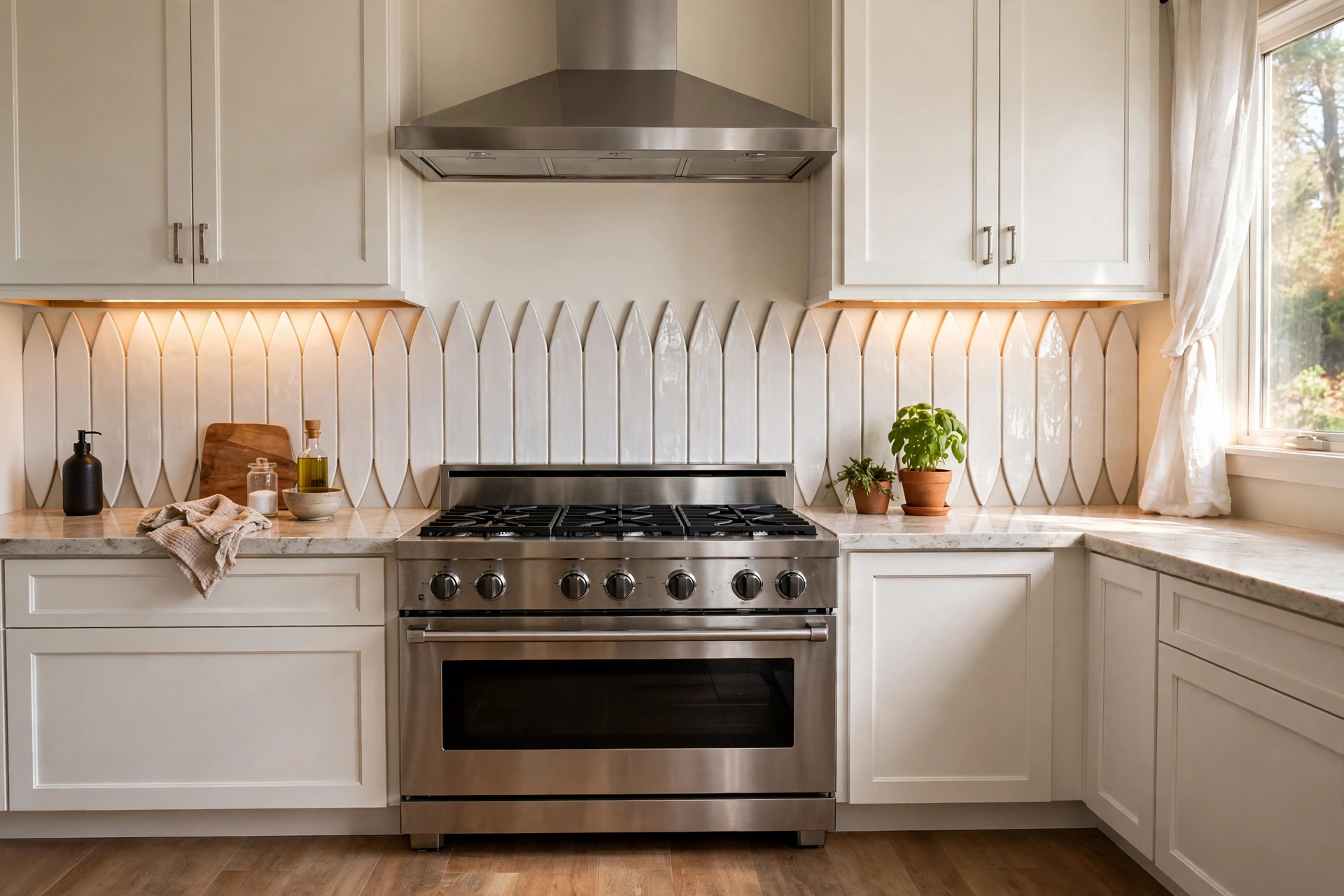

If you are searching for picket tile backsplash ideas for kitchens, you have already found one of the most charming tile styles on the market. Picket tiles are long and narrow, with pointed ends like the pickets of a fence. They sit between the square subway tile and the long plank tile in size. On a wall, they make a pattern that is both old-fashioned and fresh.
This guide walks through the best picket tile backsplash ideas for kitchens. You will learn what the tile is, how to choose a color and finish, which layouts work best, what it costs, and how to keep it clean. By the end, you will have a clear plan for your own kitchen. Plenty of backsplash design advice agrees that this tile suits nearly every home style.
Why Picket Tile Works So Well in a Kitchen
The kitchen is the hardest working room in the house. The backsplash takes heat, steam, and cooking oil every day. A good backsplash must be easy to wipe and strong enough to last for years. Tile meets both tests, and picket tile adds one more gift: character.
The long shape of the picket pulls the eye along the wall. This makes a small kitchen feel longer and a large kitchen feel more finished. The pointed ends add a touch of old-world craft. They recall handmade tiles from centuries past, yet they fit well in a modern farmhouse or a city apartment alike.
Picket tile backsplash ideas for kitchens also work with almost any cabinet color. White picket tile sits well next to white shaker cabinets. A deep blue or green picket tile looks fine against dark wood or gray cabinets. Tile maker collections show just how many glazes and edge styles exist. The shape itself is quiet, so it never fights with your counters or floors.
Another reason for the popularity of this tile is its price. Picket tile is not the cheapest tile, but it is far less dear than hand-cut stone or custom mosaic. For most families, it is a fair middle ground between plain subway tile and a costly designer wall.
What to Look For When You Shop: Picket Tile Backsplash Ideas for Kitchens
Before you fall in love with a color, check the basics. Not all picket tiles are made the same way.
First, look at the material. Most picket tiles are ceramic or porcelain. Ceramic costs less and suits most kitchen walls. Porcelain is denser and harder, so it resists chips better. Both take glaze well. Some picket tiles are made of glass or natural stone. Glass shines in a dark kitchen, while stone adds a rough, natural texture.
Second, look at the finish. A glossy glaze bounces light around the room. This is a fine choice for a kitchen with little daylight. A matte finish is softer and hides water spots. A crackled glaze has fine lines under the surface. It looks old and handmade, and many buyers love it.
Third, check the size. A common picket tile is about two inches wide and six to ten inches long. Longer tiles make the pattern bolder. Shorter tiles look more delicate. Hold a sample against your wall and step back. Guides on choosing tile suggest viewing the sample in morning and evening light, since glaze color shifts through the day.
Fourth, ask about the edge. Some picket tiles have a flat cut edge. Others have a rounded or pillow edge that softens the whole wall. The rounded edge suits a cottage or farmhouse look. The flat edge suits a cleaner, modern room.
Ten Picket Tile Backsplash Ideas for Kitchens
Here are the most loved picket tile backsplash ideas for kitchens, drawn from real homes across the country.
1. Classic white picket. White glazed picket tile set in a straight row is the safest and most loved choice. It works with white, gray, navy, or wood cabinets. White grout makes the wall look like one smooth sheet. Gray grout brings out each tile.
2. Vertical stack. Instead of laying the tiles flat in rows, stand them on end. A vertical pattern draws the eye up and makes a low ceiling feel taller. This layout looks striking behind a range hood.
3. Herringbone-style zigzag. Picket tiles can be set at angles to form a zigzag band. This takes more skill and more tile, but the result is a wall with real movement. Keep the color simple so the pattern can shine.
4. Navy blue picket. A deep blue glaze turns the backsplash into the star of the room. Pair it with brass handles and warm wood shelves. The color stays calm, not loud.
5. Forest green picket. Green picket tile is a favorite in farmhouse kitchens. It echoes the garden outside the window. Light oak floors and white counters keep it fresh.
6. Matte black picket. Black tile with dark grout makes a bold, modern statement. It needs good light, so add under-cabinet strips. A small kitchen can still carry this look if the cabinets are white.
7. Two-tone border. Use white picket tile for the main field and a single row of blue or gray tile as a band at counter height. The band acts like a ribbon around the room. It costs little more than one color.
8. Picket with open shelves. When you have open wood shelves, the tile behind them becomes part of the display. Choose a soft glaze so dishes and jars stand out against it. A crackled white glaze is ideal.
9. Full wall behind the range. Run the picket tile all the way to the ceiling behind the stove. The long pointed shape rising to the hood is dramatic. This is a fine place to spend more on a handmade-look tile.
10. Mixed-length scatter. Some makers sell picket tiles in two or three lengths. A mixed-length wall looks like an old European kitchen. The pattern seems random, but it follows a careful plan.
Layout Choices That Change the Look
The same tile can look very different with a new layout. The offset pattern, where each row starts halfway along the tile below, is the classic choice. It is easy to install and easy on the eye.
The stacked pattern, with tile ends lined up in straight columns, is cleaner and more modern. It suits flat-front cabinets and simple counters.
The vertical layout, described above, is a strong trend now. It works best on a wall that is taller than it is wide, such as the space behind a range between two upper cabinets.
Whatever layout you choose, draw it on paper first. A simple sketch saves tile and saves time on the day of the work.
Cost and Price
Picket tile backsplash ideas for kitchens come in a wide price range. Basic ceramic picket tile often sells for four to ten dollars per square foot. Mid-range porcelain or crackled-glaze tile may cost ten to twenty dollars per square foot. Handmade-look or glass picket tile can reach twenty-five dollars or more.
Labor is a large part of the bill. Tile setters often charge by the square foot or by the day. Tile installation cost per square foot varies by region, but expect labor to add as much as the tile itself, sometimes more. Renovation project guides suggest getting three written quotes before you hire. Complex layouts like zigzag patterns cost more in labor because they take longer and need more cuts.
Do not forget the extras. You will need thin-set mortar, grout, spacers, and sealer. If your wall is bare drywall, it may need a coat of primer or a backer board. A simple beginner tiling guide explains these supplies in plain terms, and most home improvement stores carry everything on one shelf.
To keep the total down, limit tile to the working areas: behind the range, behind the sink, and under the upper cabinets. A full-wall treatment is lovely, but a partial wall looks nearly as fine for far less money.
A handy rule is to buy ten to fifteen percent more tile than your wall measures. Cuts, chips, and layout tests eat into the box. Leftover tile is useful for future repairs, so nothing is wasted.
Care and Upkeep
A picket tile backsplash is easy to live with. Glazed tile wipes clean with a soft cloth and warm soapy water. Grease near the range comes off with a mild kitchen spray. Avoid harsh acids or strong bleach, which can dull the grout.
Grout needs more care than tile. Sealed grout resists stains far better than bare grout. Apply a grout sealer after the work is done, and repeat every year or two in a busy kitchen. Light grout shows stains sooner, so many families choose a soft gray instead of bright white.
Check the caulk line where the tile meets the counter each year. If it cracks or pulls away, cut it out and lay a fresh bead. This small job keeps water from getting behind the tile.
Glass picket tile needs a soft touch. Abrasive pads can scratch the surface. Stone picket tile should be sealed like grout, since stone drinks in oil and water. Hard-surface care tips from flooring makers apply just as well to a tiled wall.
Safety Notes
Tile work is safe for most home owners, but take a few simple steps. Wear safety glasses when cutting tile. A wet saw keeps dust down, which is kinder to your lungs. Thick work gloves protect your hands from sharp cut edges.
Turn off the power to any outlets in the backsplash area before you work around them. Outlets must be pulled out and re-seated with tile-thin spacers called box extenders, so the covers sit flush.
If your home was built before 1978, test old paint and wall material for lead before you sand or scrape. A simple home test kit gives an answer in minutes.
Frequently Asked Questions
Is picket tile hard to install? It is a little harder than square tile because of the pointed ends. Cuts around outlets take care. A patient beginner can manage a straight layout, and many guides walk you through each step.
Does picket tile suit a small kitchen? Yes. The long shape stretches the wall and makes the room feel wider. Choose a light color and a glossy finish to bounce light around.
What grout color is best? White grout gives a clean, seamless wall. Gray grout outlines each tile and hides stains. Dark grout with light tile is bold and modern. There is no wrong answer, only a different look.
Can I use picket tile with dark cabinets? Yes. Dark cabinets pair well with light or mid-tone picket tile. A soft blue or sage green tile also sits well against dark wood. For more pairings, see our notes on the best backsplash for dark cabinets.
How do I clean grease off the tile? Warm water with dish soap handles daily grease. For heavy build-up, a mild degreaser and a soft sponge work well. Rinse and dry so no film is left behind.
Is picket tile still in style? Picket tile has been made for well over a century. It rises and falls in fashion, but it never looks dated the way a trendy pattern can. Its long shape is simple enough to last. Browse tile and flooring retailers or design inspiration and you will see picket tile still featured in new kitchen lines.
A Final Word
Picket tile backsplash ideas for kitchens range from the plain and classic to the bold and new. The tile itself is honest: a simple pointed shape, a good glaze, and a wall that cleans up fast. Start with samples in your own light. Tape them to the wall and live with them for a few days. Then choose the color and layout that feels like home. A kitchen wall you love is worth the care you put into it.
References
Bob Vila. (n.d.). Home improvement advice. https://www.bobvila.com Daltile. (n.d.). Ceramic and porcelain tile. https://www.daltile.com HGTV. (n.d.). Home and garden ideas. https://www.hgtv.com LL Flooring. (n.d.). Hardwood, vinyl, and tile flooring. https://www.llflooring.com Lowe’s. (n.d.). Home improvement products. https://www.lowes.com Mohawk Flooring. (n.d.). Flooring products. https://www.mohawkflooring.com Shaw Floors. (n.d.). Flooring products. https://www.shawfloors.com The Home Depot. (n.d.). Home improvement products. https://www.homedepot.com The Spruce. (n.d.). Home and garden advice. https://www.thespruce.com This Old House. (n.d.). Home renovation guidance. https://www.thisoldhouse.com
Was this guide helpful?

About Michael Thompson
The My Garden US editorial team writes practical, in-depth home and garden guides for American homeowners — tested advice, no fluff.
You May Also Like
Best Underlayment for Laminate Flooring USA: A Practical Guide
August 26, 2026 0 views
Machine Washable Runner for Hallway: A Simple Guide
August 24, 2026 0 views
Waterproof Laminate Flooring for Bathrooms USA: A Simple Guide
August 24, 2026 0 views