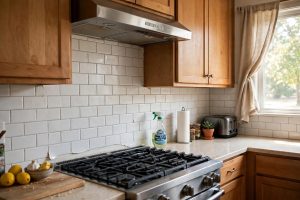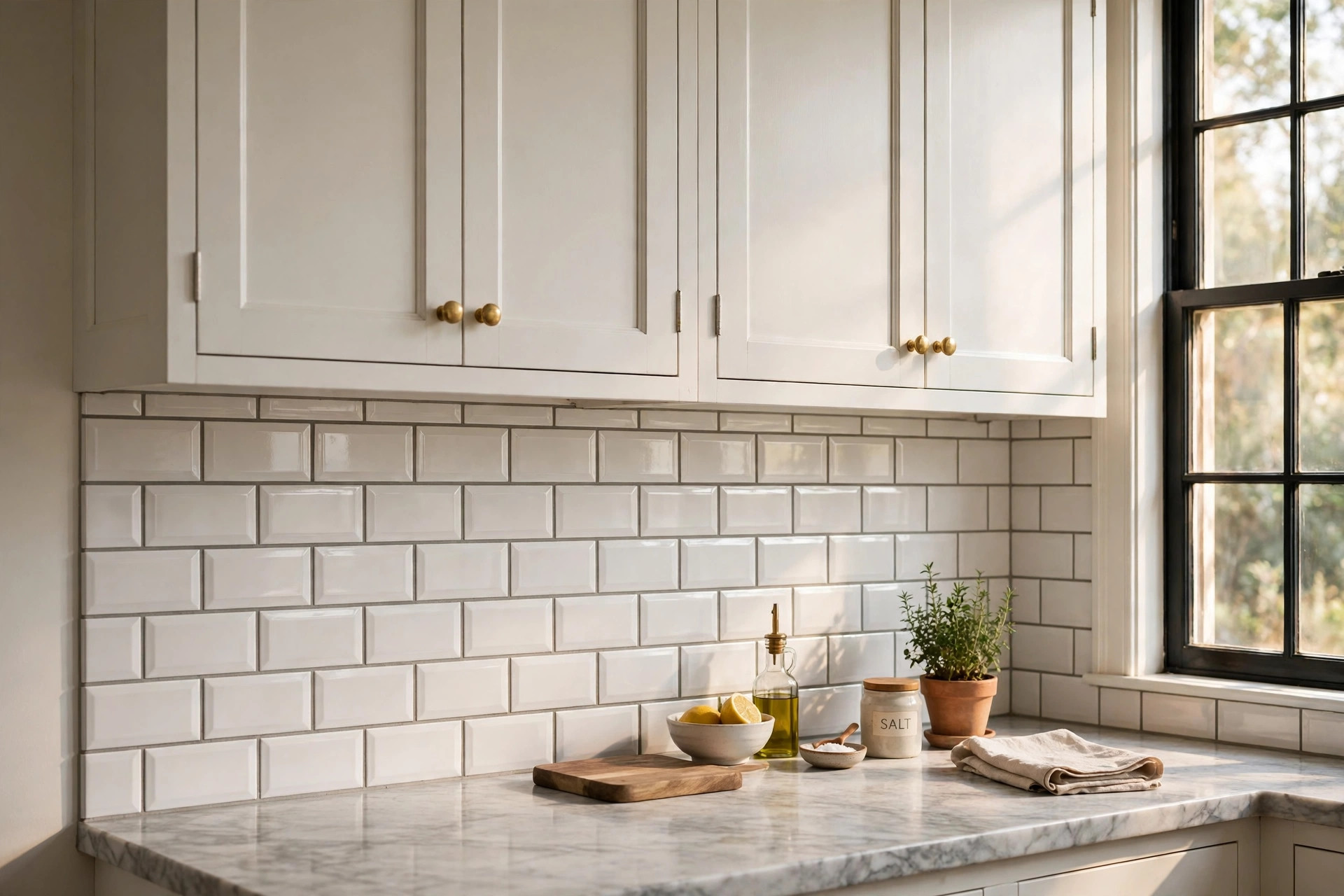

The subway tile backsplash cost per square foot is the first number to know before you start a kitchen refresh. A backsplash is the strip of tile between the countertop and the wall cabinets. It guards the wall against water, grease, and steam, and it gives the kitchen a finished look. Subway tile, the plain 3-by-6-inch rectangle first used in New York subway stations in the early 1900s, remains the most common choice in American homes. This guide sets out what you will pay for the tile, the labor, and the full job, measured per square foot, so you can plan a budget before you call an installer.
Why a Subway Tile Backsplash Makes Sense
A subway tile backsplash is one of the most budget-friendly ways to improve a kitchen. The tile itself is mass-made and easy to find, so prices stay low. A standard kitchen needs only 25 to 40 square feet of backsplash. Compare that with a full floor, and the small area keeps the total bill modest even when the per-square-foot rate is moderate.
The look also ages well. Subway tile suits old farmhouses and new condos alike. Its plain shape lets the grout lines and the layout do the talking. A running bond pattern is classic. A stacked pattern reads more modern. Either way, the tile does not fight with cabinets or counters.
There is a practical side too. Glazed ceramic wipes clean with a damp cloth. It resists heat from the stove and moisture from the sink. When a tile cracks, you can replace one piece without tearing out the wall. These small facts explain why the subway tile backsplash has lasted more than a century in American kitchens.
What the Square Foot Price Really Covers: Subway Tile Backsplash Cost Per Square Foot
The subway tile backsplash cost per square foot is not one number. It is a stack of smaller costs. The tile is one layer. The thinset mortar, grout, and sealers are another. Labor is the third, and it is often the largest part of the bill. Knowing each layer helps you read a quote and spot a fair price.
Tile Price Per Square Foot
The tile itself is the cheapest part of the job for most homes. Plain white ceramic subway tile from a big home store sells for about $2 to $4 per square foot. These boxes are stocked in volume, and the price reflects it. You can walk into a store and carry home enough tile for a full kitchen the same day.
Glazed ceramic in colors beyond white runs $3 to $6 per square foot. Handmade-looking tile with slight size and color variation runs $7 to $15 per square foot. Natural stone or glass subway tile can reach $15 to $30 per square foot before labor. The design you pick sets the floor of your budget before any work begins.
Tile makers like Daltile publish list prices online, which makes it easy to compare across brands. A good habit is to order samples first. Color on a screen is never exact. Samples let you see the tile against your counter and cabinets in your own light. Most samples cost a few dollars and save many times that in mistakes.
Labor Cost Per Square Foot
Labor is where the subway tile backsplash cost per square foot climbs. A professional tile setter charges about $4 to $10 per square foot of labor for a plain backsplash on a flat wall. That rate covers layout, cutting, setting, grouting, and cleanup. It assumes the wall is sound and the outlets need only standard cuts.
Labor rises when the job gets complex. L-shaped corners, window returns, and many outlets slow the work and raise the price. A handmade or uneven tile takes more time to level than a factory-perfect one. In high-cost cities, labor alone can reach $12 to $15 per square foot. Always ask whether the quote is for labor only or for the full job with materials included.
Many homeowners ask about tile installation cost per square foot for the whole house. A backsplash is simpler than a floor, so the rate is lower, but the same rules apply: prep, pattern, and place all affect the final number. How-to guides from This Old House show the full process step by step, which helps you judge whether a quote is fair.
Types and Options That Change the Price
Not all subway tile is priced alike. The material and the finish decide the band your project lands in.
Ceramic is the standard. It is the cheapest and the easiest to cut and clean. Porcelain subway tile costs a bit more, about $4 to $8 per square foot, and it is denser and harder. Porcelain suits busy kitchens and stands up well behind a range. Brands like Mohawk and Shaw sell porcelain tile lines in subway sizes, and flooring specialists such as LL Flooring carry matching trims and grouts.
Glass subway tile runs $8 to $20 per square foot for material alone. It gives a bright, modern look but needs a skilled hand. The adhesive shows through the back, so the installer must use the right thinset color and keep the bed even. Any flaw in the wall shows through glass, so wall prep costs rise too.
Handmade subway tile brings a soft, wavy surface and slight color shifts from tile to tile. Reviews of handmade subway tile for kitchens praise the look but note the price: $10 to $25 per square foot is common, and labor runs higher because each piece must be leveled by eye.
Zellige tile, a Moroccan clay tile with a glossy, uneven glaze, sits at the top of the range. The zellige tile backsplash cost often lands between $15 and $35 per square foot for material, and installers charge a premium because the tiles are fragile and irregular. It is a choice for looks, not for budgets.
Pattern also matters. A basic running bond is the cheapest layout. Herringbone, basket weave, and vertical stack patterns take more cutting and more time. Expect labor to rise 20 to 40 percent for a complex pattern on the same wall.
Cost and Price: A Full Breakdown
Here is what the subway tile backsplash cost per square foot looks like when every part is added up.
– Basic ceramic tile, do it yourself: $3 to $7 per square foot for tile, mortar, grout, and tools. – Basic ceramic tile, professional install: $10 to $20 per square foot, all in. – Mid-range porcelain or colored ceramic, professional install: $15 to $30 per square foot, all in. – Handmade, glass, or zellige, professional install: $25 to $50 per square foot, all in.
A typical kitchen with 30 square feet of backsplash costs $300 to $600 for a plain ceramic job done by a pro, $450 to $900 for porcelain or colored tile, and $750 to $1,500 for handmade or glass. These ranges hold for most American markets in 2026. High-cost cities run 15 to 25 percent above these figures.
A few add-ons change the total. Removing an old backsplash costs $1 to $3 per square foot extra. Wall repair behind the old tile adds $2 to $5 per square foot when the drywall is damaged. Epoxy grout, which resists stains far better than standard grout, adds about $1 to $2 per square foot to the job. A tile edge trim or pencil liner costs $3 to $8 per linear foot.
To keep the bill down, buy tile during a sale. Big stores like Home Depot and Lowe’s run kitchen and bath promotions through the year, and yearly cost guides from The Spruce track where prices are headed. Buy 10 percent more tile than the measured area. Waste from cuts and breakage is normal, and a shortfall of a single box can stall the job for days. Keep a few spare tiles after the job for future repairs. The dye lot will never match again.
Care and Upkeep
A subway tile backsplash asks little of you once it is in. Wipe it with a warm damp cloth and a drop of dish soap. Rinse and dry. That is enough for weekly care. Avoid steel wool and harsh acids, which can dull the glaze or eat the grout.
Grout needs the most attention. Standard sanded grout should be sealed after install and again every one to two years in a busy kitchen. A grout sealer keeps grease and sauce from staining the lines. Epoxy grout never needs sealing, which is one reason it costs more up front.
Caulk where the tile meets the counter and the cabinets. Caulk moves with the house; grout cracks. Re-caulk when the line pulls away or turns dark. Small care keeps the backsplash looking new for decades.
Safety
Tile work is low risk, but a few rules matter. Wear a dust mask and eye protection when cutting tile. Wet saws keep dust down, but dry grinders throw fine silica dust into the air. Breathing it over time harms the lungs.
Thinset mortar and grout are cement products. They irritate skin. Wear gloves, and wash off splashes quickly. Keep the work area ventilated. Sealers and adhesives can carry fumes, so open a window and follow the label.
Electrical safety counts around outlets. The boxes must sit flush with the finished tile face. If an outlet falls too deep behind the tile, the gap is a fire risk. Use box extenders so the outlet sits proud of the tile. When in doubt, have an electrician move or extend the boxes before the tile goes up.
Frequently Asked Questions
How much does a 30-square-foot subway tile backsplash cost installed?
With basic ceramic tile and a professional installer, $300 to $600 is typical. Mid-range tile raises the total to $450 to $900. Handmade, glass, or zellige tile can push the total past $1,000 for the same area.
Is it cheaper to install a subway tile backsplash myself?
Yes. Doing the work yourself removes the labor charge, which is often half the bill or more. Expect to pay $3 to $7 per square foot for tile, mortar, grout, and tool rental. The job is a good first tile project because the area is small and the tile is forgiving.
Does subway tile raise home value?
A clean, new backsplash helps a kitchen look cared for, and kitchens sell homes. You will not recover every dollar, but a $500 backsplash is one of the cheapest kitchen upgrades with a visible payoff at resale. Neutral colors help most.
What grout color goes best with white subway tile?
Light gray grout is the safe middle ground. It hides stains better than white and looks softer than dark charcoal. White grout shows every mark. Dark grout makes a bold grid pattern that some buyers love and others do not.
How long does a subway tile backsplash last?
The tile itself can last the life of the house. Glazed ceramic does not wear out. Grout and caulk need refreshes every few years. The job fails only when water gets behind the tile, so keep the caulk lines sound.
Can I tile over an existing backsplash?
Sometimes. If the old tile is flat, sound, and well bonded, a new layer can go over it with the right primer and mortar. But the new tile sits proud of the wall, which complicates outlet boxes and edges. Many installers prefer to remove the old layer first.
A Final Word
The subway tile backsplash cost per square foot is easy to work out once you split it into tile, materials, and labor. Basic jobs run $10 to $20 per square foot installed. Nicer tile runs $15 to $30. Handmade and glass run $25 to $50. Measure your wall, add 10 percent, pick your tile, and get two or three written quotes. With those numbers in hand, a classic kitchen upgrade stays on budget and looks right for years.
References
Daltile. (n.d.). Ceramic and porcelain tile. https://www.daltile.com LL Flooring. (n.d.). Hardwood, vinyl, and tile flooring. https://www.llflooring.com Lowe’s. (n.d.). Home improvement products. https://www.lowes.com Mohawk Flooring. (n.d.). Flooring products. https://www.mohawkflooring.com Shaw Floors. (n.d.). Flooring products. https://www.shawfloors.com The Home Depot. (n.d.). Home improvement products. https://www.homedepot.com The Spruce. (n.d.). Home and garden advice. https://www.thespruce.com This Old House. (n.d.). Home renovation guidance. https://www.thisoldhouse.com
Was this guide helpful?

About Emily Rodriguez
The My Garden US editorial team writes practical, in-depth home and garden guides for American homeowners — tested advice, no fluff.
You May Also Like

Wide Plank Hardwood Floors Cost USA: A Plain Guide to Prices in 2026
January 12, 2026 0 views
Stain Resistant Carpet for Pets Reviews USA: A Plain Guide for American Pet Owners
January 20, 2026 0 views
Hand Painted Tile Backsplash for Sale in the USA: A Simple Buying Guide
September 7, 2026 0 views