
Introduction
Saltillo tile for kitchen floor reviews usa is one of the most common searches from home buyers who want a warm, handmade floor at a fair price. Saltillo tile is a clay tile made by hand, mostly in Mexico. Each tile looks a little different. That is the point. Buyers who read reviews want to know the same few things: what it costs, how hard it is to care for, and whether it fits a busy kitchen.
Reviews from American buyers are mostly warm, but not without warning. People love the look. They love the low price. Some people struggle with the upkeep. This guide collects what buyers say most often. It walks through why the tile matters, how to choose it, the types you will see, the real cost, care and upkeep, and safety. It ends with common questions and a short final word.
If you are comparing floor types, it also helps to look at other common choices. Read our notes on white oak vs red oak flooring comparison and subway tile backsplash cost per square foot for a fuller picture of kitchen floor and tile budgets.
Why Saltillo Tile Matters for a Kitchen Floor: Saltillo Tile for Kitchen Floor Reviews Usa
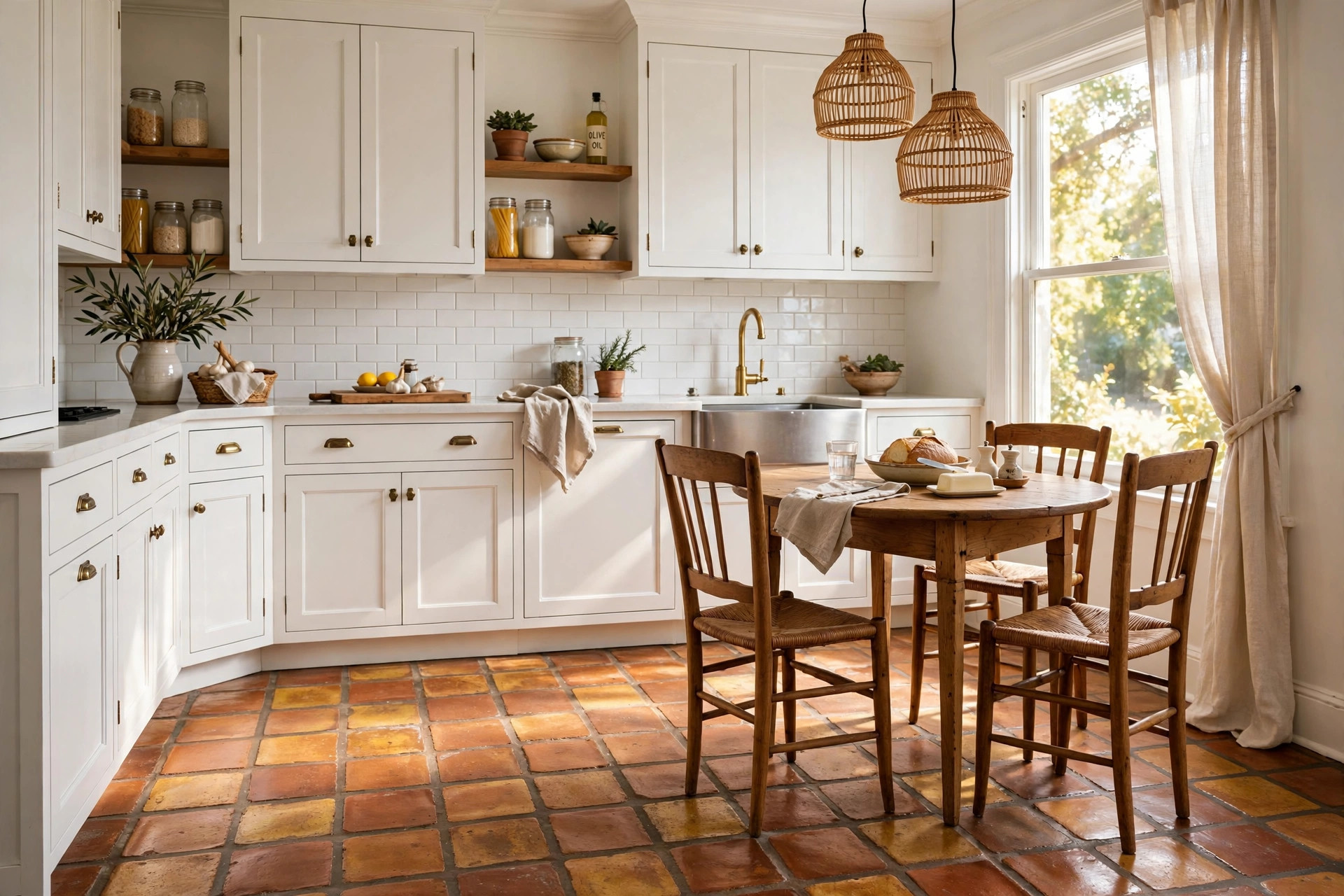
Saltillo tile matters because it gives a kitchen a look that factory tile cannot copy. Each tile is formed by hand and dried in the sun. The color shifts from tile to tile, in tones from pale gold to deep red-orange. Small chips and soft edges are normal. In a kitchen, that handmade feel softens cabinets and counters and makes a plain room feel warm.
Reviews from buyers across the USA say the same thing again and again: the floor looks better in real life than in photos. Many buyers pick Saltillo after seeing it in a friend’s home or in a restaurant. The tile carries a Southwest and Mediterranean feel, but it works in many styles. It sits well next to white cabinets, wood cabinets, and dark counters.
Another reason it matters is price. Saltillo is one of the least costly real tiles you can buy. For a kitchen floor, where many square feet are needed, that counts. Buyers on a budget often choose Saltillo over stone or imported ceramic. The savings can be large. That said, the low tile price is only part of the story. Labor, sealer, and care add to the total. Reviews that call the floor “cheap” usually mean the tile itself, not the whole job.
Saltillo also lasts. Clay tile has served floors for centuries. A well-set and well-sealed Saltillo floor can serve a kitchen for decades. Small marks blend into the handmade look instead of standing out.
What to Look For and How to Choose
Choosing Saltillo tile for a kitchen floor starts with grade. Most sellers offer two or three grades. The top grade, often called primera, has the cleanest faces and fewest chips. Lower grades show more chips and color swings. For a kitchen, reviews point buyers toward the top grade, since kitchens take spills and heavy steps.
Next, look at thickness. Saltillo tiles are thicker than most factory tile, often around three-quarters of an inch. That thickness gives a strong floor, but it raises the floor height. Check how the new height meets your doors, appliances, and the floors in nearby rooms. Some buyers need to trim door bottoms. Plan for that before the tile goes down.
Size is another choice. Common sizes are 12 by 12 inches and 16 by 16 inches. Smaller tiles give more grout lines and a busier pattern. Larger tiles look calmer and show off the color range. For a small kitchen, many buyers prefer 12-inch tiles.
Color range matters too. Saltillo color runs in lots. Tiles from one lot can look quite different from tiles in the next lot. Buy all your tile from one lot if you can. Open several boxes and mix the tiles before the setter begins. This spreads the light and dark tiles across the floor. Reviews warn buyers who skip this step: the floor can end up with a dark patch on one side and a pale patch on the other.
Finally, look at the edges. Saltillo edges are soft and rounded by hand. Grout lines will be wider than with machine-made tile. Most setters use grout joints of one-half inch or more. That wide joint is part of the charm. It also means more grout to seal and clean. Know that before you buy.
Types and Options
The classic type is the square paver, 12 by 12 or 16 by 16 inches. This is the tile most reviews talk about, and the standard kitchen choice.
A second type is the hexagonal tile. Hexagon Saltillo gives a patterned floor with a folk-art feel. It suits kitchens that want a bolder look. The hex shape takes more skill to set, so labor can cost more.
A third type is the rectangular paver, often 8 by 12 inches. These can be set in a running bond, like brick. That pattern draws the eye down the room. It can make a narrow kitchen feel longer.
Some sellers also offer Saltillo in a tumbled or antique finish. These tiles look older right away and can hide new wear from the start.
There is also the question of pre-sealed tile. Some Saltillo is sold with a sealer already applied. Some is sold raw. Raw tile costs less but needs sealing by hand after it is set. Pre-sealed tile saves a step but costs more per square foot. Read the seller’s terms before you decide.
For kitchens, most buyers choose square pavers in the top grade, bought raw or pre-sealed, then sealed again at home. That is the safe middle path that most reviews support.
Cost and Price
The tile itself is the cheapest part of the story. In the USA, Saltillo tile often sells for two to six dollars per square foot. Top-grade and larger sizes cost more. Lower grades cost less. Compared with carpet installation cost per square foot usa, tile material is often in the same range or lower, but tile labor is higher.
Labor is where the bill grows. Setting Saltillo takes more skill than setting flat factory tile. The tiles are thick and uneven. The setter must level each one by hand. Expect labor of six to twelve dollars per square foot in many US markets. Total installed cost often lands between ten and eighteen dollars per square foot. That is still below natural stone in most cases, but well above the price of the tile alone.
Sealer adds more. A good penetrating sealer for Saltillo costs money, and a kitchen floor may need two or three coats. Some buyers also add a surface finish for extra shine. Budget a few hundred dollars for sealer on a normal kitchen. If you hire the sealing out, add labor for that too.
Grout is another line item. Wide joints need more grout, and sanded grout is the normal pick for Saltillo. A grout that matches the tile tones will look calm. A light grout will show dirt fast in a kitchen.
Delivery can matter as well. Saltillo is heavy, and a kitchen order can weigh a ton or more. Some sellers charge a flat delivery fee, and some include it. Ask before you order. Also order ten to fifteen percent extra tile, since breakage and cuts are normal with handmade tile.
Care and Upkeep
Care is the part of saltillo tile for kitchen floor reviews usa that splits buyers most. Some owners say upkeep is simple. Others say it is a chore. The truth sits in the middle. Saltillo needs more care than glazed porcelain, but less than many people fear. The key is sealing.
A kitchen Saltillo floor must be sealed, and sealed well. Most owners use a penetrating sealer that soaks into the clay. Some add a topical finish on top for shine and stain guard. The sealer is what stands between the tile and tomato sauce, grease, and coffee. Reviews from happy owners almost always mention good sealing. Reviews from unhappy owners often admit the sealing was thin or skipped.
Daily care is simple. Sweep or dry mop often, since grit under shoes grinds the sealer down. A mat at the kitchen door helps a lot. For wet cleaning, use a damp mop with a mild, pH-neutral cleaner. Do not use vinegar, bleach, or harsh acids on a regular basis. They can eat the sealer and dull the tile.
Spills need quick action. Saltillo is porous, and even sealed tile can stain if a spill sits. Wipe up oil, wine, and tomato sauce right away. Keep a cloth handy near the stove.
Re-sealing is part of the plan. In a busy kitchen, expect to re-seal every one to three years. High-traffic paths near the sink and stove wear first. A simple water test tells you when: sprinkle a few drops of water on the tile. If the water beads, the sealer holds. If it soaks in and darkens the tile, it is time to re-seal. Many owners do this job themselves over a weekend.
Grout needs care too. Wide sanded grout can hold grease near the stove, so a soft brush and mild cleaner keep it clean. Re-seal the grout when you re-seal the tile.
One more note from reviews: Saltillo darkens when wet and lightens as it dries. That is normal. The color comes back as the floor dries.
Safety
Saltillo tile is safe for kitchens when it is chosen and set with care. The main safety point is slipperiness. A sealed Saltillo floor can be smooth when wet. Pick a sealer with a matte or satin finish rather than a high-gloss finish in a kitchen. Matte sealers give better grip. Place mats near the sink and the stove, where water and grease land most.
The thick, uneven surface can be a trip point at edges. Make sure the setter uses proper transition strips where the tile meets other floors. A clean edge keeps toes safe. Also check that the floor height still lets doors swing free. A door that drags can be a hazard in a busy kitchen.
Dust is a short-term concern. Cutting Saltillo makes fine dust, so the setter should cut wet or wear a mask and vent the area. This is standard practice for all tile work.
Sealers and cleaners bring their own safety notes. Use sealers in a well-vented room. Keep pets and children off the floor until the sealer cures fully, as the label directs. Store cleaners out of reach. These are normal home safety steps, but reviews remind buyers not to skip them in the rush to enjoy the new floor.
For general home safety standards around floors and products, buyer guides at Consumer Reports are a useful reference. For kitchen project planning, This Old House offers clear, plain how-to advice.
Frequently Asked Questions
Is saltillo tile good for kitchen floors?
Yes, for many homes. Reviews say it works well in kitchens where the owner seals it properly and cleans spills fast. It suits casual and rustic kitchens best. It is less suited to owners who want a floor they never think about. If you want zero upkeep, glazed porcelain may fit better. For related floor planning, see white oak vs red oak flooring comparison.
What are the pros and cons of saltillo tile in a kitchen?
Pros: low tile cost, warm handmade look, each floor is one of a kind, long life when sealed, hides small wear well. Cons: needs sealing and re-sealing, stains if spills sit, wide grout lines need care, thick tiles raise floor height, color varies between lots. Most reviews say the pros win if you accept the care routine.
How much does saltillo tile cost per square foot installed?
The tile often costs two to six dollars per square foot. Installed, with labor, grout, and sealer, most US kitchens land between ten and eighteen dollars per square foot. Prices move with local labor rates. Always get two or three written quotes.
Does saltillo tile need to be sealed?
Yes. Every review and every seller agrees on this. Raw Saltillo is porous and will stain fast in a kitchen. Use a quality penetrating sealer, with two or three coats, and re-seal every one to three years. Test with water drops to know when.
Can you use saltillo tile with radiant floor heat?
Often yes, but check with your tile seller and your heat system maker first. Clay tile holds heat well, which many owners like. The setter must use the right mortar and allow for movement. Get the plan in writing before work starts.
How do you clean a saltillo tile kitchen floor?
Sweep often. Damp mop with warm water and a mild, pH-neutral cleaner. Wipe spills at once. Skip vinegar, bleach, and harsh acids for daily use. Re-seal when water stops beading. Product picks and floor care basics are covered in guides at The Spruce and Shaw Floors.
A Short Final Word
Saltillo tile for kitchen floor reviews usa tells a steady story. Buyers love the look and the price. They warn about the upkeep. The floor rewards owners who seal it well and wipe spills fast. It punishes owners who skip those steps. Go in with open eyes, buy from one lot, hire a setter who knows handmade tile, and seal with care. Do that, and a Saltillo kitchen floor can warm your home for decades.
For tile shopping and price checks, many buyers start at Home Depot or Lowe’s. For tile-specific collections, Daltile is worth a look, and LL Flooring and Mohawk Flooring publish helpful buying guides.
References
Consumer Reports. (n.d.). Product reviews and ratings. https://www.consumerreports.org Daltile. (n.d.). Ceramic and porcelain tile. https://www.daltile.com LL Flooring. (n.d.). Hardwood, vinyl, and tile flooring. https://www.llflooring.com Lowe’s. (n.d.). Home improvement products. https://www.lowes.com Mohawk Flooring. (n.d.). Flooring products. https://www.mohawkflooring.com Shaw Floors. (n.d.). Flooring products. https://www.shawfloors.com The Home Depot. (n.d.). Home improvement products. https://www.homedepot.com The Spruce. (n.d.). Home and garden advice. https://www.thespruce.com This Old House. (n.d.). Home renovation guidance. https://www.thisoldhouse.com
Was this guide helpful?

About Michael Thompson
The My Garden US editorial team writes practical, in-depth home and garden guides for American homeowners — tested advice, no fluff.
You May Also Like

Curbless Shower Pan Installation Cost in the USA: A Plain Guide
August 26, 2026 0 views
Best Outdoor Rugs for Patio Reviews USA: A Plain Guide for American Homes
June 13, 2026 0 views
Garage Floor Tiles Interlocking Reviews USA: What Buyers Say
June 21, 2026 0 views