
When you shop for hardwood floors in the United States, you will hear two names more than any other. White oak and red oak. They fill most of the hardwood shelves at big box stores and specialty shops alike. They look alike at first glance. They come from the same broad family of trees. And yet they differ in ways that matter once the floor is down in your home.
This white oak vs red oak flooring comparison walks through each difference one by one. Color. Grain. Hardness. Cost. Water resistance. How each one stains. Which rooms suit which wood. By the end, you should know which oak fits your house, your budget, and your taste.
Why This Comparison Matters
Hardwood floors last a long time. Most oak floors stay in a home for thirty to fifty years. Some stay for a hundred. That makes the choice between white oak and red oak one of the longer lasting choices you will make in a home.
The two woods differ in price by a small but real margin. They take stain in different ways. They age in different ways. A floor you love on day one can grow into something you do not love by year ten if you chose the wrong tone for your light and furniture.
A side by side white oak vs red oak flooring comparison keeps you from learning these lessons after the boards are nailed down.
Color: The Most Visible Difference: White Oak vs Red Oak Flooring Comparison
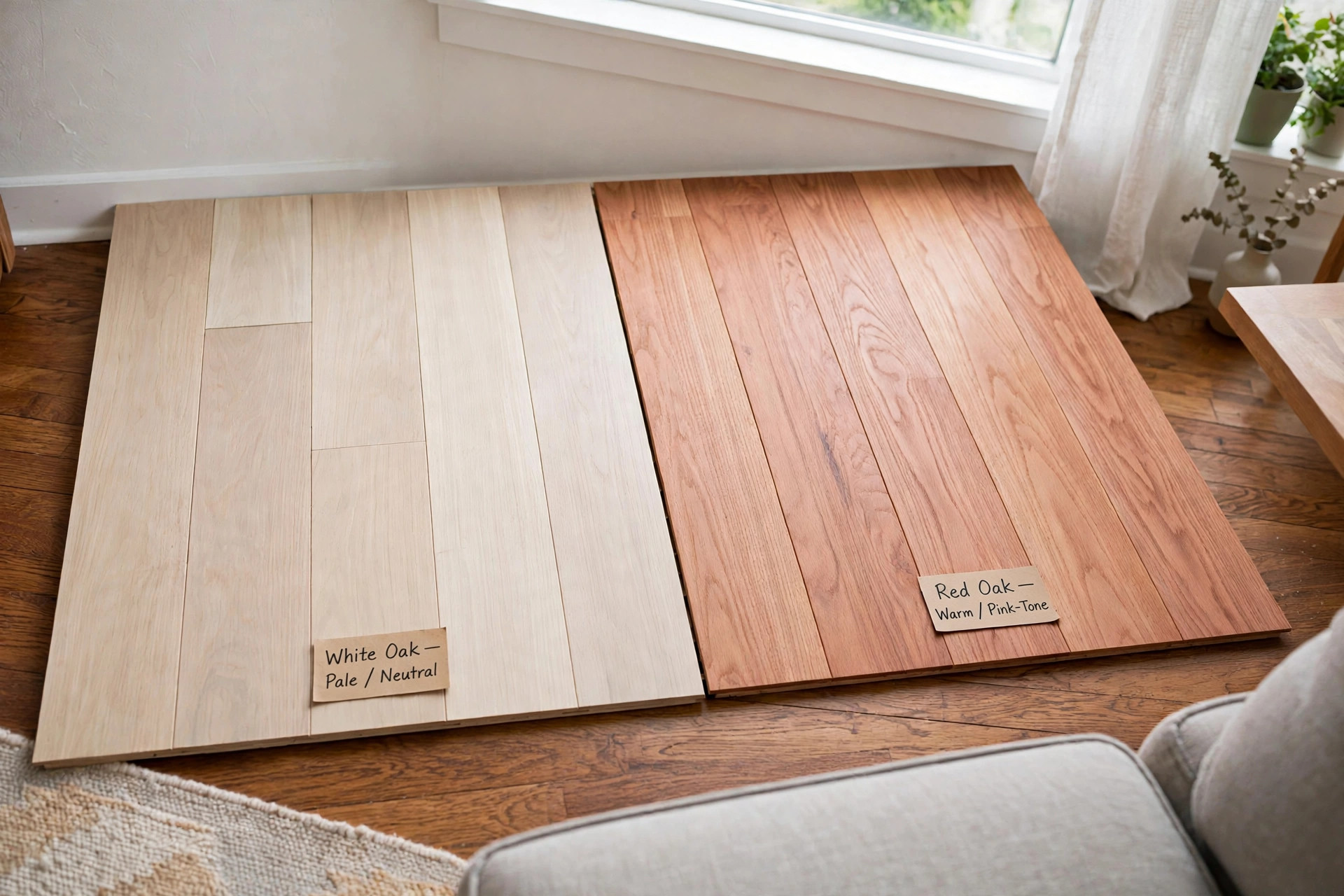
White oak has a pale, neutral color. It ranges from light tan to a soft brown with gray and beige undertones. It reads as modern and calm. It suits homes with cool paint colors, gray walls, and light furniture.
Red oak has a warm pink or salmon cast. Even unstained, the boards carry a pinkish tone that grows warmer with age. It suits traditional homes, warm paint colors, and darker wood furniture.
This difference matters because wood color sets the mood of a room. White oak keeps a room cool and open. Red oak makes a room feel warm and lived in. Neither is better. The question is which mood you want to live with for decades.
Light also changes the look. White oak holds its color well in bright rooms. Red oak grows slightly darker and richer with years of sunlight. If your room gets strong afternoon sun, know that red oak will warm up further over time.
Grain: How Each Wood Shows Its Lines
Both oaks show open grain, which means you can see the lines and pores of the wood. But the two grains look different.
Red oak has a bold grain with strong lines and open pores. The pattern shows through even under darker stains. In a large room, this gives the floor a lively, textured look. Some people love it. Others find it busy.
White oak has a smoother, tighter grain. The lines are softer and less busy. The pores are smaller. The floor reads as quiet and even from across the room. In open floor plans, white oak gives a calm surface that lets furniture and rugs stand out.
For a modern look with wide boards, white oak is the common pick. Wide plank hardwood floors show off white oak best, and stores like Lowe’s and LL Flooring carry many white oak plank options.
Hardness and Durability
On the Janka hardness scale, white oak scores about 1360 pounds of force. Red oak scores about 1290. Both are hard enough for normal home use. The difference is small but real.
What does that mean in daily life? White oak resists dents a little better. A dropped pan leaves a slightly smaller mark on white oak. In homes with heavy furniture or active children, the extra hardness helps.
But hardness is not the whole story. The finish on top of the wood does most of the protective work. A good polyurethane finish keeps both woods safe from scratches and wear. The Spruce offers clear care guides for keeping that finish intact. Many homeowners worry about pets on oak floors, and a guide to the best hardwood floor finish for dogs can help you pick a topcoat that stands up to claws.
Both oaks sand and refinish well. Each can be sanded down and refinished three to five times in its life. That means either floor can look new again long after the first finish wears.
Stain Behavior: A Key Difference
This is where the two woods truly part ways.
White oak takes stain in a clean, even way. It accepts gray, greige, and natural stains without fighting back. Designers love white oak because it can be finished to almost any tone, from pale Scandinavian white to dark espresso.
Red oak fights light stains. Its pink undertones push through pale finishes and can turn them an unwanted pink or salmon color. Dark stains look fine on red oak, but light, modern tones are hard to achieve.
If you want a gray or pale floor, choose white oak. If you want a classic medium brown or dark floor, either wood works.
When it comes time to finish your floor, water based polyurethane reviews can point you toward a topcoat that dries clear and does not add yellow tones over time. Shaw Floors and Mohawk Flooring both publish finish care tips worth reading before you seal the floor.
Water and Moisture Resistance
White oak is denser and its pores are sealed with a natural substance called tylosin. That makes white oak more water resistant than red oak. Water beads on white oak and moves into red oak faster.
This matters in kitchens, entryways, and mudrooms. A splash by the sink or a wet boot on the floor is less of a risk on white oak. Red oak can handle the same rooms, but it needs faster cleanup and a good finish. In baths and laundry rooms, many homeowners choose tile instead, since it shrugs off standing water completely.
Neither oak is waterproof. For baths and laundry rooms, other materials may serve better. But in a kitchen with care, both oaks do fine, and white oak gives a bit more margin for error.
Cost and Price
Red oak is the more common of the two trees in American forests. It costs less to cut and mill. For that reason, red oak flooring usually runs one to three dollars less per square foot than white oak for the raw material.
Installed cost tells a fuller story. Red oak floors often run from six to twelve dollars per square foot installed. White oak floors often run from eight to fifteen dollars per square foot installed. The Home Depot lists current material prices online so you can compare before you visit a store. Prices move by region, board width, and grade.
Wide planks cost more in either wood. If you are pricing wide boards, a look at wide plank hardwood floor costs helps set a realistic budget before you call installers. This Old House also has step by step installation guides that show what the labor involves.
Remember that the finish, the subfloor work, and the labor often matter more to the final bill than the species. Get at least three written quotes before you decide.
Which Rooms Suit Which Oak
White oak suits kitchens, living rooms, and open plans with modern or coastal decor. Its calm grain keeps large open spaces from looking busy. It also works well in bright rooms where you want the light to do the talking.
Red oak suits bedrooms, studies, and traditional homes. Its warm tone makes small rooms feel cozy. It pairs well with cherry, walnut, and mahogany furniture.
Hallways and stairs take heavy wear. Either wood works, but white oak edges ahead on dent resistance. Entryways see water and grit, so white oak has the advantage there too.
Types and Grades
Both oaks come in several grades. Select and better grade has the cleanest look with few knots and color variation. Number one common has more color variation and small knots. Rustic or cabin grade shows the most character.
White oak also comes in rift and quartered cuts. These cuts show straight, even grain lines. They cost more but give a very clean modern look. Red oak is rarely sold in rift cut because its grain does not suit the look as well.
Both woods come as solid boards and as engineered boards. Solid oak is three quarters of an inch thick and lasts longest. Engineered oak has a thin layer of real oak over plywood and costs less. It also handles moisture better, which helps in basements.
Care and Upkeep
Oak floors are easy to care for if you follow a few rules.
Sweep or vacuum with a soft brush head once a week. Grit is the enemy of wood finish. A small stone under a shoe can scratch any floor, white oak or red.
Clean with a damp mop and a cleaner made for hardwood floors. Never soak the floor. Never use steam mops, which push moisture into the seams.
Keep the indoor humidity between thirty and fifty percent. Oak boards swell in damp air and shrink in dry air. A simple humidifier in winter and dehumidifier in summer protect the floor.
Put felt pads under furniture legs. Use rugs at doors and in high traffic paths. Recoat the finish every seven to ten years before wear reaches the bare wood.
Safety
Hardwood floors are safe for most homes, but a few points matter.
Loose rugs on wood floors can slip. Use a rug pad under every area rug. This protects both the rug and the floor.
Refinishing creates dust and fumes. If you sand a floor yourself, wear a respirator rated for fine dust. Keep the house ventilated. Water based finishes give off fewer fumes than oil based ones and are safer for homes with children.
Watch for splinters on old worn floors. A floor with a worn finish can develop rough spots. Recoat or refinish before the wear becomes a hazard.
FAQ
Which is more popular, white oak or red oak? White oak is more popular in new homes and modern remodels. Red oak still sells in large numbers and costs less. For a decade now, white oak has led in design magazines and new builds.
Can you tell white oak from red oak once installed? Yes, most of the time. Red oak shows a pink tone and bolder grain. White oak shows a neutral tone and calmer grain. Under a dark stain they look closer, but the grain still gives them away.
Does white oak darken over time? All oak changes a little with age and light. White oak may grow slightly warmer or amber. Red oak grows slightly darker and richer. The change is slow and usually looks good.
Which stains better? White oak stains better and more evenly. It accepts a wider range of tones, including light and gray tones. Red oak resists light stains because of its pink cast.
Is engineered oak as good as solid oak? Engineered oak is real wood on top and performs well. It costs less and handles moisture better. Solid oak lasts longer and can be refinished more times. For most homes, either is a fine choice.
Should I mix white oak and red oak in one house? It is best not to mix them in the same sight line. The tones clash in an obvious way. If you must use both, keep them in separate areas with a door or hallway between them.
Final Word
There is no bad choice here. Both woods have served American homes for a century. The white oak vs red oak flooring comparison comes down to three questions. Do you want cool neutral tones or warm tones? Do you want calm grain or bold grain? And how much does the price difference matter to your budget?
Answer those three questions honestly and the right oak picks itself. Then get good quotes, pick a finish that suits your life, and enjoy a floor that will outlast almost everything else in the room.
References
Daltile. (n.d.). Ceramic and porcelain tile. https://www.daltile.com LL Flooring. (n.d.). Hardwood, vinyl, and tile flooring. https://www.llflooring.com Lowe’s. (n.d.). Home improvement products. https://www.lowes.com Mohawk Flooring. (n.d.). Flooring products. https://www.mohawkflooring.com Shaw Floors. (n.d.). Flooring products. https://www.shawfloors.com The Home Depot. (n.d.). Home improvement products. https://www.homedepot.com The Spruce. (n.d.). Home and garden advice. https://www.thespruce.com This Old House. (n.d.). Home renovation guidance. https://www.thisoldhouse.com
Was this guide helpful?

About Lisa Anderson
The My Garden US editorial team writes practical, in-depth home and garden guides for American homeowners — tested advice, no fluff.
You May Also Like

Best Flooring for Arizona Heat: Reviews and Buying Guide
May 30, 2026 0 views
Non Slip Rug Pad for Tile Reviews USA: A Practical Buying Guide
March 28, 2026 0 views
The Best Garage Floor Mats for Winter in the USA
January 18, 2026 0 views