
Introduction
If you want to know the wide plank hardwood floors cost usa home owners pay in 2026, the short answer is this: most projects land between eight and twenty-two dollars per square foot, installed. Material alone runs from five to fifteen dollars per square foot, and labor adds three to eight dollars more. The final bill for a typical living room can range from two thousand dollars to more than nine thousand dollars. The gap is wide because the wood species, the plank width, the finish, and the way the floor is installed all move the price.
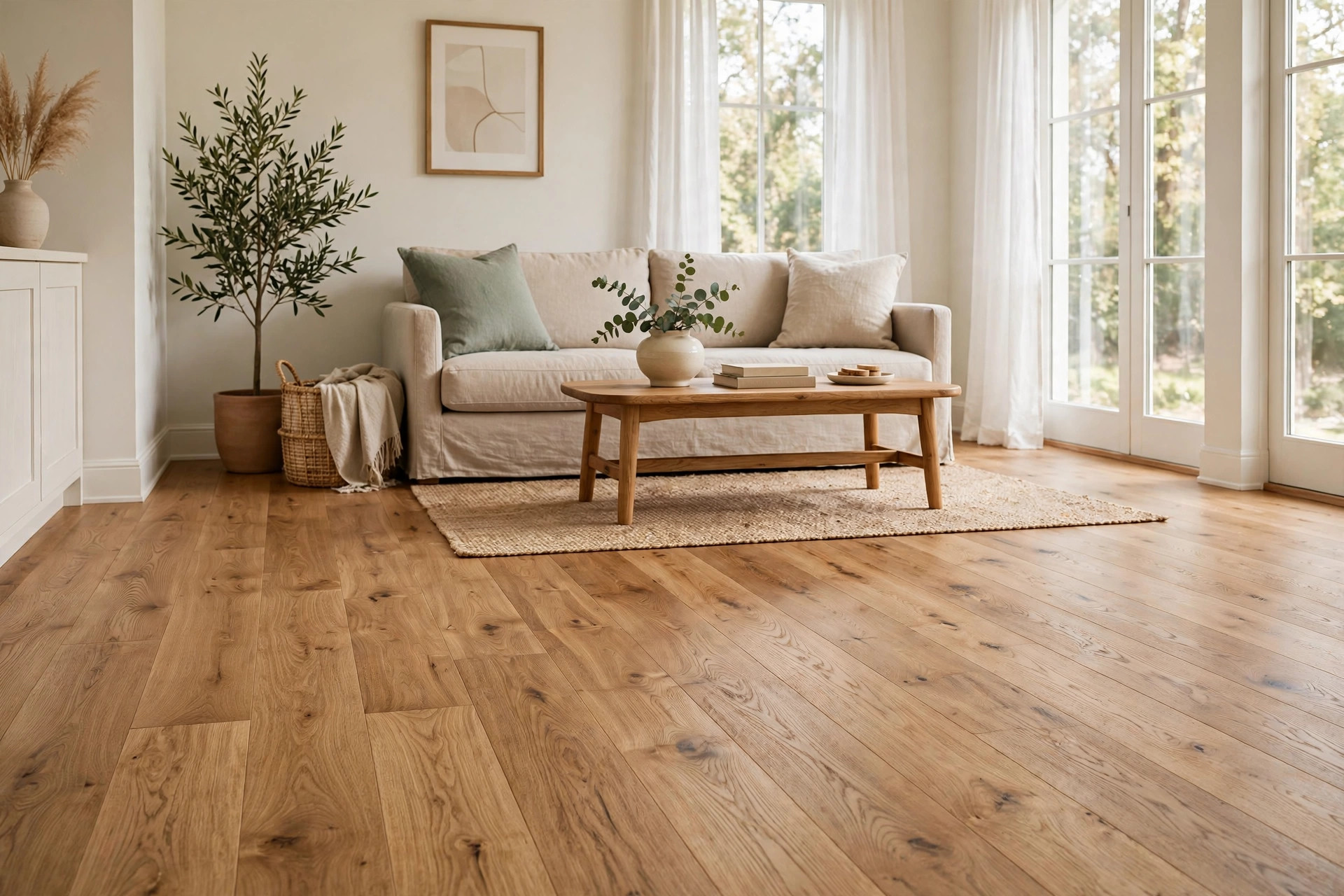
Wide plank floors are boards that measure five inches wide or more. Many are seven, eight, or even ten inches wide. Narrow strips were the norm in the nineteen hundreds. Today buyers want the look of old farmhouse floors, and wide planks give that feel. Fewer seams mean a calmer, more open look. The grain shows better across a wide board. That is the charm. It is also the reason wide planks cost more than standard strips.
This guide breaks down every part of the wide plank hardwood floors cost in the USA. You will learn what drives the price, which types fit your budget, what to watch for when you buy, and how to care for the floor after it is in. Prices quoted here reflect common ranges seen in 2026 across the country. Your town may run higher or lower.
Why Wide Plank Floors Matter: Wide Plank Hardwood Floors Cost Usa
The Look Buyers Want
Real estate agents say floors are one of the first things buyers notice. Wide plank hardwood makes rooms feel larger. Long, broad boards draw the eye across the room. In an open plan house, that effect is strong. The floor looks like one quiet surface instead of many small strips.
The Value It Adds
A solid hardwood floor is one of the few home upgrades that can pay back at resale. Appraisers and agents often rank wood floors near the top of value-adding features. Wide planks, being fashionable, tend to photograph well in listings. They signal quality. A buyer who sees a wide plank floor may assume the rest of the home is well kept.
Fewer Boards, More Wood Character
A narrow strip floor needs many boards to cover a room. A wide plank floor needs far fewer. Each board shows more of the tree: knots, grain lines, color shifts. If you love natural wood, this is the payoff. It is also why wide planks demand better timber. A flaw in a wide board is harder to hide, so mills charge more for clean, wide stock.
What To Look For When You Buy
Board Width
Boards five to six inches wide are the entry point. They cost a little more than standard three-inch strips. Boards seven to eight inches wide are the sweet spot for most buyers: clearly wide, still stable, and easier to find. Boards nine inches and wider are a luxury. They need very good lumber, and they move more with changes in humidity.
Solid Versus Engineered
Solid wide plank is one piece of wood from top to bottom, usually three quarters of an inch thick. It can be sanded and refinished many times. It is sensitive to moisture. Engineered wide plank has a real wood top layer over layers of plywood. It is more stable in damp rooms or over concrete slabs. Engineered boards can also be made wider at a lower price. If you are comparing options, read a guide on engineered hardwood flooring cost per square foot before you decide.
Wood Species
Oak is the most common choice, and it is the most affordable of the good hardwoods. White oak costs a bit more than red oak and resists dents better. Hickory is tougher still and shows bold grain. Walnut is dark, rich, and soft underfoot, but it costs more. Maple is pale and smooth. Exotic woods like Brazilian cherry cost the most and vary in color over time. The species alone can swing material cost by five dollars per square foot or more.
Finish Type
Prefinished boards arrive with the finish baked on at the factory. They go in fast and the finish is very hard. Site-finished boards are sanded and sealed in your home. The job takes longer, and you must wait before you walk on the floor. But a site finish has no bevel gaps and can be tinted to any stain you like. Wide planks with a site finish show the least visible seams.
Grade and Character
Wood grades run from clear to rustic. Clear grade has few knots and even color; it is the most costly. Select grade has some small knots and mild color variation. Rustic or character grade keeps knots, mineral streaks, and wild grain. It is cheaper and suits farmhouse style. Decide how much character you want before you shop, because grade changes the price by dollars per square foot.
Types and Options
Solid White Oak Wide Plank
The workhorse of the category. Material runs six to twelve dollars per square foot. White oak takes stain well, from pale natural to dark espresso. It is hard enough for busy family rooms. Many installers call it the safest pick for resale.
Solid Red Oak Wide Plank
Slightly cheaper than white oak, usually five to ten dollars per square foot for material. Red oak has a warm, pinkish tone that some buyers love and others stain darker. It dents a little easier than white oak but is still a true hardwood.
Hickory Wide Plank
Hickory is one of the hardest domestic woods. Material runs six to eleven dollars per square foot. The grain is dramatic, with sharp contrasts between light and dark. It hides wear well, which makes it a smart choice for homes with children.
Walnut Wide Plank
Walnut is the luxury pick among domestic woods. Material runs nine to sixteen dollars per square foot. The deep brown color needs no stain. It is softer than oak, so it suits bedrooms and formal rooms more than mudrooms.
Engineered Wide Plank
Engineered boards in oak or hickory run four to nine dollars per square foot for material. The top layer is real wood, often two to four millimeters thick, over stable plywood. You can install it below grade and over concrete. Thicker top layers can be refinished once or twice. For full pricing detail on the engineered route, see the breakdown of engineered hardwood flooring cost per square foot.
Reclaimed Wide Plank
Boards salvaged from old barns and factories run eight to eighteen dollars per square foot for material. Each board is unique, with nail holes and saw marks. Reclaimed wood is costly to mill and clean, but no new floor looks quite like it.
Cost and Price
Material Cost Per Square Foot
Here is the plain picture for 2026 in the USA:
– Basic wide plank oak, engineered: four to seven dollars per square foot – Solid oak, five to seven inches wide: five to nine dollars per square foot – Solid oak, eight inches and wider: seven to twelve dollars per square foot – Hickory or maple wide plank: six to eleven dollars per square foot – Walnut wide plank: nine to sixteen dollars per square foot – Reclaimed wide plank: eight to eighteen dollars per square foot
Add ten percent extra material for waste on straight layouts. Add fifteen percent for rooms with many angles.
Labor Cost Per Square Foot
Professional installation in the USA runs three to eight dollars per square foot. The common range is four to six. Labor covers subfloor prep, laying the boards, trim, and transitions. Wide boards take more skill to lay flat than narrow strips, so some crews charge a premium of one to two dollars per square foot for wide plank work.
What Installers Charge Near You
Rates move with your city. Big coastal cities run high; small towns in the Midwest run low. Before you sign, get three written quotes. A page on hardwood floor installation cost near me can help you learn what to ask each crew and how to compare their bids line by line.
The Extras That Raise the Bill
The sticker price on the wood is only part of the total. Watch for these line items:
– Old floor removal: one to three dollars per square foot – Subfloor repair: two to five dollars per square foot if boards are damaged – Underlayment and moisture barrier: fifty cents to one dollar per square foot – Stairs: one hundred to two hundred dollars per step – Baseboards and shoe molding: one to three dollars per linear foot, plus paint – Furniture moving: two hundred to five hundred dollars per job – Site finish, if chosen: two to four dollars per square foot on top of install
Sample Project Totals
A twelve by fifteen foot living room is one hundred eighty square feet. With mid-range solid oak at eight dollars per square foot for material and five dollars for labor, the base is about two thousand three hundred forty dollars, before extras. The same room in wide walnut at twelve dollars material and six dollars labor comes to about three thousand two hundred forty dollars. A whole first floor of one thousand square feet in mid-range wide plank often lands between ten thousand and sixteen thousand dollars installed.
Ways To Save Without Regret
Buy select grade instead of clear; the character looks good in wide boards. Choose five-inch width over nine-inch. Use engineered wood over concrete instead of raising the subfloor. Schedule the job in late winter, when installers are less busy. Never skip the moisture test to save money. A floor that cups in summer will cost far more to fix than the test ever would.
Care and Upkeep
Daily and Weekly Care
Sweep or dry mop often. Grit is the enemy; it grinds the finish like sandpaper. Use a soft broom or a vacuum with a hard floor setting and no beater bar. Damp mop with a well-wrung mop and a cleaner made for wood floors. Never flood the floor with water.
Humidity Control
Wood moves with the seasons. Keep indoor humidity between thirty and fifty percent year round. In winter, dry heated air shrinks boards and opens gaps. A whole house humidifier helps. In summer, damp air swells boards. An air conditioner or dehumidifier keeps them flat. Wide planks show gaps more than narrow strips, so humidity control matters more with this floor.
Refinishing
A solid wide plank floor can be sanded and refinished every seven to ten years, or when the finish wears through. Refinishing costs three to six dollars per square foot. To plan that future job, check a refinishing hardwood floors cost calculator guide so the numbers do not surprise you. Engineered floors with a thin top layer may only allow one light sanding, or none at all. Ask the maker before you buy.
What To Avoid
Do not use steam mops; the heat and moisture drive water into the seams. Do not use vinegar, oil soap, or wax on a modern polyurethane finish; they leave film and can block future refinishing. Put felt pads under chair legs. Use rugs at entries to catch grit. Trim pet nails to cut down on scratches.
Safety
During Installation
A flooring job is loud and dusty. Keep children and pets out of the work area. Sawdust can irritate lungs; crews should wear masks and run dust collection. If the floor is site finished, the fumes from oil-based polyurethane are strong. Plan to stay elsewhere for two to three nights, or choose a water-based finish with low odor.
Slips and Falls
A glossy finish is slicker than a matte one. If anyone in the home is unsteady on their feet, choose a satin or matte finish. Put non-slip pads under all area rugs. Wipe up spills at once; water on a smooth finish is a fall hazard.
Stairs
Wide plank on stairs looks fine, but each tread must be glued and nailed well. A loose tread is dangerous. Consider a runner carpet on the stairs if the home has small children or older adults. Stair nosing pieces must match the floor thickness exactly.
Fire and Heat
Wood floors are safe under normal use, but keep space heaters off the floor surface. Do not install solid hardwood directly over high heat radiant systems without checking the maker’s limits. Engineered wood handles radiant heat better. The U.S. Department of Energy publishes plain guidance on flooring over radiant heat systems.
FAQ
How much does wide plank hardwood flooring cost per square foot in the USA?
In 2026, most homeowners pay eight to twenty-two dollars per square foot installed. Material alone is five to fifteen dollars per square foot. Labor adds three to eight dollars. Species, width, grade, and finish set where you land in that range.
Is wide plank more expensive than narrow strip flooring?
Yes. Wide boards cost more per square foot for both material and labor. The lumber must be cleaner, the boards move more and need more care in installation, and demand for the look is high. Expect to pay two to five dollars more per square foot than standard three-inch strips.
What is the cheapest wide plank hardwood option?
Engineered oak in a five-inch width is usually the cheapest true wood option, at four to seven dollars per square foot for material. Rustic grade solid oak is the cheapest solid option. Both look like real wood because they are real wood.
Can I install wide plank floors myself?
A skilled do-it-yourselfer can lay a nail-down floor on a wood subfloor. Wide boards are less forgiving than narrow ones; any uneven spot telegraphs through. You will need a flooring nailer, a miter saw, and patience. Most first timers do better hiring a pro for wide plank, since a bad install on costly wood is an expensive lesson.
Do wide plank floors work in kitchens?
They can, with care. Engineered wide plank is the better pick for kitchens because it resists moisture swings. Wipe up spills fast and use mats at the sink and dishwasher. Solid wide plank in a kitchen needs stable humidity and quick cleanup habits.
How long do wide plank hardwood floors last?
A solid floor that is cared for can last fifty to one hundred years. Engineered floors last twenty to forty years, depending on the thickness of the top layer and how often they are refinished. The finish is what wears; the wood beneath can serve for generations.
A Final Word
The wide plank hardwood floors cost in the USA is not one number. It is a range shaped by your choices: oak or walnut, five inches or ten, engineered or solid, simple room or tricky stairs. Start with a firm budget per square foot, get three quotes, and read the fine print on extras. Buy the best grade and species your budget allows, keep humidity steady, and the floor will pay you back in comfort and value for decades. For brand comparisons and buying guides, The Spruce and This Old House both keep plain, current flooring sections. For pricing on boards and tools, the flooring departments at The Home Depot and Lowe’s show what stock costs in your zip code. Makers such as Shaw Floors, Mohawk Flooring, LL Flooring, and Daltile publish full product lines with specs you can check before you order.
References
Daltile. (n.d.). Ceramic and porcelain tile. https://www.daltile.com LL Flooring. (n.d.). Hardwood, vinyl, and tile flooring. https://www.llflooring.com Lowe’s. (n.d.). Home improvement products. https://www.lowes.com Mohawk Flooring. (n.d.). Flooring products. https://www.mohawkflooring.com Shaw Floors. (n.d.). Flooring products. https://www.shawfloors.com The Home Depot. (n.d.). Home improvement products. https://www.homedepot.com The Spruce. (n.d.). Home and garden advice. https://www.thespruce.com This Old House. (n.d.). Home renovation guidance. https://www.thisoldhouse.com U.S. Department of Energy. (n.d.). Energy efficiency and renewable energy. https://www.energy.gov
Was this guide helpful?

About Michael Thompson
The My Garden US editorial team writes practical, in-depth home and garden guides for American homeowners — tested advice, no fluff.
You May Also Like
Uncoupling Membrane for Tile Floors Reviews: What Holds Up in Real Homes
August 4, 2026 0 views
Sealing Natural Stone Tile Floors Guide USA
January 6, 2026 0 views
Best Grout for Shower Floor Reviews USA: What Homeowners Should Know
June 29, 2026 0 views