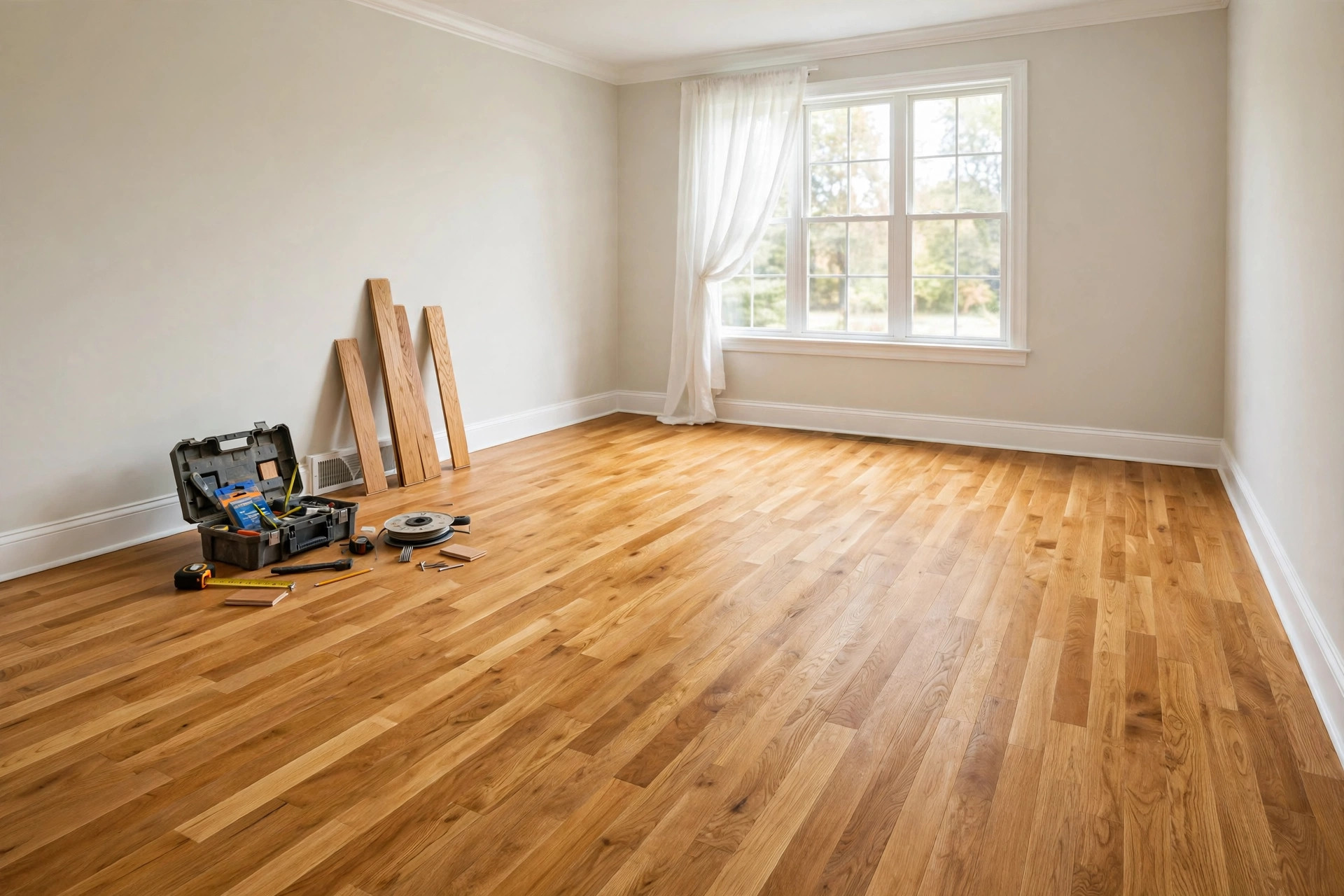

The question of hardwood floor installation cost near me comes up in nearly every home project. Wood floors look warm. They last for decades. They raise the value of a house. But the price can vary a great deal from one town to the next.
This guide breaks the cost down in plain terms. You will learn what drives the price, what to ask a local installer, and how to keep the bill under control. No jargon. No guesswork. Read on for the full breakdown.
Why Hardwood Floor Installation Cost Matters
A floor is not like a coat of paint. You cannot redo it in a weekend for a small sum. Hardwood installation is a major project. It involves materials, skilled labor, and careful prep work.
Knowing the local cost helps you plan. You can set a budget before you call anyone. You can compare quotes with a clear head. You can spot a price that is too high, or one that is suspiciously low.
Wood floors also pay back over time. A well-laid hardwood floor can last fifty years or more. It can be sanded and refinished many times. That long life makes the upfront cost easier to justify. But only if you pay a fair price at the start.
What Drives the Cost Near You: Hardwood Floor Installation Cost near Me
Labor rates change by region. An installer in a large city may charge twice what one in a small town charges. Travel time matters too. If you live far from the nearest flooring shop, expect a trip charge.
The size of the job matters. Most installers price by the square foot. A single bedroom costs less per foot than a whole first floor, because the crew must still haul tools and set up for a small job.
The state of your subfloor matters as well. An old floor that must be torn out adds labor. Uneven concrete that needs leveling adds cost. A clean, ready subfloor keeps the bill lower.
Timing can play a role. Flooring crews book up in spring and summer. If you can wait for a slow month, some firms offer lower rates. It never hurts to ask.
Wood Types and Their Prices
Not all hardwood is the same. The species you pick sets the material cost.
Oak is the most common choice in American homes. Red oak and white oak are both hard and take stain well. They cost less than most exotic woods. Oak remains the safe pick for most budgets.
Maple is harder than oak. It has a light, clean grain. It suits modern rooms. It costs a bit more than oak.
Hickory is very hard. It shows strong color changes between boards. It suits busy homes with dogs and children. The price sits near the middle of the range.
Cherry is softer and darker. It deepens in color with age. It costs more than oak and dents more easily.
Exotic species such as Brazilian cherry and teak cost the most. They are very hard and rich in color. They look striking. They also stretch the budget.
Engineered wood is another option. It has a real wood top layer over plywood. It costs less than solid wood in many cases. To compare, look up the engineered hardwood flooring cost per square foot before you decide.
What to Look for in a Local Installer
A good installer does more than lay boards. Look for a firm with a local shop or a long local record. Ask how many years they have worked in your area.
Ask for proof of insurance. A real firm carries liability coverage. Ask for references from recent jobs near you. Call at least two of them.
Get the quote in writing. It should list materials, labor, prep work, and the price of extras such as trim and transitions. A firm that gives only a verbal number is a risk.
Ask about the finish. Site-finished floors are sanded and coated in your home. They take longer and cost more. Prefinished boards arrive with the finish already on. They install faster. Both have strong backers. Consumer reviews at Consumer Reports can help you weigh the choice.
Check the warranty. A firm should stand behind both the material and the labor. Read the fine print. Know what voids the warranty.
Cost and Price: What to Expect
National figures put the hardwood floor installation cost per square foot in a wide band. Material alone can run from about three dollars to twelve dollars per square foot. Labor often adds another three to eight dollars per square foot. The total for a standard job often falls between six and eighteen dollars per square foot, all in.
Near you, the number may sit high or low in that band. City markets trend higher. Rural markets trend lower. The best way to pin it down is to get three written quotes from local firms.
Ask each firm what is included. Does the price cover moving furniture? Does it cover old floor removal? Does it cover new baseboards? Hidden extras turn a good quote into a bad bill.
For comparison, many homeowners also price tile installation cost per square foot in the USA before they commit to wood. Tile and wood serve different rooms and different needs.
How to Get Fair Quotes Near You
Start with a short list. Ask neighbors who have had floors done. Check local review sites. Call three or four firms. More than five quotes wastes your time and theirs.
Give each firm the same facts. Measure your rooms. Note the room count. State the wood species you want, if you know it. Equal facts lead to quotes you can compare.
Walk the job with each bidder. Let them see the subfloor. Let them note stairs, closets, and thresholds. A quote given over the phone is a guess.
Watch for red flags. A bidder who demands full payment up front is a warning sign. A bidder who cannot show insurance is another. A bid far below the others often means corners will be cut.
Keep a simple sheet. List each firm, each price, and what is included. The cheapest bid is rarely the best value. The best value is the fair price with the best record.
Retailers with local stores can also help. Lowe’s and Home Depot both offer flooring installation services through local contractors, which can give you a useful price anchor.
Care and Upkeep After Installation
New floors need gentle care in the first weeks. Let the finish cure fully. Ask your installer how long that takes. Keep heavy traffic off the floor until then.
Sweep or dust-mop often. Dirt acts like sandpaper under shoes. A soft broom or a dry microfiber mop works well.
Clean with a damp mop, not a wet one. Water is the enemy of wood. Use a cleaner made for wood floors. Never use steam mops on hardwood.
Use felt pads under furniture legs. Put mats at entry doors. They catch grit before it reaches the wood.
Over the years, floors will show wear. Light scratches are normal. When wear grows deep, refinishing brings the floor back. A refinishing hardwood floors cost calculator can help you budget for that later project.
Care guides at Shaw Floors and Mohawk give clear, brand-level steps for daily and yearly upkeep.
Wood also reacts to the air in your home. In dry winters, boards can shrink and show small gaps. In humid summers, they can swell. A whole-house humidifier or a room humidifier keeps the air steady. Aim for indoor humidity between thirty and fifty percent. This one habit does more for your floors than almost anything else.
Safety During and After the Job
Floor installation brings dust, fumes, and noise. Plan for it.
If floors are sanded and finished on site, the finish gives off strong fumes. Open windows. Run fans. Keep children and pets out of the work area. Some families stay with relatives for a night or two.
Dust from sanding is fine and gets everywhere. Ask the firm about dust control. Many use vacuum systems that cut the dust a great deal.
Noise is loud. Nail guns and sanders run for hours. Warn your neighbors if you share walls.
After the job, check the work before the crew leaves. Walk every room. Look for gaps, raised boards, and poor cuts at doorways. Note any issue on the spot and get a promise in writing to fix it.
Safety basics for home projects are well covered at This Old House and Family Handyman.
Ways to Save Without Cutting Corners
You do not need the most costly wood to get a fine floor. Domestic oak, for example, looks classic and wears well. It costs far less than exotic species.
Do the prep yourself if you can. Move furniture out of the rooms. Pull up old carpet. Each task you handle trims the labor bill.
Buy in the slow season. Late fall and winter are often quiet for flooring crews. Ask for an off-season rate.
Keep the layout simple. Straight runs of boards install faster than diagonal or herringbone patterns. Fancy patterns look fine but raise labor cost a great deal.
Combine rooms into one job. A crew that sets up once for three rooms charges less per foot than one that comes back three times.
Product guides at LL Flooring, The Spruce, and Bob Vila list current price ranges for many wood types, which helps you spot a fair material quote.
Frequently Asked Questions
How much does hardwood floor installation cost near me?
It depends on your town, the wood you pick, and the size of the job. As a rough guide, most American homeowners pay between six and eighteen dollars per square foot, materials and labor together. Get three local quotes for the true number.
Does the price include removing the old floor?
Often it does not. Many quotes list removal as a separate line. Ask each bidder. Removal can add one to three dollars per square foot.
How long does installation take?
A single room may take one to three days. A full house can take one to two weeks. Site-finished floors take longer because the finish must dry between coats.
Is engineered hardwood cheaper to install?
Often yes. Engineered boards can go over more subfloor types and install faster. Check the engineered hardwood flooring cost per square foot in your area and compare it with solid wood quotes.
Can I stay in the house during the work?
For prefinished floors, yes, in most cases. For site-finished floors, the fumes are strong. Many families leave for a night or two during the finish coats.
Should I hire a local shop or a big-box store?
Both can work. Local shops often give more personal service and know local subfloors well. Big stores give a price anchor and wide product choice. Compare written quotes from both.
A Final Word
The hardwood floor installation cost near me is a local question with a local answer. National averages only take you so far. The real number comes from three written quotes, a clear list of what is included, and a firm you trust.
Take your time. Choose the wood that fits your budget and your life. Hire a firm with a strong local record. Keep your quotes in one folder so you can compare them side by side. A good floor will serve your home for decades. It is worth the care to get it right.
References
Bob Vila. (n.d.). Home improvement advice. https://www.bobvila.com Consumer Reports. (n.d.). Product reviews and ratings. https://www.consumerreports.org Family Handyman. (n.d.). DIY home repair and maintenance. https://www.familyhandyman.com LL Flooring. (n.d.). Hardwood, vinyl, and tile flooring. https://www.llflooring.com Lowe’s. (n.d.). Home improvement products. https://www.lowes.com Mohawk Flooring. (n.d.). Flooring products. https://www.mohawkflooring.com Shaw Floors. (n.d.). Flooring products. https://www.shawfloors.com The Home Depot. (n.d.). Home improvement products. https://www.homedepot.com The Spruce. (n.d.). Home and garden advice. https://www.thespruce.com This Old House. (n.d.). Home renovation guidance. https://www.thisoldhouse.com
Was this guide helpful?

About James Carter
The My Garden US editorial team writes practical, in-depth home and garden guides for American homeowners — tested advice, no fluff.
You May Also Like
Non Slip Outdoor Tile for Pool Deck USA: A Practical Guide
March 13, 2026 0 views
Zellige Tile Backsplash Cost and Reviews: A Plain Guide for Homeowners
July 20, 2026 0 views
Penny Tile Floor Cost Per Square Foot USA: A Plain Guide for Homeowners
September 4, 2026 0 views