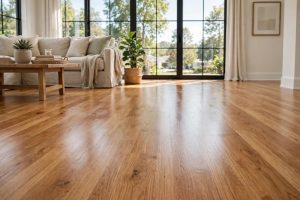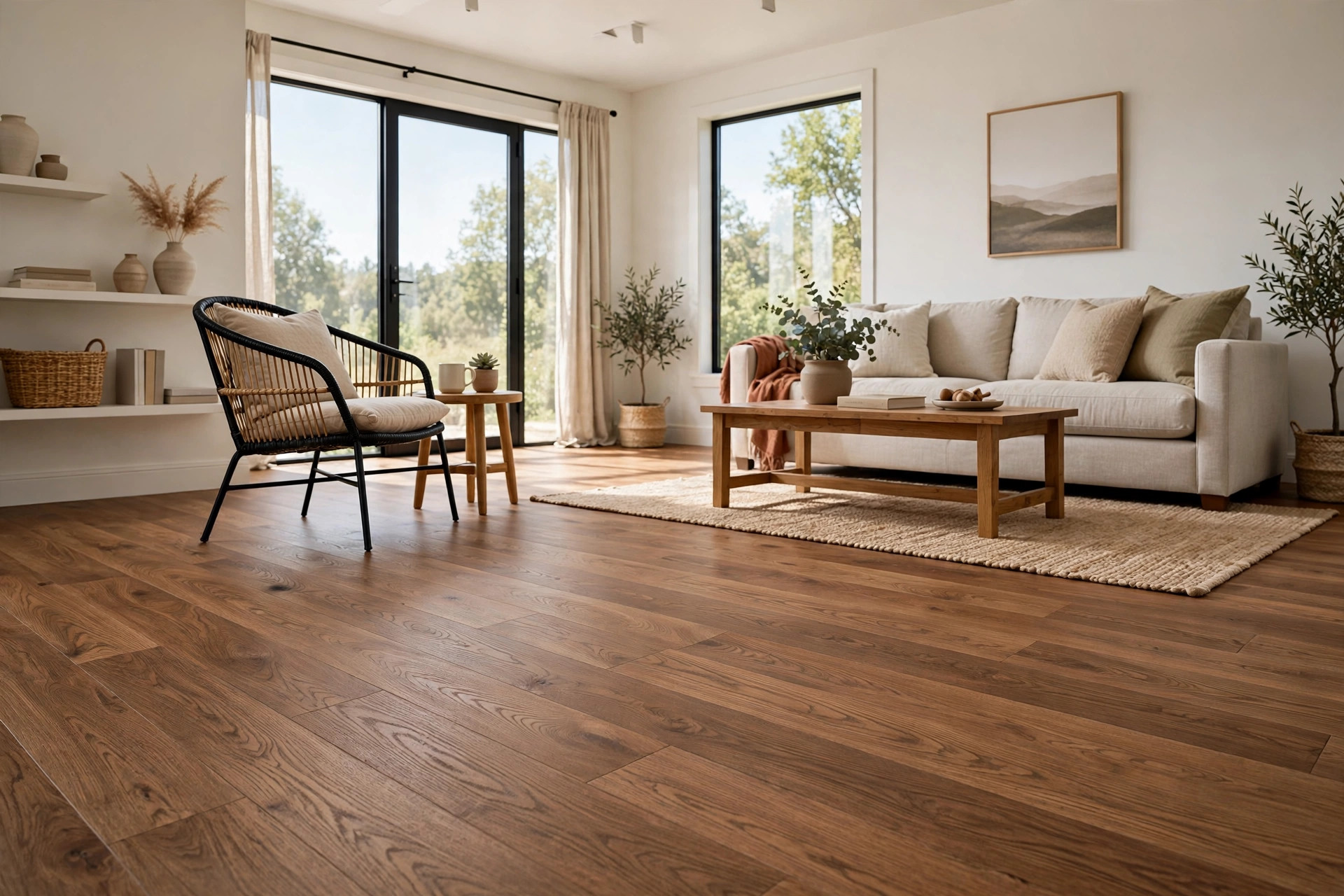

If you are planning a new floor, the engineered hardwood flooring cost per square foot is the first number you must know. It is the price that every estimate, every quote, and every store comparison is built on. This guide explains it in plain terms: what the material costs, what the labor costs, what raises or lowers the figure, and how to buy wisely without overpaying.
Why the Cost per Square Foot Matters
Every flooring job is priced by area. A room of 300 square feet at eight dollars a square foot comes to 2,400 dollars before trim and labor. The same room at twelve dollars comes to 3,600 dollars. That gap is why the engineered hardwood flooring cost per square foot deserves your full attention.
Engineered hardwood is real wood. Each plank has a thin layer of genuine hardwood on top, glued over layers of plywood or fiberboard. It looks like solid hardwood. It feels like solid hardwood. It costs less than solid hardwood and handles moisture and heat better. For kitchens, basements, and homes with radiant heat, it is often the better pick.
Knowing the per-square-foot price lets you compare a store quote with a contractor quote on equal ground. It keeps budgets honest. It stops surprises at the end of the job.
What to Look for When You Compare Prices: Engineered Hardwood Flooring Cost Per Square Foot
Not all engineered hardwood is priced the same, and the differences are real. Here are the points that move the engineered hardwood flooring cost per square foot up or down.
The Wear Layer
The wear layer is the thin sheet of real wood on top of the plank. It is measured in millimeters. A thin layer of 1 or 2 millimeters looks fine at first but cannot be sanded later. A layer of 3 millimeters or more can be refinished once, sometimes twice. Thicker wear layers cost more per square foot. They also add years to the life of the floor.
Wood Species
Oak is the most common choice and sits in the middle of the price range. Maple and hickory cost a bit more. Walnut and exotic woods such as Brazilian cherry cost still more. The species changes the look, the hardness, and the price.
Width and Length
Wide planks look modern and open. They cost more per square foot than narrow strips. Long boards cost more than short ones. If your budget is tight, standard widths are the smart buy.
Finish
Factory finishes include aluminum oxide coatings that resist scratches far better than site-applied varnish. Pre-finished boards cost a little more at the store. They save you the cost and the dust of finishing in the home.
Where You Buy
Big home centers, specialty floor shops, and online sellers all quote different prices. A well-known retailer such as The Home Depot often runs sales on popular lines. Lowe’s matches many of the same products. Specialty makers like Shaw Floors and Mohawk Flooring sell through dealers that can price higher but offer strong warranties. It pays to get at least three written quotes.
Types and Options
Engineered hardwood comes in several forms. Each has its own place in the price range.
Click-lock planks. These snap together without glue or nails. They float over the subfloor. They are the fastest to install, so labor runs lower. They suit basements and concrete slabs.
Glue-down planks. These are glued straight to the subfloor. They feel firm and quiet underfoot. Glue and labor add to the total cost per square foot.
Nail-down planks. These are nailed through the tongue into a wood subfloor. The install takes skill. Labor costs run about the same as solid hardwood install.
Veneer and texture styles. Hand-scraped, wire-brushed, and distressed faces add craft to the look. They add dollars to the engineered hardwood flooring cost per square foot as well.
For shoppers who want a clear picture of brand lines and dealer pricing, LL Flooring lists many engineered collections with per-square-foot prices shown. Daltile, better known for ceramic, also carries wood-look lines; their main site at Daltile shows how wood-look tile prices compare.
Cost and Price: The Numbers
Here is the heart of the matter. In most of the United States today, material prices for engineered hardwood run as follows:
– Budget grade: three to six dollars per square foot for the boards alone. – Mid grade: six to ten dollars per square foot. – Premium grade: ten to sixteen dollars per square foot, sometimes more for wide planks and rare woods.
Labor adds more. Professional installation runs two to six dollars per square foot depending on the method, the region, and the shape of the rooms. Glue-down and nail-down work costs more than floating click-lock. Many contractors can quote the work — but be sure the quote states material and labor separately. For a related project benchmark, see our guide to hardwood floor installation cost near me.
Add trim, transitions, and underlayment. Baseboards, stair nosing, and door thresholds are often priced by the linear foot. Tear-out of old flooring can add one to three dollars per square foot. Hauling the old floor away costs extra in some markets.
Put together, the full installed engineered hardwood flooring cost per square foot usually lands between six and eighteen dollars. A small bedroom may run 1,800 to 3,000 dollars finished. A full main floor of 1,000 square feet may run 8,000 to 15,000 dollars. Get every cost in writing before work starts.
If you are weighing other hard surfaces for part of the house, our breakdown of tile installation cost per square foot usa gives a fair comparison for kitchens and baths.
How to Keep the Price Down Without Regret
Buy for the room, not the dream. A 2-millimeter wear layer is fine for a guest room that sees light use. Save the thick wear layer for the family room.
Measure twice. Add ten percent extra for waste, more for diagonal layouts. Buying too much is wasteful. Buying too little is worse.
Time your purchase. Holiday weekends bring the best floor sales of the year at national chains. Flooring pros at This Old House often note that spring and fall are busy install seasons, when labor prices firm up.
Do the prep yourself. Moving furniture and pulling old baseboards saves real money. Leave the actual install to a pro unless you have done it before.
Ask about the finish warranty. A strong factory warranty protects your investment. The Spruce keeps plain-language guides on reading flooring warranties, which is worth an hour before you sign.
An old floor may not need replacing at all. Sanding and refinishing costs far less than new boards. Our refinishing hardwood floors cost calculator page walks through that math.
Common Mistakes That Raise the Bill
Many floor projects cost more than they should because of avoidable errors. The engineered hardwood flooring cost per square foot is only the starting figure. These mistakes push the final bill higher.
Skipping the moisture test. Wood and water do not mix. A slab or subfloor with too much moisture will cup and buckle the boards. Testing is cheap. Replacing a failed floor is not. A good installer tests before quoting. If your installer skips this step, find another one.
Buying boards before measuring. Guesswork leads to short orders. A second dye lot never matches the first perfectly. Measure every room, add ten percent for waste, and buy it all at once from the same lot.
Ignoring the stairs and thresholds. Stairs take special nosing and extra labor. Doorways need transition strips. These small items are often left out of the first quote and added later. Ask for them in writing up front.
Choosing the thinnest board for the busiest room. A 2-millimeter wear layer in a front hall or kitchen wears through years sooner than a 3-millimeter layer. The small saving per square foot turns into an early replacement. Match the board to the traffic.
Forgetting acclimation. Boxes must sit in the room for two to three days so the wood adjusts to the home. Skipping this step can cause gaps and warping that show up months later and cost good money to fix.
Paying for premium finish where it does not matter. A hand-scraped, wide-plank floor in a rental bedroom is money spent where no one will value it. Save the premium grades for the rooms you live in and see every day.
Each of these errors adds dollars to the engineered hardwood flooring cost per square foot in real terms. A careful plan avoids them all.
Care and Upkeep
Engineered hardwood is easy to live with. Sweep or vacuum it weekly with a hard-floor head. Mop with a damp, not wet, mop and a cleaner made for wood. Never soak the floor. Water is the enemy of every wood floor.
Place felt pads under chair legs. Use rugs at doors to catch grit. Keep pet nails trimmed. Most scratches can be touched up with a stain pen from the floor maker.
Refinishing is possible on boards with a wear layer of 3 millimeters or more. Plan on a professional sand and recoat every ten to fifteen years in busy rooms. Thin-wear boards cannot be sanded; they are replaced when worn.
Safety
Keep the work area clear during installation. Glue-down adhesives give off fumes, so open windows and run fans until the room airs out. Wear a dust mask and eye protection when cutting planks. Stack boxes flat and let them sit in the room for 48 to 72 hours before install so the wood adjusts to the home. Never install below the maker stated moisture limits for the subfloor.
FAQ
What is a fair engineered hardwood flooring cost per square foot installed? For most American homes, six to twelve dollars per square foot installed is fair for mid-grade boards. Premium wide-plank jobs can reach eighteen dollars. Anything far above that deserves a second quote.
Is engineered hardwood cheaper than solid hardwood? Yes, usually. Both the boards and the install cost less than solid hardwood of the same species. The savings come from thinner top wood and faster install methods.
Can it go in a basement? Yes. Floating click-lock engineered hardwood is one of the best wood choices for basements because it moves with small changes in moisture. Follow the maker rules for slab moisture testing.
How long does it last? With a thick wear layer and good care, twenty to thirty years is common. Thin-wear budget boards may last ten to fifteen years in busy rooms.
Does the subfloor affect the price? Yes. A flat, dry, level subfloor keeps labor at the low end. Fixing dips, cracks, or moisture problems can add one to four dollars per square foot before the first plank goes down.
Can I install it myself to save money? Click-lock floating floors are within reach of a careful do-it-yourselfer. Glue-down and nail-down work needs skill and special tools. A bad self-install costs more to fix than a pro would have charged.
A Short Final Word
The engineered hardwood flooring cost per square foot is the key that unlocks every floor budget. Learn the number, learn what moves it, and get it in writing. Choose the wear layer and the species for the room you have, not the room in a catalog. Compare stores and installers, watch the sales, and keep up with simple care. Do these things, and your new wood floor will look right, feel right, and cost what it should.
References
Daltile. (n.d.). Ceramic and porcelain tile. https://www.daltile.com LL Flooring. (n.d.). Hardwood, vinyl, and tile flooring. https://www.llflooring.com Lowe’s. (n.d.). Home improvement products. https://www.lowes.com Mohawk Flooring. (n.d.). Flooring products. https://www.mohawkflooring.com Shaw Floors. (n.d.). Flooring products. https://www.shawfloors.com The Home Depot. (n.d.). Home improvement products. https://www.homedepot.com The Spruce. (n.d.). Home and garden advice. https://www.thespruce.com This Old House. (n.d.). Home renovation guidance. https://www.thisoldhouse.com
Was this guide helpful?

About Sarah Mitchell
The My Garden US editorial team writes practical, in-depth home and garden guides for American homeowners — tested advice, no fluff.
You May Also Like
Flooring Waste Factor Calculator for DIYers: How Much Extra Flooring to Buy
February 23, 2026 0 views
Best Washable Area Rugs for Living Room Use: A Plain Buying Guide
May 14, 2026 0 views
Terrazzo Floor Restoration Cost Near Me: A Plain Guide
January 3, 2026 0 views