
Many homeowners type “exposed aggregate concrete cost near me” into a search bar when they want a driveway or patio that looks better than plain gray concrete. They have seen this kind of surface before. It shows small stones on the top. It feels rough underfoot. It lasts for years. But they do not know what it costs in their own town. That is a fair question. Prices change from one place to another. Labor, stone type, and the size of the job all play a part.
This guide gives a plain answer. It explains what exposed aggregate concrete is. It lists what drives the price up or down. It tells you how to find a good local contractor. It covers care, upkeep, and safety. Every word is written in simple terms. No jargon.
What Exposed Aggregate Concrete Is
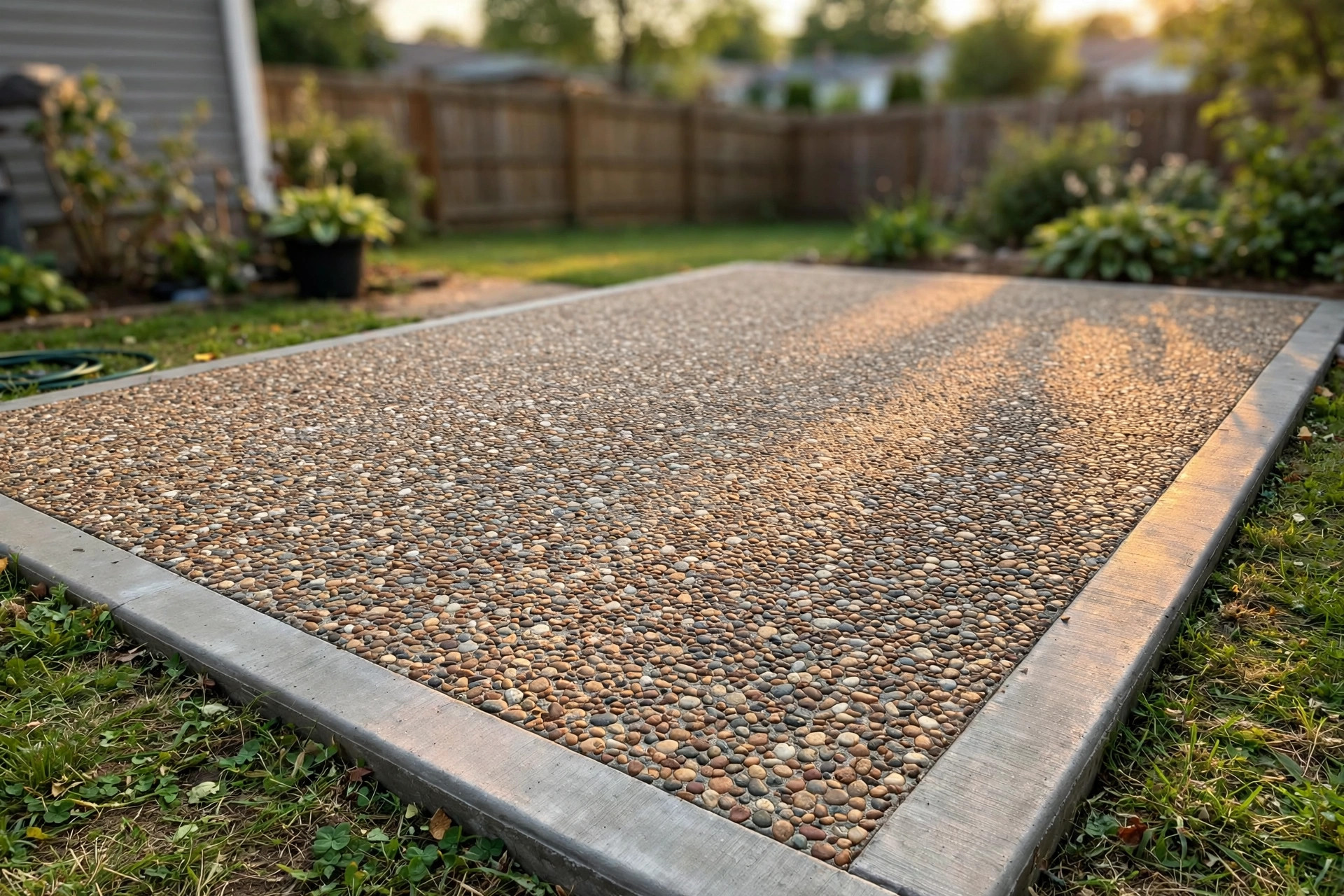
Exposed aggregate concrete is a kind of concrete with the top layer washed away. When the surface is still fresh, the worker removes the thin cement skin. That step reveals the stones inside. Those stones are called aggregate. They can be pebbles, gravel, crushed rock, or small marble chips. The result is a textured surface with color and pattern, and the rough feel gives shoes good grip in wet weather.
Why the Cost Matters to You: Exposed Aggregate Concrete Cost near Me
When you search for exposed aggregate concrete cost near me, you are really asking two questions. What will my project cost? And is the price fair? A driveway can cost several thousand dollars. A small walkway can cost a few hundred. The gap is wide. Without a guide, it is hard to tell a good bid from a bad one.
Knowing the cost helps you plan. You can set a budget before you call anyone. You can compare bids side by side. You can spot a bid that is far too low. A low bid often means thin concrete, cheap stone, or rushed work. That work may crack in a year. Then you pay twice.
Cost also tells you what options you can afford.
What Drives the Price Up or Down
Several factors shape the price. Here are the main ones.
Size of the job. Concrete is priced by the square foot. A bigger area costs more in total but often less per square foot. Contractors give better rates on large jobs because the setup cost is the same.
Stone type. Basic river pebbles are cheap. Colored stones, quartz, or marble chips cost more. Some stones must be shipped from far away. Shipping adds to the bill.
Site work. The ground must be flat and firm. If the crew must remove old concrete, grade the soil, or haul away dirt, you pay for that labor. A sloped yard costs more than a flat one.
Thickness. Driveways need thicker concrete than walkways. Four inches is common for a walk. A driveway that holds cars may need five or six inches. Thicker slabs use more material.
Decorative touches. Borders, curves, saw-cut joints, and stains add cost. Each detail takes time and skill.
Local labor rates. This is why “near me” matters. Wages differ by state and city. A crew in a big city may charge twice what a crew in a small town charges. Fuel and material delivery costs also vary.
Time of year. In cold states, concrete work stops in winter. In the busy summer season, prices can rise. Booking in a slow month may save money.
Typical Price Ranges
No single price fits the whole country. But these ranges give a starting point. Most jobs fall between eight and eighteen dollars per square foot. A simple walkway with basic pebbles may run eight to twelve dollars per square foot. A driveway with colored stone and a border may run fourteen to eighteen dollars per square foot.
Small jobs cost more per foot. A tiny 100 square foot path may cost two thousand dollars. The crew still spends a full day on site.
Large jobs get cheaper per foot. A 1,000 square foot driveway at twelve dollars per foot is twelve thousand dollars. That is a big check. But the per-foot rate is lower than for the small path.
Always get at least three bids. Ask each contractor to break down the price. Labor, materials, site work, and extras should be listed on their own lines. That makes comparison easy.
If you want to compare with other outdoor surfaces, our stamped concrete vs pavers cost comparison walks through the trade-offs in the same plain style.
Types and Options
Not all exposed aggregate looks the same. You have choices.
Pea gravel finish. This is the most common. Small round stones sit in the concrete. It looks like a river bed. It is kind to bare feet. It is a good pick for pool decks.
Crushed stone finish. The stones have sharp edges. The look is more rugged. It grips well in rain and snow. It is a good pick for driveways on hills.
Colored aggregate. The stones come in red, brown, blue, or gray tones. The concrete mix can be tinted too. This choice costs more but gives a custom look.
Glass or shell mix. Some crews mix crushed glass or sea shells into the surface. It sparkles in the sun. It suits patios and garden paths. It is not the best choice for driveways because it can be less tough.
Brushed borders. Many jobs add a smooth brushed edge around the rough center. The border frames the work. It adds a small cost but lifts the look.
Ask to see sample boards. Look at them in daylight, and wet them with water. Wet stone shows the true color of the finished job.
How to Find a Good Local Contractor
Typing “exposed aggregate concrete cost near me” is only the first step. The next step is finding the right crew. Use these steps.
Ask for photos. A real portfolio shows finished jobs, not stock pictures.
Ask how long they have done this work. Exposed aggregate is a skill. The wash-off step must happen at the right time. Too early and the stones fall out. Too late and the surface is too smooth. Experience counts.
Check reviews. Read recent reviews from local customers. Look for notes about on-time work, clean sites, and honest pricing.
Ask about the mix. A good crew tells you the thickness, the stone type, and the sealer they use. Vague answers are a warning sign.
Get it in writing. The contract should list the size, the price, the start date, and the payment plan. Never pay the full amount up front. A common plan is one third to start, one third at the pour, and the rest when you approve the finished work.
Ask about permits. Some towns need a permit for a new driveway. A good contractor knows the local rules and helps with the paperwork.
What to Look For on Bid Day
When the crew arrives to give a price, watch for these signs of a pro.
They measure the site with care. They talk about drainage. They ask where water flows in a storm. They note tree roots and soft soil. They explain the steps in plain words.
A weak bidder rushes the visit. He gives a price off the top of his head. He cannot name the stone he will use. He asks for cash up front. Walk away from that deal.
Also compare timelines. A small walkway may take two or three days. A full driveway may take a week. Weather can push dates. A good contractor gives a range, not a promise carved in stone.
Cost and Price Details
Let us put numbers to common projects. These are rough guides for a typical American town in 2026. Your town may differ.
– Front walkway, 4 feet by 25 feet (100 square feet): $1,200 to $2,000. – Small patio, 12 feet by 12 feet (144 square feet): $1,700 to $2,600. – Two-car driveway, 20 feet by 40 feet (800 square feet): $8,000 to $14,000.
Add-ons change the math. Old concrete removal can add $2 to $4 per square foot. A colored mix can add $1 to $3 per square foot. A sealer coat, which we discuss below, can add $1 to $2 per square foot.
Payment plans vary. Some crews offer no financing. Others partner with lenders. If you borrow, read the loan terms with care.
Home improvement retailers such as Home Depot and Lowe’s carry sealers, tools, and repair products for concrete work, which helps when you price the upkeep side of a project. For broader guidance on hiring and project planning, This Old House publishes step-by-step advice aimed at homeowners. Design ideas and upkeep tips appear regularly on The Spruce.
Care and Upkeep
Exposed aggregate is tough, but it still needs care. Follow these simple rules.
Seal it. A clear sealer protects the stones and the concrete. It blocks stains from oil, leaves, and rust. It also deepens the color. Apply a sealer after the concrete cures, usually within a month. Reapply every two to three years. In harsh climates, seal more often.
Clean it. Sweep leaves and dirt off the surface. Wash it with a garden hose in spring. For tough spots, use a pressure washer on a low setting. Hold the nozzle at least a foot away. Too much pressure can loosen the stones.
Fix cracks early. Small cracks are normal in concrete. Hairline cracks can be filled with a concrete crack filler. Large cracks or sunken slabs need a pro. Do not wait. Water gets into cracks and freezes in winter.
Avoid harsh chemicals. De-icing salts can harm concrete. Use sand for grip in winter instead. If you must use a de-icer, pick one labeled safe for concrete.
Watch the edges. The edge of a slab takes the most wear. Keep soil and mulch level with the slab, not piled against it. That stops water from sitting at the edge.
Good upkeep keeps the surface looking new for twenty years or more. Neglect cuts that life in half.
Flooring and tile product makers such as Daltile, Mohawk Flooring, Shaw Floors, and LL Flooring offer care guides and product lines that, while aimed at indoor floors, teach useful lessons about sealing and surface care that apply outdoors too.
Safety
Exposed aggregate is one of the safer outdoor surfaces, but a few points matter.
Grip. The rough texture gives good footing. Still, algae can grow in shady spots. Algae turns the surface slick. Clean shaded areas each spring to stop the growth.
Edges and joints. Saw-cut joints can have sharp lips if they chip. Walk the surface once a year. Grind down or fill any sharp spots.
Children and bare feet. Pea gravel finishes are gentle. Crushed stone finishes can scrape bare feet. Pick the right finish for how you use the space. A pool deck should be barefoot-friendly.
Night lighting. A dark path is a trip risk. Add low lights along walkways and steps. Solar lights are cheap and easy to fit.
Load limits. Do not park heavy trucks on a walkway slab. Slabs are built for their planned load. Overloading cracks them.
FAQ
How long does exposed aggregate concrete last? With good care, twenty to thirty years. Sealing and quick crack repair are the two habits that add the most life.
Can it be repaired if it stains? Yes, in most cases. Oil and rust stains can be lifted with a concrete cleaner and a stiff brush. Deep stains may need a pro with a surface grinder. Sealing after the repair stops the stain from coming back.
Is it slippery when wet? It grips better than smooth concrete. The stones break up the water film. Still, algae or moss can make it slick. Keep the surface clean, and it stays safe.
Can I pour it myself to save money? A small garden path is a fair do-it-yourself project if you have skill with concrete. Driveways and large patios are not. The wash-off timing is hard for a first-timer. Mistakes are costly to fix. Most homeowners do better hiring a crew.
Does cold weather damage it? Freeze and thaw cycles stress all concrete. Proper thickness, good drainage, and regular sealing protect it. Avoid de-icing salt, which speeds up surface wear.
Indoor Transitions Worth Knowing
Many homes pair an outdoor concrete slab with indoor floors. Where the two meet, the joint needs care. Our guide to best transition strips for uneven floors usa shows how to bridge height gaps cleanly. If you tile the indoor side yourself, our tile leveling system reviews for diyers usa can help you get a flat, even result.
A Short Final Word
Searching for exposed aggregate concrete cost near me is a smart first move. Now you know what shapes the price. You know what to ask a contractor. You know how to care for the surface once it is down.
Take your time. Get three bids. Check the work of each crew. Pick the one with clear answers and a fair price, not the cheapest bid on the page. A well-built exposed aggregate driveway or patio will serve you for decades. It will look good doing it. That is money well spent.
References
Daltile. (n.d.). Ceramic and porcelain tile. https://www.daltile.com LL Flooring. (n.d.). Hardwood, vinyl, and tile flooring. https://www.llflooring.com Lowe’s. (n.d.). Home improvement products. https://www.lowes.com Mohawk Flooring. (n.d.). Flooring products. https://www.mohawkflooring.com Shaw Floors. (n.d.). Flooring products. https://www.shawfloors.com The Home Depot. (n.d.). Home improvement products. https://www.homedepot.com The Spruce. (n.d.). Home and garden advice. https://www.thespruce.com This Old House. (n.d.). Home renovation guidance. https://www.thisoldhouse.com
Was this guide helpful?

About Robert Taylor
The My Garden US editorial team writes practical, in-depth home and garden guides for American homeowners — tested advice, no fluff.
You May Also Like
Garage Floor Tiles Interlocking Reviews USA: What Buyers Say
June 21, 2026 0 views
Slate Tile Flooring for Entryway Spaces: A Practical Guide for American Homes
March 10, 2026 0 views
Trex vs TimberTech Decking Comparison for USA Homeowners
June 20, 2026 0 views