Few floor coverings stir up as much interest as marble look porcelain tile. Every year, marble look porcelain tile reviews usa readers write on retailer sites and home forums tell the same story. People want the calm beauty of marble. They do not want the cost or the care that real marble demands. Porcelain tile with a marble pattern answers that wish. It looks like stone. It behaves like a hard-fired ceramic.
This guide collects what those reviews and buyer reports have to say. It walks through why this tile sells so well, what to check before you buy, the finishes and sizes you will meet, the prices charged across the country, and the steps that keep the floor looking new. By the end, you will know how to read marble look porcelain tile reviews usa shoppers post with a sharper eye, and how to choose tile you will still love ten years from now.
Why Marble Look Porcelain Tile Has Become So Popular
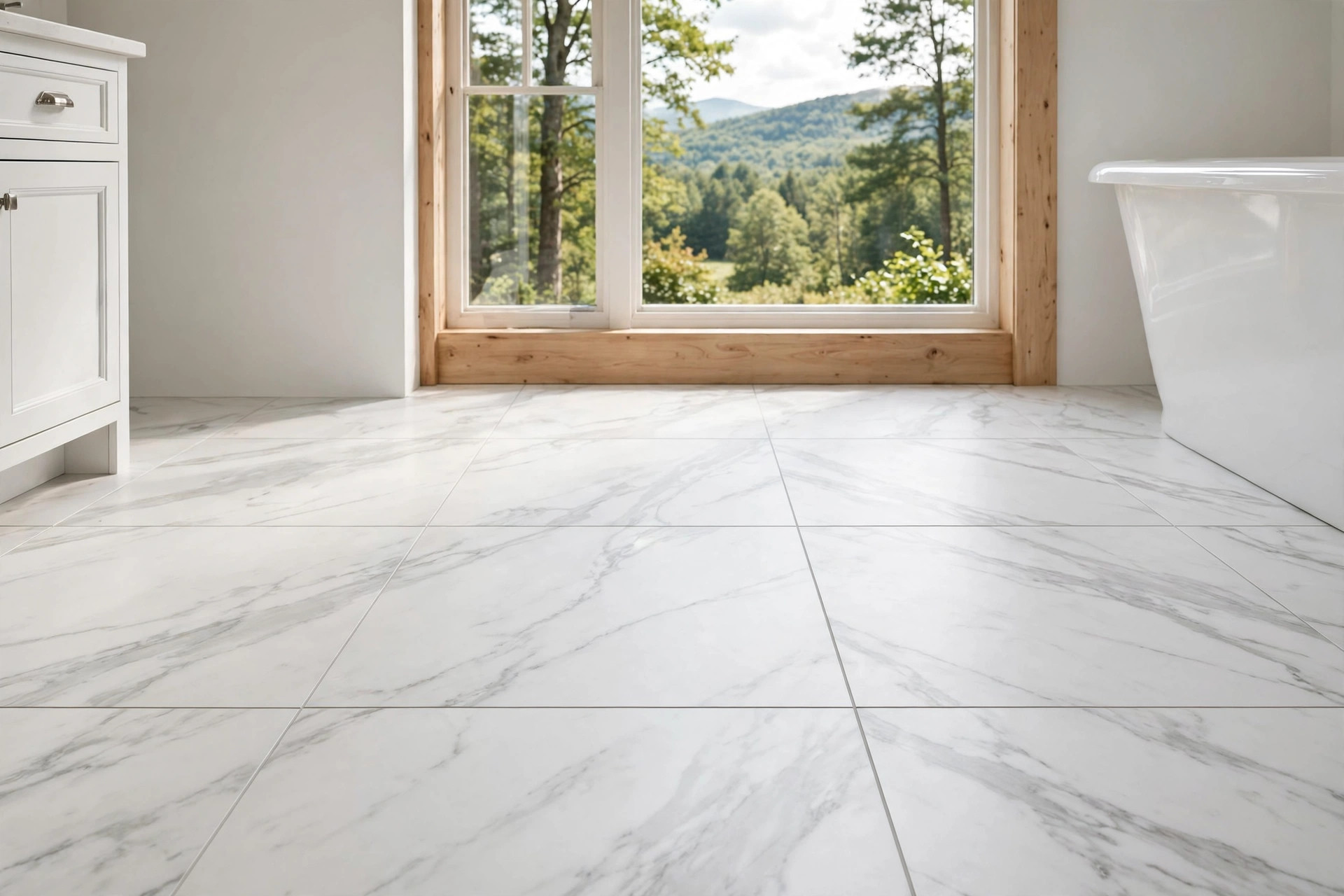
Real marble has graced fine homes for centuries. It has also kept its high price and its habit of staining. A glass of red wine or a splash of lemon can leave a mark that no polish fully removes. Marble look porcelain tile solves the second problem while copying the first one’s beauty. Modern printing can lay soft gray veining on a white ground with a realism that fools most eyes. Some tiles even copy the slight texture of polished stone.
Reviews keep pointing to three reasons for the boom. First is price. A good porcelain tile that mimics Carrara marble often costs a third of the real stone. Second is strength. Porcelain is fired hotter than common ceramic, so it resists scratches and chips better. Third is ease. Porcelain does not need sealing every year the way marble does. For busy households with children and pets, that ease matters a great deal.
Style is the fourth reason, if one counts it. White and gray floors suit almost every room. They make small bathrooms feel larger. They give kitchens a clean, calm base. Design sites note that the marble look never quite leaves fashion, which helps resale value too.
What Marble Look Porcelain Tile Is and How It Is Made: Marble Look Porcelain Tile Reviews Usa
Porcelain tile is a dense ceramic body fired at very high heat. The heat drives out nearly all water absorption. The result is a hard, glassy tile that handles wet rooms well. To make it look like marble, makers print high-resolution images of real stone slabs onto the tile surface. Digital inkjet printers lay down many layers of color, so the veins carry depth and shade rather than a flat gray line.
Some brands add what they call through-body color. The tile body matches the surface tone, so a small chip shows a similar color instead of a dark edge. Others rely on a glaze for the pattern. Both kinds appear in marble look porcelain tile reviews usa buyers leave, and both can last many years if the rating fits the room.
Retailers like the Home Depot tile department and Lowe’s flooring selection carry dozens of marble-look lines. Shoppers can compare names such as Calacatta and Carrara patterns side by side on the shelf.
What to Look for When You Read Marble Look Porcelain Tile Reviews
Reviews vary in quality. A careful reader learns to sort them. The notes below mark what matters most.
Shade, Veining, and Finish
No two lines of marble-look tile are alike. Carrara prints carry soft, feathery gray veins on a warm white ground. Calacatta prints carry bolder, darker veins with more contrast. Statuario sits between them. Study the photos in reviews, and read the comments about shade. Shoppers often warn that the tile on their floor looked slightly darker or cooler than the picture on the box. Ordering a sample board before you buy the full lot avoids this surprise. Samples usually cost a few dollars and save many headaches.
The finish changes the feel of the room. Polished tile reflects light and looks rich. Matte tile hides footprints and dust better. A honed finish sits in the middle, soft but not shiny. Reviews from families with dogs often praise matte for hiding marks.
Size, Edge, and Layout
Most marble-look porcelain comes in 12 by 24 inch or 24 by 48 inch pieces, though smaller squares remain common. Larger pieces mean fewer grout lines and a closer copy of real stone slabs. They also need a flatter floor and a more skilled installer. Rectified edges, which are cut square after firing, let tiles sit nearly tight together. Reviews often note that rectified tile gives the most stone-like result.
Durability Ratings
Tile carries a wear rating called the PEI scale, which runs from 1 to 5. For floors in main living areas, buyers should look for PEI 4 or 5. Bathrooms can accept lower ratings since foot traffic is lighter and often barefoot. The coefficient of friction tells you about slip. A value of 0.42 or higher suits wet areas. Shoppers who skip these numbers sometimes learn the hard way, so reviews often mention them by name.
Types and Options You Will See in Reviews
Polished, Matte, and Honed Finishes
Polished marble-look porcelain gleams. It bounces light across bathrooms and entryways and looks closest to honed real marble that has been polished. The trade-off is grip. Water on a polished floor can turn slick, so reviews advise care in showers and around tubs.
Matte finishes grip better and hide dust. They suit kitchens, mudrooms, and homes with pets. Honed finishes offer a middle path: a soft sheen without a mirror gloss. Many buyers pick honed for whole-house installations so the look stays even from room to room.
Large Format Pieces and Classic Sizes
Large format tile, usually 24 inches or more on one side, has become the favorite in reviews for its grand look. A 24 by 48 inch piece covers the area of four standard squares. With rectified edges and narrow grout joints, the floor reads almost like one sheet of stone. The cost of setting such pieces runs higher, since large tiles need flat subfloors and two-person handling.
Classic 12 by 24 inch tiles cost less to install and suit small rooms. They also suit do-it-yourself projects, since one person can lift and set them. Some lines add a 3 by 12 inch subway shape for shower walls, giving a full-room marble scheme.
Through-Body and Glazed Porcelain
Through-body porcelain carries its color all the way through the tile. A chip at the edge shows nearly the same tone as the face. This makes it a strong pick for busy floors. Glazed porcelain carries the pattern in its surface glaze over a colored body. The glaze can take sharper, more detailed prints, so some of the most realistic marble copies are glazed. Both types appear in reviews with high marks; the choice comes down to traffic level and budget.
Cost and Price in the USA
Prices for marble look porcelain tile range wide. At large home centers, basic 12 by 24 inch tiles sell for about 1.50 to 3 dollars per square foot. Mid-range lines with sharper prints and rectified edges run 3 to 6 dollars. Designer or imported lines can reach 8 to 12 dollars per square foot.
Installation adds a second layer of cost. Labor in most parts of the country runs 4 to 10 dollars per square foot for standard sizes, more for large format pieces. Reviews on trade sites remind readers that a straight hallway costs less per foot than a bathroom with many cuts. Materials such as thinset, grout, and underlayment add another 2 to 4 dollars per square foot.
For a 200 square foot kitchen, a fair all-in estimate is 2,000 to 4,000 dollars with mid-range tile and professional labor. Doing the setting work yourself cuts the labor share, though reviews warn that large pieces are hard for beginners. Shoppers comparing brands often start at Daltile, which publishes wide price bands, and at LL Flooring for budget lines.
Installation: What the Reviews Often Warn About
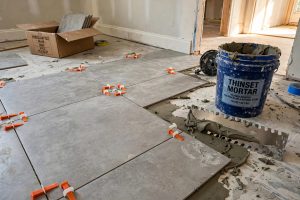
Many reviews focus less on the tile itself than on the setting. Marble-look porcelain punishes poor prep. The floor below must be flat. Industry rules ask for no more than a quarter inch of dip over ten feet for large tiles. Skipping this step leads to lippage, where one tile edge sits higher than its neighbor. Catching light, the edge casts a shadow that ruins the stone illusion.
Buyers should also buy 10 to 15 percent more tile than the room measures. Cuts around doors, vents, and corners eat pieces. Dye lots matter too. Tile from different production runs can shift in shade, so reviews advise checking the lot number on every box before the installer starts. Mixing lots mid-floor is a common regret.
Grout color shapes the final look. Light gray or warm white grout keeps the marble feel. Dark grout draws lines across the floor and breaks the illusion. Narrow joints of one sixteenth to one eighth inch suit rectified tile best.
Care and Upkeep
Porcelain asks little. Sweep or vacuum weekly to keep grit from grinding across the glaze. Mop with warm water and a mild cleaner. Harsh acids and bleach can dull some glazes over time, so reviews favor pH-neutral cleaners. This Old House and The Spruce both carry care guides that repeat this advice.
Grout needs more care than the tile itself. Epoxy grout resists stains best but costs more and sets fast. Cement grout with a sealer works for most rooms and can be resealed every few years. In showers, reviews suggest a squeegee after each use to slow soap scum and mildew.
Because porcelain does not absorb water, it never needs the yearly sealing that real marble demands. That single fact may be the biggest reason buyers leave happy reviews.
Marble Look Porcelain Compared with Real Marble Tile
Shoppers who also weigh real stone should know the trade-offs. Real marble brings a depth that no print fully matches, and each piece is one of a kind. It also stains, etches, scratches, and costs more both to buy and to set. Porcelain brings even patterns, hard wear, and low care at a lower price.
Reviews often land in the middle. Buyers who love the look but live with children, pets, or busy kitchens choose porcelain. Buyers who want the true stone and accept its needs choose marble. Homeowners planning marble bathroom floor tile pros and cons research often read both kinds of reviews before deciding.
Safety Considerations
Tile safety starts with slip. Porcelain used on bathroom or entry floors should carry a dynamic coefficient of friction rating fit for wet areas. Matte finishes grip better than polished ones, which is why reviews from families often favor matte in showers and around pools.
Lippage is a trip issue as well as a beauty issue. Proper floor prep and skilled setting keep edges flush. During installation, keep the work area clear and ventilated, since cutting tile makes dust. A wet saw with a proper blade cuts porcelain cleanly and keeps dust down.
For homes with radiant heat under the tile, check that the tile rating allows warm floors. Many marble-look lines do, and buyers pairing the two often read up on radiant floor heating installation cost usa before they commit.
Frequently Asked Questions
Does marble look porcelain tile really look like real marble? From a normal viewing distance, yes. High-resolution prints copy the veining of real slabs closely. Up close, the pattern repeats in ways real stone does not, since tiles come from a fixed set of printed faces. Asking for the number of faces in a line helps; more faces mean less repetition.
Is porcelain tile good for shower walls? It is one of the best choices. Porcelain barely absorbs water, and marble-look prints give showers a spa feel at a modest price. Buyers researching best tile for shower walls reviews usa often land on marble-look porcelain as the top pick. Use a matte or textured tile on shower floors for grip.
How long does marble look porcelain tile last? With correct installation, porcelain floors last 20 to 50 years. The glaze on floor-rated tile resists wear far longer than most owners will live in the home. Chips and cracks can happen from heavy dropped objects, which is why keeping spare tiles from the same dye lot is wise.
Can I install it over existing tile or vinyl? Sometimes. The old floor must be firm, flat, and well bonded. A primer or membrane may be needed. Reviews warn that adding a layer raises floor height, which can clash with doors and thresholds. When in doubt, removing the old floor is the safer path.
Why do reviews mention dye lots so often? Tile fired in different batches can vary in shade. A box from lot A and a box from lot B may not match on the floor. Buyers who check lot numbers before buying avoid this. If you must mix lots, blending boxes from the start spreads the difference so it does not show as a sharp line.
Is polished marble-look porcelain too slippery for bathrooms? Polished tile can be slick when wet. Many buyers use polished on walls and matte on floors, or choose a honed finish for the whole room. Check the slip rating, and read reviews from owners with similar rooms before deciding.
A Short Final Word
Marble look porcelain tile earns its strong reviews. It offers the beauty of marble, the strength of porcelain, and a price that fits many budgets. Read reviews with care. Order samples. Check dye lots. Hire a setter who levels the floor. Do these things, and the tile you choose will reward you for decades.
Buyers who want a second opinion before ordering can compare notes at Shaw Floors, which publishes buyer guides, at Mohawk for care and warranty details, and at Consumer Reports, which tests flooring durability. Bob Vila also carries plain-spoken reviews of popular tile lines.
References
Bob Vila. (n.d.). Home improvement advice. https://www.bobvila.com Consumer Reports. (n.d.). Product reviews and ratings. https://www.consumerreports.org Daltile. (n.d.). Ceramic and porcelain tile. https://www.daltile.com LL Flooring. (n.d.). Hardwood, vinyl, and tile flooring. https://www.llflooring.com Lowe’s. (n.d.). Home improvement products. https://www.lowes.com Mohawk Flooring. (n.d.). Flooring products. https://www.mohawkflooring.com Shaw Floors. (n.d.). Flooring products. https://www.shawfloors.com The Home Depot. (n.d.). Home improvement products. https://www.homedepot.com The Spruce. (n.d.). Home and garden advice. https://www.thespruce.com This Old House. (n.d.). Home renovation guidance. https://www.thisoldhouse.com
Was this guide helpful?

About Emily Rodriguez
The My Garden US editorial team writes practical, in-depth home and garden guides for American homeowners — tested advice, no fluff.