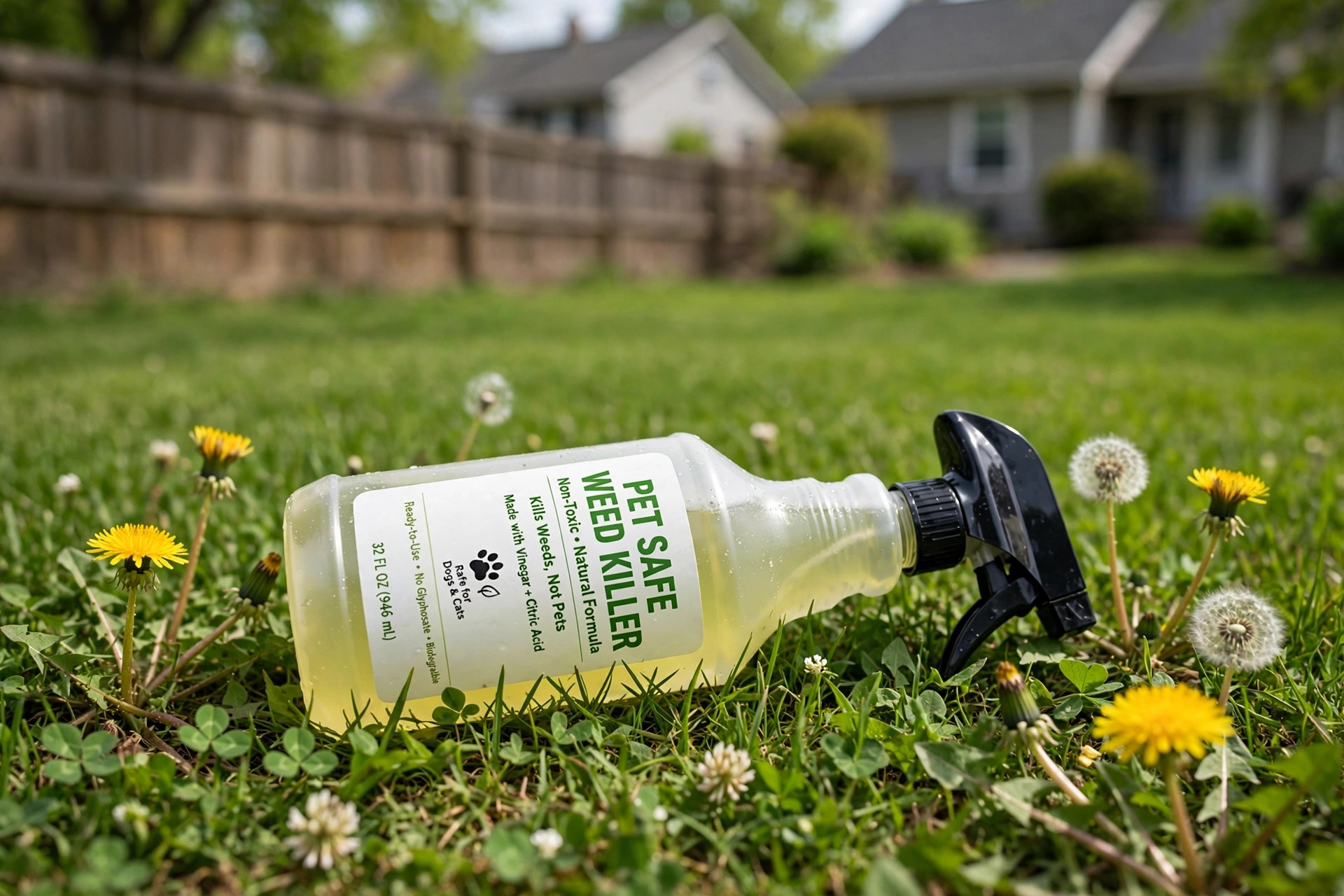

A clean lawn and a healthy dog belong together. Dogs run, roll, and sniff across the grass each day. They lick their paws when they come inside. They chew blades of grass when their stomachs feel uneasy. Because of this, the best pet safe weed killer for lawns dogs use must work without leaving poison behind. A weed killer that is safe for pets lets a homeowner fight dandelions and crabgrass without putting the family dog at risk. This guide explains why pet safe products matter, what to look for, which types exist, what they cost, and how to keep a yard safe season after season.
Why Pet Safe Weed Killer Matters for Dog Owners
Many standard weed killers use strong chemical sprays. Some of these sprays can stay on the grass for days. Dogs absorb chemicals through their paws. They swallow grass when they chew it. Small dogs and puppies face the greatest risk because their bodies are smaller. Older dogs with weak livers also need extra care.
A pet safe weed killer uses milder active ingredients. Common ones include vinegar, citric acid, corn gluten meal, and iron-based formulas. These break down fast in soil and air. Most leave little or no residue on the grass after drying. This does not mean they are harmless in all cases. A dog should not drink the bottle or lick wet spray. But once dry, pet safe products are far less likely to cause harm than standard lawn chemicals.
Dog owners also care about the look of the yard. Weeds such as clover, dandelions, and thistles spread fast if left alone. They choke out grass and leave bare patches. Bare dirt turns to mud in rain, and dogs track that mud indoors. A safe weed killer keeps the lawn thick and green, which gives dogs a clean place to play. For more ideas on keeping the whole yard safe for pets, see our guide on pet friendly pest control for yard and home.
What to Look for When You Choose: Best Pet Safe Weed Killer for Lawns Dogs
Read the label before you buy. The label tells the story. Look for words such as “pet safe,” “pet friendly,” or “safe for pets when used as directed.” These phrases are not regulated the same way for every product, so the rest of the label still counts. Check the active ingredients list. Simple, short lists are easier to judge than long chemical names.
Look for a stated dry time. Many products claim pets may return once the spray has dried. A clear dry time, often one to three hours, shows the maker has tested the product with animals in mind. If the label says nothing about pets, treat that as a warning sign.
Consider the form of the product. Ready-to-use spray bottles are easy to aim at single weeds. Concentrates cost less per gallon but need mixing. Granules spread across large areas with a spreader. Sprays work fast and dry fast. Granules last longer but take time to break down. Pick the form that fits the size of the weed problem.
Check the weed list on the label. Not every product kills every weed. Some target broadleaf weeds such as dandelions. Others target grassy weeds such as crabgrass. A few claim to stop weeds before they grow. Match the product to the weeds in the yard. The ASPCA (https://www.aspca.org) offers general guidance on keeping pets away from lawn chemicals, which is worth reading before any treatment.
Types of Pet Safe Weed Killers
Several types exist. Each has strengths and limits. Understanding them helps a buyer choose with care.
Vinegar and citric acid sprays. These are contact killers. They burn the leaves of the weed on contact. They work best on young weeds in hot, sunny weather. They often need more than one application. They do not kill deep roots well, so tough weeds may grow back. They are among the most dog friendly choices because the ingredients are simple food acids.
Iron-based sprays. These products use chelated iron to kill broadleaf weeds. The weed leaves turn black and die within a day or two. Grass is left unharmed. These products are popular for lawns because they target dandelions and clover while sparing turf. They dry fast and leave iron that soil can use.
Corn gluten meal. This is a pre-emergent product. It stops weed seeds from sprouting. It does not kill weeds that are already growing. It also adds nitrogen to the lawn, which feeds the grass. It must go down at the right time in spring and fall to work. It is fully natural and safe for dogs right away.
Soap-based and oil-based sprays. Some products use fatty acids or plant oils. These break down the outer layer of weed leaves. They act fast on small weeds. They need full coverage of the weed to work well. They are low risk for pets once dry.
Boiling water and hand pulling. The oldest methods still work. Boiling water kills weeds along walkways and patios. A hand tool pulls weeds by the root. These cost nothing and carry zero risk to dogs. They take time and effort, which makes them best for small yards or spot work. For feeding the lawn after weed work, our article on best pet safe lawn fertilizer for dog owners pairs well with this topic.
Cost and Price
Pet safe weed killers cost a little more than standard chemical sprays. A ready-to-use spray bottle of 32 ounces often costs between eight and fifteen dollars. A one gallon jug of concentrate may cost between twenty and forty dollars and make several gallons of spray. Granular corn gluten meal costs more, often thirty to sixty dollars for a bag that covers five thousand square feet.
Homeowners should compare cost per treatment, not just the sticker price. A cheap product that needs five applications costs more in the end than a stronger one that needs two. Large yards make concentrates the better buy. Small yards do fine with ready-to-use bottles. Natural products may need repeat use, so buyers should plan for two or three treatments per season. Set a yearly budget of fifty to one hundred dollars for a typical suburban lawn.
Care and Upkeep After Treatment
A weed killer is only part of lawn care. A thick lawn crowds out weeds on its own. After treatment, water the lawn deeply but not too often. Deep watering trains grass roots to grow down. Mow at a higher blade setting, around three to four inches. Taller grass shades the soil and blocks weed seeds from light.
Fill bare spots with seed in fall. Bare dirt invites weeds in spring. Aerate compacted soil so grass roots can breathe. Test the soil if weeds keep coming back year after year. Poor soil grows poor grass, and poor grass loses the fight to weeds. Keep the mower blade sharp, since ragged cuts stress the grass and open it to disease.
Store weed killer products in a locked shed or high shelf. Dogs are curious. A chewed bottle can harm even a mild product. Keep the measuring cup and sprayer clean and separate from pet supplies. Wash hands after handling any lawn product. Yards often have ant mounds as well as weeds, so it helps to plan both treatments together; our guide on best pet safe ant killer for yard dogs covers safe choices for that job.
Safety Rules Every Dog Owner Should Follow
Even the safest product needs care. Follow these rules each time.
Keep dogs off the treated area until the product is fully dry. This is the single most important rule. Drying usually takes one to three hours in warm weather. Longer in cool or damp air. When in doubt, wait longer.
Water the lawn lightly after the waiting period if the label allows it. A light rinse can wash any leftover film off the grass blades. Do not overwater right after a contact spray, since that can wash the product off the weeds too soon.
Watch the dog for the first day after treatment. Signs of trouble include heavy drooling, vomiting, paw licking, or red skin. Call the veterinarian if any of these appear. Keep the product bottle nearby when calling, so the vet can read the ingredients.
Fence off treated patches with temporary garden fencing. Dogs tend to roll in the exact spot that was just sprayed. A small fence keeps them on clean grass. Remove the fence once the area is dry and safe.
Never spray on windy days. Drift carries spray onto dog toys, water bowls, and garden beds. Spray in the early morning or evening when the air is calm. Move bowls and toys indoors before starting.
Frequently Asked Questions
How long should dogs stay off the lawn after weed killer is applied? Wait until the product is fully dry. For most pet safe sprays this takes one to three hours. In cool or humid weather, wait four hours or more. When the grass feels dry to the touch, it is usually safe. Read the label for the exact wait time of the product in use.
Is vinegar weed killer safe for dogs? Household vinegar sprays are among the safest options. The smell fades fast and the acid breaks down in soil. Strong horticultural vinegar, which is much more concentrated, can burn skin and paws. Keep dogs away until the area is dry, and do not let them drink from puddles of the mix.
Will pet safe weed killer harm cats or other pets? Products made for dog safety are usually safe for cats and other small pets as well. Cats groom their paws more, so keep them off wet spray just the same. Rabbits and guinea pigs that graze on grass need extra caution. Wait until after a rain or a deep watering before letting grazing pets back on treated grass.
Do pet safe weed killers really work? They work, but often slower than harsh chemicals. Vinegar and iron sprays may need two or three passes on tough weeds. Corn gluten meal only stops new weeds and must be timed right. For best results, combine a safe product with good mowing, watering, and overseeding. A healthy lawn is the strongest weed killer of all.
Can I make my own pet safe weed killer at home? Yes. A common mix is one gallon of white vinegar, one cup of salt, and one tablespoon of dish soap. It kills young weeds on contact. Use it with care. Salt can harm soil and nearby plants if overused. Keep it off the main lawn and use it on paths and edges instead. Never use salt mixes where dogs dig and chew the soil.
What should I do if my dog licks treated grass? Rinse the dog’s mouth with clean water if it licks wet spray. Offer fresh water to drink. Watch for drooling or vomiting over the next few hours. Most mild exposures pass without harm. If symptoms last or worsen, call the veterinarian and bring the product label along. The PetMD site (https://www.petmd.com) has guidance on common lawn chemical exposures in dogs.
A Short Final Word
The best pet safe weed killer for lawns dogs enjoy is the one used with care. Choose a product with simple ingredients. Aim it at the weeds, not the whole yard. Keep dogs off the grass until it dries. Then keep the lawn thick with good mowing and watering so weeds stay away on their own. A little extra effort buys peace of mind. The dog gets a green yard to run in, and the owner gets a yard worth looking at. Both win.
For more background, see Chewy, American Kennel Club, and The Spruce Pets. See The Home Depot for more detail. See also Petco and PetSmart for further detail.
References
American Kennel Club. (n.d.). Dog care and training resources. https://www.akc.org ASPCA. (n.d.). Pet care and animal welfare resources. https://www.aspca.org Chewy. (n.d.). Pet supplies. https://www.chewy.com Petco. (n.d.). Pet supplies and services. https://www.petco.com PetMD. (n.d.). Pet health information. https://www.petmd.com PetSmart. (n.d.). Pet supplies and services. https://www.petsmart.com The Home Depot. (n.d.). Home improvement products. https://www.homedepot.com The Spruce Pets. (n.d.). Pet care guides and product reviews. https://www.thesprucepets.com
Was this guide helpful?

About Michael Thompson
The My Garden US editorial team writes practical, in-depth home and garden guides for American homeowners — tested advice, no fluff.
You May Also Like
Pet Steps for Truck Bed Access for Large Dogs
May 20, 2026 0 views
Best Dog Ear Cleaner for Floppy Eared Breeds
May 18, 2026 0 views
A Cat Litter Box with Top Entry for Dogs: What to Know Before You Buy
April 22, 2026 0 views