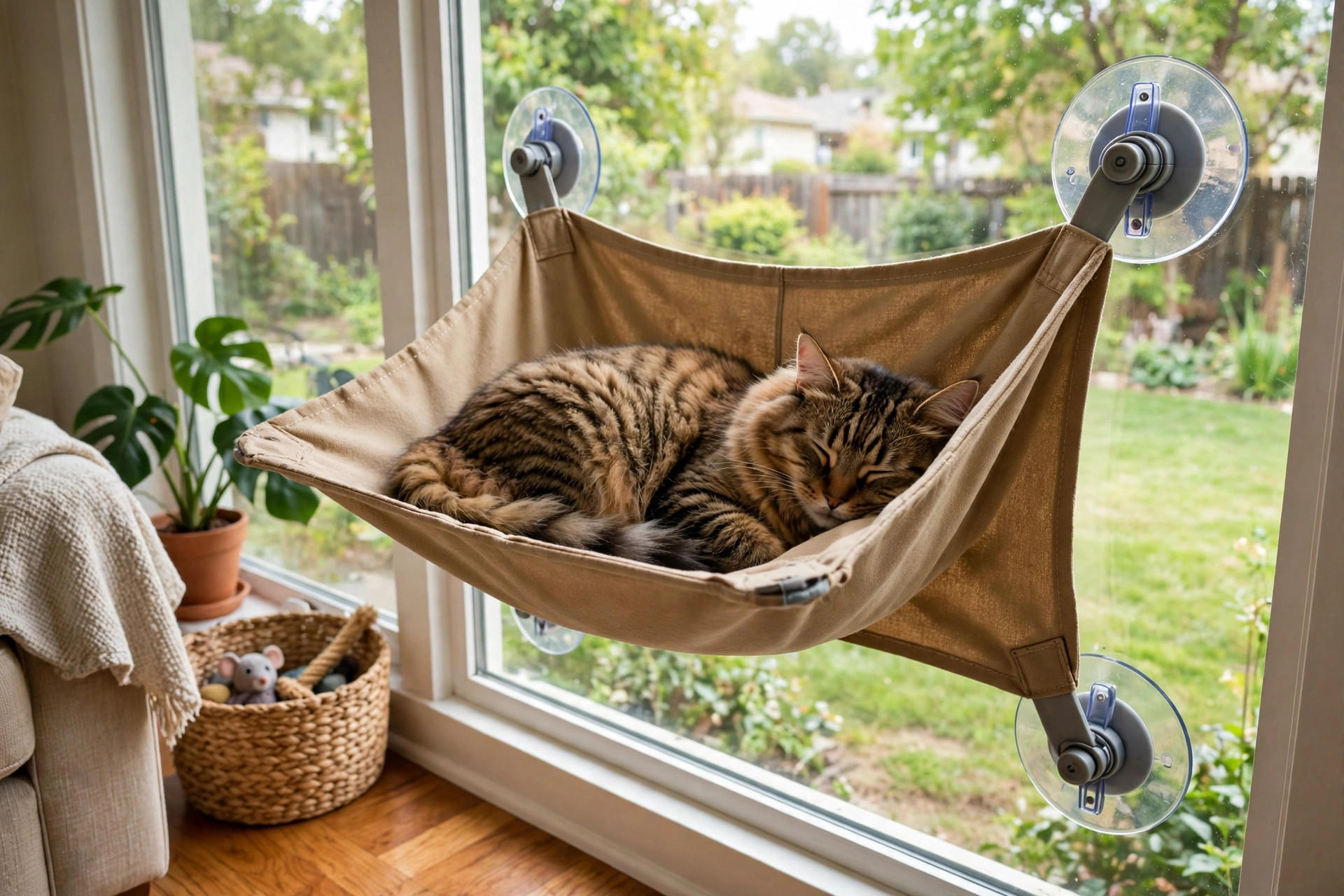

Cats love windows. They sit by the glass for hours. They watch birds. They watch leaves move in the wind. They soak up the warm sun. A cat that sits on a narrow sill can slip or scratch the paint. The best cat window hammock suction cup strong models solve this problem. They give your cat a soft bed stuck right to the glass. The suction cups hold the bed in place. Your cat gets a safe spot to watch the world.
This guide explains what makes a window hammock safe and strong. It covers how suction cups work. It shows how to pick the right bed for your cat. It also covers cost, care, and safety. Read on before you buy.
Why a Window Hammock Matters for Your Cat
Cats are natural watchers. In the wild, they rest on high spots. They look down at the land below. A window gives an indoor cat the same joy. It is a view of birds, squirrels, and passing cars. Many vets say window time fights boredom. A bored cat can scratch furniture. It can overeat. It can meow all night. A hammock gives the cat a job to do during the day.
The sun is another draw. Cats seek warm spots. A window bed catches morning light. It stays warm for hours. Older cats like this most. Heat soothes stiff joints. A soft hammock eases pressure on old bones.
A window hammock also saves your furniture. Cats will claim the back of the couch or the top of a bookcase. A hammock gives them their own spot. It keeps cat hair off your clean couch. It keeps claws away from the curtains. Pet experts at the ASPCA note that indoor cats need safe places to rest and watch. A window bed fits that need well. You can read more care basics on PetMD, which covers indoor cat enrichment in plain terms.
What to Look for in a Strong Suction Cup Hammock: Best Cat Window Hammock Suction Cup Strong
The whole bed hangs on the suction cups. This is the part that matters most. A weak cup fails. A strong cup holds for months. Here is what to check before you buy.
Suction Cup Design
Look for large cups, at least two and a half inches wide. Big cups grip more glass. The best models use four cups, not two. Four cups share the load. They also give a backup if one cup loosens.
Some cups have a twist-lock tab. You press the cup down. Then you twist the tab. This pushes air out from under the cup. The seal gets tighter. This design holds more weight than a plain press-on cup. Check reviews at Chewy or Petco to see which lock styles owners trust most. Both sites carry a wide range of window beds.
Weight rating is the key number. Add your cat’s weight plus a safety margin of five to ten pounds. A ten-pound cat needs a bed rated for at least fifteen pounds. Heavy breeds like Maine Coons need beds rated for thirty pounds or more. A guide to sturdy cat furniture for large cats can help if your cat is on the big side.
Fabric and Frame
The bed itself should be firm, not saggy. A sagging bed swings when the cat moves. That motion can break the seal on a suction cup. Look for a thick fabric stretched over a metal or hard plastic frame. Canvas and oxford cloth last well. They resist claws. They wash well too.
Check the stitching. Seams take the most stress. Double stitching lasts longer. Some beds have a removable cover. This makes washing easy. A dirty bed can smell. It can also harbor fleas. Removable covers solve both problems.
Metal frames hold up best over time. Plastic frames cost less. They can crack in cold weather near a drafty window. If your window gets cold in winter, pick metal.
Types and Options
Window hammocks come in a few main styles. Each fits a different home and a different cat.
Single-bed suction hammocks. These are the most common. One flat bed. Four suction cups. They mount on any clean glass pane. They suit small and mid-size cats. They cost the least.
Double-decker hammocks. These have two beds stacked. They fit two cats or one cat that likes levels. They need a tall window. They also need six to eight cups for safe support.
Fold-down beds. These fold flat against the glass when not in use. They suit small windows or rooms where you want a clear view at times. The hinge adds a weak point, so check the weight rating with care.
Heated window beds. Some beds have a low-watt heat pad. They plug into a wall outlet. They suit older cats and cold climates. Keep cords out of reach. Tuck them behind the curtain or tape them down.
For the rest of your cat’s room, you may also want an automatic pet feeder with a camera to check in while you are away. And if you have dogs too, a tough outdoor dog kennel for large breeds keeps the yard as safe as the window keeps the house.
Cost and Price
Prices vary by build quality. Here is what to expect in the United States.
Basic single-bed models cost between fifteen and twenty-five dollars. They use standard press-on cups. They suit light cats under ten pounds. They may need the cups re-pressed every few weeks.
Mid-range models cost between twenty-five and forty-five dollars. They use twist-lock cups. The fabric is thicker. The frame is metal. These suit most cats. This is the sweet spot for value.
Premium models cost between forty-five and eighty dollars. They use large lock cups and heavy fabric. Some include a heat pad. They hold heavy cats with ease. They last for years.
Watch for sales at large pet retailers. Stores like PetSmart and Petco run pet-bed sales often. Home Depot also stocks pet beds and spare suction-cup hardware in its pet aisle. Price trackers on The Spruce Pets can also point you to good deals. Buy from a seller with a clear return policy. You may need to test the cups on your own glass.
Installation: Step by Step
Good glass prep makes or breaks the hold. Follow these steps.
1. Clean the glass. Use warm water and a drop of dish soap. Wipe the spot where the cups will sit. Dry it fully. Grease and dust kill suction. 2. Warm the cups. Run warm water over the suction cups. Warm rubber seals better than cold rubber. Dry the cup rims lightly. 3. Press each cup hard. Place the bed at the right height. Press each cup flat. Push out the air from the center to the edge. 4. Lock the tabs. If the cups have twist locks, turn them now. Do this one cup at a time while you press. 5. Wait before loading. Let the cups sit empty for a full day if you can. This lets the seal set. Then press them once more. 6. Test with weight. Push down on the bed with your hand. Use more force than your cat weighs. If a cup slips, re-clean and try again.
Mount the bed low at first. Let your cat learn it close to the floor. Then raise it to the window. Cats trust a bed more when they have tested it themselves.
Care and Upkeep
Suction cups need care to stay strong. Check them once a week. Press each cup back down. Look for dust under the rim. In dry homes, the rubber can dry out. A thin smear of petroleum jelly on the cup rim helps the seal last. Use only a tiny amount.
Clean the fabric monthly. Most covers come off for machine washing. Wash on gentle with mild soap. Air dry to keep the shape. A clean bed smells better. It also keeps flea eggs from settling in.
Check the frame twice a year. Look for bent wires or cracked plastic. Tighten any loose screws. Replace the bed if the fabric sags deep in the middle. A deep sag puts odd stress on the cups.
Watch the glass too. Heavy beds can stress old single-pane windows. If your window is old or cracked, pick a lighter bed. Better yet, fix the window first.
Safety Rules
A window hammock is safe when used with care. Keep these rules in mind.
– Respect the weight limit. Never put a cat over the rated limit on the bed. Two cats need a bed rated for both. – Use screens on open windows. Never mount a hammock on a window you plan to open. A cat can push through a weak screen. The American Kennel Club and other pet groups stress secure windows for all pets, cats included. – Keep cords away. Heated beds have cords. Tape them flat or hide them. Cats chew cords. – Check cups after storms. Big temperature swings can loosen suction. Re-press cups after a cold snap or a heat wave. – Place soft landing below. Put a rug or a cushion under the window. If a cup ever fails, the fall is short and soft. – Watch new cats. Some cats test a bed by jumping on it hard. Watch the first few uses. Re-press cups after rough play.
The ASPCA offers more home safety tips for cats. Catster and Cats.com also publish plain guides on window perches and cat safety.
FAQ
How long do suction cups last? Good cups last one to three years. Heat, sun, and dust wear them down. Re-press them weekly. Replace the cups or the bed when they stop sealing well.
Can a heavy cat use a window hammock? Yes, if the bed is rated for the weight. Pick a bed rated at least five pounds over your cat’s weight. Twist-lock cups hold better than plain cups for heavy cats.
Will the cups damage my window? No. Suction cups do not scratch glass. They leave a faint ring of dust that wipes off. Avoid petroleum jelly on tinted windows, as it may mark the tint.
What if my cat will not use the hammock? Place a treat on the bed. Put a familiar blanket on it. Mount it low first. Some cats need a week to trust a new bed. Never force a cat onto it.
Can I use a hammock on a sliding glass door? Yes, if the glass is smooth and clean. Sliding doors work well. They give a wide view. Make sure the door stays shut while the cat uses the bed.
Do I need tools to install one? No. All suction-cup hammocks are tool-free. You need only soap, water, and a dry cloth. Most installs take ten minutes.
A Short Final Word
The best cat window hammock suction cup strong models are simple products. Strong cups. Firm fabric. Honest weight ratings. Clean your glass. Press the cups with care. Check them each week. Do this, and your cat gets a safe sunny seat for years. Your cat will thank you with long naps and quiet purrs.
References
American Kennel Club. (n.d.). Dog care and training resources. https://www.akc.org ASPCA. (n.d.). Pet care and animal welfare resources. https://www.aspca.org Cats.com. (n.d.). Cat breeds, care, and behavior guides. https://www.cats.com Catster. (n.d.). Cat care news and advice. https://www.catster.com Chewy. (n.d.). Pet supplies. https://www.chewy.com Petco. (n.d.). Pet supplies and services. https://www.petco.com PetMD. (n.d.). Pet health information. https://www.petmd.com PetSmart. (n.d.). Pet supplies and services. https://www.petsmart.com The Home Depot. (n.d.). Home improvement products. https://www.homedepot.com The Spruce Pets. (n.d.). Pet care guides and product reviews. https://www.thesprucepets.com
Was this guide helpful?

About Sarah Mitchell
The My Garden US editorial team writes practical, in-depth home and garden guides for American homeowners — tested advice, no fluff.
You May Also Like
Best Pet Food Mat for Messy Eaters Floor
July 11, 2026 0 views
A Practical Guide to a Pet Ramp for Couch for Small Senior Dogs
May 18, 2026 0 views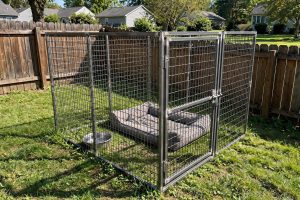
Outdoor Dog Kennel with Welded Wire Panels: A Complete Buyer’s Guide
April 2, 2026 0 views