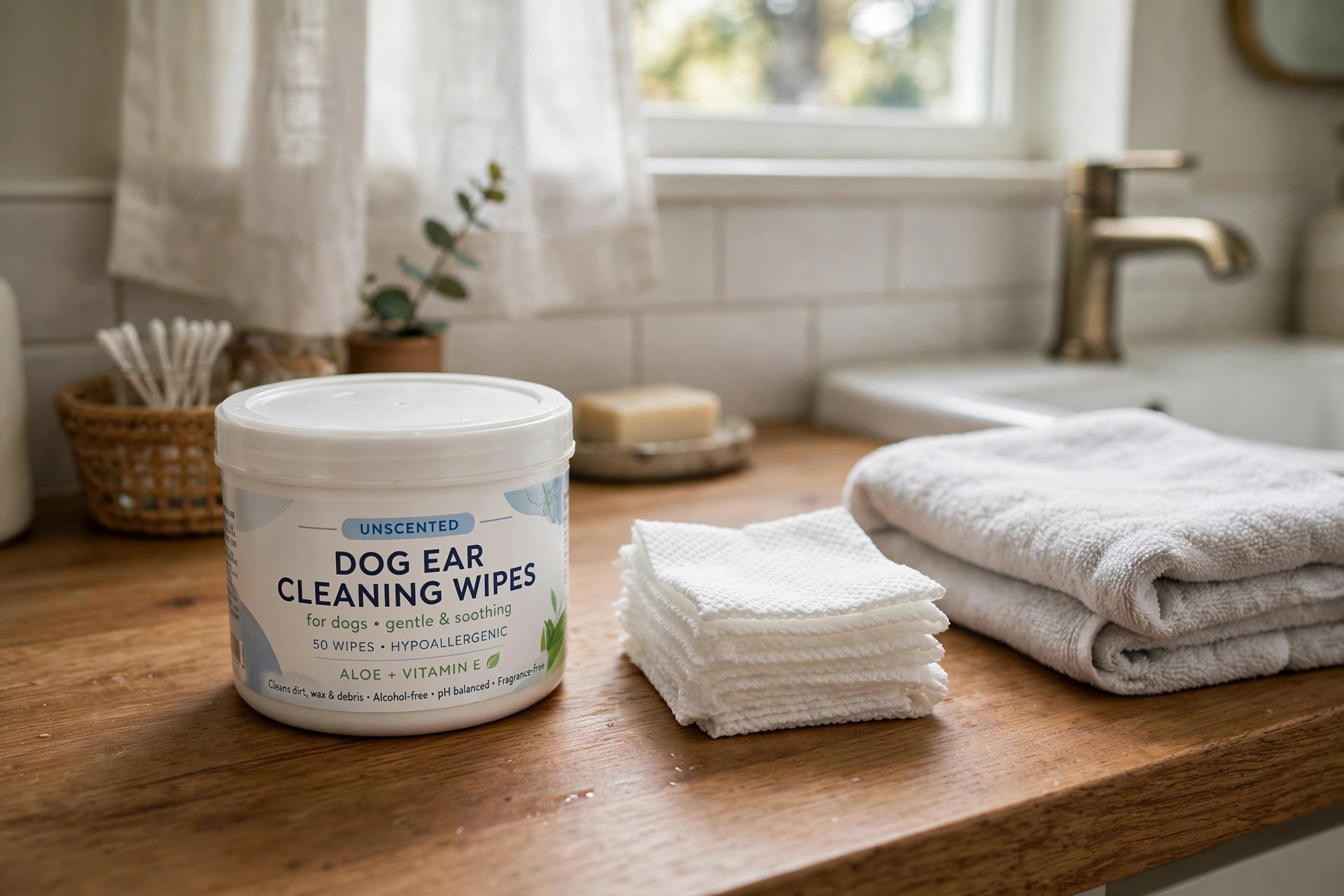

Every dog needs clean ears. Dirt, wax, and moisture gather inside the ear flap. When this build-up sits too long, it can turn into a painful infection. Many owners now use the best dog ear wipes for weekly cleaning routine care, and for good reason. A pre-moistened wipe takes less than a minute per ear. It is gentler than a cotton ball and easier to use than a liquid rinse. This guide explains what makes a good wipe, how to build a safe routine, and which kinds suit different dogs.
Why a Weekly Ear Cleaning Routine Matters
Dogs with long, floppy ears are the most prone to ear trouble. Breeds like the Cocker Spaniel, Basset Hound, and Bloodhound trap warm air under their ears. Warmth and dampness let yeast and bacteria grow. A weekly wipe-down removes the film of wax before it builds up. For active dogs that swim or play in muddy yards, a weekly schedule matters even more. Water left in the ear canal after a swim is one of the most common causes of outer ear infections.
Cleaning once a week also gives the owner a chance to notice early warning signs. Redness, a sour smell, dark discharge, or a dog that shakes its head often can all point to trouble. Catching these signs early means a simple vet visit instead of a long course of medicine. According to the American Society for the Prevention of Cruelty to Animals, regular grooming checks are part of basic pet care, and the ears deserve the same attention as the coat and nails.
A steady routine has a second benefit. Dogs learn to accept handling when it happens often. A puppy that gets its ears wiped every Sunday grows into an adult that sits still for the job. The routine becomes quick and calm for both dog and owner.
What to Look for When You Choose Dog Ear Wipes: Best Dog Ear Wipes for Weekly Cleaning Routine
Not all wipes are made the same. A good product for a weekly routine should meet a few simple tests.
First, check the ingredient list. The wipe should be free of alcohol, strong fragrance, and harsh chemicals. Alcohol stings any small scratch inside the ear. Fragrances can irritate sensitive skin. Look for gentle cleaning agents such as aloe vera, chamomile, or mild witch hazel. These calm the skin while they clean.
Second, look for a pH-balanced formula. A dog’s skin has a different pH level than human skin. Wipes made for human faces or babies can upset the balance of a dog’s ears. Pet-specific wipes are mixed to suit animal skin. The American Kennel Club notes that products made for people should never replace pet products for this reason.
Third, think about the wipe itself. It should be thick enough not to tear, but soft enough not to scratch. A textured side can lift wax better than a smooth one. The wipe should be large enough to wrap around a finger. Small, thin wipes dry out fast and make the job harder.
Fourth, consider the container. Resealable tubs keep wipes moist longer than pop-up packs. A tub with a tight lid can last for months after opening. If the wipes dry out, they lose their power and may scratch the ear.
Price guides on Chewy show that most quality ear wipes cost a few dollars per tub. Higher price does not always mean higher quality. Read the label first and the reviews second.
Types of Dog Ear Wipes
Dog ear wipes fall into a few broad groups. Knowing the groups helps a buyer pick the right one for a weekly routine.
General cleansing wipes
These are the most common. They carry a mild cleaner that removes wax and dust. They suit most healthy dogs and work well for a simple weekly pass. Owners of short-eared breeds with no history of infection can rely on these alone.
Soothing and medicated wipes
Some wipes add ingredients that calm red skin. Aloe, oatmeal, and tea tree oil in safe amounts can ease mild irritation. A small group of wipes is sold as medicated, with vet-approved cleaners for dogs prone to yeast. These are stronger. They should be used with care and, in most cases, only after a vet says they are needed.
Unscented and hypoallergenic wipes
Dogs with allergies or very sensitive skin do better with unscented wipes. These skip perfume and dyes. The American Veterinary Medical Association advises owners of allergic pets to choose the mildest product that still does the job.
Ear wipes versus liquid cleaners
Wipes are not the only option. Liquid ear cleaners, poured into the canal, reach deeper than a wipe. A full guide to liquid ear cleaners for floppy-eared breeds can help owners of spaniels and hounds decide. For a weekly maintenance routine, though, wipes are enough for most dogs. They clean the visible parts of the ear where most build-up collects. Save the liquid rinse for vet visits or for dogs with deep, chronic wax problems.
How to Clean Your Dog’s Ears: A Simple Weekly Method
A safe routine takes only a few minutes. Follow these steps in order.
Step 1: Settle the dog. Choose a calm moment. Let the dog sit or lie down. Speak in a low, steady voice. Many owners wipe ears after a walk, when the dog is relaxed.
Step 2: Look first. Fold the ear flap back gently. Check the skin color. Healthy ears look pale pink. Note any smell. A mild, clean scent is normal. A sour or yeasty smell is a warning sign.
Step 3: Wipe the outer ear. Take a fresh wipe. Wrap it around your index finger. Wipe the inside of the ear flap with slow, gentle strokes. Work from the top of the flap down toward the canal opening. Do not push the wipe deep into the canal. A finger reaches only where it is safe to go.
Step 4: Use a fresh wipe for the second ear. Always switch to a new wipe. Using the same wipe on both ears can carry germs from one ear to the other.
Step 5: Reward the dog. Praise the dog or offer a small treat. A reward makes the next session easier. Pet health guides on PetMD note that calm handling and rewards reduce stress during grooming.
Step 6: Watch for trouble. If you see dark brown discharge, swelling, or sores, stop. If the dog cries out or pulls away in pain, stop. These signs call for a vet visit, not another wipe. Health articles on Vetstreet list head shaking, scratching, and odor as the main signs of ear infection.
Most owners finish both ears in under five minutes. Done weekly, the job becomes fast and routine.
Cost and Price of a Weekly Wipe Routine
Ear wipes are one of the cheapest pet care habits. A tub of 100 wipes costs between five and fifteen dollars at most pet stores, as seen in listings on Petco. At two wipes per week, one tub lasts nearly a year. That works out to less than thirty cents per week for most brands.
Compare that with the cost of an ear infection. A vet visit for an infected ear often runs between fifty and two hundred dollars, before medicine. Prevention is plainly cheaper than treatment. Spending a small sum on wipes each month can spare a much larger vet bill later.
Buyers on a budget should still read labels. The cheapest tub may use thin wipes that tear or dry out fast. A mid-priced tub from a known pet brand usually gives the best value. Reviews on Consumer Reports show that packaging quality, not brand fame, often decides whether wipes stay moist.
For owners who clean ears often, tubs of 100 or more wipes beat small packs. The unit price drops and the tub lasts longer. Keep the lid closed tight between uses so the last wipe is as moist as the first.
Care and Upkeep of Ear Wipes
Wipes last longer when they are stored well. Keep the tub at room temperature. Avoid leaving it in a hot car or a damp garage. Heat dries wipes out. Dampness can let mold grow in a poorly sealed tub.
Check the expiry date on the label. Opened tubs usually stay good for six to twelve months. If a wipe feels dry or rough, throw it away. A dry wipe can scratch the ear and make cleaning worse than useless.
Keep wipes out of reach of small children and away from the dog. Some dogs will chew a tub if it smells interesting. If a dog swallows a wipe, watch for signs of trouble and call the vet. The ASPCA poison control guidance reminds owners that even non-toxic products can cause a blockage if swallowed.
Wipes are single-use. Never rinse and reuse them. Never flush them down a toilet, even if the label says flushable. Most pet wipes are not made for sewer systems. Throw used wipes in the trash.
Safety Notes for Weekly Ear Cleaning
Wipes are safe when used as directed, but a few rules matter.
Do not clean ears that are already infected. Wiping an infected ear spreads the infection and causes pain. A dog with a swollen, smelly, or painful ear needs a vet first. Wipes are for healthy ears, not sick ones.
Do not dig into the ear canal. Fingers can only reach the outer flap and the opening of the canal. Pushing deeper risks damage to the eardrum. If wax builds up deep inside, let the vet handle it with a proper rinse.
Watch for allergic reactions. After the first few uses of a new brand, check the ears for extra redness or itching. If the dog scratches more after wiping, the wipe may contain an irritant. Switch to an unscented, hypoallergenic brand.
Do not over-clean. Once a week is enough for most dogs. Wiping every day can strip natural oils from the skin and cause dryness. Dogs with very clean ears may need cleaning only every two weeks. Ask the vet what schedule fits your dog.
If a dog resists strongly, do not force it. Forcing can injure the ear and make the dog fear future sessions. Try a slower pace, more treats, and shorter sessions. A guide on The Spruce Pets suggests pairing grooming with playtime to build a positive link.
Frequently Asked Questions
How often should I wipe my dog’s ears?
Once a week is right for most dogs. Dogs that swim, hunt, or live in dusty places may need cleaning twice a week in summer. Dogs with small, upright ears and no history of trouble may need it only twice a month. Ask your vet for advice that fits your dog’s breed and habits.
Can I use baby wipes on my dog’s ears?
No. Baby wipes are made for human skin, which has a different pH level than dog skin. They may also contain fragrances or cleaners that irritate a dog’s ears. Use wipes made for dogs only. They are cheap and easy to find.
Are ear wipes enough to prevent infections?
They help a great deal, but they are not a cure. Wipes remove surface wax and dirt. They cannot reach deep wax or treat an infection that has already started. A weekly wipe routine plus regular vet checks is the best defense.
Which dogs need ear wipes the most?
Dogs with long, hanging ears need them most. The ear flap traps moisture and blocks air flow. Swimming dogs also need them, since water left in the ear feeds bacteria. Owners of these dogs may also want to read a full guide to self-cleaning options for busy cat owners if they keep cats too, since multi-pet homes often share grooming duties.
What should I do if my dog’s ears smell bad?
A sour or yeasty smell is a warning sign of infection. Stop using wipes and call the vet. The vet can look inside the ear with a scope and prescribe the right medicine. Do not try stronger products at home. The vet may also suggest a pet vacuum attachment for upholstery cleaning to cut down on pet hair and dander that can aggravate allergies in sensitive dogs.
Can puppies have their ears wiped?
Yes, once the puppy is eight weeks old or older. Start gently with one wipe per ear. Make the first sessions short and full of praise. Early handling builds a dog that accepts ear care as an adult.
A Short Final Word
The best dog ear wipes for weekly cleaning routine care are simple, gentle, and easy to use. They cost little and take minutes. They keep ears free of wax and give owners a weekly look at their dog’s health. Choose wipes made for dogs, free of alcohol and strong fragrance. Store them well and use them with a light hand. When in doubt about a red or smelly ear, see the vet. Good home care and honest vet care together keep dogs comfortable for years.
General home and pet guides on Bob Vila and The Spruce place ear care among the basic weekly habits of a well-kept home. A small tub of wipes on the shelf is all it takes to start.
References
American Kennel Club. (n.d.). Dog care and training resources. https://www.akc.org American Veterinary Medical Association. (n.d.). Pet care resources. https://www.avma.org ASPCA. (n.d.). Pet care and animal welfare resources. https://www.aspca.org Bob Vila. (n.d.). Home improvement advice. https://www.bobvila.com Chewy. (n.d.). Pet supplies. https://www.chewy.com Consumer Reports. (n.d.). Product reviews and ratings. https://www.consumerreports.org Petco. (n.d.). Pet supplies and services. https://www.petco.com PetMD. (n.d.). Pet health information. https://www.petmd.com The Spruce. (n.d.). Home and garden advice. https://www.thespruce.com The Spruce Pets. (n.d.). Pet care guides and product reviews. https://www.thesprucepets.com Vetstreet. (n.d.). Veterinary advice for pet owners. https://www.vetstreet.com
Was this guide helpful?

About Robert Taylor
The My Garden US editorial team writes practical, in-depth home and garden guides for American homeowners — tested advice, no fluff.
You May Also Like
Best Pet Odor Eliminator Spray for Carpets: A Complete Guide
January 10, 2026 0 views
Best Dog Ear Cleaner for Floppy Eared Breeds
May 18, 2026 0 views
The Best Outdoor Dog House Insulated for Winter: A Warm Home for Your Dog
April 7, 2026 0 views