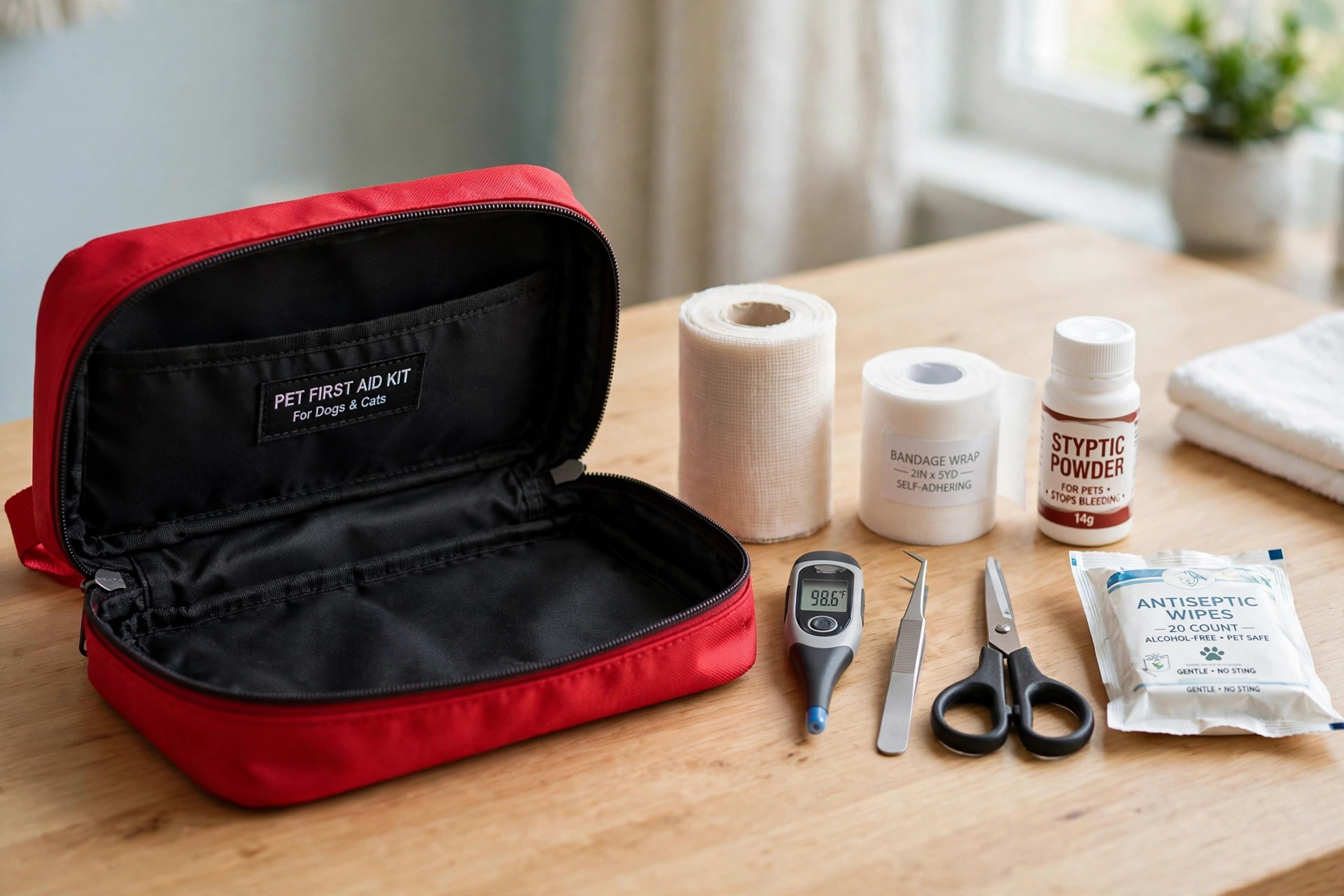

A pet first aid kit for dogs and cats is one of the simplest things a pet owner can put together, and one of the easiest to put off. Accidents do not keep office hours. A dog cuts a paw on a walk after dark. A cat knocks a glass off a shelf and steps on a shard. In these moments the vet may be a long drive away, and what sits in the hallway closet can make a real difference. This guide explains what a good kit holds, how to choose one, what it costs, and how to keep it ready.
Why It Matters
Pets live close to the ground and close to trouble. Dogs run through tall grass where ticks wait. Cats squeeze into tight corners where sharp edges hide. The ASPCA notes that pet owners should be ready for common emergencies such as wounds, poisoning, and heat stroke before they need a clinic. A kit does not replace a vet. It buys time.
Time matters most in bleeding. A deep cut on a dog’s ear can look alarming and bleed fast. Firm pressure with gauze for five full minutes often stops it. Without gauze on hand, many owners reach for a bath towel and lose time. With a kit, the answer is at arm’s length.
A kit also keeps a panicked household calm. When everyone knows where the kit is and what sits inside it, the scramble ends. One person holds the animal. One person reads the included guide card. The rest is steady work.
What to Look For and How to Choose: Pet First Aid Kit for Dogs and Cats
Start with the bag itself. The bag should be water resistant, with a clear lid or mesh pockets so items can be found fast. Bright colors help. A black bag that blends into the closet is a poor choice in a hurry.
Check the contents against a real need, not a gift box. Many cheap kits are full of cotton balls and thin bandages with little of real use. A solid pet first aid kit for dogs and cats should hold gauze pads, self-stick wrap, blunt-tip scissors, tweezers, a digital thermometer, a muzzle or strip of cloth for safe restraint, saline wash, antiseptic wipes, styptic powder for broken nails, and a printed pet emergency card with your vet’s number.
Size the kit to your animal. A large dog needs bigger gauze and longer wrap than a kitten. Some makers sell one kit for both dogs and cats, which works if the tools cover small and medium sizes. For very large breeds, add extra gauze on top of the base kit. The American Kennel Club suggests owners of active dogs keep supplies that match the dog’s size and habits.
Look for a kit made for pets, not a human kit with a pet label. Pet-safe antiseptics matter. Hydrogen peroxide is sometimes used to induce vomiting, but only on a vet’s direct order, so its place in the kit is debated. The Pet Poison Helpline advises calling before doing anything in a poisoning case. Buying guides from The Spruce Pets can help compare ready-made kits side by side before you decide.
Types of Kits
Ready-made kits. These come packed and sealed. They suit new pet owners and busy homes. Chewy and PetSmart sell many brands at many prices. Quality varies, so read the contents list before buying.
Build-it-yourself kits. A small tool bag or tackle box plus supplies from the pharmacy often beats a pre-packed kit in value. This path lets a cat owner skip dog-sized tools and a dog owner add extra wrap. Many vet clinics hand out a suggested list on request.
Travel and car kits. A small pouch for the car or the hiking pack covers the miles away from home. A broken toenail on a trail is far easier to handle with styptic powder in a zip pouch than with nothing at all. Owners who travel with pets often pair this kit with a pet stroller for small dogs and cats travel, which keeps a hurt animal off its feet on the way back to the car.
Outdoor yard kits. For homes where dogs spend hours in the yard, keep a small weatherproof kit near the back door. Owners who set up a best outdoor dog kennel for large breeds usa often keep supplies right by the run, since most scrapes happen during play.
What Goes Inside: The Full Checklist
Lay out these items when you build or check your kit.
Wound care. Sterile gauze pads in several sizes, gauze rolls, self-adhesive vet wrap, medical tape, blunt-tip bandage scissors, and cotton swabs. Vet wrap sticks to itself but not to fur, which saves pain at removal.
Cleaning. Sterile saline wound wash, antiseptic wipes made for pets, and mild soap. Salt water made at home is a backup, not a first choice.
Tools. Fine-tip tweezers for ticks and splinters, a tick remover tool, a digital rectal thermometer with a water-based lubricant, and a small flashlight to check mouths and ears.
Restraint and safety. A cloth muzzle sized for your pet, or a strip of gauze that can serve as one. Even gentle animals may bite when in pain. Leather work gloves add protection when handling a scared cat.
Medicines and odds. Styptic powder or a styptic pencil for nails, an instant cold pack, a spare leash, a soft cone collar or recovery collar, and any regular medicine your pet takes. Add a copy of vaccine records in a zip bag.
Information. A card with your vet’s phone number, the nearest emergency clinic, and the pet poison hotline number. A short printed first aid guide is worth more than a phone with a dying battery. The Red Cross offers pet first aid classes in many areas, and the practice is worth the time. Care articles on PetMD also walk through common home emergencies in plain steps.
Cost and Price
A basic pet first aid kit for dogs and cats runs from about $15 to $40. Mid-range kits with quality wrap, a real thermometer, and a solid bag run $40 to $75. A full build-it-yourself kit with pharmacy supplies lands in the same range.
Refills are cheap. Gauze, wrap, and wipes cost a few dollars each. The habit that costs nothing is the yearly check, described below.
Do not judge a kit by price alone. A $60 kit with tiny gauze and a flimsy bag serves a Great Dane poorly. Match the contents to the animal, not the price tag.
Care and Upkeep
A kit left alone for years may fail when it is needed. Twice a year, open it and check dates. Wipes dry out. Saline bottles leak. Batteries in the flashlight die. Throw out anything used or expired and write the check date on a card inside the lid.
Restock right after any use. The paw that bled in March will not wait for you to buy gauze in June.
Keep one kit in the house and one in the car if your budget allows. Heat ruins some supplies, so store the car kit in the trunk rather than on a hot seat in summer.
Teach everyone in the home where the kit lives. A kit only the owner can find is half a kit. Show children how to call for help and how to stay calm around a hurt animal.
Safety
First aid has limits, and knowing them is part of safety.
Never give human medicine to a pet without a vet’s order. Common pain tablets that are safe for people can injure or kill dogs and cats. Never pour alcohol on a wound. It burns, and the animal’s thrashing can make the injury worse.
Use a muzzle with care. Do not muzzle an animal that is vomiting, coughing, or having trouble breathing.
Restraint should be firm and kind. Wrap a cat in a towel with only the hurt area showing. Keep a dog on a short lead and speak low and slow. Cornell’s veterinary college reminds owners that a scared animal in pain is unpredictable, and that calm handling protects both sides. The American Veterinary Medical Association offers further guidance on safe handling during emergencies.
For heat stroke, move the animal to shade and cool with room-temperature water, never ice water. For seizures, keep hands clear of the mouth and time the event. For suspected poisoning, call the poison hotline or your vet before trying any home remedy. In all of these cases the kit supports the trip to the clinic. It does not replace it.
Frequently Asked Questions
Can I use my own human first aid kit for my pets? Some items cross over, such as gauze and scissors. But a pet kit needs pet-safe antiseptics, a muzzle, styptic powder, and a thermometer made for animal use. A shared human kit also tends to wander out of the house. Keep the pet kit separate and whole.
How is a kit for cats different from one for dogs? The basics match. Cats need smaller tools, and they need gentler restraint, since cats injure handlers more often than dogs do in panic. Skip dog-sized muzzles for a cat. Add a thick towel for wrapping. Senior pets of both kinds also deserve extra care after any scare; many owners pair a first aid routine with a best orthopedic dog bed for senior large dogs so a recovering animal rests on proper support.
What should I do first when my dog is bleeding? Apply firm, direct pressure with a gauze pad and hold it without peeking for five minutes. If blood soaks through, add more gauze on top rather than lifting the first pad. Wrap snugly but not tight, then go to the vet. Watch the toes past the bandage. If they swell or cool, the wrap is too tight.
Should a pet first aid kit include medicine for vomiting or poison? Only what your vet has told you to keep for your specific animal. Some vets advise keeping fresh hydrogen peroxide for emergency use, but only to be used on their direct order by phone. Guessing at doses is dangerous. The card with phone numbers matters more than any bottle.
How often should I replace the supplies? Check the kit every six months and after each use. Replace anything opened, dried out, or past its date. A written check date inside the lid keeps the habit honest.
Is a pet first aid class worth taking? Yes. Reading a list is not the same as practicing a muzzle wrap or feeling how tight vet wrap should be. The Red Cross and many vet schools run short courses. An hour of practice pays off the first time a real emergency comes.
A Short Final Word
A pet first aid kit for dogs and cats is a small box with a large job. It cannot take the place of a vet, and it should never be asked to. What it can do is turn the worst ten minutes of a pet owner’s year into ten minutes of steady, useful action. Build one this week. Check it twice a year. Teach the household where it lives. And when you bring home new gear that changes your pet’s routine, from an automatic pet feeder for dogs with camera to a simple new collar, walk the kit over in your mind once more and ask if anything in it needs a second look. The animals trust us with their care. A ready kit is one quiet way to keep that trust.
References
American Kennel Club. (n.d.). Dog care and training resources. https://www.akc.org American Red Cross. (n.d.). Swimming and water safety. https://www.redcross.org American Veterinary Medical Association. (n.d.). Pet care resources. https://www.avma.org ASPCA. (n.d.). Pet care and animal welfare resources. https://www.aspca.org Chewy. (n.d.). Pet supplies. https://www.chewy.com Cornell University College of Veterinary Medicine. (n.d.). Veterinary education and animal health. https://www.vet.cornell.edu Pet Poison Helpline. (n.d.). Animal poison control resources. https://www.petpoisonhelpline.com PetMD. (n.d.). Pet health information. https://www.petmd.com PetSmart. (n.d.). Pet supplies and services. https://www.petsmart.com The Spruce Pets. (n.d.). Pet care guides and product reviews. https://www.thesprucepets.com
Was this guide helpful?

About Robert Taylor
The My Garden US editorial team writes practical, in-depth home and garden guides for American homeowners — tested advice, no fluff.
You May Also Like
Dog Pen for Garage and Basement Containment: A Practical Guide
July 4, 2026 0 views
Best Pet Gate for Stairs with Banister Kit: A Full Guide for Pet Owners
March 4, 2026 0 views
Best Dog Brush for Short Hair Deshedding: What Every Owner Should Know
September 2, 2026 0 views