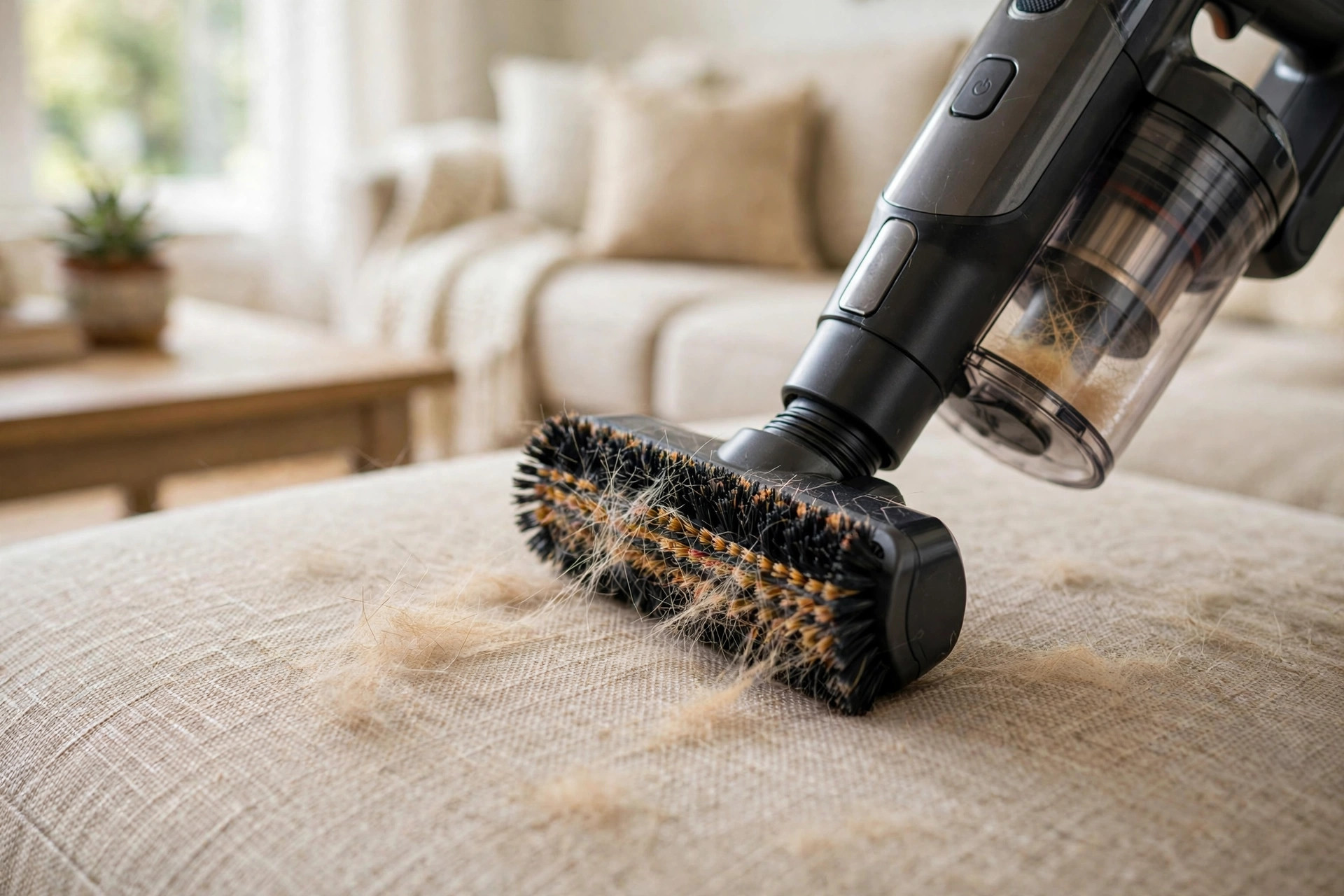

Pet owners know the problem well. Hair works its way into the weave of every sofa, armchair, and dining chair in the house. A full-size vacuum head is too wide and clumsy for cushions and seams. The best pet vacuum attachment for upholstery cleaning solves this by fitting where the main head cannot reach. This guide explains what these tools are, which types work best, what they cost, and how to keep them in good shape. If you share your home with a dog or cat, the right attachment can turn a half-hour chore into a five-minute job.
Why the Right Attachment Matters
Loose pet hair is more than a nuisance. It mats into fabric fibers and holds odor. Over time it can clog seams and discolor light-colored cloth. A standard floor head moves across flat carpet, but it cannot press into a cushion or slide down between seat and back. An upholstery attachment is small, light, and shaped for furniture. Many models add a motor or turbine that spins a brush roll. The roll beats the fabric gently and lifts hair that suction alone would miss.
Pets shed on a cycle, and indoor pets shed year round. A daily or weekly pass over favorite resting spots keeps hair from building up. Many owners find that a dedicated attachment is the difference between furniture that looks clean and furniture that looks tired. The time saved is real. So is the money saved, since clean fabric lasts longer before it needs professional care.
There is also the matter of air quality. Hair trapped in cushions breaks down into fine dust that moves through the room each time someone sits down. People with mild allergies often feel the difference after a deep furniture pass. The couch becomes a source of clean air instead of a store of old dander. An attachment that reaches deep into the weave removes what the eye cannot see, and the result is a room that simply feels fresher.
What to Look for When You Choose: Best Pet Vacuum Attachment for Upholstery Cleaning
Fit comes first. Most vacuum brands sell attachments made for their own models. A snap-on head from one brand may not fit the hose of another. Check the hose diameter of your vacuum and the mount style of the attachment before you buy. Many makers list the models their heads fit.
Brush design comes next. For upholstery, a motorized brush roll or an air-driven turbine head pulls far more hair than a plain suction nozzle. Stiff rubber fins can be just as useful. Rubber creates static-free contact and gathers hair into clumps that are easy to suck away. Soft bristles are gentler on fine fabric but may move less hair per pass.
Weight and shape matter too. You will hold this tool at odd angles and press it into crevices. A head that is light and narrow will reach into seams, around buttons, and along welting. A crevice tool, long and thin, is a good companion for the tight gap where the seat meets the back.
Suction control is a quiet but useful feature. Strong suction on thin fabric can pull the cloth into the nozzle and stall the brush. Some vacuums let you reduce suction at the hose handle. If yours does not, look for an attachment with a small air vent that you can open and close.
Types of Pet Vacuum Attachments for Upholstery
Several designs appear on the market. Each has a place.
Motorized mini brush heads. These have a small electric motor that spins a brush roll. They clean like a full-size power head but at a small scale. They are the top choice for thick fabric and heavy shedders. The trade-off is that they draw power and need a working electrical connection through the hose.
Turbine or air-driven heads. These use the vacuum’s own airflow to spin the brush roll. No motor and no wiring are needed, so they fit more machines. They work best when suction is strong. On weak suction, the turbine may spin slowly and clean less well.
Rubber fin tools. These have rows of stiff rubber nubs or fins and no moving parts. They excel at gathering hair from smooth upholstery such as microfiber. They are cheap, light, and nearly unbreakable. They do less on deep-pile fabric.
Plain upholstery nozzles. Wide, flat, and simple, these fit close to fabric and take lint with steady suction. Many vacuums include one in the box. It is a fine start, but it will not lift hair woven deep into cloth.
Crevice tools. Long and narrow, these reach places no other head can. They are not made for wide cleaning, but no upholstery job is complete without one for seams and folds.
Many shoppers compare notes on pet care and home products at sites like PetMD and The Spruce Pets, which cover grooming and cleaning tools in plain language. For broad product testing and reviews, Consumer Reports is a steady reference. Vacuum makers publish fit guides for their own heads: see Dyson, Bissell, and Hoover for motorized and turbine models, and Chewy for a wide pet-supply range that includes many attachment options. Animal welfare guidance on keeping pets and homes healthy appears at ASPCA and the American Kennel Club, and basic home improvement and cleaning tools are stocked and described at The Home Depot.
Cost and Price
Prices span a wide range. A simple rubber fin tool may cost under ten dollars. A basic plain upholstery nozzle often sells for ten to twenty dollars. A turbine head usually runs twenty to forty dollars. A motorized mini head is the dearest, often forty to ninety dollars, and brand-matched models can pass one hundred.
The attachment is only part of the cost. It must pair with a vacuum that has enough suction. If your machine is old and weak, even the best head will disappoint. Factor in replacement brushes as well. Brush rolls wear down, and rubber fins harden with age. Buying a head with replaceable parts can cost less over five years than buying a cheap head twice.
Pet gear budgets stretch further when you plan the whole routine. Puzzle toys that keep dogs busy, such as the ones in our guide to dog food puzzle toys for boredom relief usa, cut down on nervous chewing of cushions. Outdoor habits matter too: a guide to dog tie out cable for camping and yard covers safe time outside, which can reduce indoor shedding mess.
Care and Upkeep
Hair wraps around every brush roll. After each use, pull the wound hair free with your fingers or a pair of scissors. Cut along the roll, not across the bristles, so you do not nick the fibers. A clogged roll spins poorly and cleans less.
Wash removable parts. Many plastic heads and rubber tools can be rinsed with warm water and mild soap. Let them dry fully before they go back on the machine. Check the maker label first, since motorized heads must never be soaked.
Inspect the belt or turbine. Turbine heads use a small belt that wears out. When the brush slows or stops under load, the belt is usually the cause. Replacement belts are cheap and easy to fit with a small screwdriver.
Store the attachment on the vacuum or on a hook. Tossing small heads into a closet leads to cracks and lost clips. A dry shelf out of direct sun keeps rubber fins from hardening early.
Replace worn brushes. Bristles that splay outward no longer reach the fabric. Rubber fins that have gone stiff leave hair behind. A fresh head restores the cleaning power you paid for.
Keep the filters of the main vacuum clean as well. A full bin or a clogged filter cuts suction at the hose end. Turbine heads suffer first, since they rely on airflow to spin. Empty the bin when it is two-thirds full and rinse or swap the filter on the schedule the maker prints in the manual. These small habits protect the motor too, since a machine that works hard against a blocked filter runs hot and wears out sooner.
Safety
Unplug the vacuum or switch it off before you fit or remove any head. Keep fingers clear of a spinning brush roll. Small children and pets should be in another room while you clean, since a running brush can catch loose clothing, long hair, or a curious paw.
Test each new attachment on a hidden spot first. Turn the cushion over or test behind a skirt. Press the head the way you will in real use. If the fabric pulls, pills, or shows marks, switch to a softer tool or open the suction vent. Delicate fabrics such as silk, velvet, and loose-weave linen need a gentle touch and sometimes nothing more than a plain nozzle with low suction.
Mind cords and hoses. A motorized head draws current through the hose wiring. If the hose is cracked or the connection feels hot, stop and have the machine checked. Never use a wet attachment on a dry vacuum, and never vacuum damp upholstery. Moisture and household current do not mix.
For pet safety basics, including how to keep animals calm during noisy chores, the ASPCA offers clear guidance. Families with small dogs near water will also want to review dog life jacket for small breeds pool safety, a separate but useful piece of pet gear.
FAQ
Will any pet vacuum attachment fit my vacuum? Not always. Attachments are sized to hose diameter and mount style. Universal heads exist, but they can wobble or leak air on odd hoses. Check your vacuum’s model number against the maker’s fit list before you buy.
Is a motorized head really better than a turbine head? On thick fabric and heavy shedding, yes. The motor spins the brush at full speed no matter what. A turbine head depends on airflow, so it weakens when the bin is full or the filter is dirty. On light hair and thin fabric, the difference is small.
How often should I clean upholstery for pet hair? Once a week is a good base for one pet. Two or three pets, or a heavy shedder, may need two passes a week. A quick daily pass over the pet’s favorite spot takes a minute and prevents buildup.
Can these attachments damage furniture fabric? They can if used carelessly. High suction on thin fabric can pull threads. A stiff brush on delicate cloth can pill the surface. Always test in a hidden spot and start with the gentlest setting.
Do I still need a lint roller? For touch-ups, a lint roller is handy. It handles a few hairs on a dark jacket or a chair arm in seconds. For a full sofa, the vacuum attachment is faster and cheaper over time.
Should I wash the attachment? Rinse plain plastic and rubber tools with warm water and mild soap, then dry fully. Never soak a motorized head. Wipe it with a damp cloth instead and keep water away from the motor and contacts.
A Short Final Word
The best pet vacuum attachment for upholstery cleaning is the one that fits your vacuum, suits your fabric, and matches your pet’s shedding. Start with fit. Choose a brush style that fits your furniture. Keep the tool clean and the brush fresh. Do that, and your sofas and chairs will stay presentable with little effort, no matter how much your dog or cat sheds.
References
American Kennel Club. (n.d.). Dog care and training resources. https://www.akc.org ASPCA. (n.d.). Pet care and animal welfare resources. https://www.aspca.org Bissell. (n.d.). Carpet cleaners and cleaning solutions. https://www.bissell.com Chewy. (n.d.). Pet supplies. https://www.chewy.com Consumer Reports. (n.d.). Product reviews and ratings. https://www.consumerreports.org Dyson. (n.d.). Vacuum cleaners and home technology. https://www.dyson.com Hoover. (n.d.). Carpet cleaners and floor care. https://www.hoover.com PetMD. (n.d.). Pet health information. https://www.petmd.com The Home Depot. (n.d.). Home improvement products. https://www.homedepot.com The Spruce Pets. (n.d.). Pet care guides and product reviews. https://www.thesprucepets.com
Was this guide helpful?

About Sarah Mitchell
The My Garden US editorial team writes practical, in-depth home and garden guides for American homeowners — tested advice, no fluff.
You May Also Like
Best Dog Toothpaste Enzymatic for Bad Breath: A Complete Guide
May 20, 2026 0 views
Best Automatic Feeder for Two Cats Portion Control
June 26, 2026 0 views
Best Dog Leash Retractable for Large Dogs: A Complete Guide
February 1, 2026 0 views