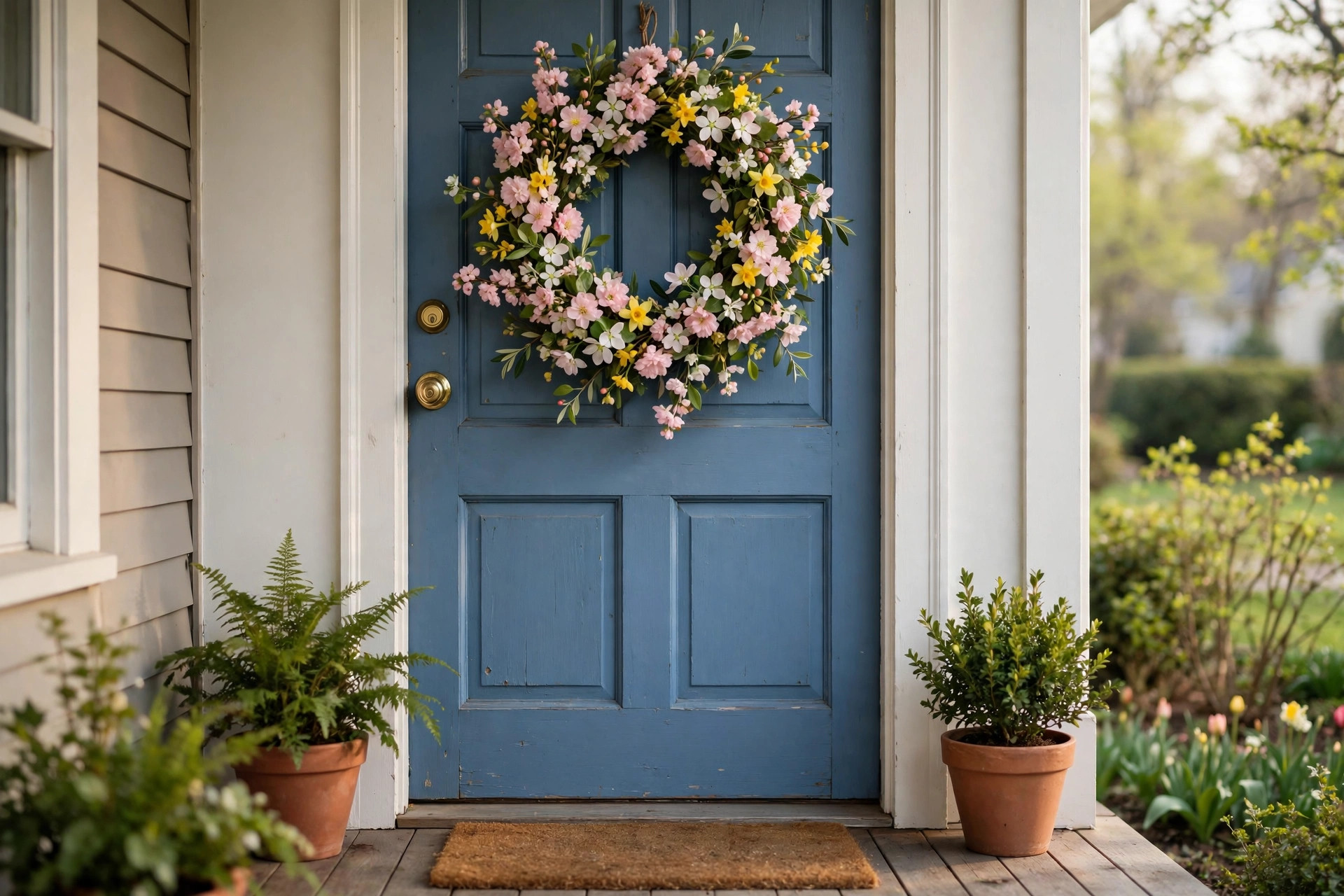
A spring wreath for front door floral welcome styles is one of the simplest ways to mark the change of season at your home. When the days grow longer and the first flowers open, a wreath on the door tells every visitor that the house is cared for. It does not take much money or time, yet the effect is strong. A plain entry becomes warm and inviting the moment a wreath goes up.
Americans have hung wreaths for generations, in every season and for every holiday. The spring wreath has its own character. It is lighter than the heavy greens of winter and brighter than the dried tones of fall. Think of fresh blooms, soft buds, pale greens, and touches of pastel color. Whether you buy one ready-made or build your own, the rules are simple and the results are hard to get wrong.
Why a Spring Wreath Matters
The front door is the first thing guests see. Real estate agents have said for years that the entry sets the tone for the whole visit. A spring wreath for front door floral welcome purposes gives that entry a finished look without a full porch makeover.
There are practical reasons too. A wreath covers marks and wear on an old door. It draws the eye away from a faded mailbox or a tired doormat. It also gives you a reason to clean the porch, wipe the door, and freshen the stoop — small jobs that pay off all season.
For many families, hanging the spring wreath is a yearly ritual. It marks the end of winter and the start of longer days. Children notice it. Neighbors notice it. It is a quiet signal that your household is awake to the season.
What to Look for When You Choose: Spring Wreath for Front Door Floral Welcome
Size and Proportion
The most common wreath size is 22 to 24 inches across, which suits a standard front door. Small doors call for 18 inches. Wide double doors can carry 28 inches or a pair of matching wreaths, one on each door.
Hold the wreath up before you buy. It should fill the door without covering the handle or the peephole. A wreath that is too small looks lost. One that is too big looks crowded.
Fresh, Artificial, or Preserved
Fresh spring wreaths use live flowers and greens. They smell wonderful and look completely natural. Their weakness is time: most fresh wreaths last one to three weeks, depending on weather and water care.
Artificial wreaths use silk or high-grade plastic blooms. They last for years if stored well. Good ones look real from the sidewalk, which is where most people see them. They cost more up front but less per year.
Preserved wreaths sit between the two. They use real flowers treated to hold their color. They last a full season or longer indoors but fade fast in direct sun and rain.
Color and Style
Classic spring palettes run to pinks, yellows, lavenders, and whites with plenty of green. A floral welcome wreath should feel light and open. Dense, dark wreaths suit winter; spring calls for air and movement.
Match the wreath to your door color. On a dark door, light blooms stand out. On a white door, deeper colors and strong greens show best. If your home is a farmhouse style, you may like a fall wreath for front door farmhouse style later in the year, but spring asks for something softer.
Weather Resistance
If your door faces the street with no cover, rain and sun will test the wreath. Look for UV-protected artificial flowers and a sturdy base. Grapevine and twig bases hold up well outdoors. Foam bases do fine under a covered porch.
Types and Options
Grapevine Wreaths
Grapevine wreaths are the workhorse of door decor. The twisted vine base is strong, light, and full of texture. Floral picks tuck into the vines without glue. They suit rustic, farmhouse, and cottage homes. You can buy them plain and add your own flowers each spring.
Floral and Silk Wreaths
These arrive finished, with blooms wired to a frame. Tulips, peonies, daisies, hydrangeas, and cherry blossoms are common spring choices. Craft stores such as Michaels carry a wide range every March, and home sites like Wayfair offer hundreds of finished designs.
Boxwood and Greenery Wreaths
Boxwood wreaths use small, dense green leaves. They look neat and tailored. They work on formal homes and in cities where a quiet entry suits the street. You can add a bow or a few fresh flowers to dress them up for Easter or Mother’s Day.
Berry and Blossom Wreaths
Spring berry wreaths mix small berries with blossoms for a garden-fresh look. They read as cheerful rather than formal. These are popular on suburban doors where a friendly feel matters.
Monogram and Letter Wreaths
Some families hang a wreath with a wooden or metal initial at the center. The letter anchors the design and gives the door a personal stamp. This works well with a simple floral ring rather than a busy one.
Themed Seasonal Wreaths
Easter brings egg and bunny accents. Memorial Day calls for red, white, and blue. If you like to change your door with each holiday, consider a patriotic wreath for front door memorial day in May and a fourth of july decorations for porch and yard set for summer.
How to Make Your Own
Building a spring wreath for front door floral welcome use is a pleasant weekend project. You need a base, floral picks or stems, wire cutters, floral wire, and perhaps a glue gun.
1. Start with a grapevine or wire base, 22 inches across. 2. Lay out your flowers and greens before you attach anything. 3. Wire the largest blooms first, spacing them evenly around the ring. 4. Fill with medium flowers, then tuck small buds and leaves into gaps. 5. Add a bow at the top or bottom if you wish. 6. Hang it and step back ten feet to check the balance.
Craft retailers like Michaels and JOANN sell bases, picks, and tools in one trip. Total cost for a full, lush homemade wreath usually runs 25 to 60 dollars, and the supplies often stretch across two wreaths.
Cost and Price
Ready-made spring wreaths range widely:
– Budget artificial wreaths: 15 to 30 dollars at big stores such as The Home Depot or Lowe’s. – Mid-range silk wreaths: 30 to 75 dollars, with fuller blooms and better color. – Premium designer wreaths: 75 to 150 dollars or more, often handmade. – Fresh spring wreaths: 35 to 90 dollars from local florists, with a short life. – DIY wreath: 25 to 60 dollars in supplies, reusable tools.
The cheapest wreath per year is a good artificial one kept in a storage box between seasons. A 50-dollar wreath that lasts five years costs 10 dollars a year.
Where to Hang It
The center of the door, at eye level, is the standard spot. Hang it so the top of the wreath sits a few inches above the middle of the door. On doors with glass panels, keep the wreath off the glass so it does not rattle.
Use an over-the-door wreath hanger for a no-damage fix. These metal hooks slip over the top of the door and cost a few dollars. For a permanent option, a small nail or adhesive hook works. If you use an adhesive hook, check its weight rating; a full floral wreath can weigh three to five pounds.
Glass storm doors need care. A wreath trapped between two doors can build heat and melt glue on hot days. Leave the outer door open on warm afternoons, or hang the wreath on the outer door itself.
Care and Upkeep
Artificial wreaths need little care. Shake off dust now and then. Bring the wreath inside during heavy storms if the door is unprotected. At season’s end, store it in a round wreath box or a large plastic bag, hung on a hook in a closet or garage.
Fresh wreaths need misting every day or two. Hang them in shade. Take them down when the flowers brown; a dead wreath sends the wrong message.
Preserved wreaths keep their looks indoors for a year or more. Outdoors, plan on one season. Keep them out of direct rain.
Home care guides from The Spruce offer detailed seasonal wreath storage advice if you want to protect your investment between years.
Safety Notes
Wreaths are safe, but a few points matter. Keep dried floral wreaths away from porch lights with hot bulbs, which can be a fire risk. The Consumer Product Safety Commission provides general guidance on home decoration safety worth a quick read.
If you have allergies, artificial wreaths avoid pollen entirely. Fresh wreaths with strong-scented blooms can bother sensitive noses near the door. Also, keep small decorative eggs or berries out of reach of toddlers, who may pull them off and mouth them.
Weight matters on adhesive hooks. A wreath that falls can scratch the door or break a glass insert. When in doubt, use a sturdier hanger.
Styling Ideas for the Whole Porch
A wreath works best as part of a small scene. Try these pairings:
– A clean doormat and two potted plants flanking the door. – A pastel welcome sign leaning by the stoop. – A pair of lanterns with battery candles for evening warmth. – Fresh mulch in the beds along the walk, which makes the whole entry feel new.
Design sites like HGTV and Country Living publish spring porch ideas each year if you want more inspiration.
When to Put It Up and Take It Down
Most households hang the spring wreath in late March or April, after the last hard frost. In warm states, early March is fine. Take it down in late May or early June, when you switch to summer decor.
Some people keep a floral wreath up all spring and summer, swapping only the bow. This works if the wreath is sun-safe and the colors stay fresh. Check it every few weeks for fading.
FAQ
How long does a spring wreath for front door floral welcome use last? An artificial wreath lasts three to seven years with proper storage. A fresh wreath lasts one to three weeks. A preserved wreath lasts one season outdoors or a year indoors.
What size wreath should I buy for a standard front door? Twenty-two to 24 inches across is the standard choice. It fills the door without covering the handle or peephole.
Can I hang a wreath on a door with a storm door? Yes, but do not trap the wreath between two closed doors on hot days. Heat can build up and damage glue and silk flowers. Hang it on the outer door or leave the storm door open.
Are artificial spring wreaths worth the money? Yes, if you buy a mid-range or better wreath. A 50-dollar wreath used for five springs costs less per year than a fresh one, and it always looks neat.
How do I keep a wreath from falling off the door? Use a hanger rated for the wreath’s weight. Over-the-door hooks are the simplest safe choice. Check adhesive hooks monthly, since heat and humidity can weaken them.
Can I make a spring wreath if I am not crafty? Yes. Start with a plain grapevine wreath and tuck in pre-made floral picks. No gluing is required, and you can rearrange the flowers until you like the look.
A Short Final Word
A spring wreath for front door floral welcome styles is a small project with a large return. It freshens the entry, marks the season, and greets every guest with color. Choose a size that fits your door, pick fresh or artificial to suit your budget, hang it with care, and store it well when the season turns. For more home ideas, browse the decorating guides at Good Housekeeping and IKEA.
References
Country Living. (n.d.). Country home and lifestyle. https://www.countryliving.com Good Housekeeping. (n.d.). Product reviews and home advice. https://www.goodhousekeeping.com HGTV. (n.d.). Home and garden ideas. https://www.hgtv.com IKEA. (n.d.). Home furnishings. https://www.ikea.com JOANN. (n.d.). Fabric and craft supplies. https://www.joann.com Lowe’s. (n.d.). Home improvement products. https://www.lowes.com Michaels. (n.d.). Arts and crafts supplies. https://www.michaels.com The Home Depot. (n.d.). Home improvement products. https://www.homedepot.com The Spruce. (n.d.). Home and garden advice. https://www.thespruce.com U.S. Consumer Product Safety Commission. (n.d.). Product safety information. https://www.cpsc.gov Wayfair. (n.d.). Furniture and home goods. https://www.wayfair.com
Was this guide helpful?

About Robert Taylor
The My Garden US editorial team writes practical, in-depth home and garden guides for American homeowners — tested advice, no fluff.