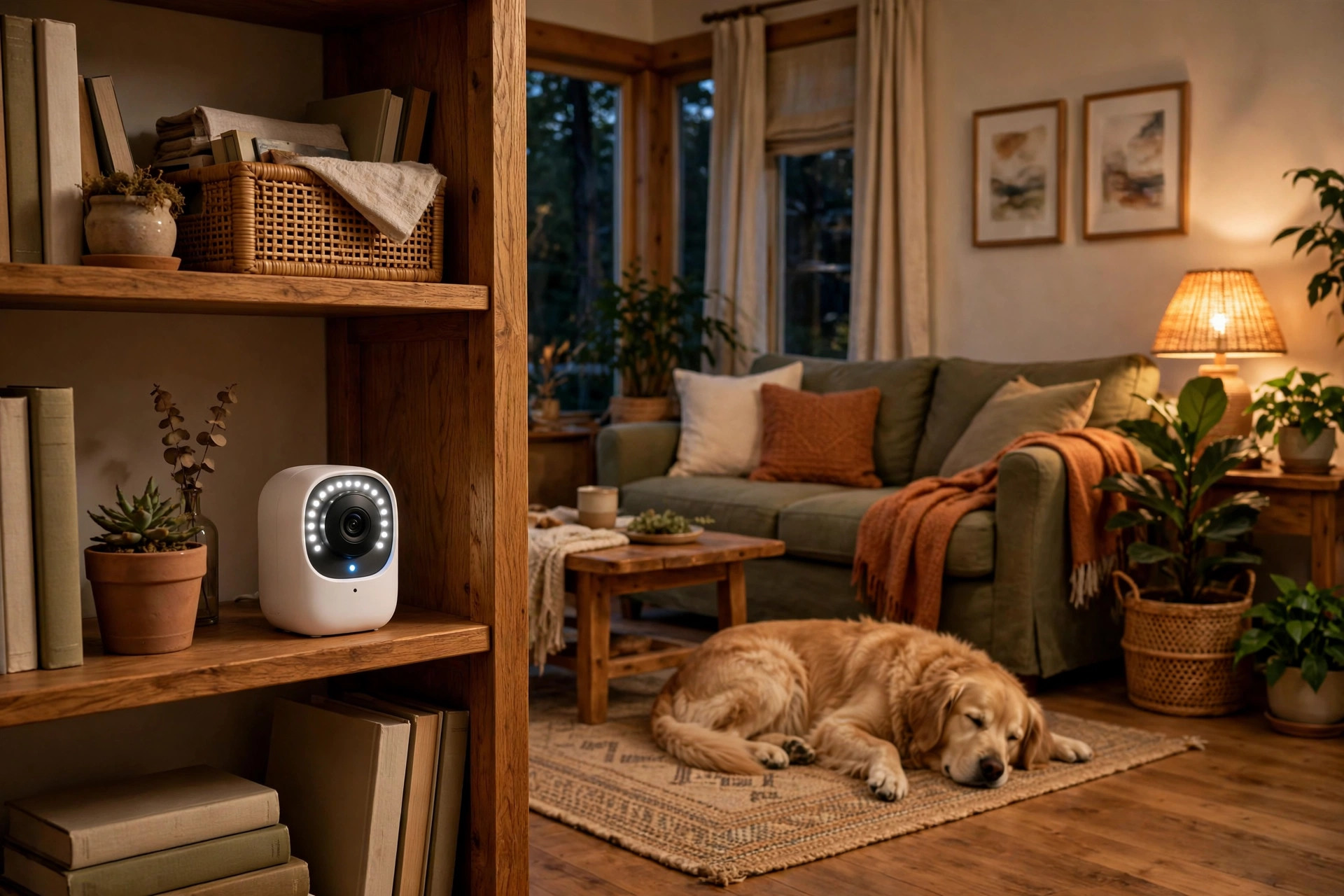

Many pet owners leave home for eight hours or more each day. The best pet camera with night vision audio lets them see and hear their dog or cat while they are away. It gives comfort. It can also catch problems early. A camera cannot replace a person. But it can give a clear picture of what happens when the house is empty.
This guide explains what these cameras do. It shows how to choose one. It covers cost, care, and safety. By the end, you will know what matters and what does not.
Why a Pet Camera Matters
Dogs and cats are creatures of habit. When you leave, some settle down. Others do not. A dog may bark for an hour. A cat may scratch the sofa. Some pets get anxious when alone. Others eat too fast or get into trash.
A pet camera with night vision audio shows you the truth. You can watch live video on your phone. You can hear sounds through the microphone. You can speak back through the speaker. Many owners use the talk feature to calm a nervous dog.
The camera also works at night. Night vision uses infrared light. The room looks dark to you, but the camera sees in clear black and white. This is useful for owners who work late shifts. It also helps owners who check on pets before bed.
There is a safety side too. If a pet is sick, you may hear coughing or restless movement. If a smoke alarm sounds, the camera picks it up. Some models send motion alerts to your phone. That can be a real help when you are far from home.
Retailers like Chewy carry many models. Pet health sites such as PetMD also explain how cameras can support a pet’s daily routine.
What to Look for When You Choose: Best Pet Camera with Night Vision Audio
Not all pet cameras are equal. Some have sharp video. Some have weak sound. Here are the points that matter most.
Video Quality
Look for at least 1080p high definition video. This gives a clear picture of your pet’s face, body, and the room. Cheaper models may offer only 720p. That is still usable, but details blur.
The lens should cover a wide angle. A field of view of 130 degrees or more lets one camera cover most of a room. Pan and tilt models can turn to follow your pet. These cost more, but they watch larger spaces.
Night Vision
Night vision is the heart of this guide. Good infrared night vision works in a fully dark room. The picture should be clear up to 20 or 30 feet. Check how the night image looks in real reviews. Some cameras wash out faces at close range. Others stay sharp.
A few models use color night vision with a small built-in light. This can startle some pets. Most owners prefer plain infrared, which is silent and invisible to the pet.
Two-Way Audio
Two-way audio means you can hear and speak. The speaker should be loud enough to reach across a room. The microphone should pick up soft sounds, such as whining or meowing.
Test reports from groups like the American Kennel Club note that calm voices work best. Shouting through a speaker can frighten a dog. Speak softly and keep messages short.
Motion and Sound Alerts
Most good cameras send alerts to your phone. A motion alert fires when something moves. A sound alert fires when noise passes a set level. You can set zones so the camera ignores a ceiling fan or a curtain.
Alerts save battery and data. They also save your time. You do not need to watch all day. You check only when the camera tells you something changed.
Power and Wi-Fi
Pet cameras plug into a wall outlet. They need steady Wi-Fi. Most use the 2.4 GHz band, which reaches farther through walls than 5 GHz. Place the camera within 30 feet of your router when you can.
If your Wi-Fi drops often, the camera will drop too. Guides at The Spruce Pets suggest testing your signal strength in the spot where the camera will sit before you buy.
Storage
Video clips can be stored in the cloud or on a memory card. Cloud plans often cost three to ten dollars a month. Local storage on a microSD card costs nothing after the card purchase. Many owners use both: local storage for daily clips, cloud for key events.
Check how long clips are kept. Some services delete clips after 30 days. Others keep them for 60 or 90.
Types and Options
Pet cameras fall into a few clear groups. Each suits a different home.
Standalone pet cameras. These are small units that sit on a shelf or mount on a wall. They offer video, night vision, and two-way audio. They are the most common choice. Prices run from about 30 to 150 dollars.
Treat-dispensing cameras. These add a treat toss feature. You press a button in the app, and a treat flies out. Dogs love this. It can reward calm behavior while you are gone. If this sounds right for your dog, you may also want to read about a best pet camera with treat dispenser wifi model for comparison.
Feeder cameras. Some automatic feeders include a built-in camera. The camera watches the bowl area while the feeder serves meals. An automatic pet feeder for dogs with camera can suit owners who want feeding and watching in one device.
Outdoor cameras. A few models are built for porches and yards. They need weather sealing. They suit owners with dogs that stay outside part of the day. For indoor use, a standard model is enough and costs less.
Multi-camera systems. Large homes may need two or three cameras. One watches the living room. One watches the crate or bedroom. Many apps let you view all cameras on one screen.
Specialist brands such as Furbo and Petcube focus on pet cameras. General stores like Amazon and Best Buy also stock wide ranges.
Cost and Price
The best pet camera with night vision audio does not have to be costly. Here is a simple breakdown.
Budget models, 25 to 50 dollars. These give 1080p video, basic night vision, and two-way audio. They lack treat dispensers and pan and tilt. They suit a single small room.
Mid-range models, 50 to 120 dollars. This is the sweet spot. You get sharp night vision, good sound, motion zones, and often a treat dispenser. Most pet owners land here.
Premium models, 120 to 250 dollars. These add pan and tilt, 2K or higher video, bark detection, and longer cloud storage. They suit multi-pet homes or large rooms.
Ongoing costs matter too. Cloud storage plans run three to ten dollars a month. A microSD card costs ten to twenty dollars once. Electricity use is tiny, usually under five dollars a year.
Watch for sales. Home improvement retailers such as Home Depot often discount smart home devices during holiday weekends.
Setup and Care
Setting up a pet camera takes about 20 minutes. Follow these steps.
1. Pick the spot. Place the camera at the pet’s eye level or a little higher. A shelf or bookcase works well. Point it at the area where your pet spends the most time, such as the sofa or the crate. 2. Connect the app. Download the maker’s app. Follow the pairing steps. Connect to your 2.4 GHz Wi-Fi network. 3. Test the view. Walk around the room. Check the live feed on your phone. Adjust the angle until you can see the pet’s resting spot and the door. 4. Set alerts. Turn on motion and sound alerts. Set the sensitivity to medium at first. Too high brings false alarms. Too low misses real events. 5. Try the speaker. Speak a short calm sentence. Make sure the volume is clear but not harsh.
Care is simple. Wipe the lens with a dry soft cloth once a month. Dust on the lens blurs night vision. Keep the camera away from direct sun, which can wash out the picture. Update the app and the camera firmware when prompted. Updates fix bugs and close security gaps.
The ASPCA advises owners to introduce any new device slowly. Let your pet sniff the camera while it is off. Turn it on later. Some dogs bark at the speaker the first time they hear a voice. This usually fades in a few days.
Safety
Pet cameras are safe when used with care. A few points deserve attention.
Cord safety. Most cameras have a power cord. Dogs, and cats most of all, may chew cords. Run the cord behind furniture. Use cord covers. Place the camera where a pet cannot reach it.
Placement. Do not mount a camera where it can fall on a pet. A shelf is safer than a high ledge. Keep small cameras away from crates where a paw could knock them down.
Privacy. A camera that watches your pet also watches your home. Use a strong password. Turn on two-factor sign-in if the app offers it. Point the camera at the pet area, not at bedrooms or bathrooms. Some owners unplug the camera when they are home.
Sound levels. Do not play loud sounds through the speaker. Sudden noise can stress a pet. Use the talk feature in a calm voice. If your pet reacts with fear, stop using the speaker for a few days.
Not a substitute for care. A camera cannot feed a pet, give medicine, or open a door. For long days, a midday visit from a neighbor or dog walker still matters. Owners who watch dogs during work hours often pair a camera with a walker; a guide to the best pet camera for watching dogs at work covers that setup in more detail.
Frequently Asked Questions
Do pet cameras work in complete darkness? Yes, if they have infrared night vision. The room can be pitch black. The camera still shows a clear black and white image. Check the stated night vision range before you buy.
Can my pet hear me through the camera? Yes. Two-way audio lets you speak through the built-in speaker. Most pets learn the voice quickly. Keep your tone calm and your words short.
Will the camera scare my dog or cat? Some pets notice it at first. A few bark at the speaker. Most get used to it in a few days. Let the pet explore the camera while it is off. Start the speaker at low volume.
Do I need to pay a monthly fee? Not always. Many cameras work fine with a memory card and no fee. Fees apply only if you want cloud storage or extra features like long clip history. Read the plan terms before you buy.
Can I use one camera for two pets? Yes, if they share one room. A wide-angle camera or a pan and tilt model covers more space. For pets in separate rooms, use two cameras.
Is a pet camera safe for kittens and puppies? Yes, with care. Keep cords out of reach. Mount the camera where small paws cannot knock it down. Young animals chew more, so cord covers are wise.
A Final Word
The best pet camera with night vision audio is the one that fits your home, your pet, and your budget. Start with clear video, true night vision, and honest two-way audio. Add treat tossing or pan and tilt only if you need them. Set it up with care. Use it to learn your pet’s day. In time, the camera becomes a quiet window into a life you used to miss.
References
Amazon. (n.d.). Online shopping. https://www.amazon.com American Kennel Club. (n.d.). Dog care and training resources. https://www.akc.org ASPCA. (n.d.). Pet care and animal welfare resources. https://www.aspca.org Best Buy. (n.d.). Consumer electronics retailer. https://www.bestbuy.com Chewy. (n.d.). Pet supplies. https://www.chewy.com Furbo. (n.d.). Dog cameras and pet monitors. https://www.furbo.com Petcube. (n.d.). Interactive pet cameras. https://www.petcube.com PetMD. (n.d.). Pet health information. https://www.petmd.com The Home Depot. (n.d.). Home improvement products. https://www.homedepot.com The Spruce Pets. (n.d.). Pet care guides and product reviews. https://www.thesprucepets.com
Was this guide helpful?

About Robert Taylor
The My Garden US editorial team writes practical, in-depth home and garden guides for American homeowners — tested advice, no fluff.
You May Also Like
Pet Carrier for Cats Airline Approved Soft Sided: A Complete Travel Guide
January 10, 2026 0 views
Best Pet Vacuum Attachment for Upholstery Cleaning
April 30, 2026 0 views
Best Dog Bed for Crate Washable Insert: A Complete Guide
April 19, 2026 0 views