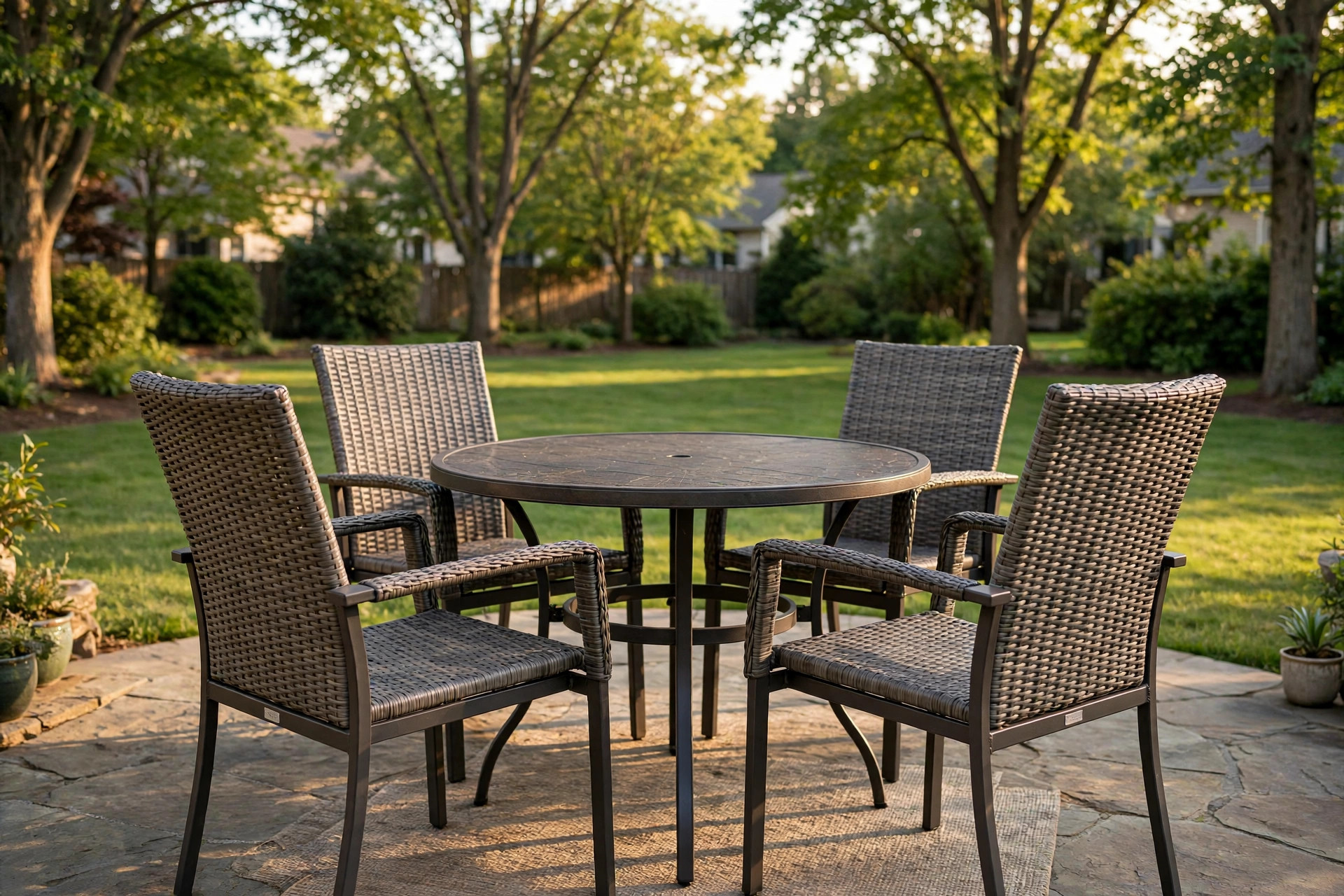

A set of four outdoor dining chairs with arms can change how a patio feels. A table alone gives a place to set plates. Chairs with arms give a place to sit back, rest the elbows, and stay a while after the meal is done. Many families find that four chairs suit their needs best. Four chairs fit a round or square table. Four chairs suit a couple with two guests. Four chairs also work for a small family.
This guide covers everything you need to know before you buy. You will learn why armchairs matter, what to look for in a frame, which materials last longest, what prices to expect, how to care for the set, and how to keep it safe. By the end, you will be able to shop with a clear head.
Why a Set of Four Armchairs Matters
Most patios in American homes are not large. A dining table with six or eight chairs can crowd a deck. A set of four fits well in a corner or under a small umbrella. It leaves room to walk around the table. It leaves room for a grill or a planter nearby.
Armchairs add comfort that plain side chairs cannot match. Arms support the forearms. They make it easier to sit down and stand up. Older guests notice the difference at once. A chair with arms also feels more finished. It looks like real dining furniture, not a spare seat pulled from the garage.
Four chairs also make buying simple. Most stores sell outdoor dining chairs with arms set four as one box or one bundle. The chairs match each other. The finish is the same. The height is the same. You do not need to hunt for a fourth chair to match the first three.
There is also a social reason. Four seats invite talk. A pair of couples can face each other. Two friends can join the host and hostess. The table stays small enough that no one must shout across it. For many homes, a patio dining set for four is the right size for daily life.
What to Look for When You Choose: Outdoor Dining Chairs with Arms Set Four
Buying chairs is easier when you know the parts. Each chair has a frame, a seat, a back, and arms. Each part affects comfort and life span.
The Frame
The frame carries the weight. It must hold a person day after day, in heat and in rain. Look for welded joints, not just screws. Screws can loosen over time. Welded metal or solid wood joints stay firm longer.
Check the feet. Feet should be flat and wide enough to stand steady on stone or wood decking. Many good frames have plastic glides under the feet. Glides stop scratches on the deck and make the chair easy to slide.
The Seat and the Back
Sit in the chair if you can. The seat should feel firm but not hard. A seat that is too deep makes short people slide forward. A seat that is too shallow leaves the thighs without support. Most adults are comfortable with a seat depth of sixteen to eighteen inches.
The back should reach at least to the middle of the shoulder blades. A higher back gives more rest. A lower back looks lighter and modern. Both can be comfortable if the angle is right. A slight lean back, about five to ten degrees, feels natural.
Arms and Height
Arms should sit at a height where the shoulders stay relaxed. For most people, that is seven to nine inches above the seat. Arms that are too high push the shoulders up. Arms that are too low give no real rest.
Measure your table before you shop. Standard dining tables are twenty-eight to thirty inches tall. The arms of the chair must slide under the table edge if you plan to push the chairs in. Leave at least two inches of space between the arm top and the table apron.
Size and Fit
Outdoor dining chairs with arms are wider than armless chairs. Each chair may need twenty-four to twenty-eight inches of width. Measure your table and your patio. A forty-two inch round table holds four armchairs well. A square table of the same size works too.
Leave at least twenty-four inches behind each chair. People need room to pull the chair out and sit down. A crowded patio is no fun, even with fine chairs.
Common Materials and Their Strengths
Material decides how long the set lasts and how much care it needs. Each common material has clear strengths.
Wood
Teak is the classic choice. It resists rot and insects. It turns a soft gray if left alone, or keeps its honey color with oil. Teak is heavy, which is good in wind. It is also costly.
Acacia and eucalyptus cost less than teak. They look warm and rich when new. They need oil or sealant each year to keep from drying out. Cedar is light and smells pleasant. It weathers well but can dent more easily than hardwood.
Wood suits buyers who like a natural look. Many home and garden guides at The Spruce note that wood needs regular care to keep its color.
Metal
Aluminum is light and will not rust. It is easy to move and easy to clean. Powder-coated aluminum comes in many colors. The coating can chip if struck hard, but touch-up paint fixes small spots.
Steel is stronger and heavier. It stays put in wind. It must be coated well, or rust will start at chips and scratches. Wrought iron looks classic and lasts for decades with care. It is heavy, so plan where it will live.
Metal chairs often have sling or mesh seats. These dry fast after rain. Advice sites like Bob Vila cover how to keep metal patio furniture free of rust.
Wicker and Resin
All-weather wicker is made from resin woven over an aluminum frame. It looks like natural rattan but stands up to sun and rain. It is light and comfortable. Quality varies a great deal. Tight, even weaving on a strong frame lasts far longer than loose weaving on thin metal.
Resin chairs are molded in one piece or a few pieces. They cost little and need almost no care. They can fade in strong sun over the years. They suit buyers who want simple seats at a low price.
Recycled Plastic Lumber
Chairs made from recycled plastic look like painted wood. They never need paint or sealant. They will not rot, crack, or splinter. They are heavy enough to stay put in wind. They cost more than resin but far less than teak. Makers of this type of furniture, such as POLYWOOD, build chairs from high-density polyethylene that holds color for years.
Types of Outdoor Dining Chairs with Arms
Shoppers will meet several styles. Each suits a different patio and a different taste.
Stacking armchairs. These pile one on another for storage. They suit small patios and renters. They are often made of aluminum or resin.
Sling armchairs. A fabric sling stretches across the frame. The sling gives a little, like a hammock. It dries fast and feels cool in summer. The fabric can be replaced when it wears out.
Cushioned armchairs. Deep cushions sit on the seat and back. They are the most comfortable for long meals. Cushions need storage or covers in rain. Look for cushions with ties so they stay in place in wind.
Folding armchairs. These fold flat for winter storage. Wooden folding chairs are classic on porches. They need more care at the hinges.
Swivel armchairs. A swivel base lets the sitter turn to talk. They are fun and social. They cost more and have moving parts that may need oil.
Think about how you will use the chairs. Daily family dinners call for easy-clean sling or resin. Long weekend cookouts call for cushioned comfort. Small decks call for stacking chairs that store well.
Cost and Price Guide
Prices for outdoor dining chairs with arms set four vary widely. The material and the brand set the price more than anything else.
Budget sets of resin or basic metal chairs often sell for one hundred fifty to four hundred dollars for four. These work well for a season or two of light use. They are easy to find at Home Depot and Lowe’s, and many families start here.
Mid-range sets of aluminum, all-weather wicker, or acacia wood usually cost four hundred to nine hundred dollars for four. This is the sweet spot for most buyers. The chairs look good, feel solid, and last many years with basic care. Shoppers can compare wide selections at large online stores like Wayfair and IKEA.
High-end sets of teak, wrought iron, or recycled plastic lumber often cost nine hundred to two thousand dollars or more for four. These are built to last a decade or longer. Specialty retailers such as Frontgate and modern brands like Article carry sets at this level.
Remember to budget for extras. Cushions may add fifty to two hundred dollars for four. A cover for the set may cost forty to one hundred dollars. Delivery fees apply to heavy sets.
Price is not the whole story. A cheap set replaced every two years costs more over a decade than a good set bought once. Independent testing groups like Consumer Reports publish ratings that help buyers compare value.
If you need a larger table for guests, you might also look at an outdoor dining table for eight. A bigger table needs more chairs, so plan the full set before you buy.
Care and Upkeep Through the Seasons
All outdoor furniture lasts longer with care. The work is small if done on a schedule.
In spring, wash the set. Use warm water, mild soap, and a soft brush. Rinse well. This removes winter grime and pollen. Check every bolt and tighten what is loose. Oil wooden chairs if the finish looks dry.
In summer, wipe spills quickly. Bird droppings and tree sap can stain if left in the sun. Keep cushions dry when rain is coming, or use a cover. If you want a full routine for cushion care, read this guide on how to clean outdoor furniture cushions.
In fall, give the set a deep clean before storage. Let everything dry fully. Store cushions indoors. Stack or cover the chairs. A breathable cover is better than plastic, which traps moisture.
In winter, store the set under cover if you can. In mild climates, a good cover is enough. In snow country, bring light chairs into a garage or shed. Heavy teak and iron can stay out, but they will weather faster.
Touch up paint chips on metal as soon as you see them. A small chip is easy to fix. A rust spot is harder. Sand the spot, prime it, and paint it. For wood, a yearly coat of oil or sealant keeps the grain rich.
These habits add years to the life of the set. Ten minutes of care each month beats a full day of repair each spring.
Safety on the Patio
Outdoor chairs are safe when chosen and used with care. A few points matter most.
Weight capacity. Most dining chairs hold two hundred fifty to three hundred pounds. Check the rating before you buy. Do not stand on the chairs to reach high places. Use a step stool instead.
Stability. Chairs should sit flat without rocking. Test each chair on a level floor in the store. At home, level the patio stones under the legs if the ground is uneven. A rocking chair can tip when a guest leans back.
Heat. Metal chairs in dark colors get hot in direct sun. Use cushions or light-colored finishes in hot climates. Resin chairs can soften in extreme heat, so keep them out of the hottest spots.
Children. Teach children not to tip chairs back on two legs. Keep small fingers away from folding hinges. Pinch points on folding chairs can hurt.
Wind. Light chairs can blow across a patio in a storm. Stack them, lay them down, or tie them together when high wind is forecast. Heavy sets need less worry.
Design shows on networks like HGTV often remind viewers that a safe patio is a used patio. A few minutes of thought keeps everyone comfortable.
Frequently Asked Questions
How much space do four armchairs need around a table? Plan on a patio area at least eight by eight feet for a forty-two inch table with four armchairs. Each chair needs about two feet of pull-out room behind it. Measure your space before you order.
Are chairs with arms better than chairs without arms? For dining, most people prefer arms. Arms give rest during long meals and help guests rise from the seat. Armless chairs tuck under the table more easily and suit tight spaces. If your patio is small, measure both and see which fits.
What is the best material for rainy climates? Aluminum, recycled plastic lumber, and resin handle rain best. They do not absorb water. Teak also handles rain well but needs oil to keep its color. Avoid untreated softwood and cheap steel in wet climates.
Do I need cushions on outdoor dining chairs with arms? Not always. Sling and contoured seats are comfortable without cushions. Hard wood and metal seats feel better with cushions. If you choose cushions, pick quick-dry foam and solution-dyed fabric. They resist sun fade and dry fast after rain.
How do I keep the chairs from fading in the sun? Shade is the best answer. An umbrella or a covered porch cuts sun damage sharply. Covers help when the chairs are not in use. Solution-dyed fabrics and quality powder coating also resist fade far better than cheap finishes.
Can I leave the set outside all winter? Teak, wrought iron, and recycled plastic can stay out with a cover in most climates. Aluminum and resin do best under cover or in a shed. Cushions should always come inside. When in doubt, store the set. It will look better for longer.
If you are still deciding on the table shape, a round patio dining set for four pairs well with armchairs and fits small patios nicely.
Final Word
A set of four outdoor dining chairs with arms is a simple purchase that pays back every day. Choose a frame that feels solid. Pick a material that suits your climate and your care habits. Measure twice. Spend what the budget allows, and care for the set through the seasons. Do that, and your four chairs will host a thousand meals.
References
Article. (n.d.). Modern furniture. https://www.article.com Bob Vila. (n.d.). Home improvement advice. https://www.bobvila.com Consumer Reports. (n.d.). Product reviews and ratings. https://www.consumerreports.org Frontgate. (n.d.). Outdoor furniture and decor. https://www.frontgate.com HGTV. (n.d.). Home and garden ideas. https://www.hgtv.com IKEA. (n.d.). Home furnishings. https://www.ikea.com Lowe’s. (n.d.). Home improvement products. https://www.lowes.com Polywood. (n.d.). Outdoor furniture. https://www.polywood.com The Home Depot. (n.d.). Home improvement products. https://www.homedepot.com The Spruce. (n.d.). Home and garden advice. https://www.thespruce.com Wayfair. (n.d.). Furniture and home goods. https://www.wayfair.com
Was this guide helpful?

About James Carter
The My Garden US editorial team writes practical, in-depth home and garden guides for American homeowners — tested advice, no fluff.
You May Also Like
Outdoor Rug for Deck Waterproof Reviews: What Shoppers Should Know
August 22, 2026 0 views
Best Outdoor Sectional Under 800 Dollars: A Plain Guide for Real Patios
August 10, 2026 0 views
Patio Furniture for Airbnb Backyard Ideas
April 15, 2026 0 views