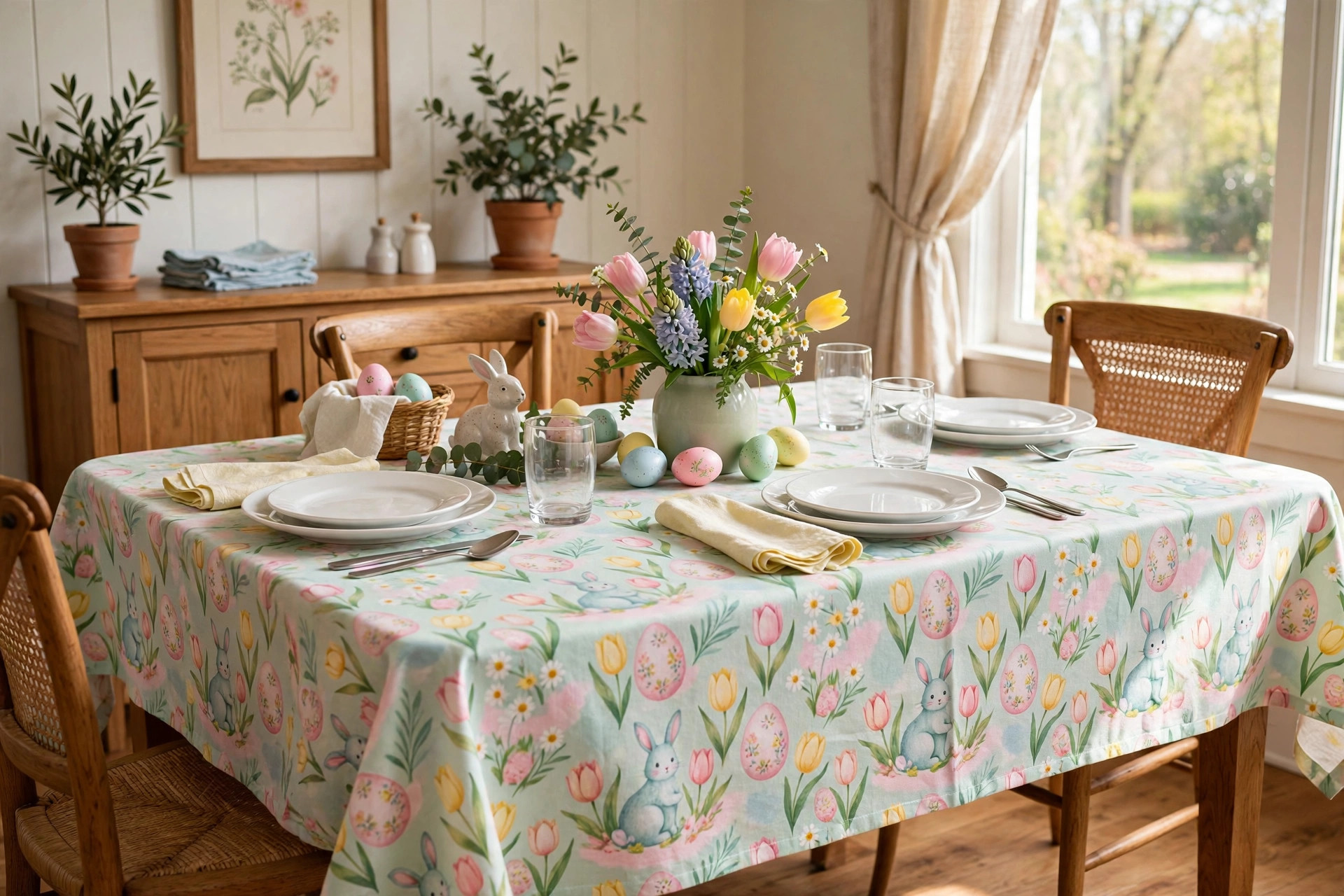

Easter brings friends and family to the table. A good easter tablecloth for spring dinner party usa can set the whole mood of the meal. It covers the old marks on the table. It brings in the colors of spring. It makes a plain room feel ready for a party.
Many hosts spend weeks on the menu and forget the table. That is a shame. Guests see the table first when they walk in. A clean, well-fit tablecloth tells them that care went into the day. This guide will help you pick the right one. It covers fabric, size, color, price, and care. It answers the common questions. It keeps every word plain.
Why the Tablecloth Matters
The dinner table is the center of an Easter party. People gather there. They talk there. They eat there. Photos are taken there. What sits under the plates shows up in every picture.
A bare table can look hard and cold. A stained table looks worse. A tablecloth hides both problems at once. It also sets the theme. Pastel colors say spring. A floral print says garden. A crisp white cloth with Easter bunnies says family fun.
A well-chosen easter tablecloth for spring dinner party usa does more than look nice. It protects the table from heat and spills. Hot dishes can mark wood in seconds. Gravy and wine leave stains that never lift. A thick cloth acts as a shield. That alone makes it worth the small cost.
How to Choose the Right One: Easter Tablecloth for Spring Dinner Party Usa
Choice starts with facts, not with taste. Measure first. Decide the fabric next. Then pick the color and print. This order saves time and avoids returns.
Measure Your Table
Take a tape measure to the table. Write down the length and the width. If the table is round, write down the diameter. These numbers decide the size you buy.
A tablecloth should hang past the edge. This part is called the drop. For a dinner party, a drop of 8 to 12 inches looks right. It covers the edge and hangs in a clean line. A drop of 15 inches or more looks formal. A short drop under 6 inches looks cheap.
Add the drop to each side of the table size. For a table 40 inches wide with a 10 inch drop, you need a cloth 60 inches wide. Most stores sell standard sizes like 52 by 70 inches or 60 by 102 inches. Match the closest size above your need.
Pick the Fabric
Fabric decides the look, the feel, and the work after the party. Each type has clear trade-offs. Know them before you buy.
Cotton is the classic pick. It looks soft and natural. It takes dye well, so the prints are bright. Cotton wrinkles and stains, so wash it soon after the meal.
Polyester is the practical pick. It resists stains and wrinkles. It holds its shape through many washes. It can feel less fine than cotton, but new blends look much better than the old ones.
Linen is the rich pick. It has a fine weave and a soft shine. It suits a formal Easter dinner. It costs more and needs ironing to look its best.
Vinyl is the easy pick. It wipes clean with a damp cloth. It suits homes with small children. It can look less fine, so save it for casual meals.
Oilcloth is much like vinyl. It has a printed face on a cotton back. It is common for Easter prints with bunnies and eggs. It folds well and stores flat.
A easter decorations for home table centerpiece usa page can give more ideas for pairing your cloth with the rest of the table.
Choose the Color and Print
Easter has its own color language. Pastel pink, soft yellow, baby blue, mint green, and lavender all say spring. These colors lift the room. They flatter food. They work with white dishes.
Prints add life. Easter eggs, bunnies, tulips, and daffodils are the classic motifs. A small repeat print looks calm. A large bold print looks festive. Plain cloths are safe if the centerpiece is bold.
Think about what you own. White dishes go with almost any print. Patterned dishes need a calmer cloth. When in doubt, pick a plain pastel cloth and add color with napkins and the centerpiece.
Guides at The Spruce show how color sets the mood of a room. HGTV often shows spring table ideas with layered linens. Both are worth a look for fresh eyes.
Types of Easter Tablecloths
Shops sell several forms of table covering. Each suits a different need.
Full tablecloths cover the whole table. They are the standard choice for a dinner party. They give the most coverage and the most polish.
Table runners run down the middle of the table. They leave the ends of the table bare. They work well over a plain cloth or a bare wood table. A runner in a bold Easter print can be the star of the table.
Round cloths fit round tables. A common size is 70 inches round. They give an even drop all the way around.
Oval cloths fit oval tables. Check both the length and width before you buy. An oval cloth on a round table will bunch.
Placemats sit under each plate. They can replace a cloth in a casual setting. Easter placemats with egg or bunny prints add cheer without covering the table.
Table skirts wrap the sides of a buffet table. They suit a sideboard where food is served. They hide stored items under the table.
Table toppers are square cloths laid over a plain cloth or a bare table. They add a second layer of color in the middle. An Easter topper with eggs or bunnies can change the whole look without a full cloth.
Table pads are not cloths at all. They sit under the cloth to guard the wood. Many hosts buy one and keep it for years. It pays for itself the first time a hot dish lands hard.
If you like seasonal tables all year, a best thanksgiving table decor for dining room guide shows how hosts reuse the same skills for the next holiday.
Cost and Price
Prices vary with fabric, size, and brand. Knowing the range helps you plan.
Basic polyester cloths cost from 10 to 20 dollars. They come in common sizes and many Easter prints. They are the best value for a one-day party.
Mid-range cotton cloths cost from 20 to 45 dollars. They look finer and feel better. Many have stitched hems and fine prints.
Fine linen cloths cost from 50 to 120 dollars or more. They suit large formal dinners. They last for years with good care.
Vinyl and oilcloth cost from 8 to 25 dollars. They are cheap and tough. Buy them when children will be at the table.
Shops like Wayfair and Home Depot carry wide ranges at honest prices. Craft stores like Michaels stock Easter prints each spring. IKEA offers simple linens at low prices. Check them in season, as Easter stock sells out fast.
Care and Upkeep
Good care makes a tablecloth last for many Easters. The steps are simple.
Shake crumbs off the cloth after the meal. Blot spills right away with a clean cloth. Do not rub. Rubbing pushes the stain deeper into the weave.
Wash cotton and polyester in cool or warm water. Use a mild soap. Wash with like colors. Pastel prints can fade in hot water or strong bleach.
Dry on a low setting or on a line. Take the cloth out while it is still a little damp. Iron on the back of the print to keep colors bright. Cotton and linen iron best with a little steam.
Vinyl and oilcloth need no machine wash. Wipe them with a damp sponge and mild soap. Dry them flat. Roll vinyl on a tube for storage. Folding leaves creases.
Store clean cloths in a dry place. Fold them with as few folds as you can. Wrap them in a cotton bag to keep dust off. Keep them out of direct sun. Sun fades prints over time.
Check Country Living for seasonal care tips. Their spring issues often cover linen storage. The home pages of Lowe’s and Walmart also post plain care guides.
Safety
Tablecloths seem harmless, but a few points of safety matter at a dinner party.
Keep the cloth clear of open flames. Do not place candles where the cloth can touch the flame. Keep paper napkins and decor away from lit candles too. The CPSC posts plain rules on candle fire safety for the home.
Make sure the cloth does not hang too long near the floor. Long edges can catch on shoes and pull dishes down. This matters most with small children and with guests who move around the table.
Check the label for flame warnings. Some cheap synthetics melt near heat. Keep hot dishes on trivets, not on the cloth itself. A trivet is a small pad that takes the heat. It costs little and saves the table and the cloth.
Frequently Asked Questions
What size tablecloth do I need for a standard dining table?
A common table is 36 by 60 inches. With a 10 inch drop on each side, you need a cloth about 56 by 80 inches. A 60 by 84 inch cloth is a good match. Always measure your own table first.
Should the cloth touch the floor?
For a home dinner party, no. A drop of 8 to 12 inches past the edge is the right look. Floor-length cloths suit formal halls and weddings. They make a home dining room feel stiff.
Can I use a Christmas tablecloth at Easter?
No. The prints clash with the season. A Christmas cloth says the wrong thing to guests. Buy one spring cloth and reuse it for years. It costs less than you think.
What goes under a tablecloth?
A felt or padded table pad adds a layer of protection. It cushions the table. It softens noise from dishes. It helps the cloth lie flat. Pads cost from 15 to 40 dollars and last for years.
How do I remove a red wine stain from a white cloth?
Blot at once with a clean white cloth. Cover the spot with salt or baking soda. After the meal, soak in cool water with a stain soap. Wash in the warmest water the label allows. Do not put it in the dryer until the stain is gone. Heat sets the stain for good.
Is it fine to mix a patterned cloth with patterned dishes?
It can work, but keep one of them calm. A busy cloth needs plain dishes. A busy dish pattern needs a plain cloth. If both are busy, the table looks crowded. White plates are the safe mate for any Easter print.
A best fall table runner for dining room harvest guide shows how the same rule works with autumn colors.
A Short Final Word
An easter tablecloth for spring dinner party usa is a small buy that pays back in full. It guards the table. It sets the spring mood. It makes the meal feel like an occasion. Measure your table. Pick a fabric that fits your life. Choose colors that lift the room. Care for it well and it will serve for many Easters to come.
Good Housekeeping and Martha Stewart post fresh table ideas each spring. Their pages are good next stops once you have your cloth in hand.
References
Country Living. (n.d.). Country home and lifestyle. https://www.countryliving.com Good Housekeeping. (n.d.). Product reviews and home advice. https://www.goodhousekeeping.com HGTV. (n.d.). Home and garden ideas. https://www.hgtv.com IKEA. (n.d.). Home furnishings. https://www.ikea.com Lowe’s. (n.d.). Home improvement products. https://www.lowes.com Martha Stewart. (n.d.). Home and cooking ideas. https://www.marthastewart.com Michaels. (n.d.). Arts and crafts supplies. https://www.michaels.com The Home Depot. (n.d.). Home improvement products. https://www.homedepot.com The Spruce. (n.d.). Home and garden advice. https://www.thespruce.com U.S. Consumer Product Safety Commission. (n.d.). Product safety information. https://www.cpsc.gov Walmart. (n.d.). Everyday low prices. https://www.walmart.com Wayfair. (n.d.). Furniture and home goods. https://www.wayfair.com
Was this guide helpful?

About Lisa Anderson
The My Garden US editorial team writes practical, in-depth home and garden guides for American homeowners — tested advice, no fluff.
You May Also Like

The Best Christmas Stocking Stuffer Ideas for Adults
September 10, 2026 0 views
Labor Day Decorations for Backyard BBQ Party: A Complete Guide
January 8, 2026 0 views
Christmas Ribbon for Tree and Wreath Decorating
January 20, 2026 0 views