
Introduction
When October arrives, the dining room changes. Light grows softer. Evenings grow cool. Families gather for harvest meals. A table runner is one of the smallest changes you can make. It is also one of the most seen. The best fall table runner for dining room harvest brings warmth to the room before a single dish is served.
A runner is a long strip of cloth laid down the center of a table. It protects the table top. It adds color and pattern. It tells guests what season it is. A fall harvest runner speaks of golden fields, ripe grain, and autumn leaves.
This guide walks through the choices step by step. It covers size, fabric, color, price, care, and safety. By the end you will know how to pick a runner that fits your table and your home.
Why a Harvest Table Runner Matters: Best Fall Table Runner for Dining Room Harvest
The dining table is the center of the harvest season. Thanksgiving dinner happens there. Sunday suppers happen there. Homework and card games happen there too. A runner honors that role.
A bare table can look cold in autumn. Wood feels harder under gray light. A runner adds a soft layer. It warms the wood with color. It warms the room with texture.
A runner also protects. Hot dishes leave marks. Knives and forks scratch. Water glasses leave rings. A good runner takes the daily wear. It keeps the table top safe through the busy months.
There is a social reason too. Guests notice the table first. A harvest runner says the home is ready for the season. It shows care without fuss. It sets a calm, welcome mood for the meal.
Finally, a runner is easy. It costs little. It takes seconds to lay down. It takes seconds to change. No other decor piece gives so much effect for so little work.
How to Choose the Right Runner
Choice comes down to four things: size, fabric, color, and pattern. Think about each one before you buy.
Size and Fit
Measure your table first. Do not guess. Lay a tape measure from one end to the other. Write down the length and the width.
The standard rule is simple. The runner should be about one third as wide as the table. A 36-inch wide table takes a 12-inch wide runner. A runner that is too wide covers the place settings. A runner that is too narrow looks lost.
For length, let the ends hang down. Twelve inches on each end is the classic drop. For a 72-inch table, buy a 96-inch runner. Some runners come in set lengths. Ninety inches is common. Seventy-two inches suits smaller tables.
Check the overhang on chairs with arms. Long runners can brush chair backs. Short runners can look stingy. When in doubt, buy the longer one and fold the end under if you must.
Fabric and Weave
Cotton is the most common choice. It is soft. It washes well. It takes dye in warm autumn shades. Cotton runners suit everyday family meals.
Linen looks more formal. It has a natural grain. It wrinkles a little, and that is part of its charm. Linen suits holiday dinners and guests.
Burlap and jute give a farm feel. They are rough and thick. They hold up well. They can shed fibers at first. Shake them out well before the first use.
Blends mix cotton with polyester. They resist stains. They keep their shape. They cost less than pure linen. Many fall harvest table collections at big stores use blends for this reason.
Check the backing. Some runners have a plain cotton backing. Others are single layer. A runner with backing lies flat. A thin single layer may curl at the edges.
Color and Pattern
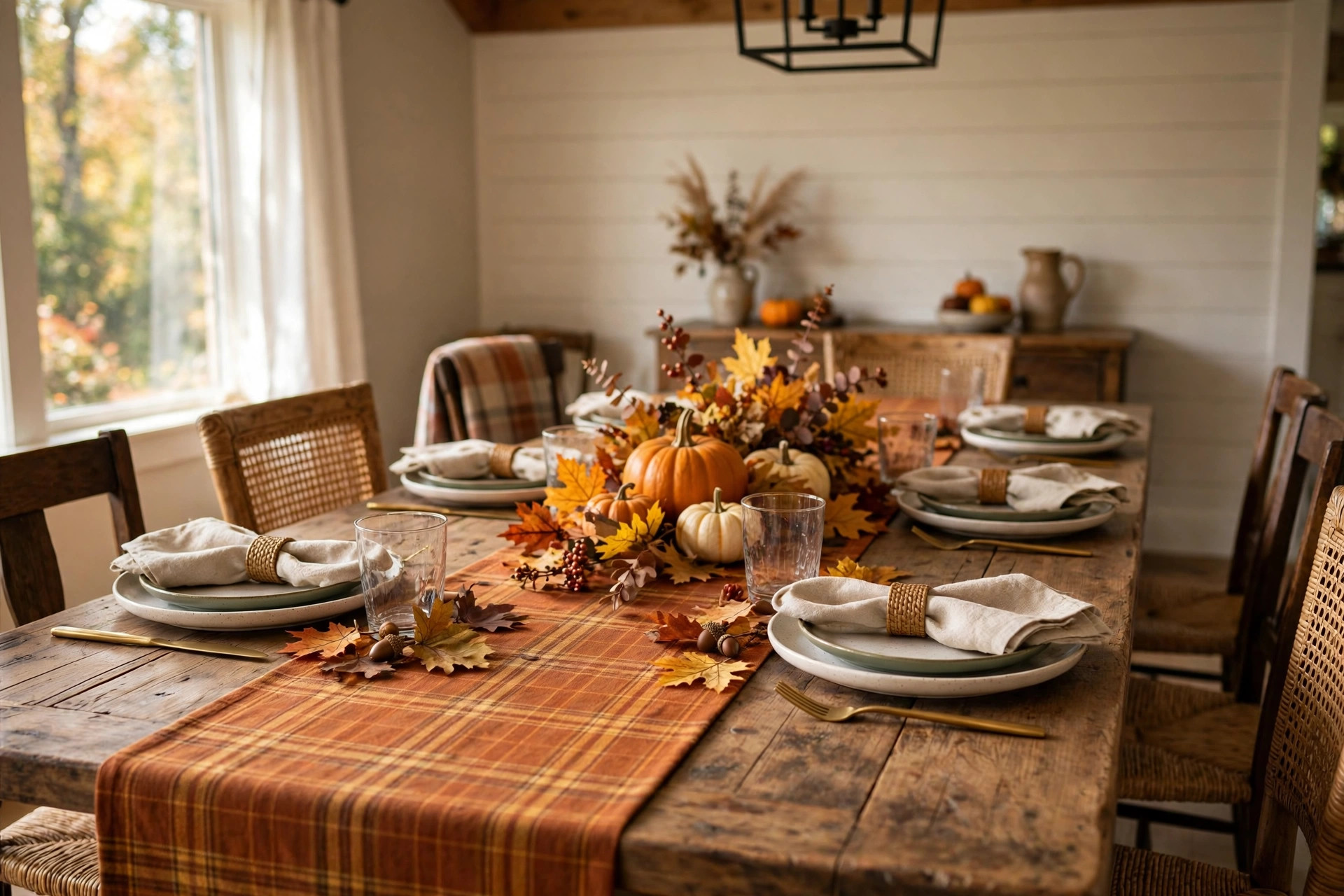
Harvest colors come from the fields. Deep gold. Burnt orange. Warm red. Brown. Dark green. These shades sit well together. They suit wood tables of any tone.
Plaid is the classic fall pattern. It reads warm at once. Stripes are simple and calm. Leaf prints say autumn in a direct way. Solid colors let the dishes do the talking.
Think about your dishes. White plates stand out on dark runners. Dark plates need a light runner behind them. If your table is already busy, pick a quiet runner. If your table is plain, pick a bold one.
Harvest does not have to mean orange. Wheat gold and olive green work well. Plum and copper give a rich look. Rust red feels old and warm. A good rule: pick two main colors and one small accent.
Types of Fall Table Runners
Runners come in several styles. Each suits a different home.
Reversible runners have two faces. One side may be plaid. The other may be plain. You turn it over for a new look. It is like two runners for the price of one.
Embroidered runners carry stitched leaves, vines, or words. They feel crafted. They suit holiday tables. They cost more. They need gentler washing.
Printed runners use dyed patterns. The design goes all the way through the cloth. They hold up to washing. They cost less than embroidery.
Woven tapestry runners are thick and heavy. The pattern is part of the weave. They lie flat and stay put. They can be hard to clean, so check the label.
Handmade and quilted runners come from craft shops and makers. Each one is a little different. They add real charm. They often need spot cleaning only. Affordable home stores carry many of these styles each season, so you can compare fabrics in person.
Many shoppers compare ideas on home decor inspiration sites before they settle on a style. Looking at photos helps more than any description. It shows how a runner looks on a real table with real light.
Cost and Price
Fall runners span a wide price range. Knowing the bands helps you shop.
Budget runners cost five to fifteen dollars. You find them in big box stores and seasonal aisles each autumn. They are often cotton blends. They work fine for one season.
Mid-range runners cost fifteen to forty dollars. This is the sweet spot for most homes. Fabric is thicker. Stitching is neater. Prints are richer. Many of these last five years or more with care.
Premium runners cost forty dollars and up. You find linen, hand embroidery, and handmade quilting here. Craft fairs and specialty shops carry them. They suit holiday tables that you want to keep for years.
Set a budget before you shop. A runner is decor, not furniture. It should not strain the wallet. Mid-range runners give the best mix of beauty and value.
Sales come each November. Stores clear fall goods after Thanksgiving. You can buy next year’s runner at half price. Plan ahead and you save real money.
Care and Upkeep
A runner only looks good if it stays clean. Most harvest runners need simple care.
Read the label first. It tells you the fabric and the safe method. Cotton usually goes in the washing machine. Use warm water and a gentle cycle. Linen likes cool water and mild soap.
Dry flat or on low heat. High heat can shrink cotton. It can also set stains. Remove the runner while it is a little damp. Smooth it with your hands. This keeps it flat.
Iron on the back side if needed. Use a warm iron for cotton. Use a cooler iron for blends. Steam helps linen lie flat.
Stains happen at harvest meals. Gravy, wine, and cranberry sauce all land on runners. Blot spills at once. Do not rub. Rubbing pushes the stain deeper. Cold water on a fresh stain beats hot water. Hot water can set protein stains like gravy.
Store off-season runners clean and dry. Fold them with tissue paper between folds. This stops crease marks. Keep them in a dry closet. Mothballs are not needed for cotton, but cedar blocks keep storage fresh.
Check edges each year. Fringe can tangle. Hemmed edges can fray. A quick trim keeps the runner neat. Loose threads pull out easily if you cut them at the base.
Good care guides on fabric and cleaning basics can help with tough stains. The main point stays simple: clean spills fast, wash gently, store dry.
Safety in the Dining Room
Decor should never bring risk. A few safety checks take minutes.
Keep the runner clear of open flame. Candles sit at the center of harvest tables. The runner passes under them. Choose a runner made of natural fiber, which burns slower than thin synthetics. Better yet, use battery candles near cloth. They give the same glow with no flame.
Watch for hot dishes. A runner is not a trivet. Cast iron and roasting pans can scorch cloth. Use thick pads under hot pots. This protects both the runner and the table.
Tuck in long ends around small children. Hanging fabric invites pulling. A child can pull a runner and bring dishes down. For family meals with toddlers, use a shorter runner or fold the ends up.
Check for loose weave near pets. Cats like to knead and claw at rough fabric. Burlap runners can snag claws. Keep pet play away from the dining table, or choose a tight weave.
The federal consumer product safety site posts general home safety tips each season. It is worth a quick look before the holidays. A safe table is a happy table.
Fall Table Runner Ideas Beyond the Dining Room
A harvest runner need not stay on the dining table. It works in other spots too.
Lay it across a sideboard. It protects the top and links the sideboard to the table. Lay it on a coffee table. It adds fall color to the living room. Hang it over a mantel as a swag. It frames autumn photos and candles.
Some homes use runners as wall art. A quilted harvest runner hung on a plain wall makes a warm backdrop. Others fold one over a bench at the entry. Guests see the season the moment they walk in.
Seasonal craft and decor stores sell matching napkins, placemats, and centerpieces each fall. A runner ties them together. When the small pieces share the runner’s colors, the whole room feels planned.
For more room-by-room fall ideas, lifestyle magazines run harvest features each October. They show how one runner can anchor a whole house.
Frequently Asked Questions
How long should a fall table runner be for a harvest dinner?
Add twenty-four inches to your table length. Twelve inches should hang over each end. A seventy-two inch table needs a ninety-six inch runner. Measure twice before you buy.
What fabric is best for a fall table runner for dining room harvest?
Cotton is best for most homes. It washes well and takes autumn colors richly. Linen suits formal dinners. Burlap suits a farm style. Blends suit homes with kids and pets because they resist stains.
Can I wash a harvest table runner in the machine?
Most cotton and cotton-blend runners can go in the machine. Use warm water and a gentle cycle. Linen and embroidered runners need cool water and mild soap. Always read the care label first. When the label is missing, hand wash to be safe.
Should the runner match my fall throw pillows?
It should echo them, not copy them. If your fall throw pillows are rust orange, a runner with rust in its pattern ties the rooms together. Matching sets sold at furniture and decor retailers make this easy, but mixed pieces look more natural, a point many small-space decor guides make each fall.
How do I keep a runner from slipping on a polished table?
Use a non-slip pad underneath. Thin rubber shelf liner cut to size works well and costs little. Some runners come with a grip backing. A pad also adds a soft layer that guards the wood.
When should I put the fall runner away?
Many homes keep harvest decor from late September through Thanksgiving. After the holiday, swap in outdoor Christmas lights and winter pieces like a Christmas tree topper for the next season. Store the fall runner clean and dry for next year.
A Final Word
The best fall table runner for dining room harvest is the one that fits your table, suits your fabric needs, and pleases your eye each day. It does not need to be costly. It does not need to be fancy. It needs to be right for your home.
Measure the table. Pick a warm color. Choose a fabric you can wash. Lay it down and step back. The room will tell you when it is right.
References
Apartment Therapy. (n.d.). Home design ideas and inspiration. https://www.apartmenttherapy.com Country Living. (n.d.). Country home and lifestyle. https://www.countryliving.com HGTV. (n.d.). Home and garden ideas. https://www.hgtv.com IKEA. (n.d.). Home furnishings. https://www.ikea.com Lowe’s. (n.d.). Home improvement products. https://www.lowes.com Michaels. (n.d.). Arts and crafts supplies. https://www.michaels.com The Home Depot. (n.d.). Home improvement products. https://www.homedepot.com The Spruce. (n.d.). Home and garden advice. https://www.thespruce.com U.S. Consumer Product Safety Commission. (n.d.). Product safety information. https://www.cpsc.gov Wayfair. (n.d.). Furniture and home goods. https://www.wayfair.com
Was this guide helpful?

About Lisa Anderson
The My Garden US editorial team writes practical, in-depth home and garden guides for American homeowners — tested advice, no fluff.
You May Also Like

Easter Garland for Fireplace Mantel Spring Decor: A Complete Guide
June 11, 2026 0 views
Fall Scarecrow Decorations for Porch and Yard
March 2, 2026 0 views
Christmas Village Display Platform for Collection USA: A Complete Buyer’s Guide
August 21, 2026 0 views