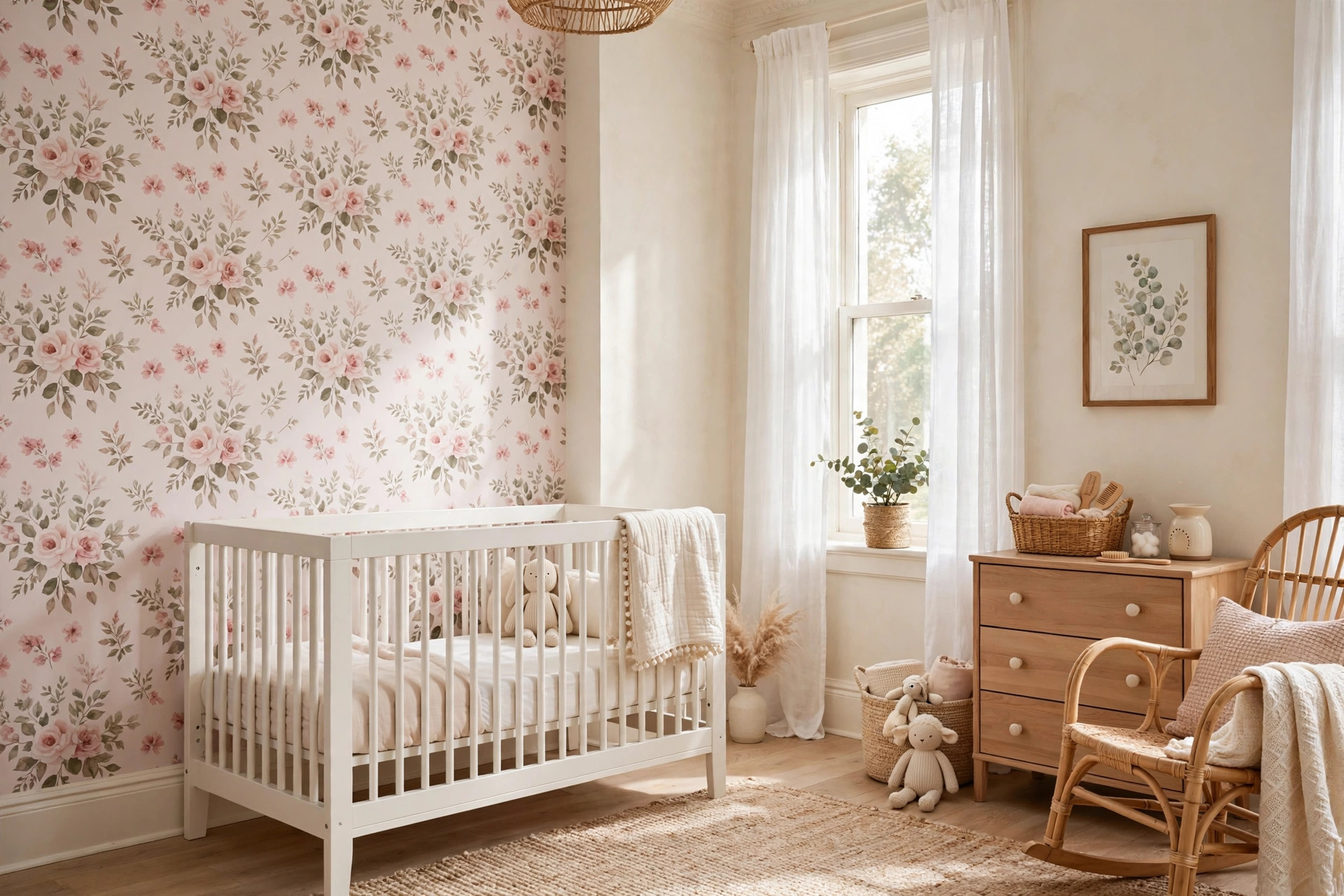

Nursery wallpaper ideas for baby girls come in a wide range. A new mother may feel unsure where to begin. Soft florals, gentle dots, and sweet animal prints all have their place. The right choice can make a small room feel warm and calm. The wrong choice can feel busy and loud. This guide walks through the options step by step. It covers what to look for, what kinds of prints suit a girl’s nursery, what they cost, and how to keep them safe for a baby. By the end, you will know how to pick a pattern you will still love when she starts school.
Why Wallpaper Matters in a Girl’s Nursery
A nursery is the first room a child will know. The walls set the mood of that room. Paint gives one flat color. Wallpaper gives pattern, texture, and depth. A soft print can make plain walls feel finished in one step. It can add interest without the need for many decorations.
Many parents choose wallpaper for a baby girl because it feels special. A rose print or a pattern of tiny bunnies tells a story. It says this room was made with care. Wallpaper also covers small flaws in old walls. Old homes often have marks and small cracks. A patterned paper hides these better than plain paint.
Another reason is staying power. A good wallpaper can last for years. As the baby grows into a toddler, the room still looks right. Many prints work for a newborn and for a five-year-old. This saves money and effort later.
What to Look For Before You Buy: Nursery Wallpaper Ideas for Baby Girls
Before you fall in love with a print, check a few practical points. A nursery has needs that other rooms do not.
Material and Safety
The material matters more than the pattern. Vinyl and vinyl-coated papers wipe clean with a damp cloth. This is useful in a room where milk, food, and small hands may reach the walls. Fabric-backed papers are tough but harder to clean.
Look for papers that say they are low in volatile organic compounds, often called low-VOC. These release fewer fumes into the air. A baby spends many hours in her room. Clean air matters. Some parents also look for zero-VOC paint for nursery walls to pair with their wallpaper. The same care applies to adhesives. Paste made for nurseries is widely sold.
Check the fire rating on the label. Most papers sold in the United States meet standard safety ratings. If you import a paper from abroad, check this point with care.
Color and Pattern Scale
Soft colors suit a nursery best. Blush pink, cream, pale peach, and light sage all work well. Strong reds and hot pinks can feel too loud for a sleeping baby. Pastels reflect light and make small rooms feel larger.
Pattern scale is the size of the repeated design. Small rooms take small to medium prints. A large print can crowd a small wall. Hold a sample against the wall before you buy. Step back and look from the door. This simple test shows how the pattern will feel in real life.
Light also changes color. A paper that looks cream in the store may look yellow under warm lamps. Test samples in morning light and evening light. Many designers suggest living with a sample for two or three days before deciding.
Peel and Stick or Traditional Paste
Peel and stick wallpaper has become common in recent years. It goes up without water or paste. It comes down without much damage to the wall. This suits renters and parents who may change their minds. Many peel and stick wallpaper reviews for bedrooms apply to nurseries too, since the same products work in both rooms.
Traditional paste wallpaper lasts longer and stays flatter on textured walls. It costs more to hang, often needing a professional. For a room you plan to keep for many years, paste may be worth it. For a room you may redecorate soon, peel and stick is the easier path. Removable wallpaper options give parents the freedom to change the look as the child grows.
Types of Nursery Wallpaper for Baby Girls
The range of prints is large. Here are the main types parents choose.
Floral Prints
Florals are the classic choice for a girl’s nursery. Roses, peonies, and wildflowers in soft tones feel gentle and timeless. A small rosebud print on cream gives a traditional look. A large watercolor floral in blush and sage feels more modern.
Floral papers pair well with white or light wood furniture. They also hide well behind a crib and a dresser. One wall of floral print with three painted walls is a common plan. This keeps the room from feeling too busy.
Polka Dots and Stripes
Dots and stripes are simple and cheerful. Small gold or blush dots on white add texture without noise. Thin vertical stripes can make a low ceiling feel taller. Wide stripes feel more playful.
These patterns work well for parents who want a modern look. They also suit a room that will later hold a toddler. Dots and stripes do not read as babyish. They can stay on the wall for a long time.
Animal and Nature Prints
Bunnies, deer, birds, and butterflies appear on many nursery papers. These prints bring a storybook feel to the room. A pattern of small woodland animals in soft gray and pink is a favorite. Nature prints in green and cream suit parents who want a calm, earthy room.
Murals of trees or hills belong to this group too. A single tree mural behind the crib makes a strong focal point. Keep the rest of the room simple when you use a mural.
Toile and Classic Prints
Toile is a classic French pattern with small scenes printed in one color on a light ground. Nursery toiles show lambs, carriages, or garden scenes in pink, blue, or gray. This style suits traditional homes. It looks formal but still sweet.
Toile works best in rooms with classic furniture. Dark wood or painted white wood both fit. The print is busy, so keep bedding and curtains plain.
Murals and Accent Walls
A mural covers one wall with a single large scene. A garden mural with flowers and birds suits a girl’s nursery well. A soft sky with clouds is another common choice. Murals make a small room feel larger by giving the eye depth.
An accent wall means papering one wall and painting the rest. This costs less than a full room. It also lets you use a bold print without crowding the space. The wall behind the crib is the usual choice.
How to Choose the Right Print
Start with the feeling you want. Do you want calm or cheerful? Traditional or modern? Answer this first, and the choices narrow fast.
Next, look at your furniture. White cribs and light wood suit almost any print. Dark furniture needs a lighter paper so the room does not feel heavy. If you already own bedding, bring a swatch to the store. Match the paper to the bedding, not the other way around. Bedding changes more often than wallpaper.
Consider the size of the room. Small rooms need small prints and light colors. Large rooms can take bigger prints and deeper tones. A north-facing room gets cool light. Warm colors like peach and cream balance this. A south-facing room gets warm light. Cooler pinks and soft grays balance that.
Think about the future. A print that suits a newborn may feel too young at age six. If you want the paper to last, pick a pattern that could suit a young girl too. Small florals, dots, and stripes age well. Large cartoon characters do not. Many parents plan to keep the nursery paper until the child asks for a change. That is often around age seven or eight.
Ask for samples. Most sellers send small samples for a low price or free. Tape them to the wall for a few days. Look at them in daylight and lamplight. This step prevents most regrets. Guides to nursery design from The Spruce and decorating features on HGTV both stress this point: live with the sample before you commit.
Cost and Price
Wallpaper costs more than paint. A clear budget helps.
Peel and stick wallpaper for a nursery usually runs from 30 to 80 dollars per roll. A standard American room needs about six to ten rolls. One accent wall needs two to four rolls. The total for an accent wall often falls between 100 and 300 dollars.
Traditional paper costs about the same per roll, sometimes less. The hanging cost is the difference. A professional installer may charge 300 to 600 dollars for a nursery, depending on the area. High ceilings and many corners add to the price.
Murals are priced by the wall. A custom mural for one wall can cost 200 to 800 dollars. Printed murals from large makers cost less.
Designer papers from small studios cost more, sometimes 100 to 200 dollars per roll. They offer unique prints you will not see elsewhere. For many parents, a mid-range paper from a large home improvement retailer or Lowe’s wallpaper selection is the right balance of price and quality.
Do not forget the extras. Paste, tools, and primer add 30 to 60 dollars. If walls need repair first, add that cost too. Tips on wall preparation from Bob Vila can help you judge whether your walls are ready.
To save money, paper one wall. This is the most common choice in nurseries. It gives the full effect at a third of the cost.
Hanging and Care
Good hanging starts with good walls. Walls should be clean, dry, and smooth. Fill holes and sand rough spots. A coat of primer helps the paper stick and makes later removal easier. Step-by-step hanging guides from This Old House walk through the full process.
Measure the walls and plan the layout before you cut. Start in the least seen corner. Match the pattern at each seam. Keep a damp sponge nearby to wipe paste from the front of the paper.
For peel and stick paper, the method is simpler. Peel a small section, stick the top, and smooth down with a flat tool. Work slowly. If a bubble forms, peel back and redo that section. The paper can be moved many times without losing its grip.
Care is simple. Dust the walls now and then with a dry cloth. Wipe marks with a damp cloth and mild soap. Test any cleaner on a hidden spot first. Avoid scrubbing, which can wear the print. Keep the room aired to prevent damp, which can loosen edges over time.
Sunlight fades colors. If the nursery gets strong sun, use curtains or blinds during the brightest hours. This protects the paper and keeps the room cool for naps.
Safety Notes
Safety comes first in a nursery. Hang wallpaper well before the baby arrives, at least a few weeks if you can. This lets fumes from paste and new paper clear from the air. Air the room daily during this time.
Keep all paste, tools, and spare rolls away from children. Store them high or locked. Follow the paste maker’s directions exactly. Some pastes need the room to stay aired while they dry.
Check edges now and then. Loose edges can peel further, and a curious toddler may pull at them. Fix loose spots with a small amount of seam adhesive. Keep small pieces of torn paper off the floor. A baby may put them in her mouth.
Choose papers without glitter or raised beads for a nursery. These small parts can come loose. Smooth, flat papers are the safest choice. If you like texture, pick an embossed paper where the pattern is pressed in, not glued on.
If anyone in the home has allergies, pick a paper rated for low emissions. Paint color trends from major paint makers often note which products meet stricter indoor air rules, and the same idea applies to wall coverings. When in doubt, ask the seller for the product’s safety sheet.
Frequently Asked Questions
Is wallpaper safe for a baby’s nursery? Yes, when you choose the right product. Pick low-VOC or low-emission paper and paste. Hang it weeks before the baby arrives. Air the room well. Smooth papers without loose parts are best.
Should I wallpaper the whole nursery or just one wall? One wall is the most popular choice. It costs less and keeps the room calm. The wall behind the crib works well. A full room suits larger spaces and quieter prints.
What colors work best for a baby girl’s nursery? Soft pinks, blush, cream, peach, and light sage are the most loved. They feel warm and calm. Avoid very bright or dark colors near the crib. They can make the room feel busy at bedtime.
Can I use peel and stick wallpaper in a nursery? Yes. It is a good choice for nurseries. It goes up without strong-smelling paste. It comes down cleanly when you want a change. Make sure it sticks well to your wall type first. Test one roll before you buy the rest.
How long will nursery wallpaper last? Good paper lasts seven to ten years on the wall. Peel and stick may last less, often three to five years. Sunlight, damp, and rough play shorten its life. Simple care keeps it looking fresh.
What pattern will not feel dated in a few years? Small florals, dots, thin stripes, and classic toile age well. They suit a baby and a young girl alike. Very trendy prints and large cartoon figures date faster. If you want lasting style, pick a quiet pattern. Guides to soft neutral palettes from Benjamin Moore and Behr’s nursery color guides show how gentle colors keep a room fresh for years.
A Final Word
Choosing nursery wallpaper ideas for baby girls should be a pleasure, not a worry. Start with a feeling. Pick a safe material. Test samples in real light. Paper one wall or the whole room, as your budget allows. The best nursery is not the one with the dearest paper. It is the one where a mother feels calm and a baby sleeps well. A soft print on the wall, a warm lamp, and a comfortable chair are all a new family needs. The rest is love.
References
Behr. (n.d.). Paints, primers, and stains. https://www.behr.com Benjamin Moore. (n.d.). Paints and stains. https://www.benjaminmoore.com Bob Vila. (n.d.). Home improvement advice. https://www.bobvila.com HGTV. (n.d.). Home and garden ideas. https://www.hgtv.com Lowe’s. (n.d.). Home improvement products. https://www.lowes.com Sherwin-Williams. (n.d.). Paints and coatings. https://www.sherwin-williams.com The Home Depot. (n.d.). Home improvement products. https://www.homedepot.com The Spruce. (n.d.). Home and garden advice. https://www.thespruce.com This Old House. (n.d.). Home renovation guidance. https://www.thisoldhouse.com
Was this guide helpful?

About Michael Thompson
The My Garden US editorial team writes practical, in-depth home and garden guides for American homeowners — tested advice, no fluff.
You May Also Like

Stucco Painting Cost Per Square Foot USA: A Complete Price Guide
February 1, 2026 0 views
Best Paint Finish for Kitchen Walls USA: A Practical Guide
February 5, 2026 0 views
Antimicrobial Wall Paint for Kitchens USA: A Plain Buyer’s Guide
July 19, 2026 0 views