A cool evening should not drive you indoors. If you own a big yard, you can keep using it long after summer ends. The best patio heater for large backyard spaces lets your family stay outside in comfort well into the cold months. This guide will help you pick the right heater for a big open area.
Choosing the right unit takes more than picking the tallest heater you see. A large yard needs real heat output. It needs even coverage. And it needs a heater that can stand up to wind and weather. This article covers the main types, the heat ratings to look for, costs, safety rules, and upkeep.
Why a Large Backyard Needs the Right Heater
A small heater will fail in a big yard. Heat drifts and fades fast in open air. A unit made for a small balcony will warm only a few feet around itself. The rest of your seating area will stay cold. That is money wasted.
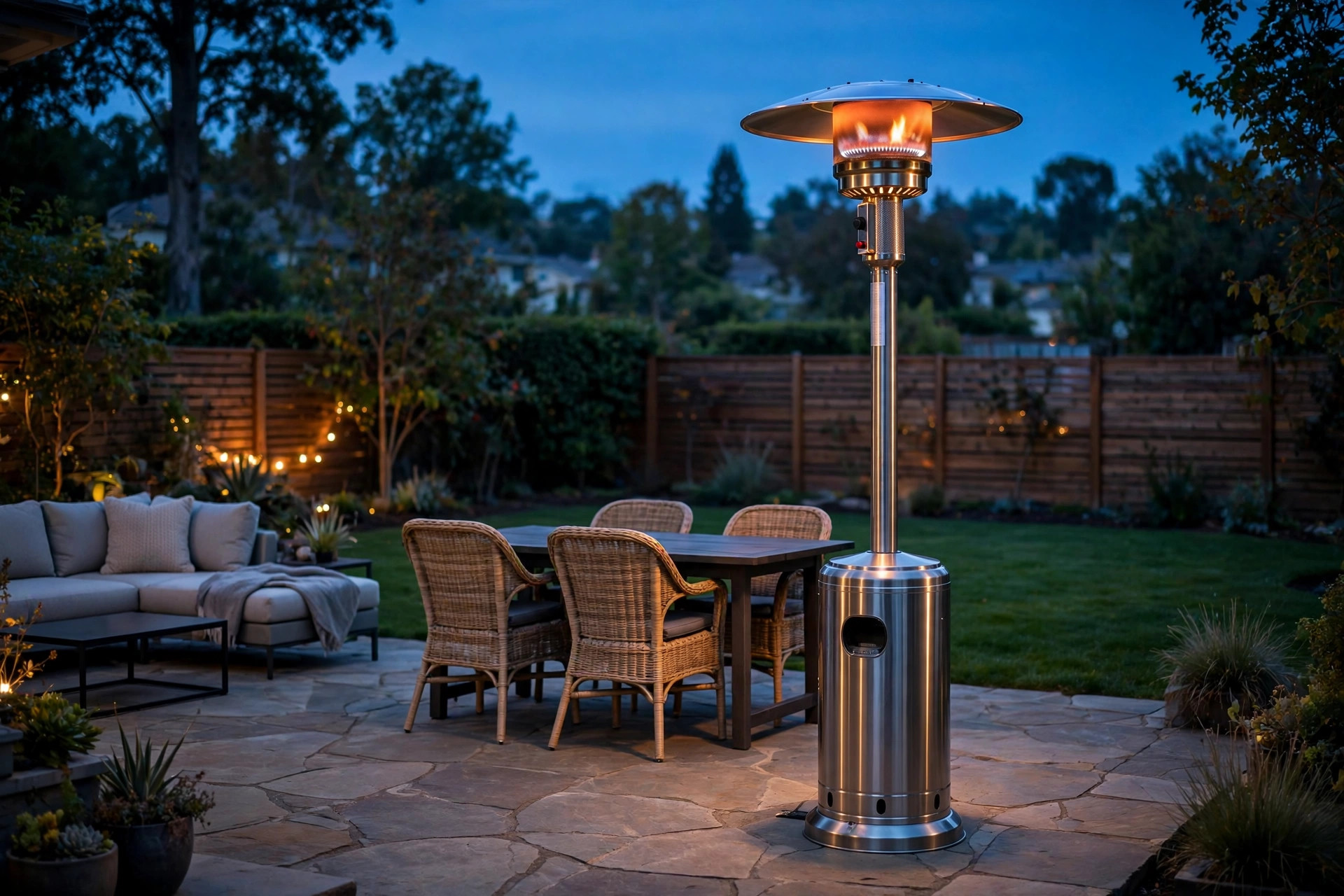
The best patio heater for large backyard use is built to push warmth across a wide space. Tall standing heaters, commercial-grade mushroom heaters, and units with high BTU ratings do this job well. They raise the usable temperature by ten to twenty degrees in their zone. That is the difference between a short night and a long evening with friends.
Think about how you use your yard. Do you have a dining set at one end and a seating group at the other? One heater cannot serve both spots. You may need two units, or one strong heater near the main gathering area. Makers of outdoor furniture note that heaters and seating work best as a planned set, not an afterthought.
What to Look for When You Choose: Best Patio Heater for Large Backyard
Heat output matters more than looks. Here are the points that count.
BTU rating. BTU, or British Thermal Unit, measures heat output. For a large backyard, look for 40,000 to 50,000 BTU on gas models. Electric models are rated in watts instead. A 1,500-watt electric heater warms about ten square feet well. Gas units cover far more ground.
Coverage area. Makers list a coverage zone, often fifteen to twenty feet in diameter. In wind, cut that claim by about a third. If your seating area is twenty feet wide, you need a heater rated for a bigger space, or two smaller units facing each other.
Fuel type. Propane tanks are easy to move and swap. Natural gas heaters cost less to run but need a fixed gas line. Electric heaters are the simplest to use, but they give the least heat per dollar in open air.
Build quality. Stainless steel lasts longer than painted steel. It resists rust in rain and snow. Look for sturdy bases and wind guards. Cheap frames wobble and tip.
Safety features. A tilt switch that cuts the gas when the unit falls over is a must. So is a flame-out cut-off. Look for units tested by a known testing lab. The U.S. Consumer Product Safety Commission offers general guidance on outdoor heater safety, and it is worth a read before you buy.
Height and design. Tall heaters stand seven to eight feet and cast heat over a wide circle. Tabletop models suit a small dining set only. For a big yard, go tall.
Types of Patio Heaters for Big Yards
Propane Standing Heaters
This is the most common choice for large backyards. The classic mushroom-top heater runs on a standard 20-pound propane tank. It puts out about 40,000 to 48,000 BTU. One unit warms a circle about twenty feet wide in calm air. Many owners place two or three around a big patio. Tanks last eight to twelve hours on a medium setting.
Pros: no wiring, easy to move, strong heat. Cons: you must refill tanks, and wind steals a lot of the warmth. Retailers such as The Home Depot and Lowe’s carry a wide range of these models with customer reviews you can compare.
Natural Gas Heaters
A natural gas heater hooks to your home gas line. It costs less to run than propane over a full season. You never swap tanks. The trade-off is that it stays in one spot. Installation needs a licensed gas fitter, which adds cost up front.
These heaters suit owners who use their yard often and want a fixed heating post near a main seating area. A permanent post heater can become part of the patio design, much like a built-in fire feature in a landscaped garden.
Electric Infrared Heaters
Electric heaters warm people and objects, not the air. They work well under a pergola or covered patio where the heat bounces back. They give off no fumes, so you can use them in tighter spots. A wall-mounted unit above a seating bench is a clean setup.
The limit is range. A 1,500-watt unit will not warm a wide open lawn. They suit defined zones, not sprawling yards. If your large backyard has a covered section, electric can pair well with a gas heater in the open part.
Fire Pits and Chimeneas
A fire pit is not a patio heater in the strict sense, but many owners of big yards choose one instead. A wide wood or gas fire pit throws heat in all directions and becomes a social center. It needs a clear zone around it, free of dry plants and low branches. Check local burn rules before you light a wood fire. Many towns limit open flames.
Cost and Price Range
Prices run wide. Here is what to expect in the United States.
– Budget standing heaters: $150 to $300. Decent heat, thinner steel, shorter life. – Mid-range heaters: $300 to $600. Better build, wind guards, steadier flames. – Premium and commercial models: $600 to $1,500. Thick stainless steel, high BTU, long warranties. – Natural gas posts: $400 to $1,200 plus installation, often $200 to $500 more.
Running costs matter too. A 20-pound propane refill costs about $20 to $25 and lasts eight to twelve hours. That is roughly $2 per hour of heat. Natural gas costs far less per hour but requires the upfront install. Electric heaters cost about $0.20 to $0.30 per hour at typical rates, but you may need several units for a large space.
Buy before the season starts. Prices rise in early fall when demand peaks. End-of-season sales in spring can cut prices by a third. Shopping guides at Wayfair and IKEA often compare prices across outdoor heating lines, which helps you spot a fair deal.
Placement Tips for a Large Backyard
Where you put the heater matters as much as which one you buy. Follow these rules.
Keep heaters at least three feet from walls, rails, umbrellas, and dry plants. Keep the top clear of tree limbs and roof edges by five feet or more. Place the unit on level ground so it stands steady.
Aim the heat at seating, not at walkways. People feel the warmth when it reaches their chairs. A heater in the middle of a seating circle works better than one at the edge of the lawn.
Watch the wind. Even a light breeze cuts heat output fast. If your yard faces open fields, set heaters on the windward side of the seating area so warmth drifts toward your guests. A simple wind screen, like a low fence or a row of tall planters, can double the comfort.
For yards with more than one gathering spot, plan a heater per zone. One near the dining table and one near the lounge chairs is a common setup. The Spruce has tested layout guides for large patios that show how two heaters can cover a long yard better than one big unit.
Safety Rules You Must Follow
Outdoor heaters are safe when used with care. Neglect the rules and they turn risky.
Never use a propane or natural gas heater indoors, in a garage, or under a low tent. The fumes can kill. Use them only in open air with clear space above.
Let the unit cool before you move it or cover it. Hot metal burns fast. Keep children and pets away from the base and the hot dome.
Turn the gas off at the tank when you are done, not just at the heater knob. Check hoses each season for cracks. A soapy water test finds leaks fast: bubbles form where gas escapes.
Store propane tanks upright outdoors, never inside the house. If you smell gas, shut the tank valve, move away, and do not light anything.
Consumer testing groups such as Consumer Reports publish safety ratings for outdoor heating gear. Reading their test notes before you buy can steer you away from weak designs.
Care and Upkeep Through the Year
A little care keeps a heater working for many seasons.
After each season, wipe the reflector dome and burner with a dry cloth. Grease and dust lower heat output. Check the igniter battery and replace it if the spark is weak.
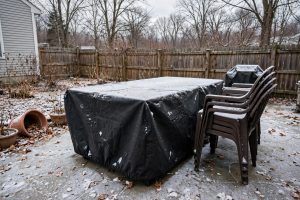
Cover it. A weatherproof patio furniture cover made for heaters fits over the tall unit and keeps rain out of the burner. Covers cost little and add years to the life of the steel. The best patio heater for large backyard life is one that survives the winter under a good cover.
Check for rust. Surface rust on steel can be sanded and painted with high-heat paint. Deep rust on the burner or gas parts means it is time for a new unit. Do not patch gas parts with glue or tape.
Store tanks right. Keep spare propane tanks in a shaded spot outdoors. Heat raises tank pressure, so shade matters in summer.
Service gas lines. If you run a natural gas heater, have the line checked by a fitter every year or two. Fittings loosen with heat and cold cycles.
Accessories Worth Considering
A few extras make the heater more useful.
– Wind guards fit around the flame and hold heat in on breezy nights. – Wheels or a rolling base let you move a heavy heater with ease. – Table attachments turn a standing heater into a small side table, handy for drinks. – Remote igniters let you light the unit from your chair. – Matching seating makes the heated zone feel planned. A best outdoor sectional sofa for small patios guide helps if you are sizing furniture for a smaller zone, while an affordable outdoor dining table for eight guide suits a big dining setup near the heater.
Frequently Asked Questions
How many heaters do I need for a large backyard?
Count your seating zones. One strong heater covers one zone of about fifteen to twenty feet across. Two zones need two heaters. For a very long yard with three gathering spots, plan three units or one heater plus a fire pit.
Is propane or natural gas cheaper to run?
Natural gas costs less per hour, often half the price of propane. But you must pay for a gas line install. If you heat the yard often, natural gas wins over time. If you heat a few nights a month, propane is simpler and the tank cost stays low.
Can I use a patio heater under a covered patio?
You can use electric infrared heaters under a solid cover. Gas heaters need open air above them and big clearances. Never put a gas heater under a low roof or inside a tent. Read the maker manual for the exact clearance your model needs.
How long does a propane tank last in a patio heater?
A 20-pound tank lasts about eight to twelve hours on medium heat. High settings can drain it in under eight hours. Keep a spare tank on hand so a cold night is never cut short.
Do patio heaters work in wind?
They work, but wind steals much of the heat. A fifteen-mile-per-hour wind can cut the comfort zone in half. Wind guards, screens, and placing the heater upwind of your seats all help. On very windy nights, no heater will feel warm in open air.
What is the best patio heater for large backyard parties?
For parties, propane standing heaters win for most owners. They are easy to move, need no install, and put out strong heat. Set one near the food table and one or two near seating groups. If you host often, add a fixed natural gas post as well.
A Short Final Word
The best patio heater for large backyard living is the one that matches your yard, your fuel choice, and your habits. Measure your seating zones. Pick a high-BTU unit with solid safety features. Place it with care, keep it covered, and it will serve you for many cold seasons.
Do not rush the purchase. Read reviews, compare warranties, and check the safety ratings. A heater is a tool you will use for years. Buy once, buy well, and enjoy your yard long after the leaves fall.
References
Consumer Reports. (n.d.). Product reviews and ratings. https://www.consumerreports.org HGTV. (n.d.). Home and garden ideas. https://www.hgtv.com IKEA. (n.d.). Home furnishings. https://www.ikea.com Lowe’s. (n.d.). Home improvement products. https://www.lowes.com Polywood. (n.d.). Outdoor furniture. https://www.polywood.com The Home Depot. (n.d.). Home improvement products. https://www.homedepot.com The Spruce. (n.d.). Home and garden advice. https://www.thespruce.com U.S. Consumer Product Safety Commission. (n.d.). Product safety information. https://www.cpsc.gov Wayfair. (n.d.). Furniture and home goods. https://www.wayfair.com
Was this guide helpful?

About Emily Rodriguez
The My Garden US editorial team writes practical, in-depth home and garden guides for American homeowners — tested advice, no fluff.