A patio wall is a blank space. Paint helps. Plants help. But few things change a patio the way a mirror can. The best outdoor mirror for patio wall spaces reflects light, opens up tight corners, and adds a sense of depth that no poster or sign can match. It is one of the simplest upgrades an owner can make to an outdoor living area.
Yet not every mirror belongs outside. A glass mirror made for a bedroom will fail fast in rain, sun, and wind. This guide explains what makes a mirror safe for outdoor use, how to choose one for your wall, what you can expect to pay, and how to keep it looking clear for years.
Why an Outdoor Mirror Belongs on a Patio Wall
Small patios are common in American homes. A brick wall, a fence, or the side of the house closes the space in. A mirror breaks that feeling. It bounces daylight into shaded corners. It doubles the sight of flowers and shrubs. At night, it catches the glow of string lights and lanterns, which makes the patio feel warm and full.
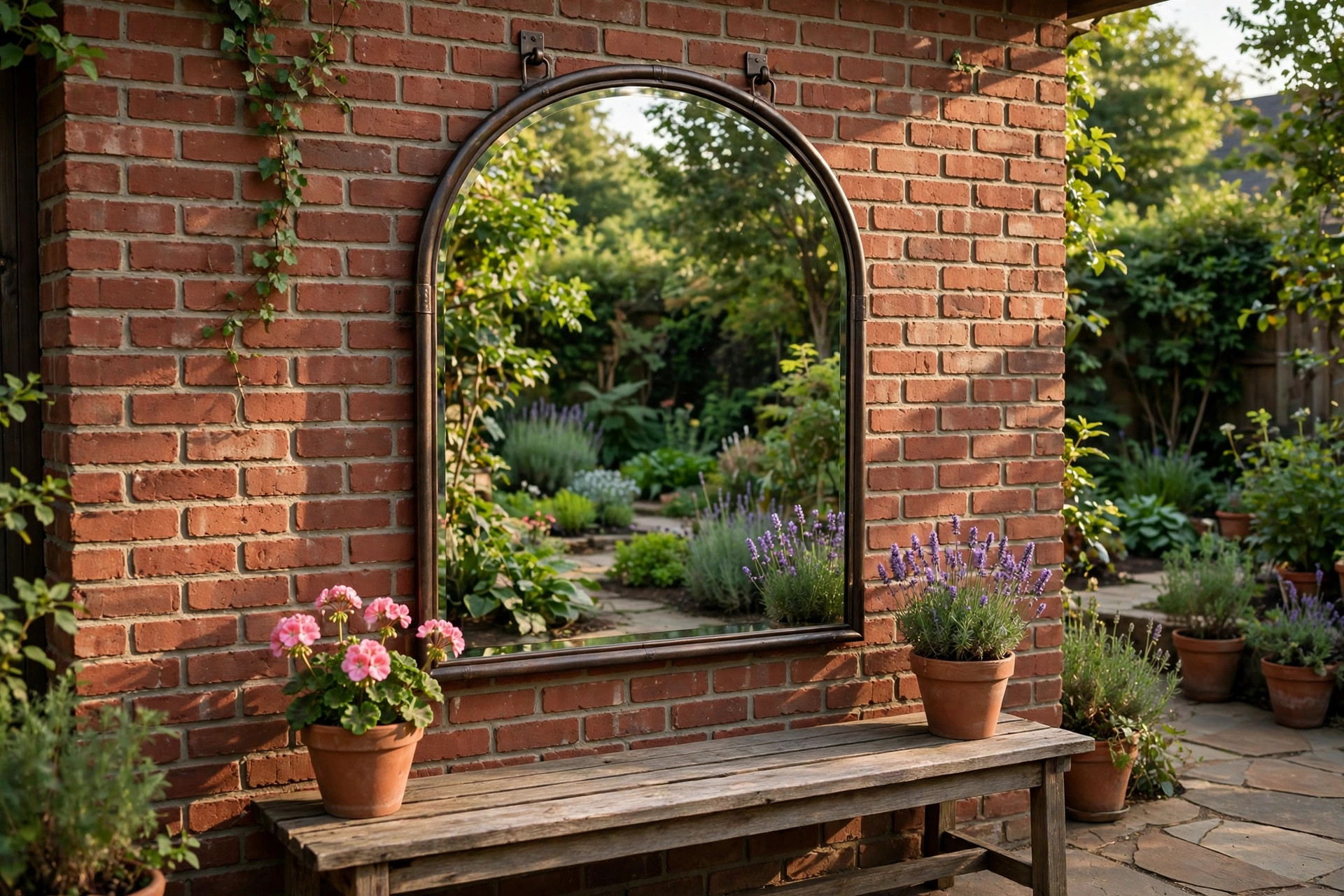
Designers call this a trompe l’oeil effect, a French term for “trick of the eye.” The trick is simple: the eye reads the reflection as more space. In a narrow townhouse yard, a mirror can feel like a window into another garden. On a large patio, it adds balance and draws the eye to a wall that would otherwise sit bare.
Mirrors also work well with other patio furniture. They sit above a console table or a bench. They pair with planters and lanterns. Many owners hang them near a seating group so guests can enjoy the reflection. When you read about how to clean outdoor furniture cushions, you will see the same idea at work: a clean, cared-for patio feels larger and more inviting than one that is ignored.
What to Look For in an Outdoor Mirror: Best Outdoor Mirror for Patio Wall
An outdoor mirror must survive weather. That is the main difference between an outdoor mirror and an indoor one. Here are the points that matter most.
Shatterproof or Safety Glass
Outdoor mirrors should never use plain float glass. If plain glass breaks, it falls in sharp shards. Shatterproof mirrors use tempered glass or a safety backing that holds pieces together. Acrylic mirrors are another choice. They are light, and they cannot shatter at all. The Consumer Product Safety Commission publishes general guidance on glass safety around the home, which is worth a look before you hang anything heavy on an outside wall.
Weatherproof Frame
The frame does most of the work. Wood frames look warm, but raw wood swells and rots in rain. If you like wood, choose teak or cedar, or make sure the frame is sealed. Metal frames should be powder-coated aluminum or stainless steel so they do not rust. Resin and plastic frames hold up well and cost less. Iron frames are heavy and solid, but they need a rust-proof coating.
Sealed Back and Edges
Water creeps in at the edges. A good outdoor mirror has a sealed backing board, often made of marine-grade plywood or plastic. The seal keeps damp air away from the silvering on the back of the glass. If you see a mirror with an open back or bare edges, pass on it.
UV and Fade Resistance
Direct sun is hard on mirrors. Heat can warp plastic frames. Sunlight can cloud the glass over time. Look for products described as UV-resistant. Acrylic mirrors resist sun well, though they scratch more easily than glass.
Size and Weight
Measure your wall first. A mirror that is too small looks lost. A mirror that is too large can strain its fixings in wind. Many owners choose a mirror between 24 and 48 inches wide for a standard patio wall. Heavier mirrors need masonry anchors or a strong wall mount. Check what your wall can hold before you buy.
The Bob Vila site offers plain advice on hanging heavy items on brick and stucco walls, which applies directly to patio mirrors. The Spruce also has practical notes on outdoor wall decor and weather limits.
Types of Outdoor Patio Mirrors
Outdoor mirrors come in several styles. Each has its own look and price.
Arched Garden Mirrors
Arched mirrors are shaped like windows or garden gates. They are very popular for patios. The arch makes the wall feel like an opening to another space. They often come with metal frames painted dark green, black, or bronze. They suit brick walls and fences.
Round and Sunburst Mirrors
Round mirrors soften a patio full of straight lines. Sunburst mirrors have rays around the glass, which catch the light and draw the eye. These work well above a bench or between two planters. They are usually lighter than arched mirrors.
Rectangular Panel Mirrors
Large rectangular mirrors give the strongest sense of extra space. They look modern and calm. They pair well with simple furniture and clean lines. Make sure the frame is rated for outdoor use, since big glass panels catch more wind.
Acrylic Mirrors
Acrylic mirrors are made of plastic, not glass. They are light, cheap, and safe around children and pets. The trade-off is clarity. They do not reflect as crisply as real glass, and they scratch if you clean them with rough cloths. Still, for a high wall or a rental home, they are a sound choice. IKEA and Wayfair both carry light outdoor-safe mirror options that are easy to hang.
Framed Tile and Mosaic Mirrors
Some outdoor mirrors use small mirrored tiles set in a mosaic frame. They add craft and color. The many small pieces catch light in a lively way. They cost more and need more cleaning, but they can be the centerpiece of a patio.
How to Hang a Mirror on a Patio Wall
Hanging is where most mistakes happen. A mirror that falls can hurt someone or break beyond repair. Take these steps.
First, find the studs or the solid part of the wall. On brick or block, use masonry screws or expansion anchors. On wood siding, drive screws into studs. On vinyl siding, you may need a mounting board behind the mirror.
Second, use the right hardware. D-rings on the back of the mirror work with picture wire or directly onto wall hooks. For heavy mirrors, use two anchor points so the load is shared. Check the weight rating of each hook.
Third, tilt the mirror slightly downward. A small tilt, even one or two degrees, keeps rain from pooling on the top edge and running behind the glass. Many owners also add a thin bead of clear silicone along the top edge.
Fourth, think about placement. Hang the mirror where it reflects something pleasant: a tree, a flower bed, a string of lights. Avoid aiming it at a neighbor’s window. A mirror that flashes sun into a neighbor’s kitchen will not make friends.
Fifth, protect it in storms. If high winds are coming, the safest move is to take the mirror down. A weatherproof patio furniture cover is made for furniture, but the same habit applies to wall decor: cover or remove items when rough weather is forecast. Lowe’s sells heavy-duty anchors and outdoor mounting hardware that make this job easier.
Cost and Price: What You Can Expect to Pay
Outdoor mirrors span a wide price range. Small acrylic mirrors start near 20 to 40 dollars. Mid-size metal-framed mirrors, the most common type, run from 60 to 180 dollars. Large arched garden mirrors with ornate frames can cost 200 to 500 dollars or more.
What drives the price? Size is the biggest factor. A real glass mirror costs more than acrylic. Hand-finished frames cost more than plain ones. Brand name adds a premium. Custom shapes cost the most of all.
Set a budget before you shop. For most patios, a mirror in the 80 to 150 dollar range is the sweet spot. It is big enough to matter, built well enough to last, and not so dear that a storm becomes a disaster. Frontgate and Polywood sit at the higher end with premium outdoor decor, while Article offers modern styles at middle prices.
Watch for sales in spring and late summer, when outdoor decor is marked down. Buying at the end of the season can save a third of the price.
Care and Upkeep Through the Seasons
An outdoor mirror needs regular care. It is not hard work, but it must be done.
Clean the glass once a month in the growing season. Use a soft cloth and a mild mix of water and white vinegar. Avoid rough sponges on acrylic. Dry with a second cloth so no spots remain. Do this on a cloudy day if you can. Hot sun dries cleaner too fast and leaves streaks.
Check the frame twice a year. Look for rust spots on metal. Sand small spots and touch them up with outdoor paint. Check wood frames for soft spots or peeling seal. Re-seal wood once a year with an outdoor clear coat.
Look behind the mirror once a year. Pull it from the wall if you can. Check the backing for damp or mold. Clear any leaves or webs from the gap between mirror and wall. Good air flow keeps moisture from settling.
In winter, harsh cold is less of a problem than freeze and thaw cycles. Water that seeps into a crack will freeze, expand, and widen the crack. If your winters are severe, bring the mirror inside or cover it well. A covered patio helps a great deal.
The same care habits that protect soft furnishings protect mirrors. Owners who stay on top of waterproof outdoor throw pillows and cushion covers tend to have mirrors that last longer, because they check their patio gear on a schedule.
Safety Points to Keep in Mind
Safety comes first with any glass item outdoors.
Use shatterproof glass or acrylic if children or pets use the patio. Place the mirror high enough that a running child cannot hit it.
Never aim a mirror so it focuses direct sun onto wood, fabric, or dry leaves. A curved mirror can act like a lens and start a fire. Flat mirrors are safer, but it is still wise to check where the reflection lands at midday.
Fix the mirror firmly. Test it by giving it a firm shake after hanging. If it moves, add anchors. In hurricane or high-wind zones, take wall decor down before storms.
Wear gloves when handling a glass mirror. Edges can be sharp even when they look smooth. Two people should carry any mirror wider than three feet.
HGTV has many patio decorating ideas, and its guides often note the same safety basics for heavy wall pieces.
Frequently Asked Questions
Can I use an indoor mirror on my patio?
You can, but it will not last. Indoor mirrors are not sealed against damp. The silvering on the back will cloud and spot within a season or two. The frame will likely rot or rust. Buy a mirror made or rated for outdoor use.
Will an outdoor mirror fade in the sun?
Good ones resist fading well. UV-resistant coatings and quality frames hold up for years. Cheap plastic frames may yellow or grow brittle after long sun exposure. If your wall faces the afternoon sun, choose metal or sealed wood over bare plastic.
How do I stop birds from hitting the mirror?
Birds strike mirrors because they see the reflection as open sky. You can break up the reflection with window decals made for birds, or hang the mirror where it reflects a wall or plants rather than sky. Some owners add a light screen or a plant in front of part of the glass.
What size mirror fits a small patio?
For a wall eight to ten feet wide, a mirror 24 to 36 inches wide looks balanced. For a narrow wall under six feet, a round mirror 20 to 28 inches across is a safe pick. When in doubt, cut a paper template and tape it to the wall for a day. Live with the shape before you buy.
Do outdoor mirrors need special cleaners?
No. Warm water with a little dish soap, or a half-and-half mix of water and white vinegar, works fine. The key is the cloth: use soft microfiber. Paper towels can scratch acrylic over time. Never use abrasive powders.
How long does an outdoor mirror last?
A well-made outdoor mirror lasts five to ten years with basic care. Acrylic mirrors last longer in wet climates but scratch more. Glass mirrors keep their clarity longer but need their seals checked. The frame usually fails before the glass does, so frame quality matters most.
A Short Final Word
The best outdoor mirror for patio wall spaces is not the biggest or the dearest. It is the one that suits your wall, your weather, and your budget. Choose shatterproof glass or acrylic. Pick a frame that stands up to rain and sun. Hang it on solid anchors. Clean it on a schedule. Do these plain things, and your patio gains light, depth, and charm for years to come.
Start by measuring your wall and noting which way it faces. Then shop with the checklist in this guide. The right mirror is out there, and your patio is closer to finished than you think.
References
Article. (n.d.). Modern furniture. https://www.article.com Bob Vila. (n.d.). Home improvement advice. https://www.bobvila.com Frontgate. (n.d.). Outdoor furniture and decor. https://www.frontgate.com HGTV. (n.d.). Home and garden ideas. https://www.hgtv.com IKEA. (n.d.). Home furnishings. https://www.ikea.com Lowe’s. (n.d.). Home improvement products. https://www.lowes.com Polywood. (n.d.). Outdoor furniture. https://www.polywood.com The Spruce. (n.d.). Home and garden advice. https://www.thespruce.com U.S. Consumer Product Safety Commission. (n.d.). Product safety information. https://www.cpsc.gov Wayfair. (n.d.). Furniture and home goods. https://www.wayfair.com
Was this guide helpful?

About Robert Taylor
The My Garden US editorial team writes practical, in-depth home and garden guides for American homeowners — tested advice, no fluff.