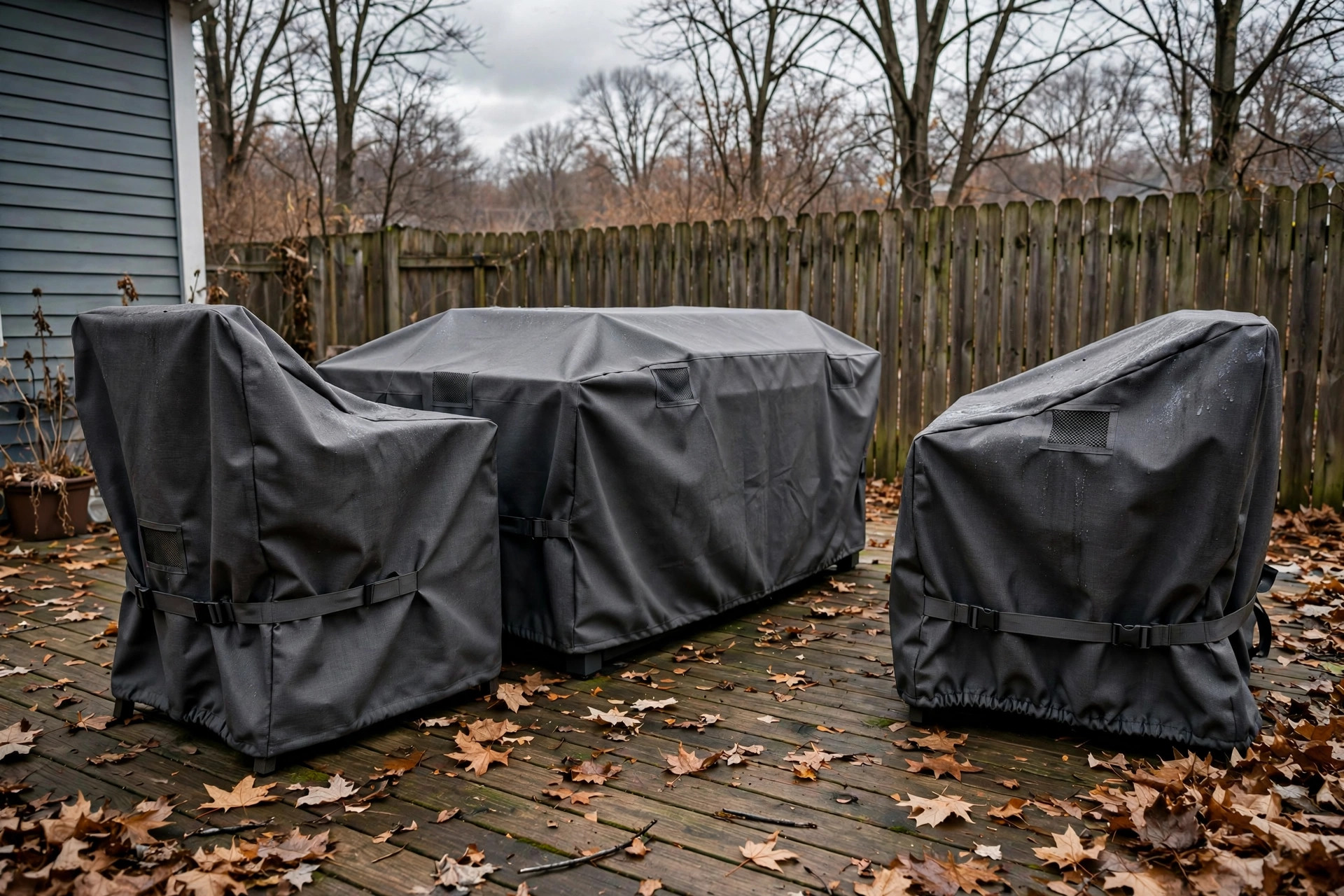

Why Winter Is Hard on Patio Furniture
A chair left out in January does not stay the same by spring. Rain soaks into cushions. Snow piles on tabletops. Ice forms in joints and cracks. Wind throws grit against metal frames. By April, a good set can look old and tired.
That is why patio furniture covers for winter storage matter. A cover is a simple shield. It stands between your furniture and the worst of the season. It keeps the set dry, clean, and ready for the first warm weekend.
Many owners skip this step. They bring cushions inside and leave the frames out. That is a half measure. Metal can rust. Wood can split. Wicker can grow mold where water sits. A cover costs far less than a new set. It is one of the cheapest ways to protect what you own.
Winter is long in many states. From November to March, your furniture sits idle for five months. Five months of freeze and thaw will test any material. A cover does not stop the cold. It stops the water. Water is the true enemy. When water soaks in and freezes, it expands. That expansion breaks seals, paint, and joints. A dry chair does not suffer this damage.
Think of the cover as winter insurance. You would not park a new car in an open field all winter without a care. Treat your patio set with the same respect. Good covers last for years. The math is simple. A set of covers costs less than one new chair.
What to Look For in a Good Cover: Patio Furniture Covers for Winter Storage
Not all covers are equal. Some are thin sheets that tear in the first storm. Others are tough shells built for years of service. Here is what separates the good from the poor.
Fabric and Material
Look for polyester or vinyl with a waterproof coating. Polyester is light and easy to handle. Vinyl is heavier and very strong against rain. The best covers use layered fabric. They are thick but not stiff.
Check the denier number if it is printed on the package. Denier measures thread thickness. A higher number means thicker cloth. For winter, 600 denier polyester is a solid choice. It resists tears and stands up to wind.
Avoid plain cotton or canvas with no coating. These soak through. They may look sturdy, but they let water pass. For true heavy duty weatherproof covers, water must bead and roll off.
Fit and Size
A cover that is too large will flap in the wind. Flapping wears the fabric thin. It can also scratch the furniture. A cover that is too small will not reach the legs. Water will find the gap.
Measure your pieces before you buy. Measure height, width, and depth. Round up by an inch or two, not by a foot. Many makers offer covers shaped for chairs, loveseats, sofas, and tables. Use the shaped cover for each piece when you can.
Some covers come with drawstrings or buckle straps at the base. These pull the cover tight. They are worth the extra cost in windy places.
Vents and Tie-Downs
A good winter cover breathes. Look for small mesh vents near the top. Vents let trapped air escape. They stop damp air from sitting under the cover. Damp air breeds mold.
Tie-downs matter just as much. Winter wind is strong. Elastic hems help, but straps and buckles are better. Click straps keep the cover locked to the chair legs. If you live where winter storms blow hard, never buy a cover without straps.
Types of Covers for Common Patio Pieces
Each piece of furniture has its own shape. Makers sell covers to match. Here are the main types you will find.
Chair covers. These slip over a single chair like a hood. Some fit dining chairs. Others fit deep lounge chairs. Check the arm width. Lounge chairs are wider than dining chairs.
Sofa and loveseat covers. These are long covers for two or three seat units. They often have vents on both ends. Measure the full length of the sofa first.
Table covers. Round and rectangular covers are sold apart. A round cover suits a round table. A rectangular cover suits a dining table. Some table covers drop to the ground. Others end at the table edge.
Umbrella covers. A standing umbrella needs its own tall, slim cover. Slide it down over the closed umbrella. This keeps the fabric clean and dry. It is a small buy that saves a large umbrella.
Fire pit and grill covers. If your patio has a fire pit or a grill, cover it too. These covers are made for heat-safe metal shapes. Never cover a grill that is still warm.
Many sellers group covers into sets. A set may hold covers for four chairs and one table. Sets cost less than buying each piece alone. If your set is standard, a bundled set is a fine deal.
Cost and Price
Covers range from cheap to costly. A thin single chair cover can cost under fifteen dollars. A full heavy duty set for a large patio can run past one hundred dollars. Most buyers spend between thirty and eighty dollars for a full set.
Price follows quality. Cheap covers use thin cloth and weak seams. They may last one winter. Better covers use thick cloth, double seams, and strong straps. They can last three to five winters. When you spread the cost over years, the better cover is the cheaper buy.
Watch for off-season sales. Late summer and early fall bring clearances. Stores drop prices to clear stock before winter. This is the best time to buy. Large online sellers and major home stores both run these sales. Check a few places and compare. Product testing groups rate covers for tear strength and water resistance, which helps when you compare brands.
Do not forget the cushions. Many owners store cushions indoors for winter. That is wise. Cushion fabric fades and wears fast when wet. But if you must leave cushions out, buy covers with extra room and a soft inner lining. Brush and air them out before you store them, so spring brings no surprises.
Care and Upkeep Through the Season
A cover is not a thing you place and forget. It needs light care all winter. These small habits make covers last.
Put covers on clean furniture. Wipe each piece before covering. Dirt left under a cover can stain. It can also hold dampness against the frame.
Let furniture dry first. Never cover a wet chair. Water trapped under a cover has nowhere to go. Wait for a dry day. If the season is already wet, towel each piece dry by hand.
Check after storms. Heavy snow can weigh a cover down. Brush snow off with a broom. Do not pull or yank the cover while it is frozen. Let ice melt on its own, or pour cool water over it to loosen it.
Keep the vents clear. Leaves and snow can block vents. Clear them now and then. Good air flow stops mold.
Fix small tears fast. A small rip can grow in wind. Patch it with repair tape made for outdoor fabric. A quick patch saves the whole cover.
In spring, wash the covers before storing them. Shake off dust. Wipe with mild soap and water. Let them dry fully in the sun. Fold them dry and store them in a bag or bin. Damp covers grow mold in storage.
For wooden pieces, covers are only part of the job. Read a teak furniture care guide before winter sets in. Oil or sealant applied in fall adds a second layer of defense.
Safety Notes for Winter Covering
Covering furniture is safe work, but a few rules keep it safer.
Do not cover anything hot. Grills and fire pits must be fully cold. This takes longer than many think. Wait a full day after the last use.
Do not let covers touch heat sources. Keep covered furniture away from outdoor heaters and firewood stacks.
Watch for mold. If you lift a cover and smell must, act fast. Air the piece out on a dry day. Clean it with soap and water. If mold returns, your vents may be blocked, or the cover may not breathe well enough.
Mind the wind. A loose cover can blow off and land in a neighbor’s yard or on the street. It can also knock over light chairs. Strap every cover tight. In storm country, weigh down light pieces or move them against the house wall.
Keep chemicals off the covers. Pool chemicals, de-icer, and strong cleaners can eat through fabric. Store these items away from covered furniture.
Check for pests. Small animals seek shelter under covers in winter. Mice may nest in folds. Check now and then. A few mothballs or cedar blocks nearby can help, but keep them away from cushions you will sit on.
Frequently Asked Questions
Should I cover my patio furniture even if it is rated all weather?
Yes. All weather means the furniture resists weather better than plain indoor pieces. It does not mean it is immune. Sun, rain, and ice still wear it down. A cover doubles or triples its life. Think of it as cheap added protection for a costly set.
Can I leave the covers on all winter without checking them?
You can, but it is not wise. Snow weight, blocked vents, and loose straps cause most winter damage to covered pieces. A quick check once a month takes five minutes. Brush off snow. Tighten straps. Look for tears. Those five minutes save money in spring.
Do I need to bring cushions inside, or can covers protect them?
Bring them inside when you can. Indoor storage is always safer for cushions. If you lack room, use covers with extra depth and a soft lining. Store flat cushions on edge so water runs off. Never let cushions sit in a pool of water under a cover.
What is the best month to put covers on?
Late October or early November suits most of the country. Watch your local weather. Put covers on before the first hard freeze. Once nights drop near freezing, water damage starts. Do not wait for the first snowstorm.
Will covers stop rust on metal furniture?
Covers slow rust a great deal, but they cannot stop it alone. Rust needs water and air. A cover removes most water. For full defense, wipe metal frames dry before covering and touch up any paint chips. A small rust spot grows fast in winter damp. Read up on winter storage ideas for patio furniture to keep frames sound.
Can I use a tarp instead of a fitted cover?
A tarp works in a pinch, but it is a poor long term choice. Tarps do not breathe. They trap damp air and cause mold. They are hard to tie down well. They flap and tear. A fitted cover with vents costs more but protects far better. If you must use a tarp, leave gaps at the bottom for air flow and tie it down with rope.
A Short Final Word
Winter will come whether you plan for it or not. Your patio set will sit out there through every storm. A good cover is a small act of care that pays off in spring.
Buy covers that fit. Choose thick fabric with vents and straps. Put them on clean, dry furniture. Check them after storms. These plain steps keep your chairs, tables, and sofas in fine shape year after year.
When spring arrives and the covers come off, your furniture will look much as it did in fall. That is the whole point. A little care in November buys a clean start in April.
References
IKEA. (n.d.). Home furnishings. https://www.ikea.com Wayfair. (n.d.). Furniture and home goods. https://www.wayfair.com Consumer Reports. (n.d.). Product ratings and reviews. https://www.consumerreports.org
Was this guide helpful?

About Lisa Anderson
The My Garden US editorial team writes practical, in-depth home and garden guides for American homeowners — tested advice, no fluff.
You May Also Like

How to Find a Patio Furniture Assembly Service Near Me
July 7, 2026 0 views
The Best Hammock Chair with Stand Indoors: A Practical Buyer Guide
April 7, 2026 0 views
How to Protect Patio Furniture From Sun
June 1, 2026 0 views