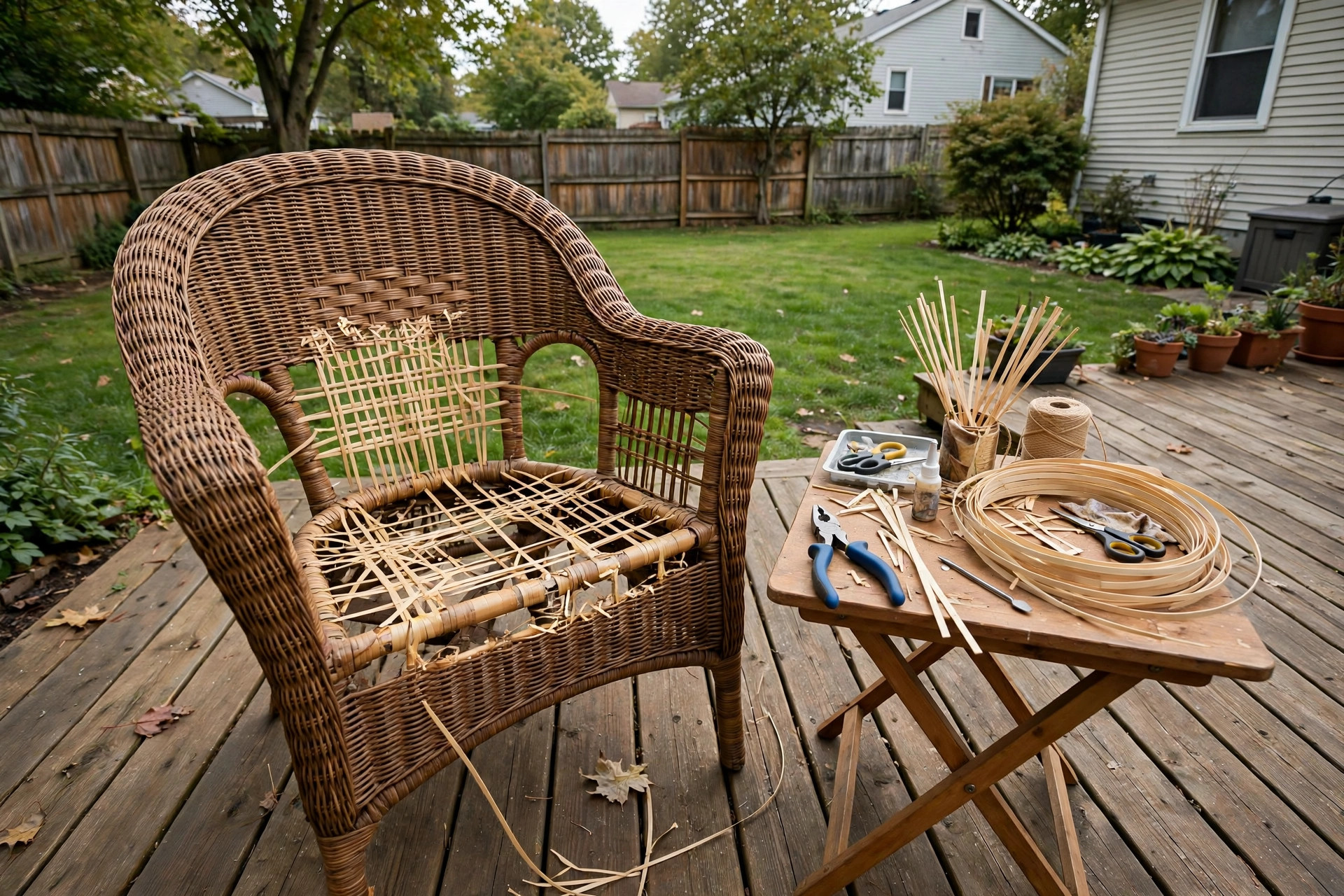

Wicker patio furniture adds warmth and charm to any yard, porch, or deck. It is light, strong, and comfortable. But sun, rain, and daily use wear it down. Strands loosen. Weaves sag. Frames rattle. Many owners throw damaged pieces away when a repair would have been simple. This guide explains how to repair wicker patio furniture step by step, using tools most homes already own. The work takes patience, not skill. With care, an old chair or table can serve for many more years.
Why Repairing Wicker Matters
Wicker furniture is not cheap. A quality set can cost several hundred dollars. Replacing it every few years drains money. A repair costs far less. Most fixes need only a few dollars of supplies.
Repair also protects the style of your outdoor space. Old wicker has a look that new sets often lack. The weave softens with age. The color settles into the yard. When you fix a piece instead of replacing it, you keep that character.
There is a practical side too. Wicker frames are built to last. The metal or wood frame beneath the weave often outlives the outer strands by years. Fixing the surface gives that solid frame new life. Many repair shops report that frame damage is rare, while surface damage is common and easy to fix. A guide from Bob Vila notes that most outdoor furniture fails at its weakest point first, and fixing that point restores the whole piece.
Know Your Wicker Type: How to Repair Wicker Patio Furniture
Before you start, learn what kind of wicker you own. The repair method depends on the material. There are three main types.
Natural wicker is made from rattan, cane, reed, or willow. It is plant fiber. It feels dry and light. It breaks when it dries out. You can soak it to make it bend again. Natural wicker is common on older pieces and porch furniture.
Resin wicker is made from plastic strands woven to look like natural fiber. It is also called all-weather wicker. It resists rain and sun far better than plant fiber. It is the most common type sold today for patios and decks. Polywood and other makers of outdoor furniture use modern synthetics for this reason.
Paper wicker is made from twisted paper strands. It is light and cheap. It is used on some budget chairs and hampers. It cannot handle water well.
Check your piece before buying supplies. Natural wicker needs cane or reed for repair. Resin wicker needs plastic repair strands, which match better and last longer outdoors. Using the wrong material makes the repair stand out and fail early. If you are unsure which type you have, a store like The Home Depot or Lowe’s can help you identify it when you bring a small sample.
Tools and Materials You Will Need
Gather your supplies before you begin. You will need:
– Replacement wicker strands (cane, reed, or resin to match your piece) – A bucket of warm water (for natural wicker) – Pliers, both flat-nose and round-nose – Wire cutters or heavy scissors – A small hammer – Sandpaper in medium and fine grit – Wood glue or outdoor craft glue – A staple gun or small tacks – Paint or outdoor stain for touch-up – Clean cloths and a soft brush
Most of these items are found at any hardware store. Shoppers often compare prices at Wayfair, Article, IKEA, and Frontgate for furniture parts and accessories, and Consumer Reports publishes ratings on outdoor furniture that can guide your choices.
How to Repair Broken Wicker Strands
Broken strands are the most common problem. A strand snaps, leaving a gap in the weave. The fix is simple.
Step 1: Clean the Area
Brush away dirt and loose fibers around the break. Use a soft brush. Wipe with a damp cloth. Let it dry. A clean surface holds glue better.
Step 2: Soak the New Strand
If you work with natural wicker, soak your replacement strand in warm water for 30 minutes. This makes it soft and easy to weave. Do not skip this step. Dry cane snaps when bent. Resin strands do not need soaking.
Step 3: Remove the Damaged Strand
Follow the broken strand to each end where it disappears into the weave. Cut it with wire cutters. Pull the ends out gently with pliers. Keep the channel open so the new strand can pass through.
Step 4: Weave the New Strand
Thread the new strand through the same path the old one took. Copy the over-under pattern of the rows around it. This is the heart of wicker patio chair repair, and it takes a steady hand. Work slowly. Pull each pass snug but not tight. Overly tight weaves warp the frame.
Step 5: Trim and Secure
When the strand is woven through, cut the ends with about half an inch to spare. Tuck each end under a nearby row. Add a drop of outdoor glue to hold it. Let the glue cure fully before using the piece.
How to Fix Loose Weaves and Sagging Seats
Sometimes strands do not break. They loosen. A chair seat sags in the middle. The weave pulls away from the frame. This often comes from years of sitting and moisture cycles.
Start by flipping the piece over. Look at the underside. You will see where the weave attaches to the frame. If tacks or staples have pulled out, replace them with new ones. A staple gun makes this fast. Push the weave back into place before stapling.
For sagging seats, try wetting the area with warm water if the wicker is natural. The fibers swell and tighten as they dry. Set the piece in the sun to dry. This old trick restores firmness in many cases. For resin wicker, tightening means re-weaving the loose rows using the strand method above.
Check the frame while you are there. Wicker patio furniture repair often reveals a loose frame joint. Tighten screws. Re-glue wooden joints with outdoor wood glue. Let it set overnight.
How to Repair a Damaged Frame
The frame is the skeleton. If it fails, the weave follows. Metal frames rust. Wooden frames crack. Rattan frames splinter.
For rusted metal frames, sand the rust off with medium-grit sandpaper. Wipe clean. Apply a rust-blocking primer, then outdoor paint. Two thin coats last longer than one thick coat.
For cracked wooden frames, open the crack slightly and fill it with outdoor wood glue. Clamp the joint closed. Wipe off extra glue. Let it cure for a full day.
For serious frame breaks, a metal mending plate adds strength. Screw the plate across the break. These plates are sold in the hardware aisle of most home stores.
Refinishing and Painting Wicker
After repairs, the piece may look patched. A fresh finish ties it together. Paint or stain the whole piece, not just the repair. This blends old and new.
Sand the surface lightly first. This helps the finish stick. Wipe off all dust. Use paint made for outdoor use. Spray paint works well on wicker because it reaches into the weave. Apply light coats. Let each coat dry before the next.
Choose a color close to the original, or pick a new color for a fresh look. Many owners repaint wicker sets every few years as part of routine care. Guidance on outdoor finishes is widely covered by home sites like The Spruce, which explains how different coatings perform in sun and rain.
How to Protect Patio Furniture from Sun and Rain
Repair is only half the job. Protection keeps the damage from coming back. After you learn how to protect patio furniture from sun, your repairs will last much longer.
Use fitted covers when the furniture is not in use. Covers block sun and shed rain. Make sure covers breathe, or trapped moisture causes mold. Store cushions indoors or in a deck box.
Keep wicker out of standing water. Move chairs off wet grass after rain. On a deck, place feet on small risers so water does not pool around the legs.
For natural wicker, apply a coat of outdoor oil or sealant once a year. This keeps the fibers from drying and cracking. Resin wicker needs less care, but a wash with mild soap each spring keeps it fresh.
Cost and Price of Wicker Repair
Doing the work yourself is cheap. A bundle of replacement cane or reed strands costs a few dollars. Glue, sandpaper, and paint add a little more. Most home repairs cost under 30 dollars in materials.
Hiring a professional costs more. A simple strand repair may run 50 to 100 dollars. A full reweave of a chair can cost 150 dollars or more. Prices vary by region and shop.
Compare the repair cost to replacement. If a chair sells new for 200 dollars, a 30-dollar home repair is a clear win. For cheap pieces under 50 dollars, replacement may make more sense. The best all weather wicker dining set options today are built to resist damage, so consider the long-term value when you decide.
Care and Upkeep Through the Year
A little care each season prevents most damage. In spring, wash each piece with mild soap and water. Check for loose strands and fix them early. Small breaks are easy. Big ones take more work.
In summer, rotate chairs so sun hits all sides evenly. This stops one side from fading and drying out. Keep cushions on the furniture. They shield the weave from direct sun.
In fall, give the set a deep clean before storage. Make repairs now, while the weather is mild. It is easier to work on a porch in October than in a cold garage in January.
In winter, store wicker in a shed or garage if you can. If it must stay out, cover it well. Natural wicker suffers most from freeze and thaw. Resin wicker handles cold better but still benefits from a cover.
For porch pieces like a best wicker loveseat for screened porch, upkeep is lighter since a roof blocks most rain. Even so, dust builds up in the weave. Brush it out twice a year.
Safety Notes
Repair work is safe when you take basic care. Wear gloves when cutting strands. Cane edges are sharp. Wear a dust mask when sanding. Old paint may contain lead on very old pieces. Test before sanding if the piece is from before 1978.
Keep glue away from children and pets. Work in a well-ventilated space when painting. Read the label on every product you use. Keep a first-aid kit nearby for small cuts.
Never sit on a piece to test it until glue and paint are fully cured. Wet glue joints can slip under weight and undo your work.
Frequently Asked Questions
Can you repair resin wicker patio furniture? Yes. Resin wicker repairs much like natural wicker. You weave in new resin strands where the old ones broke. Resin strands are sold by many suppliers. Match the color and width as closely as you can. The repair is often invisible once done.
How long does a wicker repair last? A good repair lasts as long as the rest of the piece. Strands woven with care and glued well hold for years. The key is matching the material and keeping the tension right. Repairs on well-cared-for furniture often outlast the original weave around them.
Is it cheaper to repair or replace wicker furniture? Repair is almost always cheaper. Home repairs cost little more than supplies. Professional repairs cost more but still beat the price of a quality new set. Replacement only wins for very cheap pieces where a new chair costs less than the repair.
What causes wicker to unravel? Sun and moisture are the main causes. Sun dries plant fibers until they snap. Rain swells them and loosens the weave. Heavy use wears the seat and arm areas first. Age weakens the glue and tacks that hold everything together.
Can I paint over old wicker? Yes, and it is one of the best ways to refresh a set. Sand lightly, clean well, and use outdoor spray paint. Light coats give the best result. Painted wicker also gains a layer of protection from sun and rain.
Where can I buy replacement wicker strands? Craft stores, hardware stores, and online shops sell cane, reed, and resin strands. Bring a sample of your wicker to match the size and color. Online marketplaces list many options, but a local shop lets you feel the material before you buy.
A Short Final Word
Wicker patio furniture rewards the owner who fixes rather than discards. The steps are simple. Clean, soak, cut, weave, glue, and finish. Each repair adds years to a piece that already fits your home. Start with the smallest break. You will gain skill fast. Soon the whole set will look strong again, ready for many more seasons on the porch or deck.
References
Article. (n.d.). Modern furniture. https://www.article.com Bob Vila. (n.d.). Home improvement advice. https://www.bobvila.com Consumer Reports. (n.d.). Product reviews and ratings. https://www.consumerreports.org Frontgate. (n.d.). Outdoor furniture and decor. https://www.frontgate.com IKEA. (n.d.). Home furnishings. https://www.ikea.com Lowe’s. (n.d.). Home improvement products. https://www.lowes.com Polywood. (n.d.). Outdoor furniture. https://www.polywood.com The Home Depot. (n.d.). Home improvement products. https://www.homedepot.com The Spruce. (n.d.). Home and garden advice. https://www.thespruce.com Wayfair. (n.d.). Furniture and home goods. https://www.wayfair.com
Was this guide helpful?

About David Wilson
The My Garden US editorial team writes practical, in-depth home and garden guides for American homeowners — tested advice, no fluff.
You May Also Like
Metal Patio Furniture Rust Prevention Tips
March 7, 2026 0 views
The Best Patio Table with Fire Pit: A Plain Guide for American Backyards
August 16, 2026 0 views
How to Hang String Lights on Patio: A Simple Guide
March 4, 2026 0 views