
Every summer, the sun beats down on patios across America. Chairs, tables, and sofas sit in the heat all day long. By August, many of them look old and tired. The color fades. Wood cracks. Metal grows hot enough to burn skin. Learning how to protect patio furniture from sun is the best way to keep it looking new and to save money. New outdoor sets are not cheap, and replacing them every few years adds up fast. The good news is that sun damage is slow, and a few simple steps can stop most of it. This guide explains what the sun does to patio furniture and how to fight back. It covers covers, shade, sealants, and daily habits that work. You do not need special tools or skills. You only need a little time and the right plan.
Why the Sun Hurts Patio Furniture
Sunlight is made of light you can see and light you cannot see. The part you cannot see, called ultraviolet or UV light, does the most harm. UV rays break down dyes in fabric, dry out oils in wood, and weaken plastic over time. Heat adds to the damage. On a hot day, a dark metal chair can reach well over 150 degrees. At that heat, joints loosen and paint blisters.
Most people notice the damage late. A red cushion turns pink. A brown wood table turns gray. A black resin chair turns chalky white at the edges. None of this happens in one day. It happens over weeks and months of steady exposure. That slow pace is good news, because it means early action works well. A set that is protected from the start can look good for ten years or more. A set left in full sun may look worn in two or three.
The sun also shortens the life of the small parts. Screws rust faster. Glue in wicker dries out. Elastic cords in folding chairs lose their stretch. Protecting the whole set means protecting these small parts too.
How the Sun Damages Each Material: How to Protect Patio Furniture From Sun
Different materials react to sun in different ways. Knowing what you own is the first step in learning how to protect patio furniture from sun.
Wood
Wood dries out in the sun. Natural oils leave the surface, and the grain opens up. Teak, cedar, and eucalyptus are popular outdoor woods, and all of them turn gray when left bare in the sun. That gray color is not rot, but it is a sign that the surface is weathering. Cracks can follow, especially at the ends of boards. Painted wood fares a little better, but paint still fades and peels after a few sunny seasons.
Metal
Metal furniture, such as aluminum, steel, and wrought iron, does not fade the way wood does. Instead, it gets very hot, and the heat breaks down paint and powder coating. Once the coating cracks, water gets in and rust starts. Sun damage on metal often shows up as rust, even though water does the final work. Blocking the sun is the first step in rust prevention, and our guide on how to remove rust from patio furniture covers what to do if rust has already started.
Wicker and Rattan
Natural wicker and rattan dry out fast in direct sun. The thin strands become brittle and snap. Synthetic resin wicker holds up much better, but cheap versions can still fade or turn brittle after years of strong sun. High density polyethylene, often called HDPE wicker, is the most sun proof choice in this group.
Fabric and Cushions
Fabric fades first and fastest. Standard outdoor fabric may lose its color in a single summer. Foam inside cushions also breaks down, so a cushion that felt thick in May can feel flat by September. Fabrics marked as solution dyed acrylic, such as Sunbrella and similar brands, resist fading far better than printed cotton or polyester.
Plastic and Resin
Plastic chairs and tables are light and cheap, but the sun makes them chalky and brittle. You have seen this on old white plastic chairs that feel rough to the touch. Once plastic turns chalky, it is hard to bring back. Prevention matters more than repair here.
Simple Ways to Protect Your Furniture From the Sun
There are three main lines of defense: covers, shade, and surface treatments. Most homes use a mix of all three.
Use Good Covers
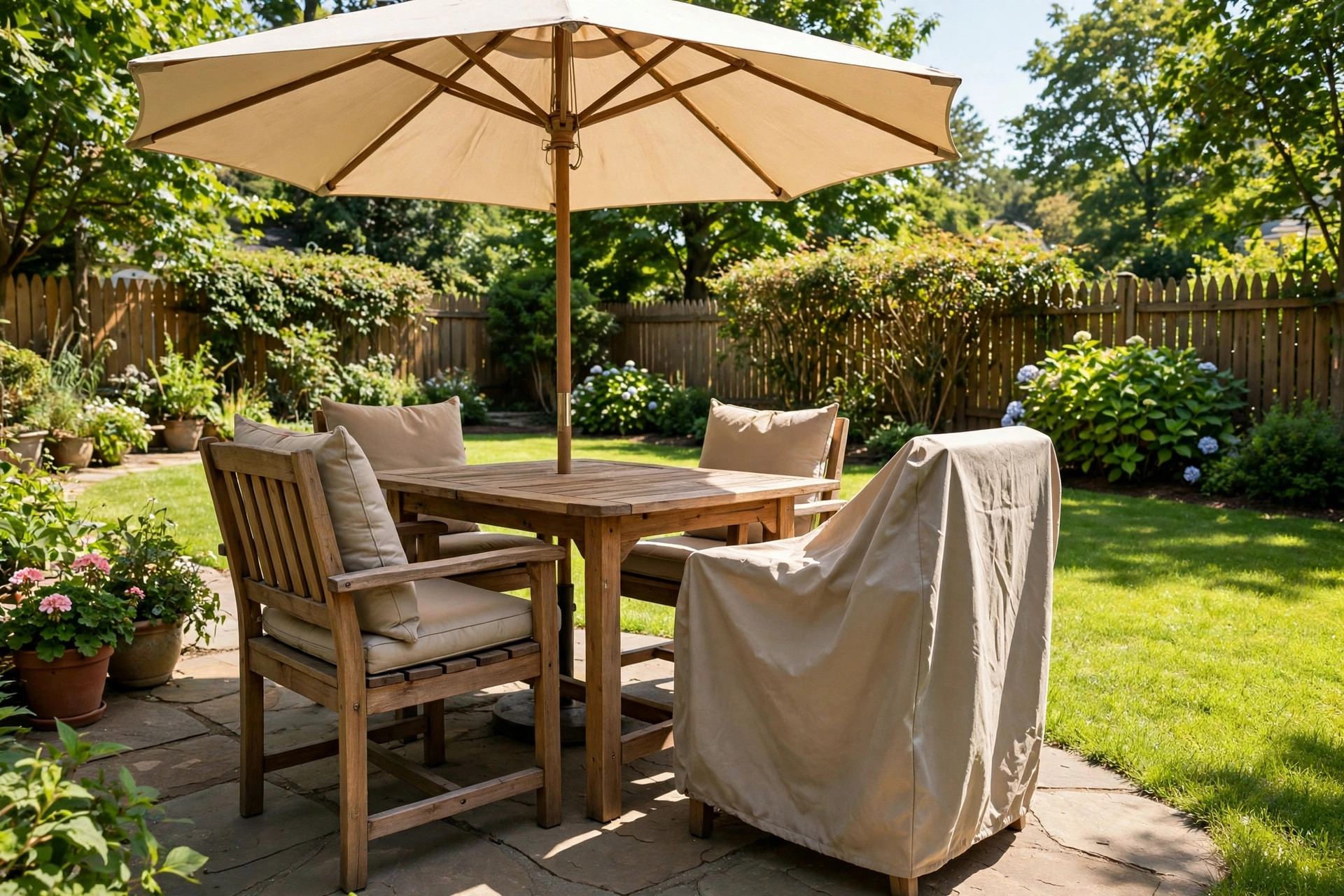
Covers are the easiest form of protection. A weatherproof patio furniture cover blocks UV light and keeps rain and dust off at the same time. Look for covers made of heavy duty polyester with a UV resistant coating. The cover should fit close to the furniture so wind does not blow it away. Straps, drawstrings, and elastic hems all help. Vents are worth having too, because they let trapped heat escape and stop mildew.
Put covers on whenever the furniture is not in use. It takes less than a minute once you learn the routine. Many owners cover their sets every evening and uncover them in the morning. That habit alone can double the life of cushions.
Add Shade
Shade stops the sun before it reaches the furniture. A large patio umbrella is the most common choice. For a dining set, the umbrella should be wide enough to shade the whole table plus the chairs. Cantilever umbrellas work well for seating groups because the pole sits off to the side. A gazebo or pergola gives full time shade and adds a nice look to the yard. Shade sails are a lower cost option and come in many shapes.
Even partial shade helps. A set that gets morning sun and afternoon shade will last much longer than a set in full sun all day. If you can move lighter pieces, shift them into the shade during the hottest hours.
Use Sealants, Oils, and Sprays
Wood needs oil or sealant to replace what the sun dries out. Teak oil keeps teak rich in color, though it must be reapplied once or twice a year. For a deeper look at this routine, see our teak patio set maintenance tips guide. Spar varnish and marine grade sealants give stronger protection and last longer between coats. For metal, touch up paint chips each spring so bare metal never sits in the sun. For fabric, UV protectant sprays add a thin shield that slows fading. They are not magic, but they buy time, especially on older cushions.
Choosing the Right Protection for Your Set
Not every home needs every method. Match the protection to what you own and where you live.
Match the Material
Wood owners should plan on annual oiling or sealing plus covers. Metal owners should watch the coating, touch up chips, and use covers in the off season. Fabric owners should bring cushions inside when storms or strong sun arrive, or store them in a deck box. Wicker owners should keep pieces out of all day sun and use covers during heat waves.
Match the Climate
Homes in the South and Southwest face the hardest sun. In Arizona, Texas, and Florida, shade structures pay for themselves quickly because the UV index stays high for most of the year. Homes in the North face a shorter but still strong summer sun, and winter storage matters just as much. If your winters are cold, plan for patio furniture storage ideas for winter that we cover in a separate guide, since freeze and thaw cycles add their own damage.
Match the Budget
Protection does not have to cost much. A set of fitted covers for a four piece set often costs less than one replacement cushion. A basic market umbrella costs far less than a new dining set. Even a simple habit, like turning cushions face down when you leave, costs nothing and slows fading on the top side. Start with the cheapest steps and add more as you can.
Cost and Price
Prices vary by region and quality, but typical ranges help with planning. A set of four to six fitted furniture covers runs about 60 to 150 dollars. A good nine foot market umbrella with a base costs 100 to 300 dollars. A shade sail runs 40 to 120 dollars, plus hardware. A gallon of teak oil or outdoor wood sealant costs 25 to 50 dollars and covers several pieces. UV fabric spray costs 10 to 20 dollars per bottle.
Compare that to replacement costs. A mid range patio dining set costs 800 to 2,000 dollars. A single replacement cushion costs 40 to 100 dollars. A full set of new cushions can cost more than the frames did. Seen this way, covers and shade are cheap insurance. Many stores, including large retailers like IKEA and Wayfair, sell both furniture and the covers that fit it, which makes sizing easy.
Care and Upkeep Through the Season
Sun protection works best as a routine, not a one time job. In spring, wash every piece with mild soap and water. Check wood for dry spots and oil or seal where needed. Touch up paint chips on metal. Look at fabric for early fading and plan replacements if needed. Learning how to clean outdoor furniture cushions properly in spring sets you up for the whole year.
In summer, keep covers on when pieces sit unused. Brush dust off shaded pieces once a week, since dust plus sun can grind into finishes. Rotate cushions so each side gets equal use. Check umbrella fabric for fading, since the umbrella itself needs care too.
In fall, give everything a deep clean. Oil wood one more time before cold weather. Store cushions in a dry box or shed. In winter, either store the set inside or keep it covered and raised off the ground so water drains away. A little work in each season keeps the sun from ever getting a head start.
Safety Notes
Hot furniture can burn. Dark metal and dark wood in full sun can cause real burns, especially on children and pets. Test surfaces with the back of your hand before sitting. Shade and light colored covers keep surfaces much cooler.
Some wood oils and sealants give off strong fumes. Apply them outdoors on a calm day, and keep children and pets away until the finish dries. Read the label and follow the drying times. Store oil soaked rags in a metal can with a lid, because some oils can catch fire on their own as they dry.
Anchoring matters too. Umbrellas and shade sails catch wind. Use a heavy base for umbrellas, at least 50 pounds for a nine foot umbrella, and anchor shade sails to solid posts or the house. A falling umbrella can hurt people and smash tables.
Frequently Asked Questions
Does patio furniture fade even under a covered porch?
Yes, but much more slowly. A covered porch blocks direct sun, which is the main cause of fading. Some reflected light still reaches the furniture, so covers during the off season still help. Expect several extra years of life compared to full sun.
Are expensive covers worth the money?
Often, yes. Cheap thin covers tear in one season and let UV light through. Heavy duty covers with UV coating last three to five years and protect far better. The cost per year is low, and they save far more in avoided damage.
Can I leave wood furniture in the sun if I oil it every year?
Annual oiling helps a lot, but it is not a full shield. Oiled wood still fades and grays in full sun, just more slowly. For the best result, combine oiling with covers or shade. Wood that gets both can look new for a decade.
How do I know if my cushions are UV resistant?
Check the tag for words like solution dyed acrylic. These fabrics resist fading far better than printed polyester or cotton. If the tag is gone, rub the fabric gently; fading that shows after one summer usually means standard fabric. Product testers such as Consumer Reports publish ratings of outdoor fabrics and furniture that can guide your next purchase.
Will a patio umbrella alone protect my set?
An umbrella helps a great deal during the hours it shades the set, but the sun moves. Morning and late afternoon sun will still hit the furniture from the side. Use the umbrella plus covers for full protection, especially on the hottest days.
Should I bring cushions inside every night?
You do not have to, but it is the best habit for long cushion life. If that feels like too much work, a deck box next to the seating area makes it easy. At minimum, bring cushions in before storms and during heat waves.
A Final Word
The sun will always shine on your patio, but it does not have to ruin your furniture. Covers, shade, and a little seasonal care stop most of the damage. Start with the easy steps this weekend. Put covers on the pieces you use least. Move a chair into the shade. Oil the wood table before the next heat wave. Each small step adds years to the life of your set, and your patio will look better for all of it.
References
IKEA. (n.d.). Outdoor furniture and accessories. https://www.ikea.com Wayfair. (n.d.). Patio furniture and outdoor living. https://www.wayfair.com Consumer Reports. (n.d.). Product ratings and buying guides. https://www.consumerreports.org
Was this guide helpful?

About Michael Thompson
The My Garden US editorial team writes practical, in-depth home and garden guides for American homeowners — tested advice, no fluff.
You May Also Like
Outdoor Dining Chairs Stackable Set of Six: A Plain Guide
June 11, 2026 0 views
The Best Propane Patio Heater for Deck Owners: A Plain Guide
January 25, 2026 0 views
Outdoor Furniture Sets Under 1000 Dollars: A Practical Buying Guide
January 26, 2026 0 views