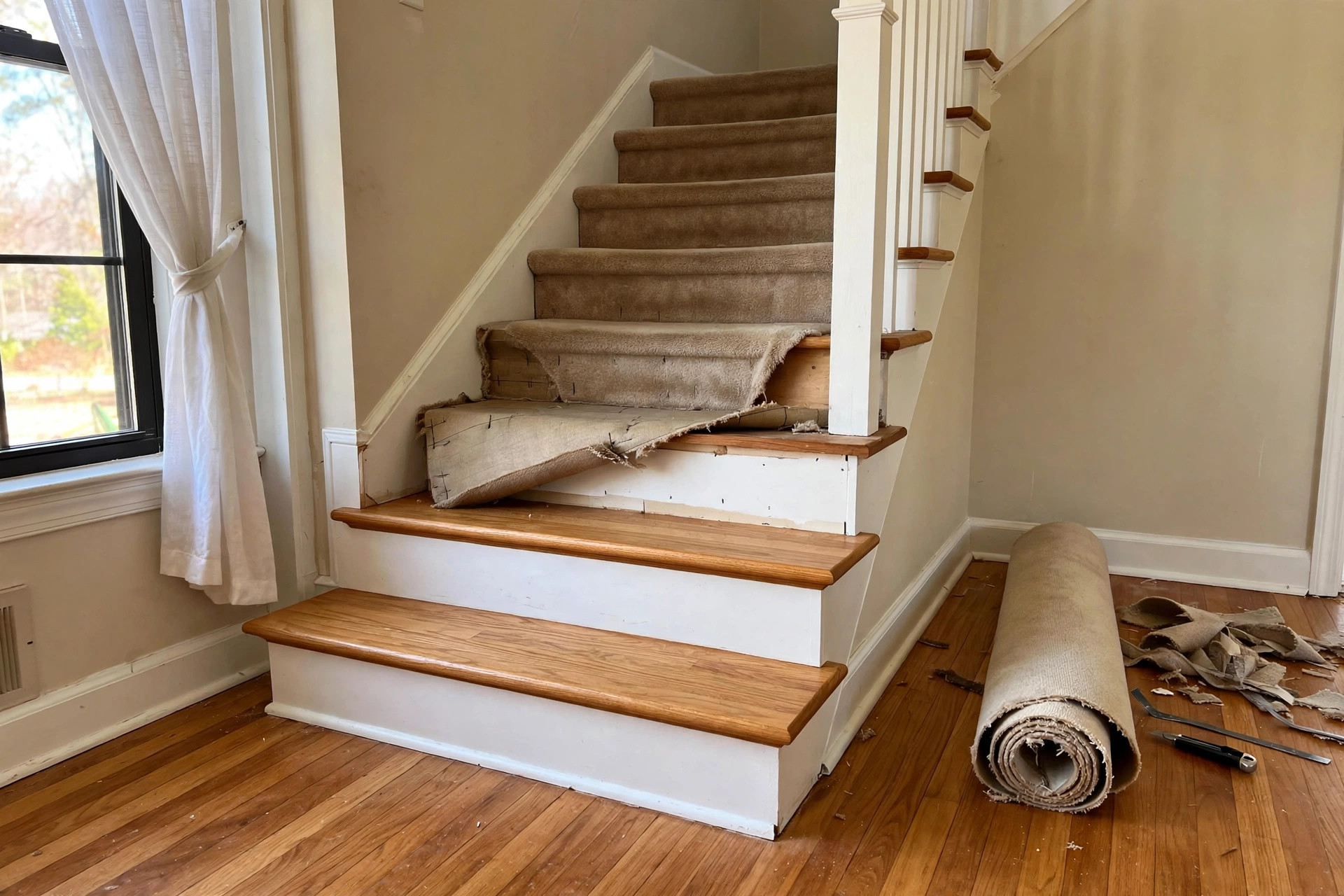

Many homeowners ask what carpet to hardwood stair conversion cost really means for their budget. The stairs carry more foot traffic than almost any part of the house. Carpet wears thin there first. It also traps dust and dirt deep in the fibers. Hardwood stairs look cleaner and last far longer. This guide lays out the full price picture in plain terms, so you can plan with care and spend with sense.
Why the Conversion Matters
Stairs are the most used path in a two story home. Every step up and down grinds dirt into carpet. After five or ten years the carpet on stairs often looks far worse than the carpet in the bedrooms. Pads compress. Edges fray. Stains settle in where feet land every day.
Hardwood stairs solve this problem for decades. A good oak tread can last fifty years or more. When it scratches, it can be sanded and refinished. When carpet wears out, it must be thrown away. Over the life of a house, hardwood stairs often cost less per year than replacing carpet two or three times.
Hardwood also helps with dust. Carpet holds fine dust that no vacuum fully removes. People with dust allergies often breathe easier once the carpet comes off the stairs. Wiping a tread clean takes a minute. Deep cleaning carpeted stairs takes hours.
Home value is another reason. Real estate agents often say hardwood stairs add to a home’s appeal. Buyers see wood stairs as a sign of a well kept house. In a tight market, small details like the staircase can help a sale move faster.
There is also the matter of daily use. Carpeted stairs can feel soft, but that softness hides damage. A loose tread under carpet is hard to spot. Once the carpet is off, the installer can see the frame. Creaks get screwed down. Weak spots get sistered with new lumber. The staircase comes out stronger than it went in. Many owners say their stairs feel solid for the first time in years after a conversion.
How to Choose the Right Path: Carpet to Hardwood Stair Conversion Cost
Before you look at prices, make a few basic choices. These shape the carpet to hardwood stair conversion cost more than anything else.
Measure Your Stairs
Count the number of treads, which are the flat parts you step on. Count the risers, which are the vertical boards between treads. A standard straight staircase has about twelve to fifteen treads. Landings, turns, and split designs add to the count. Write down every step. Contractors price per tread, so an exact count keeps bids honest.
Pick the Wood
Red oak is the most common choice for stairs. It is hard, holds stain well, and matches many floors. White oak is a step up in price and resists dents a little better. Maple and hickory are harder still and suit busy homes. Match the species to your floors if you can. A close match looks planned and natural.
Choose New Treads or Retrofit Covers
Full new treads replace the old step entirely. Retrofit stair treads, also called stair caps or covers, fit over the existing step. Full treads cost more but look and feel best. Retrofit covers cost less and work well when the old stairs are sound. Guides on thisoldhouse.com explain how to tell which one your staircase needs.
Types of Conversions
There are three common ways to turn carpeted stairs into hardwood stairs. Each has its own price range.
1. Full Tread and Riser Replacement
The old carpet, pad, and staples come off. The old treads are removed. New solid wood treads and risers go in. This is the most thorough job. Expect a skilled carpenter to need three to five days for a standard staircase. It is the best choice when the old stairs creak, sag, or feel uneven.
2. Retrofit Tread Caps
Thin solid wood caps glue and nail over the existing treads. New thin riser panels cover the old risers. This takes less time, often one to three days. The finished look is close to full replacement. It works only when the old staircase is flat, level, and strong.
3. Stair Tread Only with Painted Risers
Some homeowners keep costs down by installing wood treads and painting the risers white. This classic look suits colonial and farmhouse homes. It saves money on wood riser panels and stain work. The painted risers need touch up every few years, which adds to long term care.
What Carpet to Hardwood Stair Conversion Cost Looks Like
Now to the numbers. For a standard straight staircase of thirteen treads, most homeowners pay between $2,000 and $5,000 for a full conversion done by a professional. Per tread, that works out to roughly $150 to $350 installed, including the tread, riser, and finish work.
Simple retrofit jobs on a short straight staircase can come in as low as $1,200 to $1,800. Complex jobs cost more. Stairs with turns, landings, open railings, or damaged frames can reach $6,000 to $10,000. Homes with curved stairs need custom work and run higher still.
Material costs make up about half of the bill. Solid red oak treads cost $40 to $80 each at a home center like homedepot.com or lowes.com. Risers cost $10 to $25 each. Stain, finish, nosing pieces, and trim add several hundred dollars. Labor makes up the other half. Most flooring contractors charge $75 to $150 per tread for installation and finishing.
Finish choice moves the price too. Factory finished treads cost more up front but go in fast. Site finished treads cost less for materials but add labor days for sanding and coating. Site finish lets you match your existing floors exactly, which many homeowners prefer.
Related floor projects follow similar math. If you are also weighing hardwood floor installation cost near me, note that stair work costs more per square foot than floor work. Stairs are slow, detailed work. Each tread is cut, fitted, and finished by hand.
Geography matters as well. Prices run higher in large cities on the coasts and lower in small towns in the Midwest and South. Always get at least three written bids. Bids should list materials and labor separately so you can compare them fairly.
Timing can trim the bill too. Contractors are often busiest in spring and early summer. Booking a job in late fall or winter can bring a better price. Ask each bidder if there is an off season discount. Some offer ten percent or more to keep crews busy in slow months.
Do not forget the small extras. New handrails, balusters, and newel posts are often priced apart from the treads. A full railing update can add $500 to $2,000. If your railing is sound, keep it and save the money. If it wobbles, fix it now while the stairs are open. It costs less to do both jobs at once.
Care and Upkeep
Hardwood stairs ask for simple care. Sweep or dry mop weekly. Wipe up spills right away so water never sits on the wood. Use a cleaner made for hardwood floors, not soap and water. Place a runner down the middle if you want softer steps and less noise. Felt pads under a runner keep it from sliding.
Every few years, check the finish. If water no longer beads on the surface, it is time for a fresh coat of polyurethane. A screen and recoat costs far less than a full sanding. With this simple routine, oak stairs stay handsome for decades. If you ever need to refresh the whole floor nearby, a refinishing hardwood floors cost calculator can help you budget that work too.
Keep pets in mind. Dog nails can scratch any finish. Trim nails often and lay a runner if your dog races up and down. Felt runners also protect the wood in high traffic homes with children. Rotate or replace the runner before it wears through to the wood. A worn runner can trap grit that grinds into the finish.
Watch the humidity in your home. Wood swells in damp air and shrinks in dry air. Big swings can open small gaps at tread joints. Keep indoor humidity between thirty and fifty percent with a humidifier in winter and a dehumidifier in summer. Stable air keeps the stairs tight and quiet.
Safety on the Stairs
Hardwood stairs are safe when built to code, but they need a few details right. Treads must be deep enough for a full foot, usually ten to eleven inches. Risers must be even in height from top to bottom. Uneven risers cause most stair falls. A good installer checks this before the first tread goes in.
Add a solid handrail if your stairs lack one. Building codes require it. Non slip stair pads or a carpet runner help on steep stairs and in homes with older adults or small children. Keep stairs well lit. A dark staircase is a danger no matter what covers it. Reviews and test data at consumerreports.org can help you pick safe lighting and sturdy runners.
Carpet removal itself needs care. Old carpet can hold decades of dust. Wear a mask when pulling it up. Staples and tack strips are sharp. Pull them with pliers and a flat bar, and sweep the steps clean before the installer arrives.
Frequently Asked Questions
How long does a carpet to hardwood stair conversion take?
A professional crew usually needs one to three days for retrofit caps and three to five days for full tread replacement. Site finished stairs add drying time between coats. Plan for a week without full use of the stairs if the finish is done on site.
Can I do this work myself?
Skilled do it yourself builders can install retrofit tread caps with basic tools. Full tread replacement is harder. It calls for precise cuts, level work, and knowledge of stair codes. Most homeowners hire a pro for that part. How to guides at familyhandyman.com show what each step takes.
Will the new stairs match my existing hardwood floors?
Close matches are common but exact matches are hard. Wood from different lots stains a little differently. Site finishing gives the best match because the installer stains on the spot. Factory finished treads come in standard colors that match popular floor lines from brands like shawfloors.com.
Is hardwood on stairs louder than carpet?
Yes, wood steps are louder than carpeted steps. Footsteps carry more sound through the house. A runner down the center cuts the noise a lot. Felt or rubber underlayment under the runner helps more. Many families find the trade off worth it for the cleaner look and longer life.
What about tile on stairs instead of wood?
Tile is hard and cold underfoot and costs similar money. Most American homes use wood for stairs because it suits the rest of the house. If you are curious about tile prices for other rooms, tile makers such as daltile.com publish wide product lines, but wood stays the top pick for stairs.
How do I keep the cost down?
Choose red oak over exotic woods. Use retrofit caps instead of full treads. Paint the risers white instead of buying wood risers. Do the carpet tear out and staple removal yourself. These steps can cut a third or more from the bill. Shopping sales at big retailers and comparing design ideas at thespruce.com and bobvila.com also help you spend less.
A Final Word
Carpet to hardwood stair conversion cost is a fair price for work that lasts. A straight staircase of thirteen treads runs most homeowners $2,000 to $5,000 installed. The stairs look better, clean easier, and outlast carpet by decades. Count your treads, pick your wood, get three bids, and you will land on a price you can trust. For engineered hardwood flooring cost per square foot figures to pair with this project, that related guide keeps the whole budget in one place.
References
Bob Vila. (n.d.). Home improvement advice. https://www.bobvila.com Consumer Reports. (n.d.). Product reviews and ratings. https://www.consumerreports.org Daltile. (n.d.). Ceramic and porcelain tile. https://www.daltile.com Family Handyman. (n.d.). DIY home repair and maintenance. https://www.familyhandyman.com Lowe’s. (n.d.). Home improvement products. https://www.lowes.com Shaw Floors. (n.d.). Flooring products. https://www.shawfloors.com The Home Depot. (n.d.). Home improvement products. https://www.homedepot.com The Spruce. (n.d.). Home and garden advice. https://www.thespruce.com This Old House. (n.d.). Home renovation guidance. https://www.thisoldhouse.com
Was this guide helpful?

About Sarah Mitchell
The My Garden US editorial team writes practical, in-depth home and garden guides for American homeowners — tested advice, no fluff.
You May Also Like
Pet Friendly Flooring Options for USA Homes
June 17, 2026 0 views
The Cheapest Way to Redo Floors: A Practical USA Guide
June 16, 2026 0 views
Tile Leveling System Reviews for DIYers USA: A Plain Guide to Flat, Even Floors
May 25, 2026 0 views