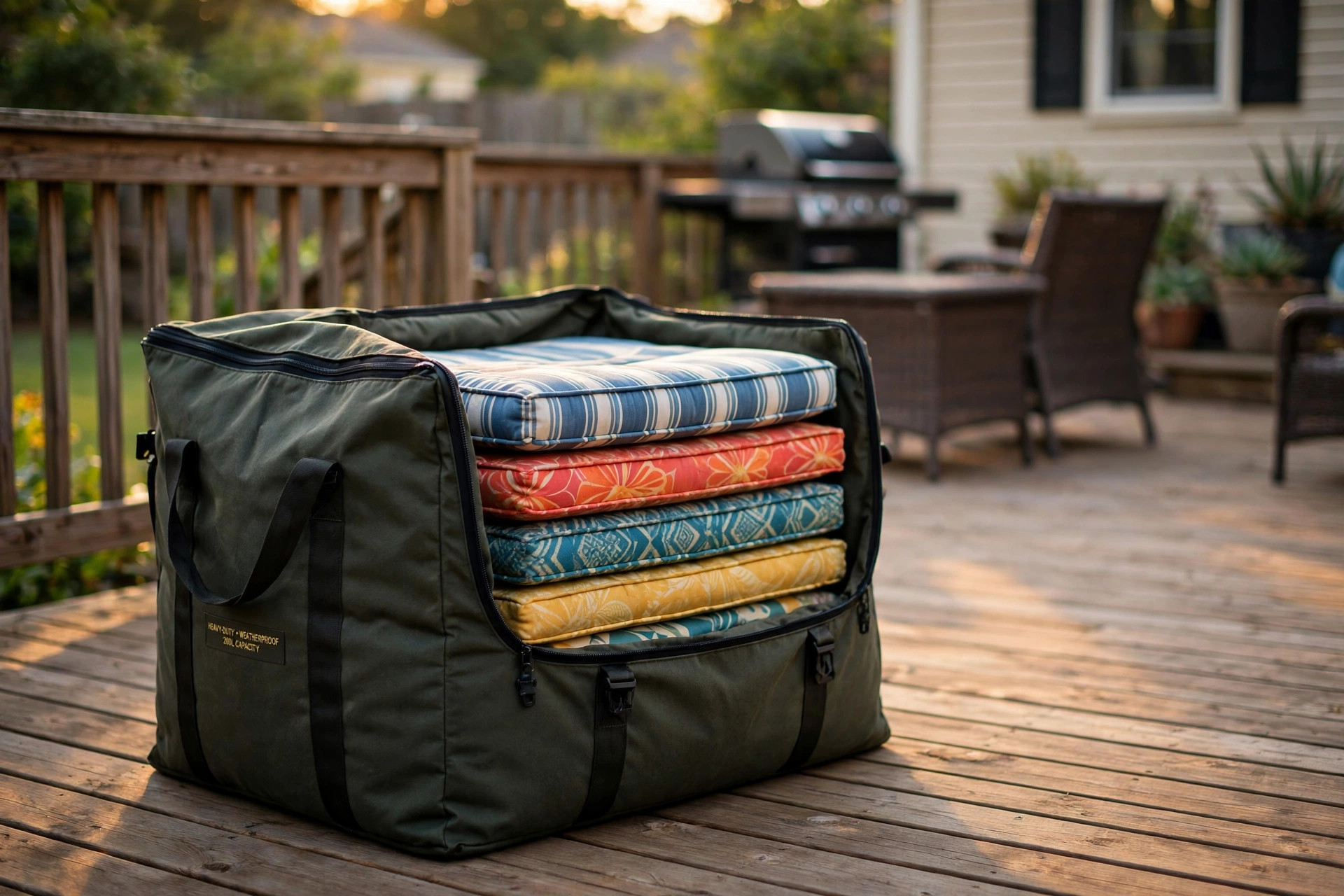
Every year, thousands of American homeowners spend good money on patio furniture cushions. The cushions are soft and bright when new. They make a plain backyard feel like a comfortable room. Then the rain comes. The sun beats down. The cushions fade, soak, and grow mold. A patio furniture cushion storage bag is a simple answer to this common problem. It is a large, sturdy bag that holds your cushions when you are not using them. This article explains what these bags are, why they matter, and how to pick the right one for your home.
Why It Matters
Outdoor cushions are not cheap. A full set of chair cushions and bench pads can cost as much as the furniture frames they sit on. Sunlight is the first enemy. Strong summer sun breaks down fabric dye and weakens fibers. Rain is the second enemy. A soaked cushion takes days to dry. Wet foam holds mold and mildew. It can also hold a sour smell that never fully leaves.
A patio furniture cushion storage bag protects against all of this. It keeps rain off the cushions. It blocks dust and pollen. It stops squirrels and birds from nesting in the folds. It also keeps the yard tidy. When guests arrive, you can pull fresh, clean cushions out of the bag in less than a minute. When the evening turns cold or the sky turns gray, you can pack them away just as fast.
Many homeowners already own patio furniture covers. Covers protect the frames. Bags protect the cushions. The two work well together. A cushion bag is lighter and easier to carry than a rigid storage box. It folds flat when empty. That makes it a good choice for small patios and decks where space is tight.
What to Look For: Patio Furniture Cushion Storage Bag
Not all storage bags are the same. A thin bag from a dollar store will not do the job. Look for these points when you shop.
Water resistance. The most important trait is a fabric that sheds water. Look for polyester or polyvinyl material with a waterproof coating. Seams should be tight. Some bags have sealed seams. Those are better.
Size. Measure your cushions before you buy. A standard lounge chair cushion is about 24 inches wide and 22 inches deep. A bench cushion can be 48 inches wide or more. Many bags come in sizes that hold four to six chair cushions. A bag that is too small is useless. A bag that is much too large lets cushions shift and wrinkle.
Closure. Look for a heavy zipper or a strong drawstring. Zippers keep dust and insects out. Some bags add a flap over the zipper. That extra flap keeps rain from seeping through the teeth of the zip.
Handles. You will carry this bag in and out of the garage. Wide, stitched handles make the job easy. Cheap bags use thin straps that tear after a few months. Handles that wrap under the bag are strongest.
Breathability. Here is a point that surprises many buyers. A fully sealed bag can trap damp air. If you put slightly wet cushions inside, mold can grow in the dark. Some bags have small vents or a mesh panel. Vents let air move while keeping rain out. If you live in a humid state, look for a bag with vents.
Strength. Check the weight rating if the maker lists one. Good bags are made from thick fabric, often measured in denier. A rating of 300D or higher is a good sign. Reinforced stitching at the corners is also a good sign.
Types and Options
Standard Cushion Bags
The standard bag is a tall rectangle with a top zipper. It stands on end like a duffel. Most hold four to six seat cushions. This is the best choice for a simple patio set.
Bench and Chaise Bags
Some bags are long and low. They fit bench cushions, loveseat pads, and chaise lounge cushions. If your set has a bench, buy one of these instead of forcing a long cushion into a tall bag.
Waterproof Deck Boxes and Soft Bags Together
A few homeowners use both a bag and a deck box. The bag holds the cushions. The box holds the bag. This gives double protection in places with hard winters. If you want more ideas for winter storage, see patio furniture storage ideas for winter.
Vacuum and Compression Bags
Some makers sell bags that squeeze the air out. These are good for throw pillows and small pads. They are not good for thick foam cushions. Strong vacuum pressure can bend foam and ruin its shape. Use compression only for light items like waterproof outdoor throw pillows for patio.
Bags With Wheels
Large bags with wheels exist. They are made for resort-style sets with many cushions. Wheels help when you roll the bag across a deck to a shed. They cost more. They are worth it if you have a bad back or a long walk to the garage.
Cost and Price
A patio furniture cushion storage bag costs less than most people think. Small bags start around ten dollars. Mid-range bags with good zippers and thick fabric run from twenty to forty dollars. Large heavy-duty bags with wheels can cost sixty to eighty dollars.
Think of the price against the cost of new cushions. A set of four replacement chair cushions can cost one hundred dollars or more. One season of neglect can ruin a set. The bag pays for itself the first year. Buy the best bag you can afford. Cheap bags split at the seams. Then you buy twice.
Watch for sales at the end of summer. Many stores cut prices on outdoor goods in August and September. Online sellers also run deals. Big home and garden retailers carry these bags in store and on their sites. You can compare sizes and fabrics side by side. Sites like Wayfair list many brands with customer reviews. IKEA also sells outdoor storage products that pair well with its patio sets.
How to Use the Bag
Using a patio furniture cushion storage bag is simple. But a few habits will make it work better.
1. Clean first. Never store dirty cushions. Brush off dirt and leaves. Wipe down spots. If the fabric allows, wash the covers. Make sure the cushions are fully dry before they go in the bag. Damp cushions breed mold.
2. Fold or stack neatly. Stack cushions flat, largest at the bottom. Do not stuff them in at odd angles. Sharp folds can crease the fabric. Take the time to line them up.
3. Keep it off wet ground. Place the bag on a pallet, a low shelf, or a dry garage floor. Concrete floors sweat in spring. A bag that sits in a puddle will soak through at the bottom.
4. Close it fully. Zip the bag shut every time. An open bag is a home for spiders and mice. A half-open bag lets in dust.
5. Bring it inside for winter. The bag is tough, but it is not a shed. In cold states, move the bag into the garage or basement from November to March. Freezing and thawing wears out zippers and coatings.
6. Label it. If you have more than one bag, write the contents on a tag. “Blue lounge chairs” is enough. You will thank yourself in May.
A Word on Cleaning Cushions Before Storage
Cushion covers come off on most quality sets. Wash them in the machine on a gentle cycle with mild soap. Air dry them. For foam inserts, brush off crumbs and let them air out in the shade. Sun is good for killing germs, but long hours in direct sun fade fabric. One hour of morning sun is enough. For a full cleaning routine, read how to clean outdoor furniture cushions.
Care and Upkeep of the Bag
The bag itself needs care. Wash it once a season. Most bags can be hosed off. Use a soft brush and mild soap. Rinse well. Let the bag dry fully in open air before you put cushions back in.
Check the zipper now and then. A little wax or soap on the teeth keeps it moving. If a seam starts to split, sew it right away. Small tears grow fast under the weight of foam.
Do not drag the bag across rough concrete. Lift it by the handles. Dragging wears holes in the bottom. Holes let in water and insects.
Store the empty bag folded flat in winter. Keep it in a dry place. A bag stuffed in a damp corner will mildew just like a cushion would.
Safety
Storage bags are safe products. Still, a few notes are worth reading.
Keep bags away from grills and fire pits. The fabric can melt or catch fire. Do not set a lit candle on top of a bag. Store the bag at least ten feet from open flame.
Do not let small children play inside large bags. A large cushion bag is big enough for a child to climb into. Keep zipped bags out of reach of toddlers.
If you use mothballs or scent packets to keep pests away, keep them in a small pouch. Do not let them touch the cushion fabric directly. Strong scents can stain or bleach fabric.
In windy areas, do not leave a full bag on an open deck during a storm. A tall bag full of light cushions can blow over or slide. Move it inside or weigh it down.
Frequently Asked Questions
How many cushions fit in one bag? It depends on the size. A standard bag holds four to six seat cushions. Bench bags hold one long bench cushion plus two or three seat cushions. Always check the maker’s size chart. When in doubt, buy the larger size.
Can I leave the bag outside all year? Most bags are made for outdoor use. But they last longer in a garage or shed. Sun and cold wear down the coating. If you must leave it outside, place it under a covered porch or eave.
Will the bag keep cushions dry in heavy rain? A good bag with a coated fabric and a full zipper keeps rain out. It is not a dry bag for boating. In a hard storm with driving rain, some damp can seep in at the seams. Store the bag under cover when storms are forecast.
Do I need to wash cushions before storing them? Yes. Clean cushions store better. Dirt and food stains set in over time. Pollen and bird droppings can stain fabric if left for months. A quick wash each fall adds years to your cushions.
Can I store pillows in the same bag? Yes. Pillows fit well in the gaps between large cushions. Put them in last so they do not get crushed. Small compression bags work well for throw pillows if you want them packed tight.
What if my cushions do not fit? Measure again. Cushions often run larger than the label says. If the bag is too small, return it for a larger size. Do not force cushions in. Forcing splits seams and bends foam.
A Short Final Word
A patio furniture cushion storage bag is one of the smartest small buys for any backyard. It costs little. It works well. It saves your cushions from rain, sun, dust, and pests. Pick a bag that fits your set, keep it clean, and store it indoors for winter. Your cushions will look fresh for years. That means less money spent on replacements and more time enjoying your patio.
References
IKEA. (n.d.). Outdoor furniture and storage. https://www.ikea.com Wayfair. (n.d.). Patio furniture and outdoor storage. https://www.wayfair.com
Was this guide helpful?

About Emily Rodriguez
The My Garden US editorial team writes practical, in-depth home and garden guides for American homeowners — tested advice, no fluff.