A porch or deck is a fine place to sit in the evening. But in a place where it rains often, an outdoor sofa takes a beating. Rain soaks the cushions. Water sits on the frame. Mold grows in the fabric. Rust eats the metal. Choosing the best outdoor sofa for rainy climate use is about more than looks. It is about materials that shed water, dry fast, and stand up to season after season of wet weather. This guide explains what to look for, which types hold up best, what they cost, and how to care for them. It is written in plain terms so any buyer can use it.
Why It Matters
Water is the main enemy of outdoor furniture. A sofa that sits through one dry summer can look fine for a while. The same sofa, left out through a rainy autumn and spring, can fall apart. The cushions hold damp and start to smell. The seams rot. The screws rust and stain the deck. A cheap set may last only one or two seasons in a wet region.
In a rainy climate, the weather does not give the furniture time to rest. It rains, it dries a little, and it rains again. Materials stay damp for long stretches. This is the perfect ground for mold and mildew. Mildew does not just look bad. It can cause stains that never wash out, and it can bother people with breathing problems.
A good outdoor sofa for wet weather saves money over time. It may cost more at the start. But it does not need new cushions every year. It does not need to be replaced after two summers. Many buyers find that a solid set, bought once, costs less in the long run than two or three cheap sets.
There is also the matter of comfort. A sofa with soggy cushions is no fun to sit on. A set with quick-dry cushions is ready to use a few hours after a storm. That means the porch gets used more, and the family gets more out of the yard.
What to Look For in an Outdoor Sofa for a Rainy Climate: Best Outdoor Sofa for Rainy Climate
The Frame
The frame is the bones of the sofa. It must not rust, rot, or swell when wet. Look for aluminum frames. Aluminum does not rust. It is light and easy to move. Powder-coated aluminum is even better, because the coating gives extra protection against chips and scratches.
Teak and other hardwoods also hold up well. Teak has natural oils that fight water and insects. It turns a silver gray color with age, which many people like. Eucalyptus and acacia are cheaper woods, but they need oil or sealant to last in rain.
Stay away from plain steel frames unless they are fully sealed and powder-coated. Even a small chip in the coating lets water in, and rust spreads fast. Wrought iron is strong but heavy, and it rusts if the paint fails.
The Fabric and Cushions
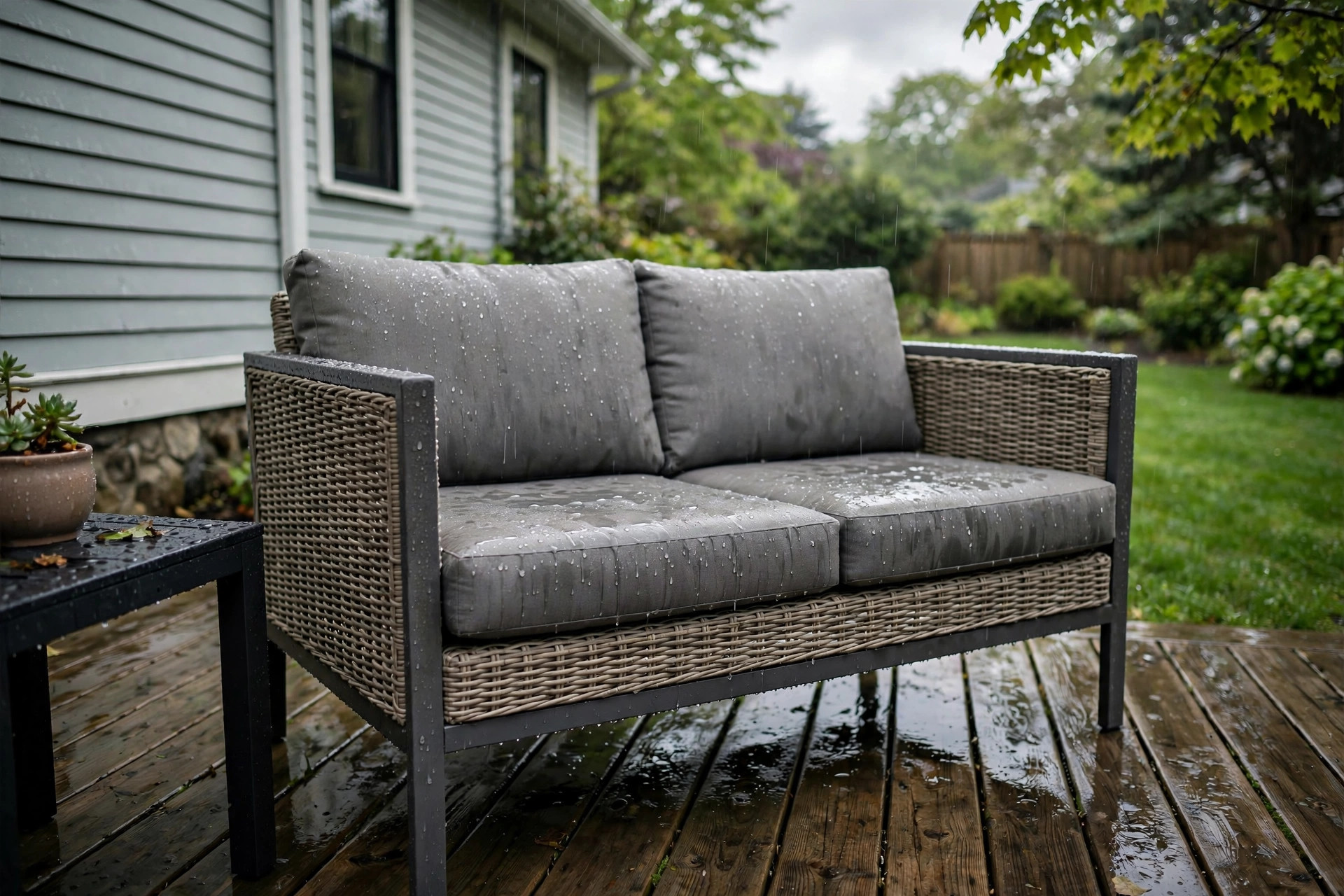
Fabric is where most cheap sofas fail. Look for solution-dyed acrylic fabric. The color goes all the way through the fiber, so it does not fade in the sun, and it resists water and mildew. Olefin is another good choice. It dries fast and holds up well in wet weather.
Avoid plain cotton or cotton-blend cushions for rainy places. Cotton holds water like a sponge. It dries slowly and grows mold fast.
The inside of the cushion matters too. Quick-dry foam lets water drain out instead of sitting inside. Some cushions have open-cell foam with a mesh bottom that lets water pass through. These dry in hours, not days. If the cushions have zippers, you can remove the covers and wash them, which is a real plus in a damp climate. For extra comfort in wet weather, many owners pair their sofa with waterproof outdoor throw pillows for patio seating, which add color without holding damp.
Design Details
Good design helps water escape. Look for slatted seats and backs that let water run off. Raised feet keep the frame off a wet deck. Cushions that sit loose on the frame, rather than being fixed tight, are easier to take in when a storm comes.
Check the joints and screws. Stainless steel screws and hardware do not rust. Plastic glides on the feet protect the deck and do not corrode.
Types and Options
All-Weather Wicker Sofas
All-weather wicker is made from resin, not from natural plant fiber. It looks like real wicker but does not soak up water. It is one of the most popular choices for rainy regions. The resin strands shed water and dry fast. The frames under the wicker are usually aluminum, which does not rust.
A good resin wicker sofa is woven tight, with no loose ends. Cheap versions use thin strands over a steel frame, and those can crack and rust. If your space is tight, the same all-weather wicker idea works well in a best outdoor sectional sofa for small patios layout, which gives full seating in a small footprint.
Teak and Hardwood Sofas
Teak is the old standby for wet climates. It has served on ships for centuries, which tells you something about how it handles water. A teak outdoor sofa is heavy, solid, and long-lived. It needs little care beyond an occasional wash. Some owners oil it to keep the warm brown color, but this is for looks, not for strength.
The main drawback is price. Teak is dear. Eucalyptus and acacia cost less, but they are not as tough. They need regular oiling to stand up to steady rain. If you buy a cheaper wood, plan to treat it each spring.
Aluminum and Metal Sofas
Powder-coated aluminum sofas are light, modern, and very rain-proof. They come in many styles, from plain benches to full deep-seat sofas. Because aluminum does not rust, these sets do well in places where it rains week after week.
Cast aluminum is heavier and more ornate. It suits classic porches. It costs more than tube aluminum, but it is very sturdy. Make sure any metal set has stainless steel hardware, because plain screws are often the first part to rust.
Resin and Plastic Sofas
High-density polyethylene sofas, often made from recycled plastic, are built for bad weather. They do not rot, rust, or splinter. They are heavy enough to stay put in wind. They come in colors that look like painted wood.
These sets are plain in style, but they are hard to beat for low care. A quick wash with soap and water is all they need. They are a sound pick for a cabin, a rental property, or a busy family yard.
Cost and Price
Prices vary widely. A basic resin wicker loveseat can start around two hundred dollars. A full three-seat sofa with quick-dry cushions often runs between five hundred and fifteen hundred dollars. Name-brand sets with solution-dyed acrylic fabric sit at the higher end of that range.
Teak sofas start higher. A small teak sofa may cost eight hundred dollars. A large, well-built teak set can pass three thousand. Aluminum sets fall in the middle, from about four hundred to two thousand dollars, based on size and brand.
Cushions are a big part of the price. Quick-dry foam and good fabric add cost, but they are the parts that matter most in rain. It is better to spend the money on good cushions than on a fancy frame.
Watch for sales at the end of summer. Stores clear out patio furniture in August and September. You can often find a good set for a third less. Check return policies too, since a sofa is a large item to ship back. Big sellers like Wayfair and IKEA carry wide ranges of outdoor sofas, so it is easy to compare styles and prices side by side.
Care and Upkeep
Even the best outdoor sofa for a rainy climate needs some care. Shake out the cushions after rain so water does not pool in the seams. Stand cushions on edge now and then so they drain and air out.
Wash the fabric once or twice a season with mild soap and water. Rinse well. Let everything dry in the sun before you put covers back on. Do not use bleach on colored fabric unless the care tag allows it, because bleach can harm the fibers.
Oil teak once a year if you want to keep its color. If you like the silver gray look, just wash it and leave it alone. Check screws and bolts each spring and tighten any that are loose. Touch up paint chips on metal frames right away so rust cannot start.
When heavy storms or long wet spells come, good covers help a lot. A set of weatherproof patio furniture covers keeps driving rain off the cushions and frame, and it stretches the life of the whole set.
Store the sofa under a roof or in a shed for winter if you can. If you must leave it out, cover it and tip it so water runs off. Keep the area under the sofa clear of leaves, because wet leaves hold damp against the feet and frame.
Safety
A wet sofa can be slippery. Slatted wood and smooth metal get slick when wet. Set the sofa on a level surface so it does not rock or slide. If the deck gets mossy, clean it, because a slick deck plus a heavy sofa is a bad mix.
Check for mold on cushions and fabric. Wipe it off with a mild cleaner and let the piece dry fully in the sun. People with asthma or mold allergies should wear a mask when cleaning a moldy set.
Do not place an outdoor sofa right against the house siding where rain runs off the roof. The steady drip wears fabric and can rot wood frames. Leave a gap so air can move behind the sofa. Keep grills and fire pits well away from the sofa, since sparks and heat can scorch fabric and melt resin wicker.
When you move a heavy sofa, lift with care. Wet wood and wet cushions are heavier than they look. Get help rather than risk a back strain.
Frequently Asked Questions
What is the best material for an outdoor sofa in a rainy climate? Powder-coated aluminum with solution-dyed acrylic cushions is one of the best mixes. Teak is also excellent. The key is a frame that does not rust or rot, plus fabric and foam that dry fast.
Do I need to cover my outdoor sofa every time it rains? Not with a good set. Quick-dry cushions handle normal rain on their own. Covers help during long wet spells and in winter, and they keep the sofa cleaner. They are worth the cost.
How long should an outdoor sofa last in a wet climate? A well-built set should last five to ten years, sometimes more. Teak can last decades. Cheap sets with steel frames and cotton cushions may fail in one or two seasons.
Can I leave the cushions out in the rain? Yes, if they are made for outdoor use with quick-dry foam and water-resistant fabric. They will dry in a few hours after the rain stops. Plain indoor-style cushions should always be brought inside.
What does solution-dyed fabric mean? It means the color is mixed into the fiber before the fabric is woven, not printed on top. The color goes all the way through. It resists fading, water, and mildew far better than surface-dyed cloth. Independent testers such as Consumer Reports often point to fabric quality as the top factor in how long outdoor furniture lasts.
Is teak worth the high price in a rainy area? For many buyers, yes. Teak handles steady rain better than almost any other wood. It needs little care and lasts a very long time. The high price is easier to bear when you divide it over twenty or thirty years of use.
A Final Word
The best outdoor sofa for a rainy climate is not the prettiest one in the store. It is the one with the right frame, the right fabric, and the right details to shed water year after year. Buy for the weather you have, not the weather you wish for. Spend your money on good cushions and a rust-proof frame. Take care of the set with simple seasonal cleaning. Do that, and your porch will have a comfortable seat ready whenever the rain lets up.
References
Consumer Reports. (n.d.). Product reviews and ratings. https://www.consumerreports.org IKEA. (n.d.). Outdoor furniture. https://www.ikea.com Wayfair. (n.d.). Outdoor furniture and decor. https://www.wayfair.com
Was this guide helpful?

About James Carter
The My Garden US editorial team writes practical, in-depth home and garden guides for American homeowners — tested advice, no fluff.