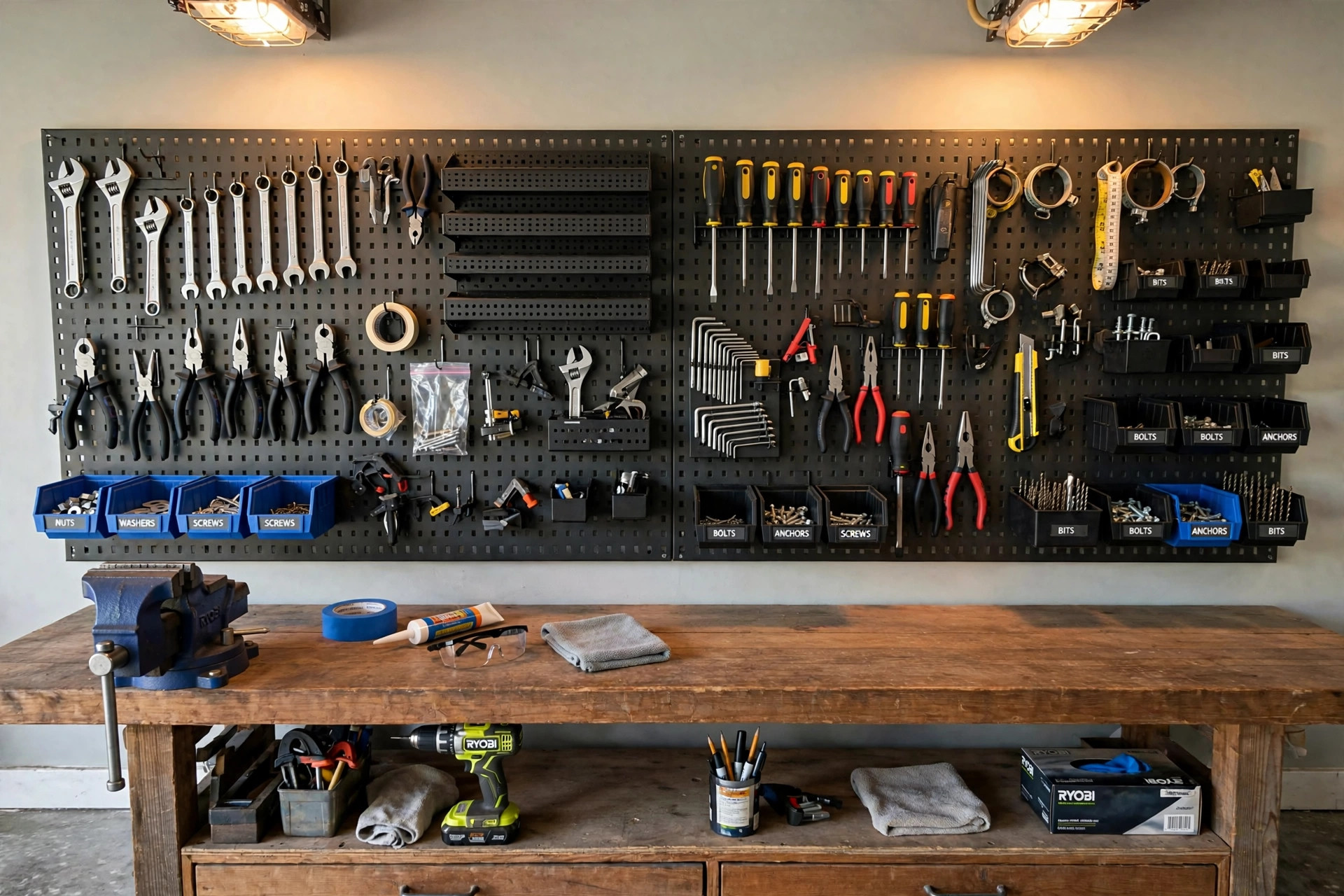

Homeowners in America face one problem that never seems to end. The tools, craft supplies, and small items keep growing, but the shelves and closets do not. Floor space is fixed. Wall space, by contrast, often sits empty. Stackable pegboard wall organizers for sale today turn that empty wall space into useful storage, and they do it at a price most families can afford.
This guide explains what these organizers are, why so many people buy them, how to choose the right set, and how to keep them safe and sturdy for years.
Why Stackable Pegboard Wall Organizers Matter
A pegboard is a flat panel drilled with rows of holes. Hooks, bins, and shelves fit into those holes, so the user can hang items on the wall instead of piling them on the floor. Stackable pegboard wall organizers take that idea further. Two or more panels link together, side by side or top to bottom, to form one large storage wall.
The stacked design matters for three reasons. First, it covers more wall space without gaps that waste room. Second, it spreads the load, so each panel carries only part of the weight. Third, it lets the owner start small and add panels later as needs grow. A person can buy one panel this month and a second panel next month, and the two will join to form a clean, even wall of storage.
Garages, workshops, craft rooms, and laundry rooms gain the most from this kind of system. In a garage, hand tools, extension cords, and paint cans move off the workbench and onto the wall. In a craft room, spools of thread, scissors, and paint jars sit in clear view, which saves time and ends the search through boxes. A report on garage organization at The Spruce notes that wall-mounted systems can free up a full shelf of floor space in a small shop.
What to Look for When You Buy: Stackable Pegboard Wall Organizers for Sale
Shoppers should look past the price tag and study the details. A good pegboard organizer lasts for many years. A cheap one warps, tears, or pulls out of the wall.
Panel Material
Three materials lead the market.
Hardboard. The classic brown panel. It is cheap and light, and it takes paint well. It bends under heavy tools, however, and it swells if it gets wet. It suits craft rooms and light hobby use.
Plywood. Wood panels are stronger than hardboard and hold heavier tools. Many owners stain or paint them to match the room. Good plywood resists warping if it is sealed on both faces.
Metal. Steel or aluminum pegboards are the strongest choice. They carry heavy tool sets, they resist fire, and many use magnetic hooks as well as standard hooks. They cost more, but they often outlast the wall they hang on. Shoppers comparing metal options at Lowe’s will find a wide range of sizes and finishes.
Hole Size and Spacing
Standard pegboard holes measure one eighth of an inch or one quarter of an inch, spaced one inch apart. Most hooks on the market fit the one quarter inch pattern. Before buying, the shopper should confirm which pattern the panel uses, because hooks for one size will not hold in the other.
Weight Rating
Manufacturers print a weight limit for each panel. The limit counts the panel plus everything hung on it. A garage owner who plans to hang power tools should pick panels rated for at least fifty pounds each, with the weight spread across several wall studs. Anchoring into studs, rather than drywall alone, makes the system far safer. Advice on strong wall anchoring appears in guides at Family Handyman.
Stacking Hardware
The word stackable should mean more than “fits next to each other.” Good sets ship with connector clips, joining brackets, or tongue-and-groove edges that lock panels into one frame. Ask whether the joining hardware is in the box or sold apart. Hidden add-on costs can double the real price of a cheap set.
Types of Stackable Pegboard Organizers
Wall-Mounted Panels
The plain panel is the most common type. Panels mount on the wall with screws and spacers that leave a small air gap behind the board. That gap is essential, because hooks need room behind the panel to lock into the holes. A panel hung flat against the wall without spacers cannot take hooks at all.
Framed Panel Sets
Framed sets add a wood or metal frame around each panel. The frame stiffens the board and hides the raw edge. Many framed sets include the spacers built in, which makes mounting faster. The frame also makes stacking neater, since each panel shares a common edge line with its neighbor.
Bin and Shelf Kits
Some organizers ship with plastic bins, wire baskets, and small shelves that plug into the holes. These kits suit shops and craft rooms where loose screws, beads, or fasteners need sorting. A homeowner can compare storage-bin layouts in ideas at Apartment Therapy to plan which bin sizes fit the panels.
Freestanding Towers
A few stackable systems form a freestanding tower or a two-sided island instead of mounting to a wall. These suit renters and rooms where the wall cannot be drilled. The tower base adds stability, though a tower holds less weight than a wall-mounted system of the same size.
Cost and Price
Prices for stackable pegboard wall organizers for sale in American stores run across a wide band. Small hardboard starter panels sell for under twenty dollars each. Mid-range plywood panels with joining hardware run thirty to sixty dollars per panel. Metal panels and large kits with hooks and bins can reach one hundred to two hundred dollars per panel.
The full cost includes more than the panels. A shopper should budget for the hook kit, the bins or shelves, the mounting screws and wall anchors, and any paint or sealer for wood panels. Buying a bundle that groups panels with hooks often costs less than buying each part alone. Price trackers and store flyers at Home Depot help shoppers compare bundle prices in their area.
Used panels can save money, but they carry risk. Holes wear wider with use, and worn holes will not grip hooks. A buyer who shops second-hand should test hooks in several holes before paying.
How to Install and Arrange
Installation takes about one hour for a two-panel stack.
1. Find the wall studs with a stud finder and mark them with pencil. 2. Hold the first panel level against the wall and mark the screw holes. 3. Drive screws through the panel and the spacers into the studs. 4. Lock the second panel to the first with the joining hardware, then screw it to its studs in the same way. 5. Press the hooks into the holes and hang the tools, keeping heavy items low and near the studs.
Plan the layout on paper first. Hang the items used daily at arm height. Put rarely used items higher. Leave a few empty rows so the system can grow. Many buyers sketch a layout using ideas for small-space storage at Wayfair before they drill.
Care and Upkeep
Pegboard organizers need little care, but a few habits keep them safe and neat.
Dust the panels every few months, since dust settles on flat boards and hooks. Wipe metal panels with a dry cloth to fight rust. Check each screw once a year and tighten any that have loosened. If a hole has worn wide, move the hook to a fresh hole and mark the worn one with a dot of paint so nobody hangs weight on it.
In damp garages and basements, choose metal or sealed wood panels. Plain hardboard absorbs moisture and sags. A light coat of polyurethane on plywood panels keeps them flat for years. Storage care tips from IKEA remind owners to keep wall-mounted systems out of direct rain and standing water.
Seasonal habits keep the system working well. In spring, take every hook off the board, wipe the panels with a damp cloth, and check for new rust spots on metal boards or soft spots on hardboard. Re-oil metal hooks with a thin coat of light machine oil so they slide in and out of the holes without sticking. In summer, heat and humidity make hardboard swell, so a dehumidifier or a simple fan in the garage slows the damage. When fall arrives, walk along the wall with a screwdriver and tighten every screw, because wood studs shrink and loosen as the house dries out in winter. A board that was rock solid in July can wobble by January if the screws back out.
The hooks and bins deserve the same attention. Plastic bins grow brittle in cold weather, so swap cracked bins before they break and spill their contents. Wire baskets hold up better in the cold but can scratch painted panels, so slide a strip of felt behind any basket that rubs the board. Label each bin with a simple printed tag that names the contents. Clear labels turn the pegboard from a pile of hooks into a real system, and they stop the common habit of piling unrelated items on one hook just because it was empty.
Safety Notes
A loaded pegboard is heavy, and a failed mount can drop tools on a foot or a child. Mount every panel into studs or masonry with rated fasteners. Never trust drywall anchors alone for a heavy tool wall. Keep sharp tools with the points facing the wall or covered with guards. In homes with small children, mount the sharp and heavy items above the reach of a child, and consider a lock on the workshop door. Guidance on household safety from The Container Store echoes the same rule: anchor heavy storage to the structure, not the drywall.
Frequently Asked Questions
How much weight can a stackable pegboard hold? It depends on the material and the mount. A metal panel screwed into studs can hold fifty pounds or more. A hardboard panel on drywall anchors may hold only ten to fifteen pounds. Read the printed rating on the package and stay under it.
Can I paint my pegboard? Yes. Hardboard and plywood take paint well. Use a brush, not a spray can, and do not fill the holes with paint. Metal panels take spray paint made for metal. Let the paint cure for a full day before hanging hooks.
Will hooks from one brand fit another brand’s panel? Usually, yes, if both use the same hole size and spacing. The one quarter inch pattern is the common standard in America. Some metal panels use a slotted pattern that needs brand-specific hooks, so check before mixing.
How do I stack panels neatly? Buy a set made for stacking, with joining clips or matching edges. Mount the first panel level, then lock the next panel to it before driving the screws. A level and a tape measure are the only tools needed.
Are these organizers good for renters? Wall-mounted panels need screws, which many landlords forbid. Freestanding stackable towers need no drilling and move with the renter. Adhesive-mounted small boards work for light craft items but not for tools.
Where can I buy stackable pegboard wall organizers? They are sold at home centers, hardware stores, and large online retailers across the United States. Shoppers can compare sizes and bundle prices at stores such as Target or at specialty retailers online.
A Short Final Word
Stackable pegboard wall organizers for sale offer one of the cheapest ways to add real storage to a home. The panels cost little, mount in an hour, and grow with the owner panel by panel. Buyers who check the material, the hole size, the weight rating, and the joining hardware will end up with a system that holds tools and supplies safely for many years. For owners who also need organizers inside drawers and cabinets, this pegboard wall organizers price comparison guide helps sort the field, while this stackable bathroom vanity organizers buying guide and this look at stackable makeup and cosmetics organizers cover stackable storage for smaller rooms.
References
Apartment Therapy. (n.d.). Home design ideas and inspiration. https://www.apartmenttherapy.com Family Handyman. (n.d.). DIY home repair and maintenance. https://www.familyhandyman.com IKEA. (n.d.). Home furnishings. https://www.ikea.com Lowe’s. (n.d.). Home improvement products. https://www.lowes.com Target. (n.d.). Retail store. https://www.target.com The Container Store. (n.d.). Storage and organization products. https://www.containerstore.com The Home Depot. (n.d.). Home improvement products. https://www.homedepot.com The Spruce. (n.d.). Home and garden advice. https://www.thespruce.com Wayfair. (n.d.). Furniture and home goods. https://www.wayfair.com
Was this guide helpful?

About Jennifer Lee
The My Garden US editorial team writes practical, in-depth home and garden guides for American homeowners — tested advice, no fluff.
You May Also Like
A Practical Bathroom Vanity Organizers Price Comparison USA Shoppers Can Trust
October 1, 2026 0 views
The Best Shoe Storage Racks for American Homes
January 10, 2026 0 views
Closet Organizer Systems Reviews and Buying Guide
March 23, 2026 0 views