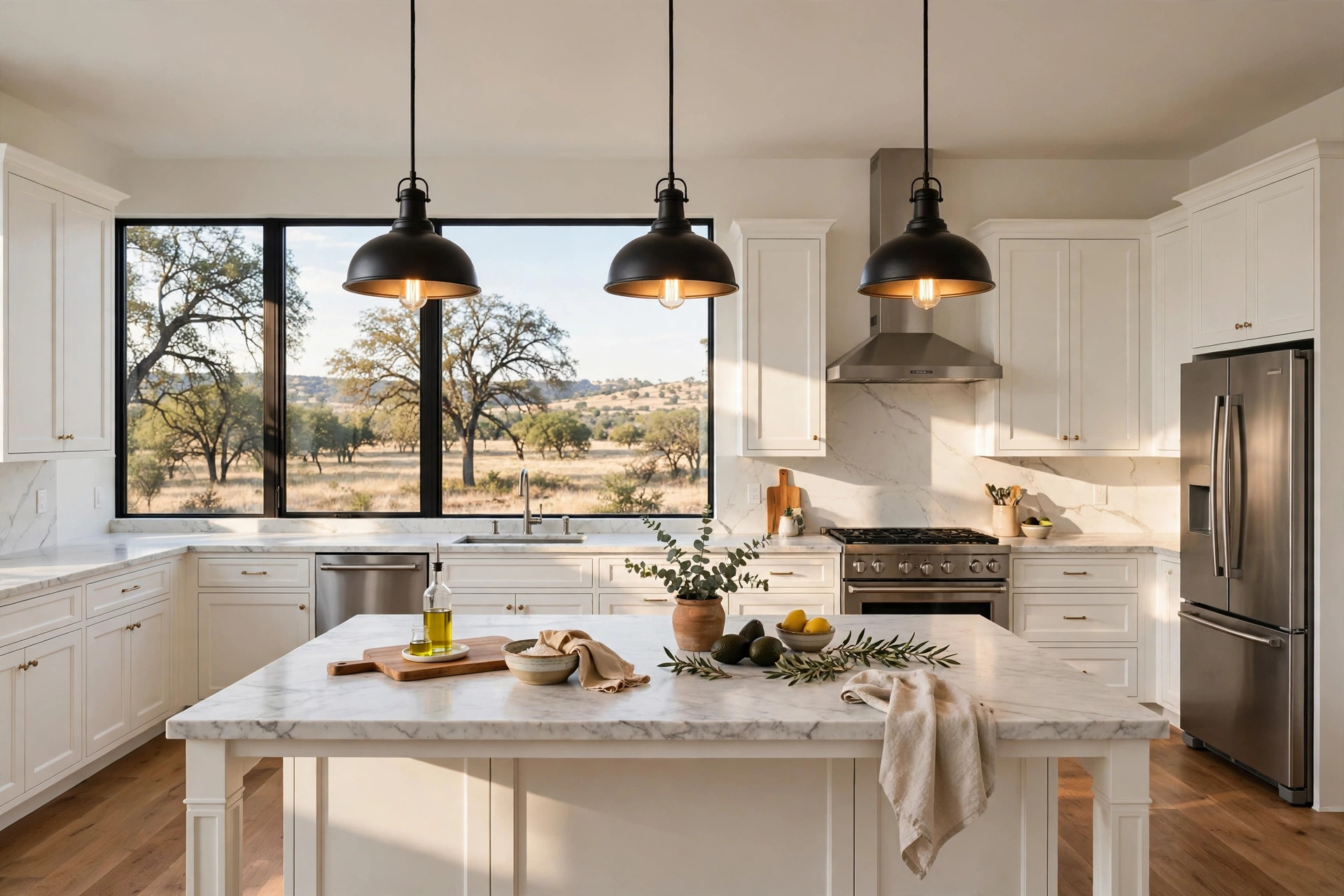

The kitchen island hanging lights texas homes usa owners choose can change the whole room. A kitchen island is the heart of the home in Texas. Families cook there. Children do homework there. Guests gather there. The right hanging lights make the island bright for work and warm for talk. This guide explains how to pick them, how to size them, what they cost, and how to keep them safe.
Why Kitchen Island Hanging Lights Matter
Texas kitchens run hot and bright. Afternoon sun pours through big windows. The island needs light that works at noon and at midnight. Overhead cans alone leave shadows on the work surface. Hanging lights fix that. They drop light close to the counter, right where hands work.
Style matters too. In Texas homes, the kitchen often opens to the family room. The island is the first thing guests see. A row of pendants draws the eye and sets the tone. Farmhouse glass shades, black metal cages, and seeded glass globes are common picks across the state. They suit the ranch, the craftsman, and the new-build ranch-style home alike.
Good light also saves money. Bright, well-placed pendants mean fewer cans in the ceiling. They cut glare. They help cooks see the color of food. A well-lit island is simply a safer, happier place to work.
How to Choose the Right Lights: Kitchen Island Hanging Lights Texas Homes Usa
Measure the island first
Get the length of the island. Get the ceiling height. These two numbers drive every choice. For an island of six feet, two large pendants or three small ones work well. For a long eight-foot island, three pendants are the classic choice. Leave even space between them. Leave the same space from the end of the island.
Rule of thumb: each pendant should cover about one-third of the island. A pendant with a 12-inch shade lights about two feet of counter. A 16-inch shade lights about three feet. Plan the layout on paper before you buy. Guides from home improvement experts can help you check your math, like the lighting planners at The Spruce.
Hang them at the right height
Hang the bottom of the shade 30 to 36 inches above the island top. For an eight-foot ceiling, that puts the fixture about 50 inches off the floor. For a ten-foot ceiling, many Texas homes add a downrod or chain to reach the right height. Keep the line of sight open. Diners seated at the island should see each other under the shades, not through them.
Pick the right bulb color
Bulb color is measured in Kelvins. For a Texas kitchen, 2700K to 3000K is the sweet spot. That is warm white. It flatters food and skin. Cool white at 4000K feels harsh in a home kitchen. Dim-to-warm bulbs are worth the small extra cost. They drop from bright task light at dinner prep to a soft glow at dessert.
The U.S. Department of Energy keeps notes on efficient lighting choices, and the ENERGY STAR program lists bulbs that meet strict quality rules.
Match the style to the house
Texas homes range from old brick bungalows to new stucco builds. Let the house lead. A farmhouse gets seeded glass or lantern shades. A modern build gets slim metal domes. A Spanish-style home gets warm amber glass. Carry one finish through the kitchen. If the faucets are brushed nickel, nickel pendants tie the room together.
Types and Options
Single pendants
A single pendant works for a small island or a bar-top peninsula of four feet. One statement shade can carry the room. Choose a shade at least 12 inches wide. Anything smaller looks lost over a wide counter.
Row of two or three
This is the classic Texas island look. Two or three matching pendants run down the center of the island. Keep them in a straight line. Use the same shade size and the same height. Symmetry reads as calm and planned.
Linear fixtures
One long fixture can replace three pendants. A linear bar with three to five heads spans six to eight feet of island. It is easy to wire and easy to clean. Linear fixtures suit modern Texas kitchens with flat-front cabinets.
Chandelier-style and lanterns
For a big open plan, a small chandelier or a pair of lanterns over the island makes a statement. These fixtures cast softer, wider light. They work best with a second light source, like cans or under-cabinet strips, so the work surface stays bright.
Smart and dimmable options
Many new pendants ship dimmable. Some link to smart switches. A dimmer is the single best add-on for island lights. It lets one fixture serve breakfast, homework, and late-night talk. Smart home makers like Whirlpool and GE Appliances also sell connected kitchen products that pair well with a planned kitchen upgrade.
Cost and Price
Prices run wide. A simple single pendant costs $40 to $120 at a big home store. Mid-range sets of three run $200 to $600. Designer fixtures from specialty shops run $300 to $800 each. Brass, hand-blown glass, and imported shades sit at the top of the range.
Installation adds cost. If the ceiling already has a junction box over the island, a handyman may charge $100 to $200 per fixture to hang and wire it. If new wiring is needed, an electrician may charge $200 to $500 per point. Texas homes with attic access are cheaper to wire than homes on a slab with a finished ceiling.
Total budget for three pendants over a standard island usually lands between $500 and $1,500, installed. High-end picks with an electrician can reach $2,500. Buy the fixtures and the bulbs at the same time. Check stock at large retailers such as Home Depot and Lowe’s to compare prices across brands.
Where to spend and where to save
Spend on the dimmer switch and on quality bulbs. Save on the shades if the shape is right. A well-made $60 shade with a good bulb beats a $300 shade with a bad one. Spend on an electrician when new wire is needed. Never cut corners on wiring.
Care and Upkeep
Hanging lights are easy to keep. Dust shades once a month with a soft cloth. Texas dust storms and open windows leave a film on glass fast. Wash glass shades in warm soapy water twice a year. Dry them fully before you hang them back.
Check the hang height once a year. Chains and cords can stretch. Retighten the canopy screws at the ceiling. Replace bulbs as a set. Old bulbs dim over time. A fresh set keeps the light even across the island.
LED bulbs last 15,000 to 25,000 hours. That is years of evening cooking. Keep one spare bulb in the pantry. Note the wattage and the color temperature printed on the old bulb before you shop. Repair guides from This Old House show simple fixture fixes a homeowner can do safely.
Safety
Safety comes first with any wired fixture. Turn off the breaker before you touch a wire. Use a voltage tester to confirm the power is off. If the home is older and the wiring looks worn, call a licensed electrician. Texas code follows the National Electrical Code. An electrician knows the local rules.
Keep fixtures clear of heat. Pendant shades should sit well above the island top, never near a cooktop burner. If the island has a gas range, hang lights high and wide of the flame. Grease from cooking can build up on shades. Wipe them often so grease never thickens.
Cord and chain length matter for tall Texans. A shade that hangs too low is a head strike. Keep the bottom of the shade above forehead height for the tallest person in the house. In homes with ceiling fans nearby, check that no blade passes close to a pendant cord.
For more on safe kitchen wiring, see the project guides at Bob Vila and the appliance safety pages from Bosch.
Fitting Lights to Texas Homes
Texas homes have their own quirks. Many have vaulted ceilings in the great room. A long downrod brings the light to the island. Swag hooks let you center a pendant where no box exists. Many homes have slab foundations. Running new wire across a slab ceiling means cutting drywall. Budget for patch and paint.
Heat and sun matter. Big west windows bake the kitchen at four in the afternoon. Warm bulbs can feel too warm in a sunlit room. A 3000K bulb holds its own against daylight better than a 2700K bulb. Test one bulb before you buy six.
Open plans are the norm. The island light is seen from the sofa. Choose shades that look good from every side. Open-bottom shades show the bulb from below. Closed or diffused shades hide it. Both work. Pick the look you want to live with.
Pair the pendants with the rest of the kitchen plan. If you are adding kitchen island seating, set the lights so seated diners are lit from the side, not blinded from above. If the kitchen gets a new kitchen backsplash tiles treatment, pick shade glass that flatters the tile color. Texas builders often wire one switch for the whole row. Ask your electrician for two zones instead. One zone can dim the center pendants for mood while the end pendants stay bright for prep. A full kitchen island hanging lights buying guide can help you compare every option side by side.
Independent product testing helps too. Consumer Reports rates lighting and kitchen products on quality and value.
FAQ
How many pendants do I need over my island?
Count the island length in feet. Divide by two. Round to the nearest whole number. A six-foot island takes three pendants. A five-foot island takes two or three. For very small islands, one large pendant is enough.
How high should kitchen island hanging lights hang?
Hang the bottom of the shade 30 to 36 inches above the counter. Over a 36-inch island top, that is about 66 to 72 inches off the floor. Taller ceilings need longer rods or chains to hold the same gap.
What size pendant is right for my island?
Match the shade to the island width. A shade should be about one-third the width of the island. For a 24-inch wide island, an 8-inch shade looks thin. A 12 to 16-inch shade looks right. When in doubt, go one size up.
Are LED pendants worth it in Texas?
Yes. LEDs run cool in a hot climate. They last for years. They cut power use by up to 80 percent over old bulbs. The light quality of a good 2700K or 3000K LED matches old bulbs. Look for the ENERGY STAR mark on the box.
Can I hang pendants on a sloped or vaulted ceiling?
Yes. Use a sloped-ceiling adapter. It lets the rod hang straight while the canopy sits flat on the slope. Most fixtures include one or sell it as an add-on. Check the box before you buy.
Do island lights need a dimmer?
They do not need one, but a dimmer is the best upgrade you can make. One dimmer turns task light into mood light. Use a dimmer rated for LED bulbs. Pair it with dimmable bulbs only.
A Short Final Word
The kitchen island hanging lights texas homes usa buyers pick should do three jobs. They should light the work. They should flatter the room. They should last for years with little care. Measure the island. Hang the shades at the right height. Pick warm bulbs. Add a dimmer. Do those four things, and the island becomes the best-lit, best-loved spot in the house.
References
Bob Vila. (n.d.). Home improvement advice. https://www.bobvila.com Bosch. (n.d.). Home appliances. https://www.bosch-home.com Consumer Reports. (n.d.). Product reviews and ratings. https://www.consumerreports.org ENERGY STAR. (n.d.). Energy efficient products. https://www.energystar.gov GE Appliances. (n.d.). Kitchen and home appliances. https://www.geappliances.com Lowe’s. (n.d.). Home improvement products. https://www.lowes.com The Home Depot. (n.d.). Home improvement products. https://www.homedepot.com The Spruce. (n.d.). Home and garden advice. https://www.thespruce.com This Old House. (n.d.). Home renovation guidance. https://www.thisoldhouse.com Whirlpool. (n.d.). Home appliances. https://www.whirlpool.com
Was this guide helpful?

About David Wilson
The My Garden US editorial team writes practical, in-depth home and garden guides for American homeowners — tested advice, no fluff.
You May Also Like

Dishwasher Third Rack: USA Online Deals and a Plain Buying Guide
April 20, 2026 0 views
Kitchen Pantry Cabinets: A Guide for American Homes
February 19, 2026 0 views
Quartz Countertop Installation in Texas Homes: A Plain and Full Guide
January 28, 2026 0 views