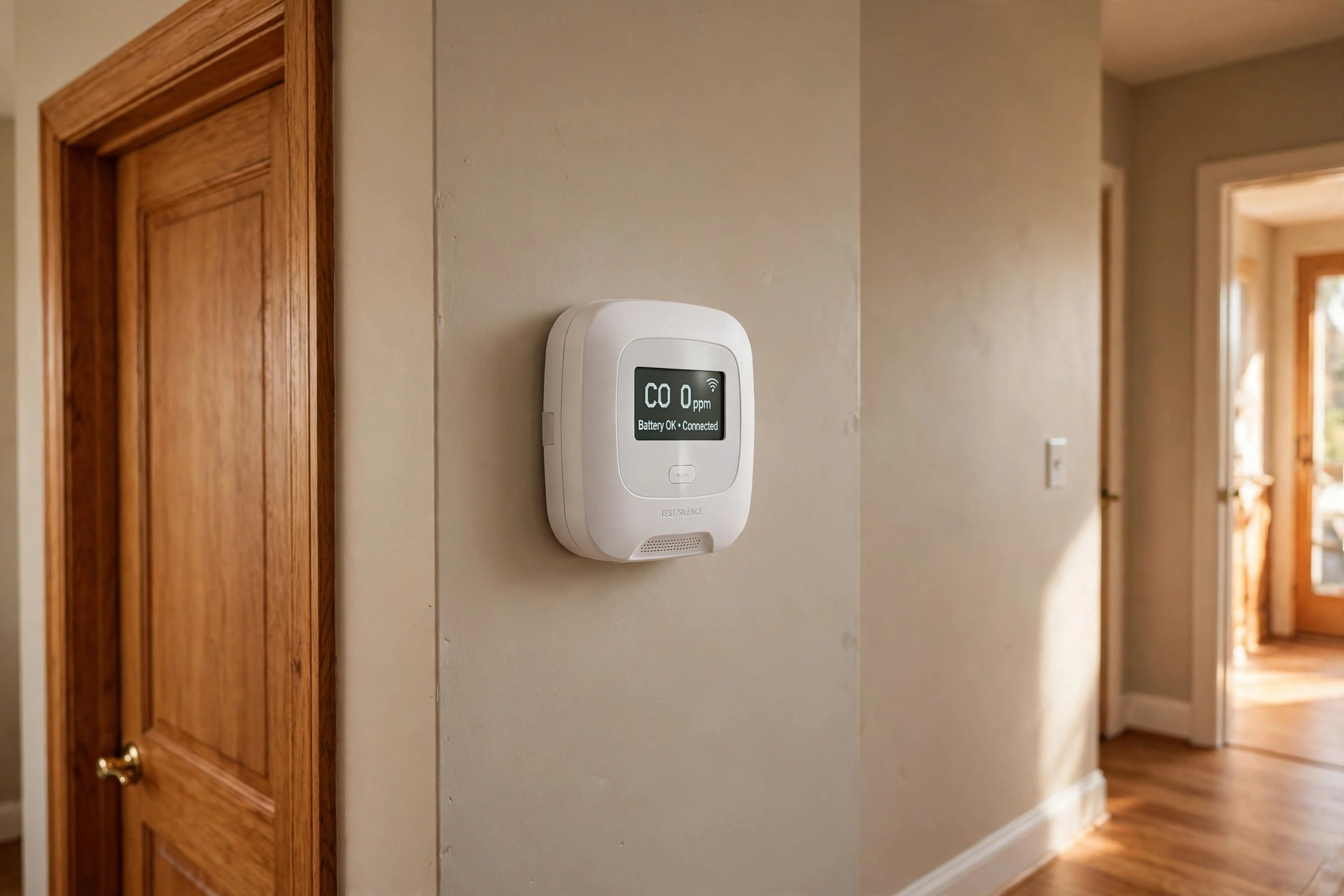

Carbon monoxide is a danger that no one can see. It has no color and no smell. It gives no sign until the body starts to fail. A smart CO detector with app alerts USA households can buy today changes that picture. It sounds an alarm in the home. It also sends an alert to a phone. That alert can reach you at work, on the road, or on a trip far from home. This guide explains how these units work, what to look for when you buy one, what they cost, and how to keep them in good order.
Why It Matters
Every year, carbon monoxide from heaters, stoves, fireplaces, and car engines harms hundreds of families in the United States. The gas forms when fuel burns without enough air. A blocked vent, a cracked heat exchanger, or a generator set too close to the house can let it build up indoors. At low levels it brings headaches and dizziness. At higher levels it can knock a person out. Sleep makes the danger worse, because a sleeping person cannot wake to a loud sound in the hall.
A plain alarm helps the people who are home. A smart CO detector with app alerts USA buyers choose goes a step further. It connects to the home Wi-Fi. When it senses gas, it pushes a warning to every phone on the account. That means a parent at the office can learn that the alarm is sounding at home. A neighbor can be called. The fire department can be sent. Minutes matter with this gas, and the phone alert buys minutes.
There is another gain. Smart units often speak the alert. They say, in plain words, “Warning: carbon monoxide in the kitchen.” Older units only beep. At three in the morning, a voice that names the danger and the room can wake people faster than a plain tone. Many models also test themselves each month and tell the app if the sensor is weak. A weak sensor in a plain unit might sit silent for years, and no one would know.
What to Look For When You Buy One: Smart Co Detector with App Alerts Usa
Start with the sensor. Most home units use an electrochemical sensor. It reacts with carbon monoxide and sends a small signal. This type is steady, draws little power, and lasts about seven to ten years. Some brands use a biomimetic sensor, which mimics the way blood absorbs the gas. Both meet the standard. Look for a unit listed to UL 2034. That listing means the unit passed tests for how fast it sounds at rising gas levels. The U.S. Consumer Product Safety Commission gives plain facts on what these listings mean and how detectors should be placed.
Next, study the app. The app is the heart of a smart CO detector with app alerts USA buyers rely on. It should send push alerts even when the phone screen is dark. It should show the history of alerts and tests. It should let you name each room. It should work on both major phone systems. Read the app store reviews with care. A fine sensor paired with a poor app is a poor buy.
Check the power plan. Some units plug into a wall outlet with a battery for backup. Some run on batteries alone. Some wire into the home circuit. Plug-in units are the simplest for most homes. Battery-only units work well where no outlet sits near the needed spot. Look for a sealed battery that lasts the full life of the unit. If the batteries must be changed, the app should warn when power is low.
Consider voice alerts. As noted, spoken warnings help in the night. Consider a hush button in the app. A kitchen alarm set off by a smoky pan needs a quick silence, but the app should make clear that a real carbon monoxide warning can never be hushed the same way. Also look for a self-test feature. The best units run a sensor check each month and report the result to the app without any work from you.
Think about how the unit fits the rest of the home. Some connect to smart home systems and can turn on lights or unlock nothing at all. Keep it simple. The main job is warning. Tech news sources such as The Verge often review how well new smart home gear connects to phones and hubs, which can help you judge claims before you buy.
Types and Options
Plug-In Smart CO Detectors
These units slide into a standard outlet. Most keep a battery inside for outages. They are easy to move and easy to install. The drawback is placement. Carbon monoxide mixes with room air, so outlets near the floor work fine, but outlets behind furniture can muffle the sound. Keep them in open spots.
Battery-Only Smart CO Detectors
These mount on a wall or ceiling with screws. They need no outlet. They suit halls, bedrooms, and basements. The sealed battery often lasts the full seven-to-ten-year life of the sensor. When the unit dies, you replace the whole thing. Mark the replacement date on the unit with a pen when you hang it.
Combination Smoke and CO Detectors
Many brands sell one unit that senses both smoke and carbon monoxide. This cuts the number of boxes on the ceiling. The voice alert names the danger, so you know which one fired. For a full picture of smoke-sensing tech, see our guide to the best smart smoke detector reviews 2026 usa. The trade-off is simple. When the smoke half wears out, or when smoke standards change, you may need to replace a unit whose CO half is still good. Many families accept that cost for the cleaner look and simpler app.
Smart CO Detector with App Alerts USA Shoppers Compare
The two best-known names in this space are Nest Protect and First Alert. Our nest protect vs first alert comparison usa walks through the differences. Nest units, sold through the Google Store, use a polished app and voice alerts in clear language. First Alert makes both smart and plain units at lower prices and sells wide. Either can serve well if it meets UL 2034 and pairs with a stable app.
Whole-Home Security Add-Ons
Some monitored security firms sell carbon monoxide sensing as part of a plan. Companies such as Ring, SimpliSafe, and ADT link detectors to a central watch center. If the alarm sounds and no one answers, the center calls the fire department. This adds a monthly fee. It suits people who want a human on the line when they cannot answer a phone. Tech reviewers at PCMag and CNET test these monitored setups and rate their apps, which can help you weigh the fee against the gain.
Cost and Price
Prices for a smart CO detector with app alerts USA stores carry range widely. A basic smart plug-in unit often costs between forty and eighty dollars. A combination smoke and CO unit with voice alerts often runs between one hundred and one hundred thirty dollars. A hardwired unit with a sealed battery can cost more, and an electrician may be needed to fit it.
Look past the sticker price. A unit with a sealed ten-year battery costs nothing to feed. A unit with replaceable batteries costs a few dollars a year. Independent test groups such as Consumer Reports rate these units for alarm speed and app quality, which can guide the choice when prices look close. A monitored plan adds a monthly charge of ten to thirty dollars or more. Over the life of the unit, the plan can cost more than the detector itself.
Buying in sets can cut the per-unit cost. Many brands sell two-packs or three-packs. Most homes need more than one detector. One in or near each sleeping area is the rule of thumb, plus one near a fuel-burning heater or an attached garage.
Also note the replacement cycle. The sensor wears out after about seven to ten years, even if the unit looks new. Write the buy date on the back. When the end-of-life chirp sounds, replace the unit at once. A fresh unit protects better than an old one with a tired sensor, no matter how smart it was in its day.
Care and Upkeep
A smart detector needs little care, but it needs some. Dust the vents twice a year with a soft brush or a vacuum tool. Dust can slow the air that reaches the sensor. Do not paint over the unit. Paint seals the vents and ruins the sensor.
Test the alarm with the test button each month. The app of a good smart unit logs the test. If the app shows a missed self-test, look into it that day. Keep the app on your phone and keep alerts turned on.
Wi-Fi matters. The unit must stay on the home network to send phone alerts. If you change the router or the Wi-Fi password, pair the detector again. The app walks you through it in a few minutes. If the power goes out, the battery backup keeps the alarm sounding at home, but the app alerts pause until the network returns. This is worth knowing, not fearing. The loud alarm in the hall is still the first line of defense.
Safety
Detectors are a backstop, not a shield. The first safety rule is care of the gear that makes carbon monoxide. Have the furnace, boiler, and water heater checked each year by a trained worker. Look at the vents from the outside in each season. Leaves, snow, and nests can block them. Never run a car in a closed garage, even with the door cracked. Never use a gas stove or oven to heat the home. Never run a generator inside the house or garage. Set portable generators at least twenty feet from the home, with the exhaust pointed away from windows and doors.
Place detectors with care. Put one on each floor. Put one inside each sleeping area or just outside the door. Keep one near an attached garage. Do not place a unit right next to a fuel-burning appliance. The normal puff of gas when the burner starts can cause false alerts. Fifteen feet of distance is a common guide. Do not place units in kitchens full of steam or in baths full of mist. Steam can harm the sensor over time.
Know what to do when the alarm sounds. If anyone feels sick, with headache, dizziness, or nausea, get out at once and call the emergency number from outside. Do not stop to open windows. Do not go back in to find a pet until the fire crew says the air is safe. If no one feels sick, still treat the alarm with respect. Step outside, call the non-emergency fire line, and let trained staff check the home. The app alert helps here. It tells you the alarm is real and not a low-battery chirp, even when you are not home to hear it.
Frequently Asked Questions
How many smart CO detectors does a home need?
At least one on each floor. Add one in or near each sleeping area. Add one near an attached garage and near any fuel-burning heater. A three-bedroom home often needs four or five units. The app shows all of them in one list, which makes a larger set easy to watch.
Do smart CO detectors work when the power is out?
The alarm in the home works on battery backup and will sound. The phone alerts need home Wi-Fi and internet. If the router loses power, alerts pause until the network returns. Keep this in mind during storms, and do not depend on the app alone.
Will the app alert me if I am far from home?
Yes. The alert travels through the internet, not through home Wi-Fi range. You can be in another state and still get the push. Make sure the app has permission to send alerts and to sound at full volume. Test it once from the road so you trust it.
How long do these detectors last?
The sensor lasts about seven to ten years. The unit will sound an end-of-life signal when the sensor wears out. Replace the whole unit then. Do not keep using an old unit because it still powers on. A tired sensor may miss rising gas.
Can a smart CO detector tell smoke from carbon monoxide?
Combination units can. The voice alert names the danger and the room. “Emergency: smoke in the hallway” sounds different from “Emergency: carbon monoxide in the basement.” Plain beeps from old units cannot do this, which is one reason voice alerts matter.
Do I still need detectors if my home is all electric?
Yes, if the home has an attached garage. Cars and tools in the garage make carbon monoxide. A blocked dryer vent can also cause trouble in rare cases. If the home is all electric with no attached garage, the risk is very low, but many fire officials still advise at least one unit for safety.
Final Word
A smart CO detector with app alerts USA homeowners can trust is a small box with a large job. It watches the air while you sleep, work, and travel. It speaks the warning in plain words. It reaches your phone wherever you are. Pick a unit listed to UL 2034, set the app with care, place the boxes where they belong, and care for the furnace and vents each year. If you are weighing a plain alarm against a smart one, our roundup of the best carbon monoxide detector reviews 2026 compares both kinds side by side. Do that, and you have given your home a quiet guard that never sleeps.
References
ADT. (n.d.). Home security and automation. https://www.adt.com CNET. (n.d.). Technology news and reviews. https://www.cnet.com Consumer Reports. (n.d.). Product reviews and ratings. https://www.consumerreports.org Google Store. (n.d.). Smart home devices. https://store.google.com PCMag. (n.d.). Technology product reviews. https://www.pcmag.com Ring. (n.d.). Smart home security devices. https://www.ring.com SimpliSafe. (n.d.). Home security systems. https://www.simplisafe.com The Verge. (n.d.). Technology news and reviews. https://www.theverge.com U.S. Consumer Product Safety Commission. (n.d.). Product safety information. https://www.cpsc.gov
Was this guide helpful?

About Lisa Anderson
The My Garden US editorial team writes practical, in-depth home and garden guides for American homeowners — tested advice, no fluff.
You May Also Like

Best Smart Oil Tank Gauge Reviews USA: A Homeowner Guide
January 12, 2026 0 views
Freeze Alarm for Vacation Home Reviews USA: What to Know Before You Buy
January 25, 2026 0 views
Span Panel vs Traditional Panel Cost USA: A Homeowner’s Guide
January 8, 2026 0 views