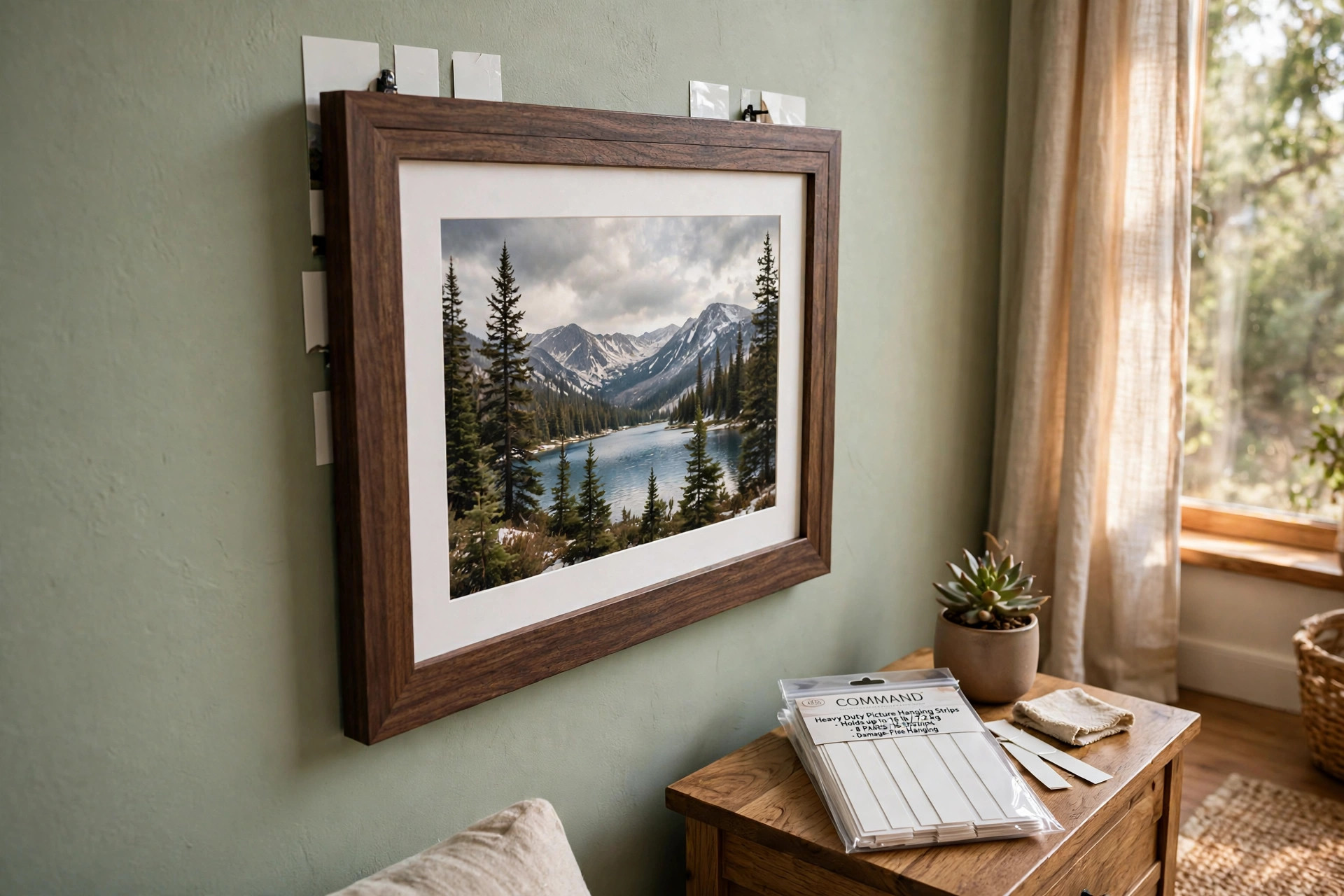

Heavy frames test every wall. A large wood frame with thick glass can weigh twenty pounds or more. Nails and hooks work, but they leave holes. Renters, new homeowners, and anyone who dislikes patching drywall want another way. The best picture hanging strips for heavy frames give you that way. These are thick adhesive strips with interlocking teeth. Two strips press together and lock. One side sticks to the frame, and the other side sticks to the wall. You can hang a heavy frame in minutes. You can take it down without damage. This guide explains what to buy, how to choose, and how to hang heavy art with confidence.
Why It Matters
A heavy frame is not a poster. It has real weight. When a heavy frame falls, it breaks glass, scars the wall, and can injure a person below. The stakes are higher than most people think. That is why the best picture hanging strips for heavy frames must be rated well above the actual weight of the frame. Weight ratings on the package are not decoration. They are test results from the maker, and you should respect them.
Adhesive strips also protect your walls. Every nail hole must be filled, sanded, and painted when you move out or rearrange a room. A gallery wall of six frames can mean a dozen holes. Strips pull away clean with a slow stretch. The paint stays on the wall. In rental homes, this matters even more. Many leases allow adhesive strips but forbid nails.
There is a third reason. Strips hold frames flat against the wall. A wire and hook lets a frame tip forward at the top. That tilt catches light and throws glare across glass. It also collects dust behind the frame. Strips press the whole back of the frame to the wall, so it sits straight. The picture looks level from every angle in the room.
How to Choose the Right Strips: Best Picture Hanging Strips for Heavy Frames
Check the Weight Rating
This is the first and most important step. Weigh your frame if you can. A small bathroom scale works fine. Or add up the parts: frame, glass, mat, and backing. A 24 by 36 inch frame with real glass often weighs 15 to 25 pounds. The strips you buy must hold more than that number. The best practice is to use strips rated for at least twice the weight of the frame. If your frame weighs 16 pounds, use strips rated for 32 pounds. This margin covers humid air, rough walls, and the slow pull of gravity over years.
Heavy-duty strips come in different sizes. Small strips hold about 3 pounds per pair. Large strips hold about 4 pounds per pair. Extra-large strips hold about 12 to 16 pounds per pair. Count the strips on the package. Four pairs of large strips give you 16 pounds of holding power. Six pairs give you 24. Do the math before you buy, and buy one extra pack for mistakes.
Match the Strip to the Wall Surface
Adhesive strips stick best to smooth, hard, clean surfaces. Painted drywall, painted wood, tile, glass, and metal all work well. The surface must be smooth enough for full contact. A thick orange-peel texture weakens the bond because the adhesive cannot touch the whole strip. Brick, raw concrete, rough stucco, and unfinished wood are poor choices. The strips will not hold heavy frames on those walls.
Flat latex paint works better than glossy paint. Glossy paint sheds adhesive over time. Fresh paint is another problem. Wait at least a week after painting before you stick anything to the wall. Paint that has not cured can peel away under the load, taking the strip with it. Vinyl wallpaper is also risky. The strip may pull the paper off the wall when you remove it. For those walls, hooks and nails remain the safer choice. The guides at This Old House explain which wall surfaces accept adhesive hangers and which do not.
Look at Temperature and Humidity
Adhesive bonds hate heat and steam. A frame hung above a radiator or inside a steamy bathroom will test the limits of any strip. Most heavy-duty strips are rated for indoor rooms between 50 and 105 degrees Fahrenheit. Humid rooms reduce holding power. If you hang a heavy frame in a bathroom, use more strips than the rating calls for, and check the frame every few months. Cool, dry rooms give the longest life.
Read the Frame Back
Not every frame back suits strips. Flat wood or composite backs work best. A deep rabbet or a thin metal back gives the adhesive little to grip. If the back is uneven, fill the gap with a thin piece of foam board first, then attach the strips to the board. Make sure the back is clean. Wipe it with rubbing alcohol and let it dry before you apply the strips. Dust and oil are the enemies of a strong bond.
Types and Options
Interlocking Adhesive Strips
This is the standard product and the heart of this guide. Each strip has a foam base, a strong adhesive face, and a field of tiny mushroom-shaped posts on the other face. You press two strips together, and the posts lock. One strip goes on the wall, and one goes on the frame. To hang, you press the frame to the wall and hold for thirty seconds. To remove, you pull the tab straight down to stretch the adhesive away. Leading brands at Home Depot and Lowe’s sell these in sets sized for heavy loads.
Extra-Large Strip Sets
For the heaviest frames, buy the extra-large sets made for frames up to 16 pounds per pair. These strips are wider and longer, so they spread the load over more wall area. A 30-pound mirror or a large framed canvas can hang on four to six pairs of extra-large strips. The removal tabs are longer, so you need clearance behind the frame to pull them down. Plan for that space when you hang.
Adhesive Picture Hanging Sets for Plaster
Old plaster walls look smooth but crumble under nails. Interlocking strips suit them well, but the wall must be sealed and painted. Bare, powdery plaster will shed the top layer and drop the frame. Test a small area first. Press one strip to the wall, wait a day, and pull it off slowly. If the plaster stays put, you can hang with confidence. Bob Vila has a clear walkthrough of hanging on plaster without damage.
Alternatives Worth Knowing
Strips are not the only damage-free option. French cleats are two interlocking wood or metal rails. They hold very heavy frames, but they need screws in the wall. Monkey hooks and gorilla hooks punch a tiny hole that almost disappears when removed. If your frame is over 30 pounds, these alternatives deserve a look. For anything up to about 20 pounds, the best picture hanging strips for heavy frames remain the simplest choice.
Cost and Price
Adhesive strips are cheap compared with the frame they hold. A pack of small strips costs a few dollars. A pack of large or extra-large strips for heavy frames runs about eight to fifteen dollars, depending on the count. To hang one heavy frame, expect to use one to two packs. That puts the cost of hanging a heavy frame at roughly ten to twenty-five dollars. Compare that with a handyman visit or the cost of patching and repainting nail holes, and the strips win on price.
Watch the price per strip, not the price per pack. Bulk packs look dear at first but cost less per strip. If you plan a gallery wall, buy the bulk pack. Check the weight rating on the back of the package, not the marketing on the front. Two packs with the same brand name can hold very different weights. Consumer Reports tests adhesives for strength, and its ratings can help you compare brands on a fair basis.
Do not chase the cheapest strips for heavy frames. Off-brand strips often use weaker adhesive and fewer locking posts. A failed bond costs far more than the few dollars you saved. Stick with well-known makers and rated sets.
Care and Upkeep
Strips need little care, but they are not set-and-forget. Check heavy frames twice a year. Press gently on the bottom corners. If a corner moves, the bond is weakening. Pull the frame down at once and replace the strips. Never reuse a strip that has been pulled off. Once the adhesive stretches, its strength is gone. Fresh strips cost little. A broken frame costs much more.
Keep the room conditions steady. Heat waves and long humid spells stress every adhesive bond. If you live in a humid climate, a dehumidifier in the room protects both the strips and the art. Grime that creeps behind the frame can work into the adhesive edge over the years.
When you rearrange, remove the strips the right way. Pull the tab slowly, straight down along the wall, stretching the strip to many times its length. It will release with a soft snap. Never yank the tab outward or twist it. Fast pulls can tear paint. If a tab breaks off, warm the strip with a hair dryer for a minute, then roll it off the wall with your thumb. This method is the one recommended by most paint makers, including Behr and Sherwin-Williams, because it leaves the paint film intact.
Safety
Heavy frames demand respect. Never hang a frame that weighs more than the strips are rated to hold. Never hang over a bed, a crib, or a chair where people sit for long hours unless you are certain the bond is sound. In homes with small children, use a secondary safety measure for the heaviest pieces. A small clear bumper or a second set of strips at the bottom adds insurance.
Glass-front frames carry extra risk. When glass breaks, it falls in sharp sheets. If you hang a heavy glass-front frame with strips, consider swapping the glass for lightweight acrylic. Acrylic weighs far less, cuts the total weight, and does not shatter. The picture looks the same behind it. This one change can turn a risky hang into a safe one.
Earthquake country needs extra care. Strips resist straight-down pull far better than sideways shear. A tremor can shear a frame right off the wall. If you live in a seismic zone, use mechanical fasteners for heavy frames, not adhesive alone. Safety comes before clean walls.
Frequently Asked Questions
How many strips do I need for a 20-pound frame?
Use strips rated for at least 40 pounds in total, which gives you a safety margin of two. With extra-large strips rated at 16 pounds per pair, three pairs give you 48 pounds of rated hold. Place one pair near each top corner and one pair centered at the bottom, or space four pairs evenly around the frame. The guides at The Spruce show good placement patterns for heavy frames.
Will picture hanging strips damage painted walls?
When used correctly, no. Pull the tab slowly downward to stretch the adhesive off the wall. The wall keeps its paint. Damage happens when people pull too fast, pull outward, or hang on fresh or glossy paint. Let paint cure for a full week before hanging. If you are unsure about your paint, test one strip in a hidden spot first. Benjamin Moore advises the same cure time for any adhesive on its paints.
Can I use hanging strips on textured walls?
Light texture is fine if the strip still makes full contact. Heavy texture, knockdown, or popcorn finishes are not. The adhesive only touches the high points, so the real holding power drops far below the rating. For textured walls, use hooks made for the wall type or screw into a stud. Do not trust the package rating on rough surfaces.
How long do adhesive strips last under a heavy frame?
Most makers rate their strips for several years indoors. In practice, a heavy frame on quality strips lasts three to seven years in a cool, dry room. Heat, humidity, and direct sun shorten that life. Check the frame twice a year and replace the strips at the first sign of movement.
Can I hang a heavy mirror with picture hanging strips?
Yes, if the mirror weighs less than the rated hold of the strips you use. Many people hang 15 to 20 pound mirrors on extra-large strips with success. The mirror back must be flat and clean. Bevel edges and thin metal backs give poor contact. For mirrors over 25 pounds, use a French cleat or wire on proper anchors instead. Mirrors over doors and beds deserve mechanical fasteners.
What should I do if a strip fails and the frame falls?
First, check for injury and broken glass. Clean up carefully with gloves. Then figure out why it failed. Common causes are dirty surfaces, fresh paint, too few strips, heat, or a textured wall. Fix the cause, not just the strip. If the wall surface was the problem, switch to a hook or anchor. If the strips were too few, double the count and buy a higher-rated set.
A Final Word
The best picture hanging strips for heavy frames turn a dreaded chore into a ten-minute job. Weigh the frame, buy strips rated for twice that weight, clean both surfaces, and press with care. Check the frame twice a year. Pull the tabs slowly when the time comes to move it. Your walls stay whole, your art stays level, and your security deposit stays safe. For related damage-free ideas, see our guides on peel and stick wallpaper for bedrooms reviews, removable wallpaper for renters reviews usa, and accent wall painting ideas for living rooms. For step-by-step hanging projects, HGTV offers clear photo guides that pair well with the method described here.
References
Behr. (n.d.). Paints, primers, and stains. https://www.behr.com Benjamin Moore. (n.d.). Paints and stains. https://www.benjaminmoore.com Bob Vila. (n.d.). Home improvement advice. https://www.bobvila.com Consumer Reports. (n.d.). Product reviews and ratings. https://www.consumerreports.org HGTV. (n.d.). Home and garden ideas. https://www.hgtv.com Lowe’s. (n.d.). Home improvement products. https://www.lowes.com Sherwin-Williams. (n.d.). Paints and coatings. https://www.sherwin-williams.com The Home Depot. (n.d.). Home improvement products. https://www.homedepot.com The Spruce. (n.d.). Home and garden advice. https://www.thespruce.com This Old House. (n.d.). Home renovation guidance. https://www.thisoldhouse.com
Was this guide helpful?

About Robert Taylor
The My Garden US editorial team writes practical, in-depth home and garden guides for American homeowners — tested advice, no fluff.
You May Also Like
Textured Wall Finish Contractors Near Me: A Plain Guide to Hiring Right
May 18, 2026 0 views
Paint Color Consultation Service Online USA: A Plain Guide for Homeowners
April 18, 2026 0 views
Wall Decals for Kids Rooms: Reviews and Buying Guide USA
March 13, 2026 0 views