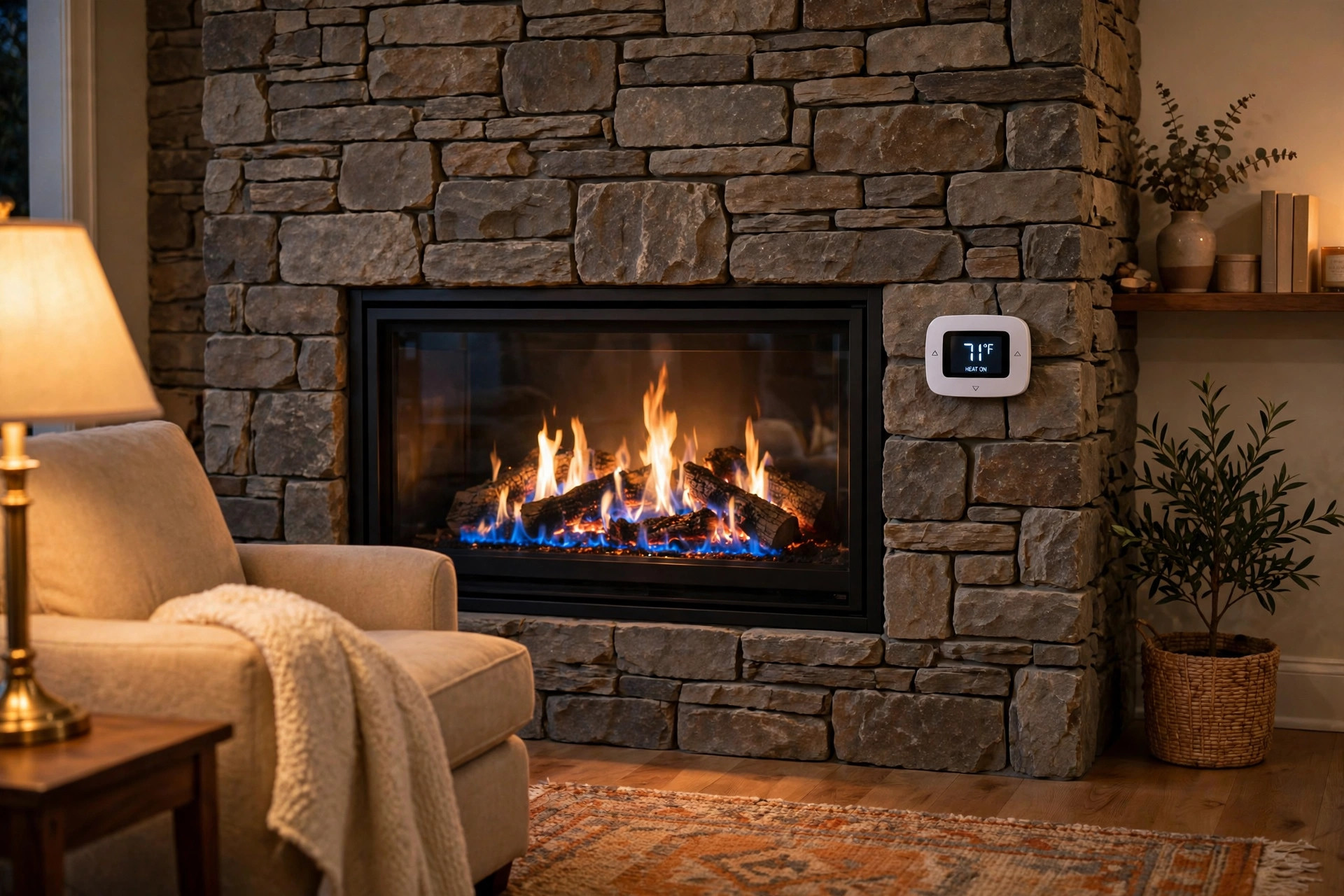
A gas fireplace with a thermostat does more than burn. It watches the room. When the air cools, it lifts the flame. When the room warms, it lowers the flame. The result is steady heat with no hot and cold swings. A thermostat controlled gas fireplaces price comparison usa gives shoppers a clear view of what these units cost, from simple wall-control models to smart units that learn your schedule.
Many buyers pick these models for one reason: comfort. A plain gas fireplace runs at one level. You turn it on, and it heats until you turn it off. A thermostat model holds the room near the temperature you set. It feels more like a furnace than a decoration. For cold winter states, that small difference matters a lot.
Why a Thermostat Matters on a Gas Fireplace
Heat that never stays still is annoying. Without a thermostat, a gas fireplace can push a small room past comfort in less than an hour. You open a window. The room cools. You close the window. The room warms again. The cycle repeats all evening.
A thermostat ends that cycle. It reads the air around it and feeds the flame only what the room needs. Living rooms stay even. Bedrooms near the fireplace stay cool enough for sleep. Older houses with drafty windows benefit most, since the unit works harder only when the cold air wins.
Fuel savings follow. A fireplace that shuts down when the room is warm burns less gas than one left on full blast. Over one heating season, the difference can be clear on a gas bill. Reviewers who test heating products often note this point in their write-ups, including the independent product tests published by Consumer Reports, which compare real-world efficiency claims against maker promises.
Safety gets a small boost too. A thermostat that holds a lower, steady flame keeps the glass front cooler than a unit run at full roar for hours. The room never climbs to an unsafe heat. The unit never runs longer than needed.
What to Look for When You Choose One: Thermostat Controlled Gas Fireplaces Price Comparison Usa
Shopping starts with the basics. The unit must fit your home, your fuel line, and your local rules. These points help you sort the choices.
Direct Vent or Ventless
Direct vent models pull air from outside and send exhaust out through a wall or roof pipe. They seal off from room air. Most experts call them the safer and more efficient choice, and many buying guides rank them highest for primary heat. If you live in a small space, you can also read a guide to best direct vent gas fireplaces for california apartments to see how these sealed units fit tight floor plans.
Ventless models burn room air and send no exhaust outside. They are cheaper and easy to install. But they are banned in some states and some cities. Check your local code first. The EPA’s federal safety guidance explains how indoor fuel-burning appliances must meet clean-air rules, which is why some areas limit ventless heat.
Wall Thermostat, Remote, or Smart Control
Basic units pair with a simple wall thermostat. You set a number and the fireplace obeys. Mid-range models add a hand-held remote with a built-in room sensor. High-end smart thermostat controlled gas fireplaces link to Wi-Fi and join a smart home system. A smart model can warm the den before you arrive home and rest while you sleep.
Heat Output and Room Size
Makers rate fireplaces in BTUs. A small room of 400 square feet needs about 10,000 to 15,000 BTUs. A large open plan of 1,000 square feet may need 30,000 BTUs or more. Too much heat is as bad as too little. Oversized units short-cycle and waste gas. Measure your room and match the rating. The room-sizing advice from The Spruce walks through these numbers with simple charts.
Natural Gas or Propane
Most city homes burn natural gas from a utility line. Rural homes often burn propane from a tank. Many fireplace models ship ready for natural gas and need a kit for propane. Propane burns hotter but costs more per unit of heat. Check which fuel your home already uses before you shop.
Types and Options on the Market
Gas fireplaces with thermostats come in four main shapes.
Inserts slide into an old wood fireplace opening. They use the existing chimney space for the vent pipe. This is the cheapest path if you already own a masonry fireplace. A full gas fireplace inserts reviews and buying guide can help you compare insert sizes and vent kits.
Built-in direct vent units sit inside a wall like a window. They suit new builds and remodels. Installers frame a chase around them and run the vent out the back. The installation walkthroughs from This Old House show how pros frame, vent, and trim these units.
Ventless firebox models need no chimney at all. They hang on a wall or sit on the floor. Buyers who want easy setup often start with buy ventless gas fireplaces online in arizona style listings, though local bans still apply.
Freestanding gas stoves look like old wood stoves but burn gas. They stand in a corner and vent through the wall. They heat small cabins and dens very well.
Brands differ in looks and controls. Makers such as Napoleon offer wide lines of direct vent fireplaces with thermostat remotes and designer fronts. Companies like Heatilator sell builder-grade models that contractors install in new homes. Large home centers carry many of these lines, and both Home Depot and Lowe’s publish model-by-model price listings that make side-by-side checks easy. For design and hearth styling ideas, the hearth design ideas from HGTV show how these units look in finished rooms.
Cost and Price: A USA Comparison
Prices vary by region, fuel type, and how much hand work the install needs. This section lays out the real ranges seen across the country. The price comparison guides from Bob Vila track these ranges by region and are worth a look before you visit a showroom.
Unit prices
Entry-level ventless models with a basic thermostat start near 900 dollars. They heat one room and offer few extras. Mid-range direct vent models with remote thermostats run from 1,500 to 2,500 dollars. They offer better efficiency, nicer glass, and quieter fans. Premium smart models with Wi-Fi and designer fronts run from 2,500 to 4,000 dollars or more. Large multi-sided units for great rooms can pass 5,000 dollars before install.
Installation costs
Installation often costs as much as the unit. A simple swap of an old insert may cost 500 to 1,000 dollars in labor. A new direct vent install with fresh gas line and wall vent can cost 1,500 to 3,000 dollars. Costs run higher in big cities where labor rates are steep. Rural areas may cost less but can add travel fees for the installer.
Regional price differences
Cold-climate states show higher demand and slightly higher prices in peak season. Stores in the Northeast and upper Midwest stock more models and run fall sales as heating season nears. Southern states carry fewer models, so prices may stay flat all year. Shipping a heavy unit to a remote ZIP code can add 200 to 400 dollars.
Running costs
A 20,000-BTU unit burns about one therm of natural gas every five hours at full flame. With a thermostat, full flame is rare. Expect winter gas bills to rise by 20 to 60 dollars a month in a cold state, less in mild states. Propane costs more, so propane users save more by leaning on the thermostat.
Smart features add cost
Wi-Fi controls add 150 to 400 dollars to the unit price. Some buyers find the price worth it for remote start and schedules. Others find a plain wall thermostat does the same job. Read model reviews before you pay for extras you may never use.
Some smart models join wider home systems. They talk to room sensors and voice helpers. You can ask for heat from the couch or set a night schedule from your phone. Check that the app gets updates from the maker. A dead app leaves you with a costly feature that no longer works.
Care and Upkeep
A gas fireplace needs little care, but it needs some. Clean the glass once a season with a cleaner made for fireplace glass. Dust the logs and burner with a soft brush. Check that the vent pipe is clear of nests and leaves each fall.
Have a pro service the unit once a year. The tech checks the gas line, tests the thermostat sensor, and looks at the vent seals. A yearly visit costs 100 to 200 dollars in most areas. Skip the service and small problems grow into big ones.
Watch the flame color. A healthy gas flame burns mostly blue with small yellow tips. A flame that burns tall and yellow may need air adjustment. If you smell gas, leave the house and call your gas company at once.
Safety
Gas heat is safe when the rules are followed. Install a carbon monoxide detector in the same room as the fireplace and test it monthly. Keep curtains, paper, and furniture at least three feet from the glass front. Never let small children play near a hot fireplace. A glass safety screen is a smart add-on in homes with kids.
Ventless models need extra care. They add moisture to the air and use room oxygen. Run them only as the maker directs and never leave them on overnight. In many states, building codes require an oxygen depletion sensor on every ventless unit. Check local rules before you buy.
Have a licensed pro do the gas work. Do-it-yourself gas lines are illegal in many places and dangerous everywhere. A permit and an inspection protect your home and your insurance.
Keep a fire extinguisher within reach of the room, and teach every family member where it sits. Never block the vent pipe with snow, leaves, or stored boxes. A blocked vent pushes exhaust back into the house.
FAQ
How much does a thermostat controlled gas fireplace cost in total? Most buyers spend 2,000 to 5,000 dollars for the unit plus installation. Simple ventless setups can cost less. Large direct vent installs with new gas lines can cost more.
Can I add a thermostat to my current gas fireplace? Many gas fireplaces accept an add-on thermostat or remote kit. The fireplace must have a millivolt or electronic valve that supports it. Ask a pro to check your model before you buy a kit.
Are smart thermostats safe on gas fireplaces? Yes, when the kit is made for your fireplace model. Use only controls rated for fireplace use. Never wire a home furnace thermostat directly to a fireplace valve unless the maker allows it.
How much gas does one use in a winter? A mid-size unit in a cold state may use 30 to 60 therms in a season with thermostat control. Mild states use far less. Your gas bill shows the real number after the first winter.
Do I need a chimney? Direct vent models need a vent pipe through a wall or roof, not a full chimney. Ventless models need no vent at all. Only older wood-burning designs need a real chimney.
A Final Word
A thermostat turns a gas fireplace from a decoration into a real heater. Prices differ across the USA, but the shopping method stays the same. Pick the right vent type, match the heat to the room, and get a pro to install it. Do that, and the fireplace will pay you back in warm evenings for many winters to come.
References
Bob Vila. (n.d.). Home improvement advice. https://www.bobvila.com Consumer Reports. (n.d.). Product reviews and ratings. https://www.consumerreports.org Heatilator. (n.d.). Fireplaces and fireplace products. https://www.heatilator.com HGTV. (n.d.). Home and garden ideas. https://www.hgtv.com Lowe’s. (n.d.). Home improvement products. https://www.lowes.com Napoleon. (n.d.). Fireplaces, grills, and heating products. https://www.napoleon.com The Home Depot. (n.d.). Home improvement products. https://www.homedepot.com The Spruce. (n.d.). Home and garden advice. https://www.thespruce.com This Old House. (n.d.). Home renovation guidance. https://www.thisoldhouse.com U.S. Environmental Protection Agency. (n.d.). Protecting human health and the environment. https://www.epa.gov
Was this guide helpful?

About Emily Rodriguez
The My Garden US editorial team writes practical, in-depth home and garden guides for American homeowners — tested advice, no fluff.