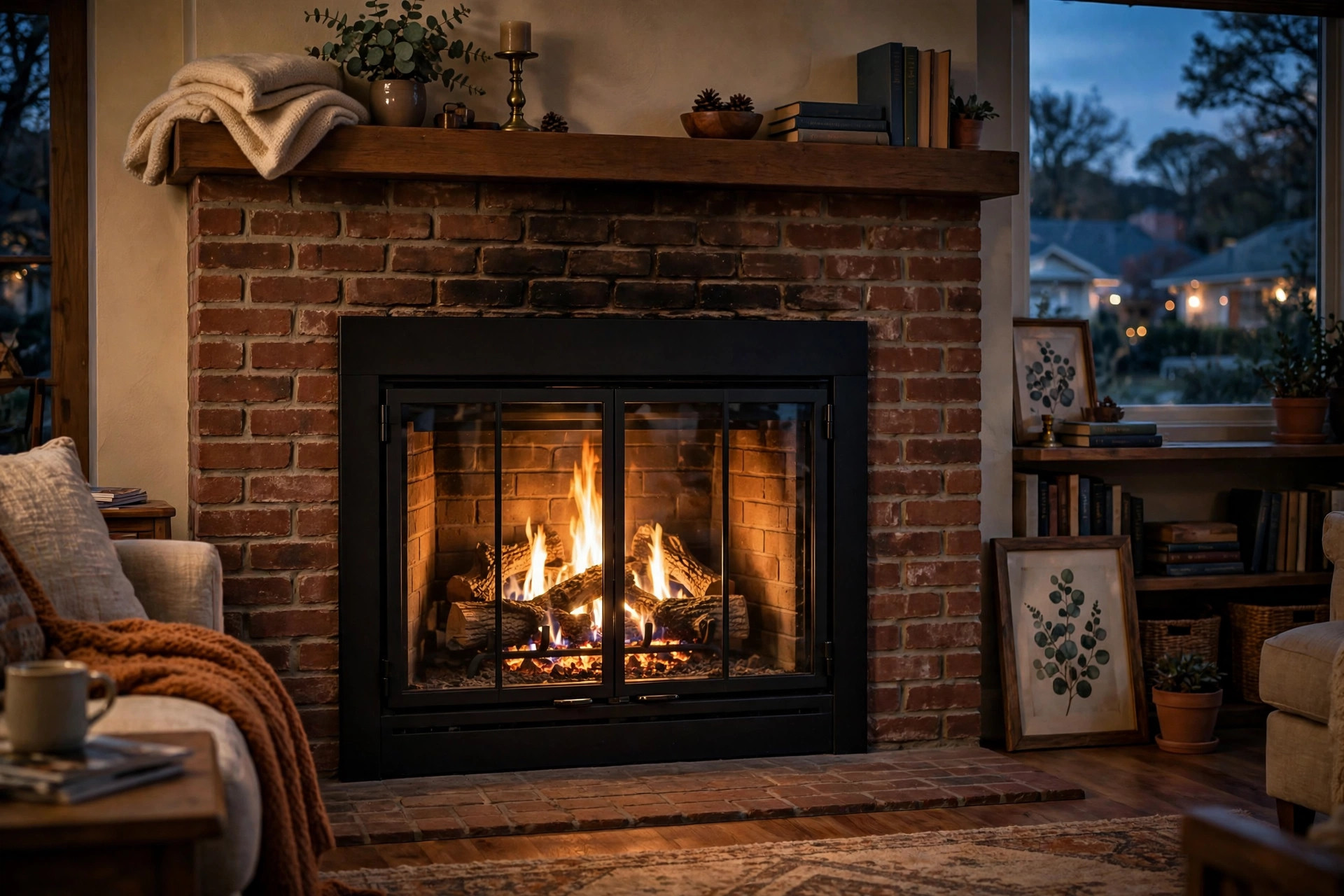

An old masonry fireplace can lose more heat than it gives. Cold air slips down the chimney. Heat from the fire drifts up the flue. A gas fireplace insert can change that. It fits inside the old firebox. It seals the opening. It turns a drafty hole in the wall into a true source of heat. This gas fireplace inserts reviews and buying guide will walk you through how inserts work, what to look for, what they cost, and how to keep one running well for years.
Why It Matters
Many American homes have a wood fireplace that no one uses. Wood is heavy to carry. It leaves ash. It needs a dry place to stack. The chimney needs sweeping. For an older owner, or for a busy family, the work is more than the pleasure. A gas fireplace insert keeps the charm of the fire and removes the labor. You push a button or turn a dial. The flames appear. The blower moves warm air into the room. When you are done, you shut it off. There is no smoke in the room and no ash to clean.
There is also the question of heat. An open wood fireplace is often said to send most of its heat up the chimney. An insert sits in the firebox with a sealed face. Heat comes out through a heat exchanger and a blower. Much less escapes. For a living room or a den, an insert can become the main heat source on a mild winter day. It can cut the load on the main furnace. That matters in the months when the gas bill is highest.
There is also the matter of the chimney. An unused open fireplace still lets weather in. Rain, snow, and birds find the flue. A cap helps, but the wide throat of an old fireplace is hard to seal. An insert fills that throat. The vent pipes are narrow and capped. The house stays warmer and drier. Many owners say the house feels different the first night the insert is lit: quieter, warmer, and free of the cold draft that used to fall from the hearth.
What to Look For When You Choose: Gas Fireplace Inserts Reviews and Buying Guide
Start with size. A fireplace insert must fit the firebox opening. Measure the height, the width at the front, the width at the back, and the depth. Write the numbers down. Bring them to the dealer. Inserts come in small, medium, and large sizes. A unit that is too small will look lost in a wide opening. A unit that is too large will not fit. Many dealers stock fireplace and stove installation guides that show how to take these measurements.
Next, look at heat output. It is measured in BTUs. A small insert may give 20,000 to 25,000 BTUs. A large one may give 35,000 to 40,000 BTUs. As a rough rule, a 30,000 BTU insert can warm 1,000 to 1,500 square feet, but the room layout matters more than the number. Open floor plans carry heat well. Closed rooms do not. The U.S. Department of Energy keeps plain guides on heating efficiency and home energy use that help you match output to the space.
Fuel type matters. Most inserts run on natural gas. Some run on propane. The gas company can tell you which line feeds your home. If you have no gas line, a plumber or gas fitter can add one, but that adds to the cost. Make sure the model you buy is set for your fuel. A natural gas unit can be changed to propane with a kit, but the kit must be made for that model and fitted by a trained installer.
Venting is the next question. There are three main kinds.
Types and Options
Vent-Free Inserts
Vent-free inserts need no chimney and no pipe. They burn gas cleanly and send the heat into the room. They are easy to place and low in cost. But they are not legal in every state or city. Some places ban them. Some require an oxygen depletion sensor. The EPA sets standards for clean burning and indoor air quality that you should read before you choose this type. If you plan to use one, a window cracked open and a carbon monoxide detector are wise.
Direct-Vent Inserts
Direct-vent units are the most common choice. They draw air for combustion from outside through one pipe and send exhaust out through another. The room air never meets the flame. They are safe and they work well. They need a chimney or an outside wall for the vent pipes. Most buyers end up with a direct-vent model.
B-Vent Inserts
B-vent inserts use the existing chimney as the exhaust path. They are less common now. They draw room air for combustion. Newer direct-vent models have largely taken their place.
Style Options
You can choose the look of the fire. Ceramic logs give the classic wood look. Some models offer stones, driftwood, or modern glass media. Glass doors come in black, bronze, or nickel frames. Remotes can be simple on-off units or full thermostats. Some premium models tie into a smart home setup. If that idea appeals to you, see our note on smart thermostat controlled gas fireplaces for sale before you decide.
Cost and Price
A gas fireplace insert usually costs between 1,500 and 4,000 dollars for the unit alone. Small basic models sit at the low end. Large units with fans, remotes, and fine finishes sit at the high end. Installation adds more. A straight swap into an old fireplace with a chimney liner may run 1,000 to 2,000 dollars. A job that needs a new gas line, electrical work for the blower, or masonry repair can run higher.
It pays to get more than one bid. Ask each installer what is included. The liner, the cap, the gas hookup, and the permits should all be on the paper. Retailers such as a major home improvement store and a national home center chain can point you to local installers, and dealers that sell brands like a leading gas fireplace maker or a long-time hearth brand often have their own crews. Check independent product test results and ratings before you sign.
Running cost depends on gas prices in your area. Gas is often cheaper than electric heat for the same warmth. Many owners use the insert to heat the main living space and turn the furnace down. Over a winter, the saving can be real.
Care and Upkeep
A gas fireplace insert needs little care, but it needs some. Each fall, before the cold sets in, clean the glass. Use a cleaner made for fireplace glass. Regular glass cleaner can leave a film. Wipe the logs gently with a soft brush. Vacuum the area around the burner. Check that the batteries in the remote and the receiver are fresh.
Have a trained technician service the unit once a year. The technician will check the gas line, the burner, the ignition, and the vent pipes. He will look for soot, which can signal poor burning. He will test the safety shutoff. A yearly visit costs little and catches trouble early. Home repair guides at a family handyman site and a home advice library give good checklists for what to ask the technician.
Keep the glass doors and the surround clean on the outside too. Dust shows fast on black metal. A damp cloth works. Do not use sharp tools near the gasket around the glass. The gasket keeps the seal tight. If it wears out, the insert can lose heat and draw room air into the firebox. A new gasket is a small part and a dealer can fit it in one visit.
Write down the model number and the date of install. Keep the manual in a drawer near the fireplace or in the house file. When you call for service, the technician will ask for the model. With the number at hand, the right parts can be ordered the first time. That short habit saves weeks of waiting on a part in the middle of winter.
Keep the area around the insert clear. Do not hang stockings close to it in December. Keep paper, toys, and curtains away from the front. The glass gets hot. Teach children to stay back.
Safety
Gas is safe when it is handled right and dangerous when it is not. Installation must be done by a licensed gas fitter or a trained hearth installer. Never hook up a gas insert yourself. Never skip the permits. A local building office can tell you what the code requires.
Every home with gas heat should have working carbon monoxide detectors. Put one on each floor and near the bedrooms. Test them each month. Replace them when the maker says. If the detector sounds, get everyone out and call the fire department. Do not try to find the source yourself.
If you smell gas, do not light the fireplace. Do not flip switches. Leave the house and call the gas company from outside. The retailer a large Midwestern home improvement chain posts these same rules on its hearth pages, and they are worth reading.
Vent-free models deserve extra care. Use them only where they are legal. Follow the room-size rules in the manual. Keep a window partly open. If anyone in the house gets headaches or feels sick while the unit runs, shut it off and get fresh air.
Frequently Asked Questions
How long does a gas fireplace insert last?
A well-made insert lasts 15 to 20 years. The burner and the firebox hold up well. Parts like the blower motor, the igniter, and the remote may need replacement along the way. Yearly service stretches the life of the unit.
Can I install a gas insert in any fireplace?
Most masonry fireplaces can take an insert. Factory-built metal fireplaces can too, but only with a model listed for that use. The chimney must be sound. A cracked flue needs a liner. A dealer or a chimney sweep can inspect the fireplace before you buy.
Do gas fireplace inserts need electricity?
The fire will burn without power. The blower, which pushes heat into the room, needs electricity. Many models work with a battery backup for the ignition. Ask the dealer which parts need house current and which run on batteries.
Are gas inserts cheaper to run than wood?
Often yes. Wood costs money if you buy it and time if you cut it. Gas is metered and steady. A gas insert also turns far more of its fuel into room heat. That said, gas prices vary by region, so check your local rates.
What is the difference between a gas insert and gas logs?
High efficiency gas log sets for sale go into an open fireplace. They look like a fire but most heat still goes up the chimney. An insert is a sealed metal box that fits the opening. It traps the heat and moves it into the room. Inserts heat far better than logs.
Should I get a wood insert instead?
Wood inserts give a fine, strong heat and need no gas line. But they need wood, stacking, and chimney sweeping. Gas wins on ease. Wood wins when the gas goes out in a storm or when you like the ritual of a real fire. Our guide to best wood burning fireplace inserts for texas homes can help you weigh the choice.
A Short Final Word
A gas fireplace insert is one of the kindest upgrades you can give an old fireplace. It brings real heat, easy control, and a lively flame to a hearth that may have sat cold for years. Take your measurements. Choose the right vent type and fuel. Have it fitted by a trained hand. Keep it clean and serviced. Do these things and the fire will be ready whenever winter comes, year after year.
References
Bob Vila. (n.d.). Home improvement advice. https://www.bobvila.com Consumer Reports. (n.d.). Product reviews and ratings. https://www.consumerreports.org Family Handyman. (n.d.). DIY home repair and maintenance. https://www.familyhandyman.com Heatilator. (n.d.). Fireplaces and fireplace products. https://www.heatilator.com Lowe’s. (n.d.). Home improvement products. https://www.lowes.com Menards. (n.d.). Home improvement supplies. https://www.menards.com Napoleon. (n.d.). Fireplaces, grills, and heating products. https://www.napoleon.com The Home Depot. (n.d.). Home improvement products. https://www.homedepot.com This Old House. (n.d.). Home renovation guidance. https://www.thisoldhouse.com U.S. Department of Energy. (n.d.). Energy efficiency and renewable energy. https://www.energy.gov U.S. Environmental Protection Agency. (n.d.). Protecting human health and the environment. https://www.epa.gov
Was this guide helpful?

About David Wilson
The My Garden US editorial team writes practical, in-depth home and garden guides for American homeowners — tested advice, no fluff.
You May Also Like

Top Rated Stone Fireplace Surrounds for Small Apartments
August 28, 2026 0 views
Best Direct Vent Gas Fireplaces for American Homes: A Complete Buyer’s Guide
September 29, 2026 0 views
Fireplace Installation Services Cost Guide USA
January 23, 2026 0 views