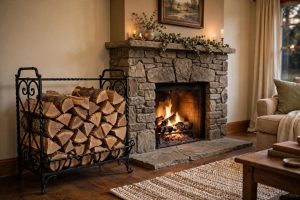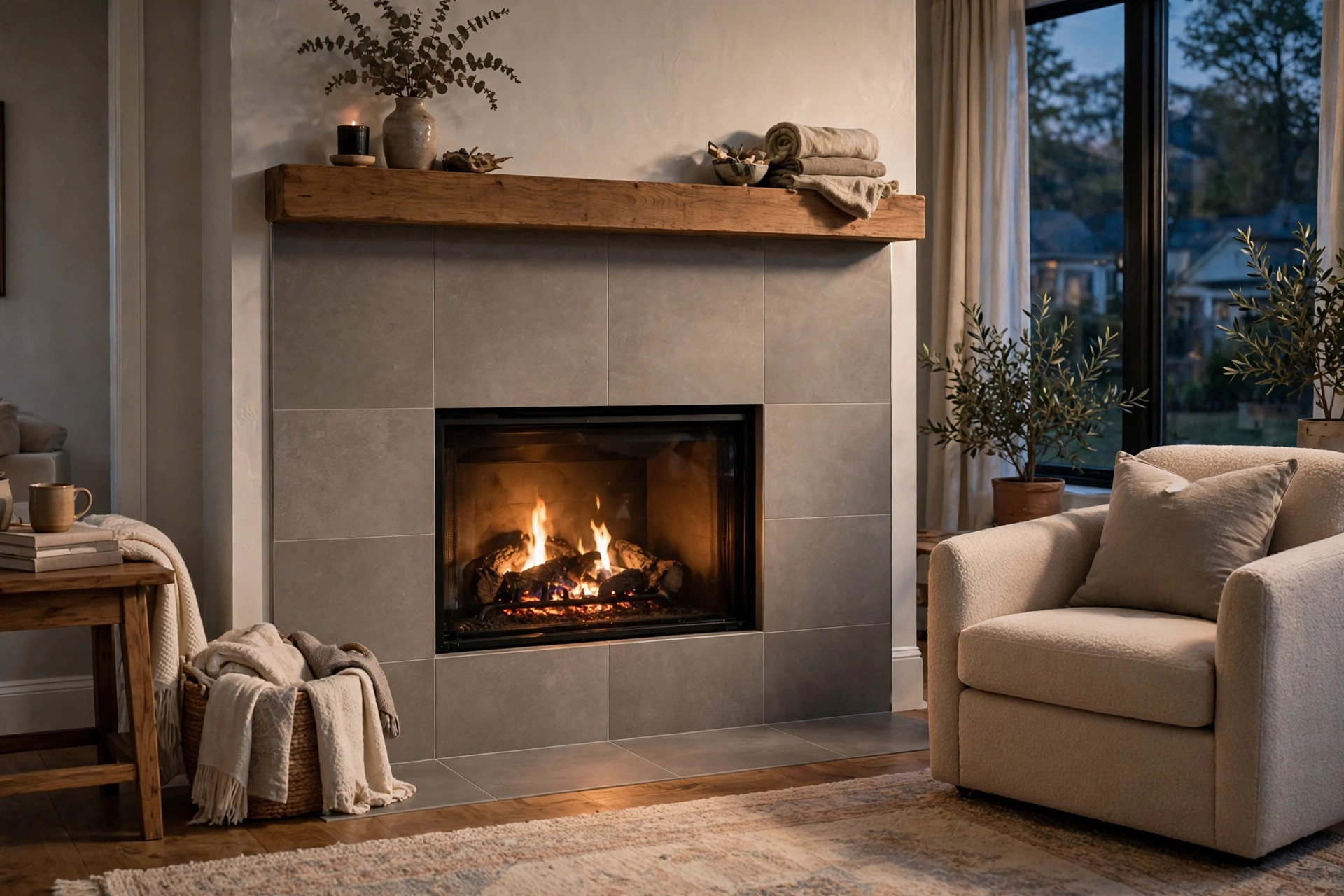

A fireplace can warm a room and lift the look of a whole home. The surround is the frame around the firebox. Tile is one of the most common choices for this frame. This energy efficient tile fireplace surrounds buying guide walks you through every step of choosing tile that holds heat well and wastes little energy. You will learn how tile stores heat, which types work best near a fire, what to check before you buy, what it costs, and how to keep it safe and clean.
Many owners think only about the color or the pattern of the tile. That is a mistake. The tile around a fireplace takes heat from the fire and gives it back to the room. A good choice can cut heat loss and lower the heating bill. A poor choice can crack or block heat. The notes below help you make a smart buy.
Why an Energy Efficient Tile Fireplace Surround Matters
A fireplace loses heat in several ways. Some heat goes up the flue. Some escapes through gaps around the firebox. The surround itself can either help or hurt. Tile is a dense material. Dense materials absorb heat slowly and release it slowly. This is called thermal mass. A tile surround with good thermal mass takes in heat while the fire burns. After the fire dies down, it gives that heat back into the room.
This matters for two reasons. First, the room stays warm longer without more fuel. Second, less heat escapes into the wall behind the fireplace. In older homes, the wall behind the firebox can be cold and drafty. A proper tile surround acts as a heat shield and a heat bank at the same time.
Energy efficiency is not only about fuel. It is also about comfort. A room with an even, steady warmth feels better than a room that is hot near the fire and cold in the corners. Tile spreads heat in a gentle way. Over a season, the savings add up. Sites like The Spruce and Bob Vila show how small surround upgrades can trim heating costs.
There is also the matter of home value. Buyers notice fireplaces. A clean, modern tile surround can raise the appeal of a living room. A dated or damaged surround can drag it down. When you pick tile with efficiency in mind, you get both looks and function. That is a rare combination in home projects.
How Tile Surrounds Affect Energy Efficiency: Energy Efficient Tile Fireplace Surrounds Buying Guide
Not all tile behaves the same way around heat. Three traits set them apart: density, conductivity, and thickness.
Density means how heavy and solid the tile is. Stone tiles and thick porcelain tiles are dense. They store more heat than thin ceramic wall tile. Think of a thick stone as a brick in a brick oven. It soaks up heat and holds it. A thin tile warms fast and cools fast.
Conductivity is the speed at which heat moves through the material. For a surround, you want a middle ground. The tile should take heat from the fire and pass it to the room, not trap it behind the wall.
Thickness matters too. Tile that is three-eighths of an inch thick stores more heat than one that is one-quarter inch thick. Thicker tile also resists cracks from heat stress. When tile heats and cools over and over, thin tile can fail first.
The grout between tiles plays a role as well. Sanded grout is dense and handles heat better than unsanded grout. For the hottest areas, a heat-rated mortar and grout are worth the extra cost. They hold up under repeated cycles of heating and cooling.
Types of Tile for Fireplace Surrounds
Porcelain Tile
Porcelain is the most popular choice for fireplace surrounds today. It is fired at very high heat, which makes it dense and hard. It resists stains, scratches, and moisture. It comes in sizes from small mosaics to large slabs. Large slabs mean fewer grout lines, and fewer grout lines mean less upkeep.
For energy efficiency, thick porcelain is a strong pick. It stores heat well and does not crack under normal fireplace heat. Look for porcelain rated for high-heat use. Retailers such as Home Depot and Lowe’s carry many lines of heat-rated porcelain tile, and maker sites like Napoleon and Heatilator explain how surrounds fit with their firebox units.
Ceramic Tile
Ceramic tile is lighter and less dense than porcelain. It is cheaper and comes in more colors and patterns. The trade-off is lower thermal mass. Ceramic works best on the outer parts of a surround, away from the hottest zone. Keep it at least a foot from the firebox opening.
Natural Stone Tile
Stone tiles include slate, travertine, marble, and granite. Stone is the densest option of all. It stores heat the longest. A stone surround can stay warm for hours after the fire goes out. That is the peak of thermal mass.
Stone costs more than porcelain. It also needs sealing. An unsealed stone tile can stain from soot and ash. Slate and granite handle heat well. Marble is soft and can discolor near high heat, so keep it on the outer frame.
Glass Tile
Glass tile looks modern and bright. It reflects light and can make a dark room feel larger. But glass has low thermal mass and can crack under sharp heat changes. If you love the look of glass, use it on the far edges of the surround and mix it with porcelain or stone in the hot zone.
What to Look for When You Buy
Start with the heat rating. Tile makers test their products for heat tolerance. Look for words like “fireplace rated” or “suitable for high heat” on the label. If the label says nothing about heat, ask the store. Never guess. Tile that is not rated for heat can crack or pop off the wall.
Check the size and thickness. Large-format tiles give a clean, modern look. But large tiles are harder to install on an uneven surface. Measure your surround area first. Thick tile, at least three-eighths of an inch, is best near the fire.
Look at the finish. Matte finishes hide soot and dust better than glossy finishes. In a busy living room, matte is the easy choice. Textured tile adds grip and hides wear, but deep texture can trap soot.
Think about color. Dark tile hides soot stains well. Light tile brightens a room but shows soot more. There is no wrong answer here. It is a matter of taste and how much cleaning you want to do.
Ask about the tile’s warranty and keep your receipt and the product name. If a tile fails in the first year, you want proof of what you bought.
Buy ten to fifteen percent more tile than you measure. Tiles break during cutting. Some boxes have color differences from batch to batch. Extra tile from the same batch saves you from a mismatch later.
Before you finalize your choice, it helps to compare related buying guides. Shoppers who study fireplace extras often read our fireplace log holders price comparison to plan the full cost of the hearth area. If you heat an outdoor space too, see our affordable infrared outdoor heaters guide for ways to warm a patio without waste.
Cost and Price
Tile prices vary widely. Basic ceramic tile can cost as little as two dollars per square foot. Mid-range porcelain runs from five to fifteen dollars per square foot. Natural stone runs from ten to thirty dollars per square foot or more. Handmade and designer tiles can cost far more.
The tile is only part of the bill. You also pay for mortar, grout, sealant, and backing board. Heat-rated thinset mortar costs more than standard mortar. A cement backer board is the right base for tile near a fire.
Labor is the other big cost. A tile setter may charge from ten to thirty dollars per square foot for labor, based on the tile size and the pattern. Mosaic and herringbone patterns take more time, so they cost more to install.
A typical fireplace surround is twenty to forty square feet. With mid-range porcelain and pro labor, the total often lands between eight hundred and two thousand five hundred dollars. Stone can push the total past three thousand dollars.
To keep costs down, use expensive tile only in the visible hot zone. Use a cheaper matching tile on the outer frame. This trick gives a rich look for less money. Also watch for sales at big home stores. For an independent view on what tile lines are worth the price, check the buying guides at Consumer Reports.
For shoppers comparing fuel costs around the home, our guide on where to buy corner electric fireplaces in California shows how electric heat stacks up against wood heat in one warm state. Pairing a low-cost electric unit with a tile surround can be a smart mix.
Care and Upkeep
A tile surround is easy to care for. Wipe it down once a month with a damp cloth and mild soap. Soot builds up near the firebox. Wipe that area more often. Do not use harsh cleaners with bleach on stone tile. They can strip the sealant.
Reseal natural stone once a year. The sealant wears down with heat and cleaning. Test the seal by dropping a little water on the stone. If the water beads up, the seal is good. If it soaks in, it is time to reseal. Sealing takes an hour and costs little.
Check the grout once a year. Heat can shrink grout over time. Look for hairline cracks or loose spots. Small cracks can be filled with matching grout. Large gaps mean the tile may be moving. Call a pro if many tiles feel loose.
Keep the flue clean. A dirty flue sends more soot onto the surround. Have the chimney swept once a year if you burn wood. The EPA offers guidance on clean and safe home burning practices that protect both your tile and your air.
Safety
Safety comes first with any fireplace project. Tile is not flammable, which is one reason it is a good choice. But the work around it must follow the rules.
Keep clearances. Building codes set a minimum distance between the firebox opening and any flammable material. Tile itself is safe, but the wood framing behind it is not. Your installer must know the local code. In most areas, tile can sit right at the firebox edge, but wood trim must stay back at least six inches. Check your local code before work starts.
Use heat-rated mortar and grout near the firebox. Standard mortar can break down under high heat. The label should say it is rated for fireplace or high-heat use. This is not the place to save a few dollars.
Never tile over a damaged firebox. If the firebox has cracked bricks or a rusted damper, fix those first. Tile on top of damage hides the problem. It does not fix it. Have a chimney pro inspect the firebox before you start. Sites like This Old House and Family Handyman publish safe fireplace project checklists worth reading.
Keep a fire extinguisher near the fireplace. Test smoke and carbon monoxide alarms twice a year. These steps cost little and protect your home. A tile surround does not make a fireplace safe on its own. Good habits do.
Watch children and pets around a hot surround. Tile stores heat, which is the point. But that means the tile stays hot after the fire dies. A screen or gate keeps little hands off hot tile. Teach children that the fireplace area is not a play zone.
Frequently Asked Questions
Does tile really make a fireplace more energy efficient?
Yes, in a modest but real way. Dense tile stores heat while the fire burns and releases it after the fire dies. This keeps the room warm longer and cuts the need for extra fuel. The gain is largest with thick porcelain or stone tile. Thin ceramic tile gives little benefit. No surround can fix a bad flue or a leaky firebox, so fix those first.
Which tile type is best for energy efficiency?
Natural stone and thick porcelain are the best. Both are dense and store heat well. Stone holds heat the longest. Porcelain is easier to clean and often cheaper.
Can I put tile directly over an old brick surround?
In many cases, yes. The old brick must be clean, solid, and free of loose mortar. A cement backer board or a scratch coat of mortar gives the new tile a good grip. If the old brick is crumbling or soot-stained deep inside, it is better to remove it and start fresh. Ask a tile setter to look at it first.
How close can tile go to the firebox opening?
Tile is nonflammable, so it can sit right at the edge of the firebox opening in most codes. The exact rule depends on your local building code and the type of fireplace. Wood trim and mantels must stay farther back. When in doubt, call your local building office. A five-minute call can prevent a failed inspection.
Do I need to seal porcelain tile?
No. Porcelain is dense and does not absorb water or stains. It needs no sealant. Natural stone is the tile that needs sealing. Ceramic tile with a glazed surface needs no sealant either. Only the grout lines may need a grout sealer. Check the product label to be sure.
How long does a tile fireplace surround last?
A well-built tile surround can last twenty years or more. The weak points are grout and sealant, which need care over time. With yearly checks and small repairs, a tile surround will outlast most other parts of the room.
A Final Word
An energy efficient tile fireplace surround is a smart buy. It stores heat, protects the wall, and lifts the look of the room. Choose dense, heat-rated tile. Pay for heat-rated mortar. Keep up with simple care. The result is a fireplace that warms the room longer and costs less to run. That is comfort you can feel every winter night.
References
Bob Vila. (n.d.). Home improvement advice. https://www.bobvila.com Consumer Reports. (n.d.). Product reviews and ratings. https://www.consumerreports.org Family Handyman. (n.d.). DIY home repair and maintenance. https://www.familyhandyman.com Heatilator. (n.d.). Fireplaces and fireplace products. https://www.heatilator.com Lowe’s. (n.d.). Home improvement products. https://www.lowes.com Napoleon. (n.d.). Fireplaces, grills, and heating products. https://www.napoleon.com The Home Depot. (n.d.). Home improvement products. https://www.homedepot.com The Spruce. (n.d.). Home and garden advice. https://www.thespruce.com This Old House. (n.d.). Home renovation guidance. https://www.thisoldhouse.com U.S. Environmental Protection Agency. (n.d.). Protecting human health and the environment. https://www.epa.gov
Was this guide helpful?

About Sarah Mitchell
The My Garden US editorial team writes practical, in-depth home and garden guides for American homeowners — tested advice, no fluff.
You May Also Like
Top Rated Outdoor Patio Heaters Buying Guide
February 5, 2026 0 views
Premium Chimney Inspection Services Near Me: A Homeowner’s Guide
August 7, 2026 0 views
Heat Powered Stove Fans: A Full Reviews and Buying Guide
September 17, 2026 0 views