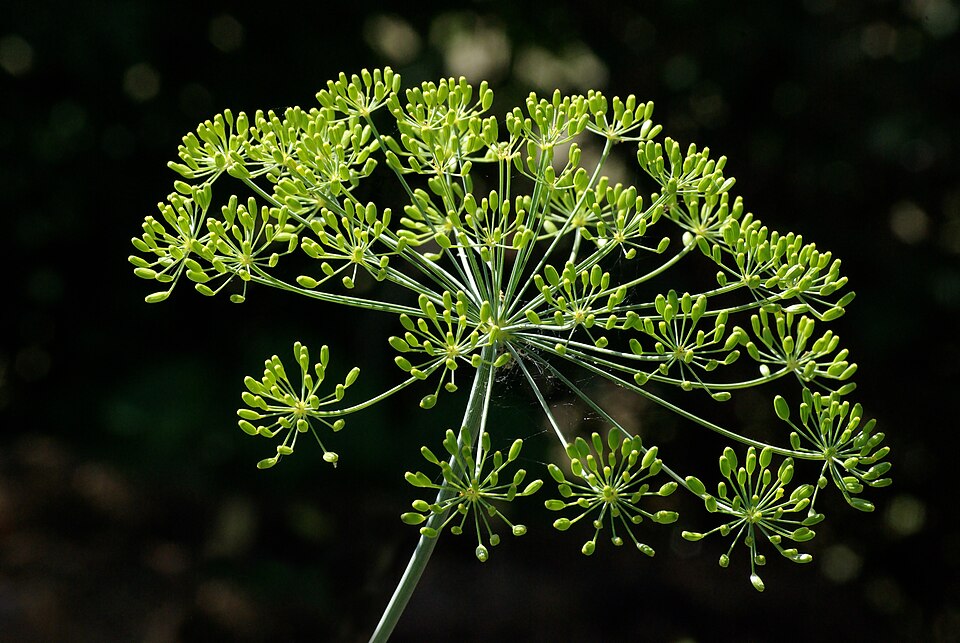
If you grow one herb this year, make it dill. Known to botanists as Anethum graveolens, it suits zones 3 through 11 and goes from planting to harvest in roughly 40 to 60 days. Remember this and you are most of the way there: sow where it will grow – dill hates transplanting. self-sows freely, so plant once and it returns.
This guide covers the full season in plain terms — varieties, timing, soil, water, pests, and harvest. The USDA PLANTS database lists Anethum graveolens with its full background if you want the botanical fine print.
Why bother with dill? Because it delivers a fast payoff by garden standards: roughly 40 to 60 days from planting to harvest. Few other plantings turn a packet of seed into this much food or color this quickly. Across zones 3 to 11, home gardeners grow it with steady success. Short-lived in extreme heat; succession sow in zones 9-11.

Photo: Wikimedia Commons
At a Glance
- Botanical name: Anethum graveolens
- Type: Herb
- USDA zones: 3 to 11
- Sun: Full sun
- Soil: Average, well-drained soil
- Water: Moderate
- Spacing: 12 inches apart
- Planting depth: 1/4 inch deep
- Days to maturity: 40 to 60 days
- How to start: Sow directly where it will grow
Choosing a Variety
Bouquet dill is the classic for pickling with big seed heads. Mammoth dill grows five feet tall — dramatic but needs staking. Fernleaf is compact for pots and small gardens. All dill tastes similar, so choose by size and habit. Since dill self-sows freely, one planting often becomes a permanent patch; let a few plants seed each year. For a steady leaf supply, sow small batches every few weeks rather than one big planting that all bolts together. Our guide to growing cilantro pairs well with this one if you are planning the bed. The Old Farmer’s Almanac variety guides add regional picks worth comparing.
When and How to Plant
Get the timing right and dill nearly grows itself. Sow seed directly right around your last spring frost.
Zones shift every date by weeks, so check your USDA zone planting dates on our planting calendar to pin yours down. The Old Farmer’s Almanac publishes frost-date tables worth bookmarking too.
Space plants 12 inches apart and place seed or roots 1/4 inch deep. Crowding invites disease and cuts yields, so resist the urge to squeeze in extras. Short-lived in extreme heat; succession sow in zones 9-11. For regional timing detail, the University of Minnesota Extension is worth a read.
Soil and Sun
Sun first: full sun is non-negotiable for strong dill plants. For soil, aim for average, well-drained soil. A 2- to 3-inch layer of compost worked into the top 8 inches fixes most problems before they start.
Sandy soil dries fast — compost helps it hold water. Clay holds too much — compost and raised beds fix that. Either way, the Almanac planting calendar has solid guidance on preparing ground for dill.
Watering and Feeding
The watering recipe for dill is simple: moderate. Deep, less-frequent soakings beat daily sprinkles; they push roots down where the soil stays cool and moist longer.
Mulch is the cheapest irrigation helper you own: 2 to 3 inches of straw or shredded leaves keeps soil moisture even between waterings. The USDA PLANTS database covers watering dill through hot spells.
Go easy on fertilizer. Compost at planting time plus a modest mid-season feeding is plenty for dill. Heavy nitrogen grows big soft plants that pests and disease love.
Care Through the Season
Mid-season care is where harvests are won or lost. Water moderately; dill dislikes soggy ground but drought stunts it. It needs little fertilizer — rich soil grows floppy plants. Black swallowtail caterpillars feed on dill too; plant extra. Succession sow for continuous leaves, since each plant has a limited prime. Let seed heads mature and dill self-sows freely. Walk the rows weekly — catching a pest or a dry spell early beats any rescue later.
Take this tip to heart: sow where it will grow – dill hates transplanting. self-sows freely, so plant once and it returns. It sounds small and it matters more than most products sold to gardeners. Our guide to growing fennel makes a good companion read for the same bed. When pests show up, the USDA PLANTS database guides help you name them fast.
Do not overlook airflow. Plants packed too tightly stay wet longer after rain, and wet leaves are where fungal diseases start. Thin to the spacing in this guide even when seedlings look lonely — they will fill in faster than you expect.
Dill also earns its place as an insect plant. Those flat yellow flower heads draw ladybugs, hoverflies, and lacewings — the very insects that eat the aphids off your vegetables. Gardeners who leave a few dill plants to bloom near tomatoes and cucumbers see fewer pests across the whole patch. And when black swallowtail caterpillars strip your dill bare, don’t reach for spray — they rarely kill the plant, the seeds still mature, and the butterflies repay you. Plant a sacrificial row if you want dill for the kitchen and dill for the caterpillars.
Season by Season
Think of the year in four jobs. Spring: Sow seed directly right around your last spring frost. Get compost into the bed early and give transplants a week of hardening off. Summer: water deeply, mulch well, and scout for trouble weekly; harvest at peak and keep picking to prolong the season. Fall: gather the last of the crop. In mild-winter areas, a late planting can carry the harvest into cool weather; elsewhere, finish up before hard frost. Clear finished plants and protect the soil with mulch or a cover crop. Winter: sharpen tools, order seed, and plan rotations. In winter, rest: clean tools, order seed early for the best selection, and sketch next year’s bed plan while the garden sleeps.
Harvest
Nothing beats the flavor of dill picked at the right moment. Here is how to tell when that moment arrives, and what to do next.
Snip feathery leaves anytime, and cut whole seed heads for pickling when seeds are plump but still greenish. Dry seeds fully before storing airtight. Freeze leaves; dried dill loses punch. Pro tip: let one patch go to seed each year and you’ll have volunteer dill forever — it self-sows more reliably than any herb. For another harvest-season read, see our guide to growing parsley. Cross-check ripeness signs with the Missouri Botanical Garden harvest notes.
Storing and Preserving the Harvest
The freezer is the home herb gardener’s best friend. Soft herbs lose their character when dried but keep it frozen: chop dill leaves, freeze in oil or water in ice cube trays, and bag the cubes for winter cooking. For drying, pick in the morning after dew dries, tie small bundles, and hang them somewhere dark with good air movement; crumble into jars once crisp. Whole dried leaves hold flavor longer than crushed, so crush only what you need. Pesto-style pastes — herbs blended with oil — freeze well in small jars with headspace. Keep everything labeled and dated, and use last season’s stash before the new harvest arrives.
Troubleshooting
Bolting in heat — succession sow for steady leaves. Aphids cluster on seed heads; hose them off. Floppy tall plants need staking in wind. Self-sown seedlings pop up everywhere — thin or move them while small. For help naming a mystery symptom, the National Agricultural Library diagnostic pages are excellent.
Frequently Asked Questions
How long does dill take to grow?
About 40 to 60 days from planting to harvest, depending on variety and weather. Warm seasons and good soil hit the early end of that range.
Can I grow dill in containers?
Yes — dill suits containers well. Use a pot at least 12 inches wide and deep with drainage holes, good potting mix, and a sunny spot. Pots dry fast, so check water daily in summer.
What is the hardest part of growing dill?
Sow where it will grow – dill hates transplanting. Self-sows freely, so plant once and it returns. Master that one point and most other problems never show up.
When should I plant dill?
Work backward from your frost dates: Sow seed directly right around your last spring frost. Check your USDA zone planting dates on our planting calendar to pin down your exact window.
One Last Tip
Let dill teach you the value of benign neglect. Allow one patch to flower and drop seed each season, and you will never buy dill seed again — volunteers pop up exactly where conditions suit them, which is usually better than where you would have sown. Thin the volunteers to a hand’s width apart and harvest the rest as microgreens. The self-sown patch often outperforms deliberate sowings, because the seed waits for its own perfect moment to sprout.
References
Missouri Botanical Garden. (n.d.). Anethum graveolens. Plant Finder. https://www.missouribotanicalgarden.org/
Gardenia.net. (n.d.). Anethum graveolens. https://www.gardenia.net/
Old Farmer’s Almanac. (n.d.). Planting calendar. https://www.almanac.com/planting-calendar
U.S. Department of Agriculture. (n.d.). Anethum graveolens. National Agricultural Library. https://www.nal.usda.gov/
Was this guide helpful?

About My Garden US
The My Garden US editorial team writes practical, in-depth home and garden guides for American homeowners — tested advice, no fluff.