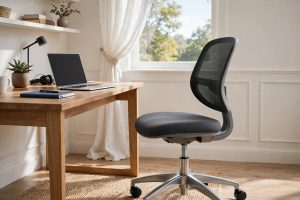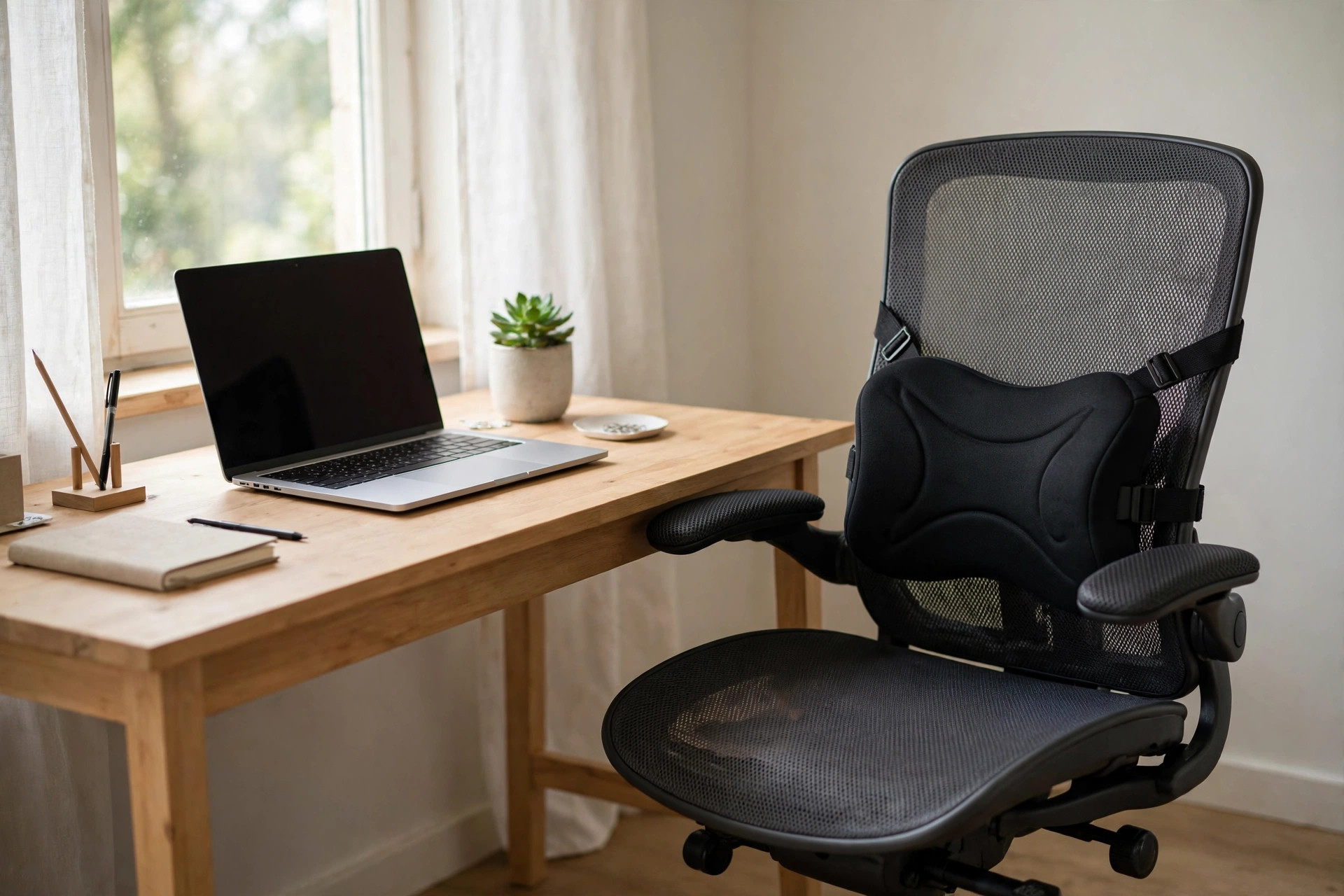

Many people sit for eight hours a day. Some sit for longer. An ergonomic lumbar support pillow for office chair use can make those hours easier on the back. It fills the gap between the chair and the curve of the lower spine. That small change helps the body sit the way it was built to sit. This guide explains why the pillow matters, what to look for, and how to get the most from it.
Why It Matters
The lower back has a natural inward curve. Doctors call it the lumbar lordosis. Most office chairs do not match this curve. The seat back is often flat or nearly flat. When a person leans back, the lower spine flattens against it. The muscles around the spine must then hold the body upright on their own.
That strain builds over hours. It shows up as a dull ache between the ribs and the hips. It can grow into stiffness by the end of the work day. Over months, poor sitting habits add to the trouble. The spine likes support. When it gets none, the soft tissues carry a load they were not meant to carry.
An ergonomic lumbar support pillow restores the missing shape. It sits between the chair and the small of the back. It pushes gently forward, keeping the natural curve in place. With that support, the back muscles can relax. The shoulders sit easier. The head lines up over the spine instead of drifting forward. Many workers report less fatigue by mid-afternoon once they start using one.
Good posture also helps the rest of the body. When the lower back is supported, the pelvis tilts the right way. The chest opens. Breathing grows deeper without any effort. People who use proper back support often sit taller without thinking about it. The change is small, but the comfort gain is large.
This matters more now that home offices are common. Dining chairs, folding chairs, and old task chairs often lack any lumbar design. A simple pillow can turn a poor chair into a workable one. Workplace guides from furniture makers such as Herman Miller and Steelcase have long stressed that lumbar support is a basic part of healthy sitting, not a luxury.
What to Look For When You Choose One: Ergonomic Lumbar Support Pillow for Office Chair
Not every pillow works for every body. A few details make the difference between a pillow that helps and one that ends up in a closet.
Size and Shape
The pillow should fit the width of the chair back. Most adults do well with a width of 13 to 16 inches. A pillow that is too wide presses into the sides of the torso. A pillow that is too narrow fails to support the full lumbar region.
Shape matters as much as size. Contoured pillows follow the curve of the back. They are higher in the middle and taper at the edges. Flat rolls work too, but they suit thinner frames better. Some pillows come in a D-shape that fits between the back and the chair seat. Reviewers at Wirecutter often test these shapes against real desk setups to see which hold up over a full work day.
Thickness is the detail people get wrong most often. A very thick pillow pushes the body too far forward. A very thin one does almost nothing. Three to five inches of depth suits most office chairs. Chairs with deep bucket backs need a thinner pillow. Flat-backed chairs can take a fuller one.
Fill Material
The fill decides how the pillow feels and how long it keeps its shape.
Memory foam is the most common choice. It molds to the body under heat and pressure. It returns to shape when the weight is gone. High-density memory foam holds its form for years. Low-density foam flattens in months. A firm feel works best for lumbar support, since the pillow must push back against the spine.
Standard foam costs less. It feels springier and stays cooler. It breaks down faster than memory foam, so it suits lighter use or tight budgets.
Mesh-covered foam lets air pass through. People who sit in warm rooms or near sunny windows often prefer it. It trades some firmness for better air flow.
Latex offers a firm, lively feel. It resists sagging for a long time. It also costs more. People with foam allergies sometimes choose latex instead.
Cover and Straps
The cover should come off for washing. Sweat and dust build up on anything that sits against clothing all day. A removable, washable cover keeps the pillow fresh. Cotton blends breathe well. Polyester blends dry faster.
Straps hold the pillow to the chair. Two elastic straps, one high and one low, work best. They keep the pillow from riding up or sliding sideways. Without straps, the pillow shifts every time the sitter stands and sits back down. Adjustable straps fit more chair types. A snap or buckle closure beats simple elastic loops, which loosen over time.
Types of Lumbar Support Pillows
Pillows fall into a few clear groups. Each suits a different need.
Contoured foam pillows. These are the most popular. They look like a shallow wave or a wide smile. The curve matches the lumbar region. They attach with straps and sit against the middle of the chair back.
Roll pillows. These are simple cylinders, sometimes with a flat side. They give firm, focused support. They suit people who want strong pressure in one spot. They also work well in car seats.
Cushion-style pillows. These look like small throw pillows. They blend in with home decor. They give softer, less targeted support. They suit people with mild discomfort who want comfort without a medical look.
Mesh back supports. These combine a plastic frame with a mesh panel. They flex with movement. They suit warm climates where foam feels too hot. Home office guides on The Spruce often point out that mesh supports also work well on folding chairs and dining chairs.
Heated and massage versions. Some pillows add heat or vibration. The heat eases muscle tightness. The vibration is gentle. These cost more and need a power source. They suit people who want relief and support in one item.
People building a full home office often pair a lumbar pillow with other ergonomic gear. An ergonomic kneeling chair for home office desk setups, a home office desk mat leather for writing surfaces, and even a portable standing desk for working from anywhere units all share one goal: a work space that fits the body instead of fighting it.
Cost and Price
Prices run from about 15 dollars to 60 dollars. The middle of that range, 25 to 40 dollars, holds most of the good choices.
Basic foam rolls sit at the low end. They work, but the fill may wear out within a year. Mid-range memory foam pillows last longer and hold their shape better. This is where most buyers should look.
Premium pillows cost 40 dollars and up. The price buys denser foam, better covers, and stronger straps. Heated or massage models sit at the top of the range. They can reach 60 dollars or more.
Price is not everything. A well-made 30-dollar pillow beats a poorly made 50-dollar one. Check the foam density if the maker lists it. Look for removable covers. Read the strap design. Shoppers comparing models across stores like IKEA and Wayfair often find that mid-range options earn the best long-term reviews.
Replacement cost matters too. A pillow that keeps its shape for three years is cheaper per month than a cheap one replaced twice a year.
Care and Upkeep
A lumbar pillow lasts longer with simple care. Follow a few habits and the pillow will serve for years.
Wash the cover every two to four weeks. Most covers go in a normal machine wash on a gentle cycle. Let the cover air dry. Heat from a dryer can shrink cotton blends.
Wipe the foam itself with a damp cloth when it looks dirty. Never soak the foam. Never put foam in a washing machine. Water breaks down foam from the inside. Let the foam dry fully before putting the cover back on.
Keep the pillow out of direct sun for long stretches. Sunlight breaks down foam and fades covers. Store the pillow flat if it will not be used for a while. Standing it on edge for months can bend it out of shape.
Check the straps now and then. Elastic wears out. When a strap loses its grip, the pillow starts to slide. Some makers sell replacement straps. Others design the pillow to work with plain elastic bands from a fabric store.
Rotate the pillow if it has two usable sides. Even wear keeps the support even. A pillow that sags on one side pushes the spine off center.
Standing desk makers like UPLIFT Desk often note that accessories last longest when they are treated as work tools, not decorations. A lumbar pillow earns its place each day, and a little upkeep protects that value.
Safety
A lumbar pillow is a simple product, but a few safety points deserve note.
The pillow should never push the body into pain. If the lower back hurts more after a day of use, the pillow is too thick or placed too high. Move it down. Try a thinner model. Pain is a signal, not something to push through.
People with back injuries should talk to a doctor before adding any support. A herniated disc, a fracture, or a recent surgery changes what the spine needs. A doctor or physical therapist can say whether a pillow helps or harms in that case.
Check the pillow for loose parts. Straps with metal buckles can pinch. Keep small parts away from young children, who may pull them off and put them in their mouths.
Do not use a lumbar pillow as a substitute for medical care. It supports posture. It does not treat disease. Ongoing numbness, sharp pain, or pain that runs down a leg needs a professional visit.
For workers setting up shared or family work spaces, general safety guidance from testing organizations such as PCMag can help when comparing home office accessories side by side.
Frequently Asked Questions
Where should the pillow sit on the chair? Place it at the small of the back, right above the belt line. It should fill the gap between the chair and the inward curve of the spine. Sit back fully and feel for the spot where the pillow meets the back without pushing you forward.
Can I use it on any chair? Yes, on almost any chair with a back. It works on office chairs, dining chairs, car seats, and even sofas. Chairs with built-in lumbar support may not need one. Try the chair first, then add the pillow if support feels missing.
How long does a good lumbar pillow last? A quality memory foam pillow lasts two to four years of daily use. Standard foam lasts one to two years. The cover wears out first in most cases. Replacing the cover can add a year or more of life.
Will it help with upper back pain? It helps indirectly. When the lower back sits right, the upper back and shoulders often follow. But a lumbar pillow targets the lower spine. Upper back pain may need a different fix, such as raising the monitor or changing the desk height.
Should the pillow feel firm or soft? Firm enough to hold the curve of the spine. If the pillow collapses under your weight, it cannot do its job. A firm pillow that still gives a little under pressure is the sweet spot for most people.
Can children use a lumbar support pillow? Children rarely need one. Their spines are still growing, and most child-size chairs fit them well enough. If a child has back pain, see a doctor rather than buying a support product.
A Final Word
An ergonomic lumbar support pillow for office chair use is one of the simplest upgrades a home office can get. It costs little. It needs no tools. It works on almost any chair. The payoff is real: a back that feels better at five in the evening than it did before. Choose a size that fits, a fill that holds its shape, and straps that stay put. Then sit back, and let the pillow do the quiet work of holding you up.
References
Herman Miller. (n.d.). Office furniture and ergonomic seating. https://www.hermanmiller.com IKEA. (n.d.). Home furnishings. https://www.ikea.com PCMag. (n.d.). Technology product reviews. https://www.pcmag.com Steelcase. (n.d.). Office furniture and workplace research. https://www.steelcase.com The Spruce. (n.d.). Home and garden advice. https://www.thespruce.com UPLIFT Desk. (n.d.). Standing desks and ergonomic office furniture. https://www.uplift-desk.com Wayfair. (n.d.). Furniture and home goods. https://www.wayfair.com Wirecutter. (n.d.). Product reviews from The New York Times. https://www.nytimes.com/wirecutter
Was this guide helpful?

About Lisa Anderson
The My Garden US editorial team writes practical, in-depth home and garden guides for American homeowners — tested advice, no fluff.
You May Also Like

Adjustable Monitor Arm for Dual Screen Setup
June 23, 2026 0 views
Adjustable Height Standing Desk Frame Only: A Practical Guide
February 19, 2026 0 views
Home Office Desk Grommet for Cable Pass Through: A Simple Guide
January 25, 2026 0 views