
Introduction
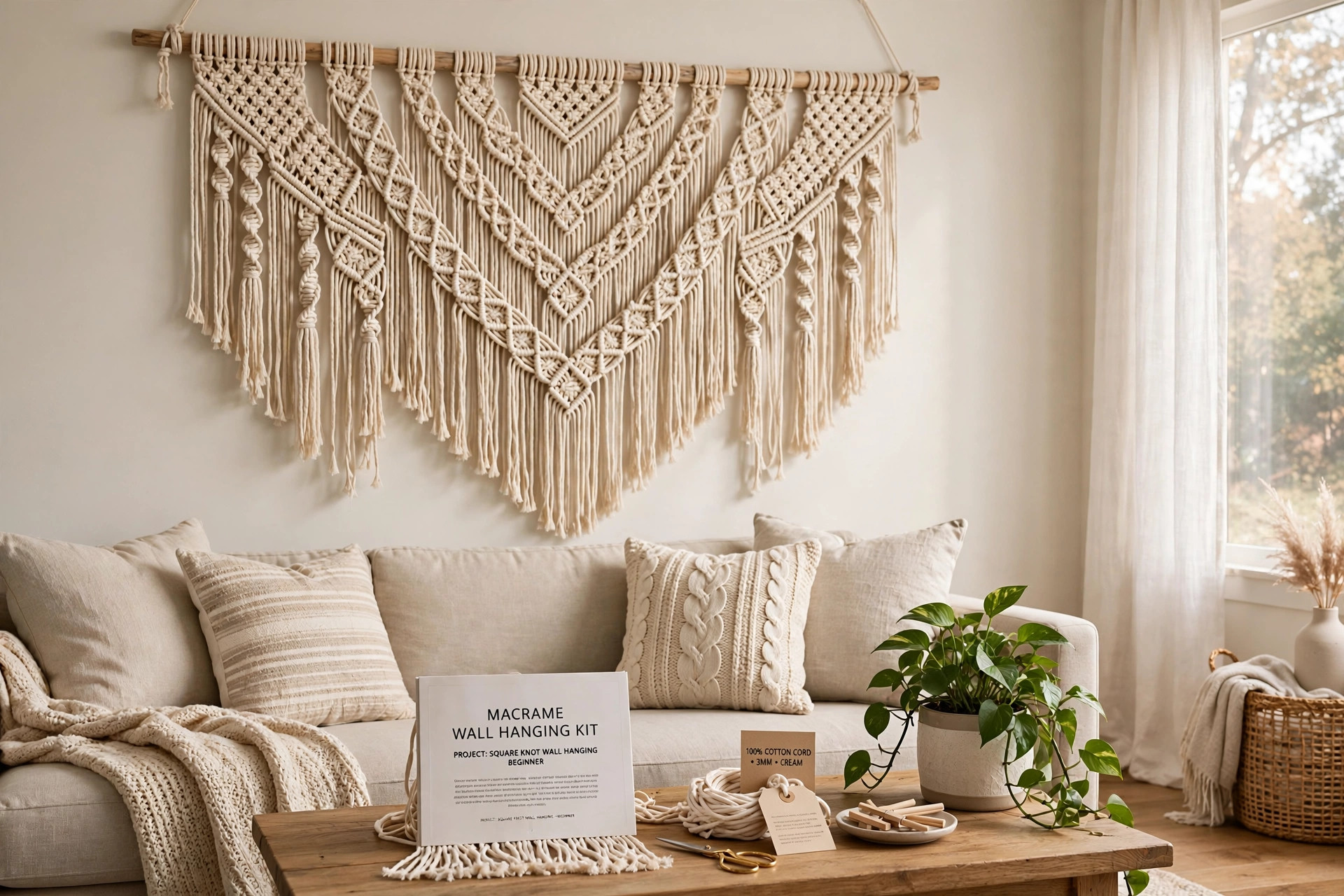
A macrame wall hanging kit large for living room use is one of the easiest ways to fill a big blank wall with something warm and handmade. These kits come with the cord, the wooden rod or branch, and a pattern that shows each knot in order. You do not need prior skill. Most makers finish their first large piece in a weekend.
Large wall hangings have a long history. The craft of macrame goes back centuries, when sailors knotted rope into useful and decorative forms. In the 1970s, macrame plant hangers and wall pieces filled American homes. The craft faded for a time, then came back strong in the last decade. Today, a macrame cord kit for wall hanging DIY project is a common weekend craft, and full kits sized for living room walls sell well at major craft retailers.
This guide walks through the whole process. It covers why a large piece suits a living room, what a good kit should contain, the main styles you can choose from, what you will pay, how to care for the finished piece, and answers to common questions.
Why a Large Macrame Wall Hanging Works in a Living Room: Macrame Wall Hanging Kit Large for Living Room
The living room is the center of most homes. It is where the family gathers and where guests sit. A large macrame wall hanging gives that room a soft focal point without the weight of framed art.
It Fills a Big Wall Without Cost
A wall above a sofa or fireplace can be three to five feet wide. A framed print that size can cost several hundred dollars. A kit for a piece of the same size often costs a fraction of that. You spend more time than money, and the result feels personal.
It Adds Texture and Warmth
Modern living rooms often have flat screens, smooth tables, and plain walls. Knotted cotton cord adds texture that balances these hard surfaces. The natural color of cotton cord works with almost any paint color, from white to deep blue. Craft guides at Michaels often point to texture as the fastest way to make a plain room feel finished.
It Fits Many Styles
A large macrame piece suits bohemian rooms, farmhouse rooms, coastal rooms, and even spare modern rooms. The pattern changes the mood. A tight geometric pattern looks modern. A loose pattern with long fringe looks relaxed and rustic. The same kit can look different in two homes based on the room around it.
What to Look for in a Macrame Wall Hanging Kit
Not every kit is equal. A cheap kit with thin cord and vague directions can cause frustration. Here is what to check before you buy.
Cord Quality and Thickness
Cord is the heart of the project. Most living room kits use cotton cord between 3 mm and 5 mm thick. The 3 mm cord makes finer detail. The 5 mm cord builds faster and suits a truly large piece. Look for single-twist cord, which combs out into soft fringe at the ends. Three-ply cord is stronger but stiffer and harder to unravel. The kit should list the total cord length in yards or meters. A large piece can use 300 to 600 feet of cord. If the listing hides this number, treat it as a warning sign.
The Dowel, Rod, or Branch
The piece hangs from something at the top. Most kits include a smooth wooden dowel or a stained branch. Check the width. A living room piece needs a rod at least 24 inches wide, and many are 36 to 48 inches. The rod should be straight and sanded smooth so the cords hang straight. Some makers swap in a driftwood branch or a copper pipe for a different look, but the kit rod works fine for a first project.
Pattern and Instructions
A good kit includes a printed or digital pattern with step photos. It should name each knot as you use it. The two basic knots are the square knot and the lark’s head knot. Most large pieces use these two for almost everything, with double half hitch knots for edge details. A pattern that assumes you know the knots is fine if it links to a basic knot guide. A pattern that skips steps is not. Beginner guides from JOANN and BLICK show how clear knot diagrams should look.
Extras in the Box
Some kits add wooden beads, metal rings, or a comb for brushing out fringe. These are nice but not required. One useful extra is a small S-hook or wall bracket for hanging. Check the listed weight of the finished piece. A large cotton piece can weigh five to ten pounds, so you need a proper anchor in the wall, not just a small nail.
Types and Styles of Large Macrame Wall Hangings
Large macrame wall hangings come in several classic shapes. Each suits a different wall.
The Full Panel
A full panel hangs in one wide rectangle of knots. It covers the most wall space and makes the strongest statement. It takes the most cord and the most time, often six to ten hours for a first piece. Full panels suit wide walls above long sofas.
The Center Medallion
A medallion piece has a dense knot pattern in the middle and long loose cords or fringe on the sides. It looks airy and takes less time than a full panel. This style fits well over a fireplace or a console table.
The Layered or Tiered Piece
Tiered pieces use several rows of cord hung at different lengths from one rod, or several short rods stacked on a wall. Each tier is simple, so a beginner can build confidence one tier at a time. The result has movement and depth.
The Semi-Circle or Fan
Fan-shaped pieces spread out from a central point like a half sun. They use less cord but need careful measuring so both sides match. Many crafters find this the prettiest shape for a living room. A best embroidery hoop set for wall art DIY project can pair well with a fan piece on the same wall, since the round hoops echo the curved shape.
Plant Hangers as Companions
Some living room makers hang two or three small plant hangers next to the main piece. They use the same knots and the same cord, so the set looks planned. General craft advice at The Home Depot notes that grouping pieces at different heights makes a wall feel designed rather than filled.
Cost and Price Guide
Prices for a macrame wall hanging kit large for living room size fall into clear bands.
Budget kits, 15 to 30 dollars. These usually cover pieces up to 24 inches wide. The cord may be thin or short, and the pattern may be basic. They suit a small wall or a first practice piece.
Mid-range kits, 30 to 60 dollars. This is the sweet spot for living room pieces. The kit should include enough quality cotton cord for a 30 to 40 inch wide hanging, a solid wooden rod, and a clear pattern. Most first-time makers should shop in this band.
Premium kits, 60 to 120 dollars. Premium kits use thick, soft single-twist cord, include extras like beads and combs, and offer complex patterns with video lessons. They cover pieces 40 to 60 inches wide.
Compare the cord length per dollar, not just the price. A 40 dollar kit with 500 feet of good cord beats a 25 dollar kit with 200 feet of thin cord. Also budget for extras you may need: a wall anchor set costs a few dollars, and a pet slicker brush from a craft store works well for combing fringe. Buying craft basics at a big retailer is covered in project guides from Family Handyman.
How to Make Your Piece: The Basic Steps
Every large macrame wall hanging follows the same path. Knowing the steps ahead of time removes most fear.
1. Set up a work bar. Hang the rod on two hooks at chest height, on a wall or a garment rack. You will work standing up. 2. Cut the cords. The pattern lists cord lengths and counts. Cut all cords before you start knotting. Add a few inches to each cut if you are unsure. Extra length is better than short cords. 3. Attach with lark’s head knots. Fold each cord in half, loop it over the rod, and pull the ends through the loop. Fill the whole rod. 4. Work the pattern row by row. Most patterns read from top to bottom. Tie one full row before moving down. Keep your tension even. Uneven tension is the most common beginner flaw. 5. Add beads or details. Slide beads onto cords where the pattern shows them. 6. Trim the fringe. Comb out the bottom cords with a brush, then trim them into a straight line, a V shape, or points. Trim less than you think, then trim more if needed. 7. Hang it. Fix a strong anchor in the wall stud or use a rated drywall anchor. Hang a small level on the rod to keep it straight.
The first two hours feel slow. Most makers report that the knots start to feel natural after the first few rows. A weekend is enough for a large piece if you give it two or three sessions.
Care and Upkeep
Cotton macrame is easy to live with, but it does need light care.
Dust it often. Dust settles into the knots. Shake the piece gently every few weeks, or run a cool hair dryer over it from a foot away. A soft brush works for detailed areas. Cleaning advice for textile wall pieces appears in home care articles from Bob Vila.
Keep it out of damp air. Cotton can hold moisture and grow mildew in damp rooms. A living room with normal airflow is fine. Do not hang a cotton piece in a bathroom or over a stove.
Handle stains at once. Blot spills with a dry cloth. Do not rub. For a set stain, dab with a damp cloth and a drop of mild soap, then blot dry. Test on a hidden cord first.
Straighten the fringe. Over time, fringe can curl or tangle. Mist it lightly with water and comb it straight with your fingers. Let it dry before you touch it again.
Protect from strong sun. Long hours of direct sun can fade natural cotton and weaken it over years. A spot near a window is fine, but a wall that bakes in afternoon sun is not ideal. If your living room gets harsh light, window treatment tips from The Spruce can help you soften it.
A well-made piece lasts for decades with this light care. Many families pass macrame pieces down like quilts.
Safety Notes
Macrame is a safe craft, but a large hanging has a few points worth care.
Hang it on a real anchor. A large piece is heavier than it looks. Use a wall anchor rated above the piece weight, or screw into a wall stud. Test the hold before you walk away.
Keep long fringe from small children. Long cords can wrap around small fingers or necks. Hang the piece high enough that toddlers cannot reach the fringe. Cord safety for homes with children is also covered by craft safety guides from This Old House.
Work with good light and posture. Hours of close knot work strain the eyes and the back. Take a break every hour. Stand at a bar set to a height where your shoulders stay relaxed.
Store cord away from pets. Cats love string. Keep unused cord in a closed bag. Check a finished piece now and then for pulled cords if you have a curious cat.
FAQ
How long does a large macrame wall hanging take to make? A first large piece takes six to twelve hours of knotting time. Most people split this over two to four days. Experienced knotters can finish in half that time. Cutting the cords and setting up the bar adds about an hour before you start.
Is a kit better than buying cord and a pattern separately? For a first piece, yes. A kit guarantees the cord length matches the pattern and the rod fits the design. Buying separately can save money on your third or fourth piece, once you know how much cord a project needs.
What if I make a mistake in the pattern? Knots untie. That is the beauty of macrame. Work backward from the mistake, undo the wrong knots, and redo them. Cotton cord forgives several rounds of untying before it starts to fray.
Can I wash a finished macrame wall hanging? Do not put it in a washing machine. Spot clean only, as described in the care section. A full soak can shrink the cord unevenly and distort the pattern.
How do I know what size fits my wall? Measure the wall space and the furniture below it. A good rule is that the piece should be about two-thirds the width of the sofa or table it hangs over. Leave at least six inches of space between the bottom of the piece and the top of the furniture.
Where else can I use a large macrame piece? Large pieces work in bedrooms, dining rooms, and entry halls. Makers of DIY dreamcatcher kit for bedroom decor crafts projects often hang a dreamcatcher in the bedroom and a large macrame panel in the living room for a matched handmade look across the home.
Final Word
A macrame wall hanging kit large for living room walls turns an empty wall into a handmade centerpiece for less than the cost of a dinner out. The work asks for patience more than skill. The knots are simple, the rhythm is calming, and the finished piece carries the mark of your own hands in a way no store print can match. Pick a kit with good cord and a clear pattern, set up your bar, and start with the first row. By the weekend, your living room will have a new focal point that you made yourself.
References
Blick Art Materials. (n.d.). Art and craft supplies. https://www.dickblick.com Bob Vila. (n.d.). Home improvement advice. https://www.bobvila.com Family Handyman. (n.d.). DIY home repair and maintenance. https://www.familyhandyman.com JOANN. (n.d.). Fabric and craft supplies. https://www.joann.com Michaels. (n.d.). Arts and crafts supplies. https://www.michaels.com The Home Depot. (n.d.). Home improvement products. https://www.homedepot.com The Spruce. (n.d.). Home and garden advice. https://www.thespruce.com This Old House. (n.d.). Home renovation guidance. https://www.thisoldhouse.com
Was this guide helpful?

About Sarah Mitchell
The My Garden US editorial team writes practical, in-depth home and garden guides for American homeowners — tested advice, no fluff.
You May Also Like
Best Heat Transfer Vinyl for Shirts Cricut: A Plain Guide to Choosing the Right Cut
February 7, 2026 0 views
How to Make a DIY Bath Salt Kit for Spa Gifts at Home
October 3, 2026 1 views
Knitting Loom Kit for Hats and Scarves Beginners: A Complete Guide
March 15, 2026 0 views