
A back that aches by three in the afternoon is a common cost of desk work. Many people sit in a standard chair for eight hours or more, and their posture falls apart by the hour. An ergonomic kneeling chair for home office desk use offers a different way to sit. It tilts the body forward, opens the hips, and takes pressure off the lower back. This guide explains how the chair works, what to look for, and how to use it well.
Why Your Chair Matters at the Home Office Desk
The chair you sit in shapes your workday. A chair that fits your body helps you stay alert. A chair that fights your body wears you down. Most office chairs ask the hips to bend at a right angle. That sharp bend pushes the lower back into a round, slack shape. The spine loses its natural curve. The shoulders roll forward. The neck bends down.
These small problems add up over years. Back pain is one of the most common health complaints in desk workers. Stiff necks and tight hips are close behind. Many people try to fix the problem with a better office chair. That can help. But a kneeling chair changes the posture itself. It does not ask you to sit like a standard chair. It asks you to sit like the body was meant to sit, with the hips open and the spine tall.
If you work in a small room, the chair matters even more. A quiet keyboard for shared home office space helps the noise, but comfort comes from the chair. A kneeling chair often takes up less floor space than a full office chair. That can make a small home office feel more open.
How a Kneeling Chair Works: Ergonomic Kneeling Chair for Home Office Desk
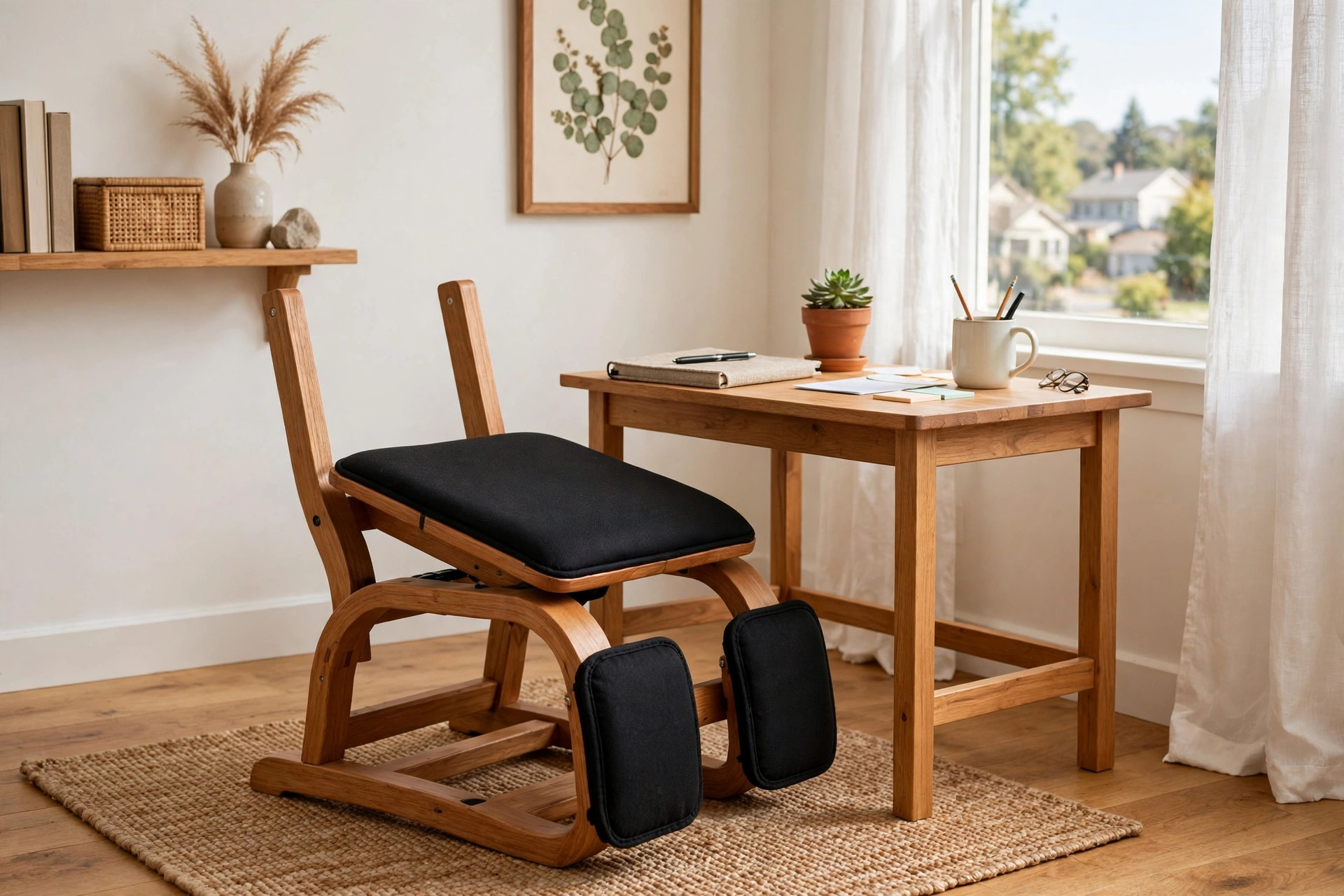
A kneeling chair looks strange at first. It has a seat that slopes forward. Below it sit two padded knee rests. The user kneels on the pads with the shins down and back. The seat holds most of the weight. The knee pads hold only a small share. The hips open to an angle of about 110 to 120 degrees instead of 90.
This open angle is the whole point. When the hips open, the spine can stand straight without effort. The back muscles relax. The weight of the upper body stacks neatly over the hips. Many users report that their lower back pain drops within a week or two. A best laptop stand for standing desk posture can help the neck at the same time, but the chair does the heavy work for the back.
The forward tilt also keeps the feet useful. The feet stay near the floor. The user can shift weight and change position through the day. Small shifts in posture keep blood moving and keep joints from growing stiff. Good sitting is not still sitting. A kneeling chair makes small movement easy.
What to Look for When You Choose
Not all kneeling chairs are built the same. Some are fine furniture. Some are flimsy and wobble. Use the points below to judge any chair you consider.
Frame and Build
The frame is the most important part. It must hold your full weight day after day. Wooden frames, often made from beech or birch, look warm and hold up well. Metal frames feel modern and often cost less. Check the weight limit before you buy. A good chair supports at least 200 pounds. Look at how the parts join. Screws and bolts should sit tight with no play. Rock the display model side to side in the store if you can. It should not wobble.
Pads and Comfort
The knee pads and the seat pad carry your body. Thick foam feels soft at first but can flatten over time. Dense foam keeps its shape longer. The covers should be tough fabric that breathes. Vinyl looks neat but grows hot and sticky in warm rooms. Removable covers are a nice touch because you can wash them.
Adjustability
Bodies come in different heights. A chair that fits one person may not fit another. The best chairs let you change the seat height and the knee pad angle. Some also roll on casters so you can move around a desk. If you are tall or short, adjustability matters more than brand. Measure your desk height first, then match the chair to it.
Reading reviews from trusted sites can help you compare models. Sites like Wirecutter test office furniture with care and give plain, honest verdicts. You can browse their work at Wirecutter before you spend your money.
Types of Kneeling Chairs
Wooden Frame Models
Wooden kneeling chairs are the classic design. They look like well-made furniture. Many buyers like them for a home office that should feel warm, not corporate. The wood holds weight well and ages nicely. Prices tend to run higher than metal models. A good wooden chair can last ten years or more with simple care.
Metal Frame Models
Metal frames cost less and feel lighter. They suit buyers who want to try the kneeling style without a big outlay. Many metal chairs adjust in more ways than wooden ones. The trade is looks. A metal tube frame never looks as fine as wood. For a spare room or a rented flat, metal is a smart, practical choice.
Kneeling Chairs with Back Rests
Some kneeling chairs add a small back rest. It gives the back a place to lean during long calls. Purists say a back rest defeats the point, because the spine should hold itself up. In truth, most users like the option. A short rest that you lean on now and then does no harm. Just do not lean on it all day, or your posture will slump like it would in any chair.
Rocking and Active Models
A few newer designs let the base rock. Rocking adds gentle motion to the workday. It can keep the core muscles engaged. These models suit people who fidget and want to move. They cost more and need a little practice. Try one before you buy if you can.
Large furniture stores carry many of these types. You can sit in them and compare at Www.ikea.com or browse a wider range online at Www.wayfair.com.
Cost and Price
A kneeling chair for home office desk use can cost anywhere from 70 dollars to over 400 dollars. The price depends on the frame, the padding, and the brand name.
Basic metal models start near 70 to 120 dollars. They work fine for short workdays. Mid-range chairs run from 130 to 250 dollars. This is the sweet spot for most buyers. You get a solid frame, dense foam, and real adjustability. High-end chairs cost 250 dollars and up. They use fine wood, thick cushions, and careful joinery. They suit people who sit for six hours or more.
Price alone does not tell you the value. A 90-dollar chair that lasts two years costs more per year than a 220-dollar chair that lasts ten. Look at the warranty. A one-year warranty is standard. Longer warranties suggest the maker trusts the build.
If money is tight, watch for sales at big office furniture makers. Companies like Herman Miller and Steelcase sell fine ergonomic seating, and their guides explain what good support looks like. See Herman Miller and Steelcase for their office seating lines.
Care and Upkeep
A kneeling chair needs little care. Wipe the frame with a damp cloth now and then. Vacuum the pads to pull out dust. Wash removable covers as the label allows. Tighten the bolts once or twice a year. A bolt that loosens will make the chair creak and wobble.
Keep the chair out of strong sun. Sun fades wood and dries out fabric. If the pads flatten after years of use, you can often buy new pads instead of a new chair. A little care keeps the chair safe and quiet for a long time.
Safety and Healthy Use
A kneeling chair is a tool, not a cure. Use it with sense.
Start slowly. Sit in the chair for 30 minutes the first day. Add 30 minutes each day. Your knees and shins need time to adjust. Jumping to a full day can leave the knees sore. Some soreness at first is normal. Sharp pain is not. Stop if anything hurts in a sharp way.
Do not kneel with all your weight on the pads. The seat should carry most of your weight. The pads steady you. If your knees ache, shift your weight back to the seat.
Get up and walk. No chair, however good, replaces movement. Stand, stretch, and walk every hour. A standing desk used for part of the day can pair well with a kneeling chair. Uplift Desk makes desks that move up and down for this kind of mixed routine. Learn more at UPLIFT Desk.
Watch the desk height. The desk must match the chair. If the desk is too high, the shoulders hunch. If it is too low, the back rounds. Set the screen so the top sits near eye level. Elbows should rest near a right angle.
An ergonomic mesh office chair under 200 dollars is a fine choice if kneeling does not suit you. Some people switch between a standard chair and a kneeling chair through the day. That variety is often the healthiest choice of all.
For tips on setting up the rest of the workspace, The Spruce offers plain, well-tested home office guides at The Spruce. PC Magazine reviews desks, monitors, and office gear at Www.pcmag.com, which helps when you match a chair to new equipment.
Frequently Asked Questions
Does a kneeling chair really help back pain?
Many users say yes. The open hip angle lets the spine keep its natural curve. That takes strain off the lower back. Studies of posture support the idea. But results differ from person to person. A kneeling chair helps most when combined with movement, a good desk height, and short breaks through the day.
Can I use a kneeling chair for eight hours a day?
Most experts say no, not at first. Build up slowly over two to three weeks. Many long-time users still switch between a kneeling chair and a standard chair. Variety keeps the body from locking into one posture. If you sit for eight hours, plan to change chairs or stand part of the time.
Are kneeling chairs bad for the knees?
They are not bad for healthy knees when used right. The pads spread the load, and the seat carries most of the weight. People with knee problems, arthritis, or recent knee injuries should ask a doctor first. Stop using the chair if the knees swell or hurt in a sharp way.
Will a kneeling chair fit under my desk?
Measure first. A kneeling chair needs less width than a standard office chair but sits a little higher. Check the chair height against your desk. You want room to slide the chair in and out with ease. Most standard desks, around 28 to 30 inches high, pair fine with adjustable kneeling chairs.
How long do kneeling chairs last?
A well-made chair lasts five to ten years. Wooden frames last longest. Metal frames hold up well too. The pads wear first. Dense foam and good fabric extend pad life. Tightening bolts yearly keeps the frame sound.
What is the best kneeling chair for back pain?
The best kneeling chair for back pain is the one that fits your body and your desk. Look for a sturdy frame, dense pads, and adjustable height. A chair you can try before you buy is worth more than any brand name. Start with mid-range models from trusted sellers and adjust from there.
A Final Word
An ergonomic kneeling chair for home office desk work is a simple change with a real payoff. It opens the hips, straightens the back, and takes pressure off the places that ache. Choose a sturdy frame. Pick pads that will last. Start slowly, and keep moving through the day. Your back will thank you.
References
Herman Miller. (n.d.). Office furniture and ergonomic seating. https://www.hermanmiller.com IKEA. (n.d.). Home furnishings. https://www.ikea.com PCMag. (n.d.). Technology product reviews. https://www.pcmag.com Steelcase. (n.d.). Office furniture and workplace research. https://www.steelcase.com The Spruce. (n.d.). Home and garden advice. https://www.thespruce.com UPLIFT Desk. (n.d.). Standing desks and ergonomic office furniture. https://www.uplift-desk.com Wayfair. (n.d.). Furniture and home goods. https://www.wayfair.com Wirecutter. (n.d.). Product reviews from The New York Times. https://www.nytimes.com/wirecutter Www. (n.d.). Home and garden information. https://www
Was this guide helpful?

About Sarah Mitchell
The My Garden US editorial team writes practical, in-depth home and garden guides for American homeowners — tested advice, no fluff.
You May Also Like
Standing Desk Anti Fatigue Mat for Hardwood Floors: Comfort Without Damage
August 13, 2026 0 views
Home Office Desk With Side Return Extension: A Complete Buyer’s Guide
January 26, 2026 0 views
Best Mini Fridge for Home Office Under Desk: A Practical Buyer’s Guide
September 5, 2026 0 views