
Introduction
An affordable infrared outdoor heaters buying guide helps you spend less and stay warm. Many people want to use their patio after the sun goes down. Cold air can cut those evenings short. An infrared heater solves this problem in a simple way. It sends heat straight to people and chairs, not to the wind. You feel warm within minutes. This guide explains how these heaters work. It also shows what to look for, what types cost, and how to use them in a safe way. You will not need any special skill. You will only need a clear plan and a fair budget.
How Infrared Heat Works: Affordable Infrared Outdoor Heaters Buying Guide
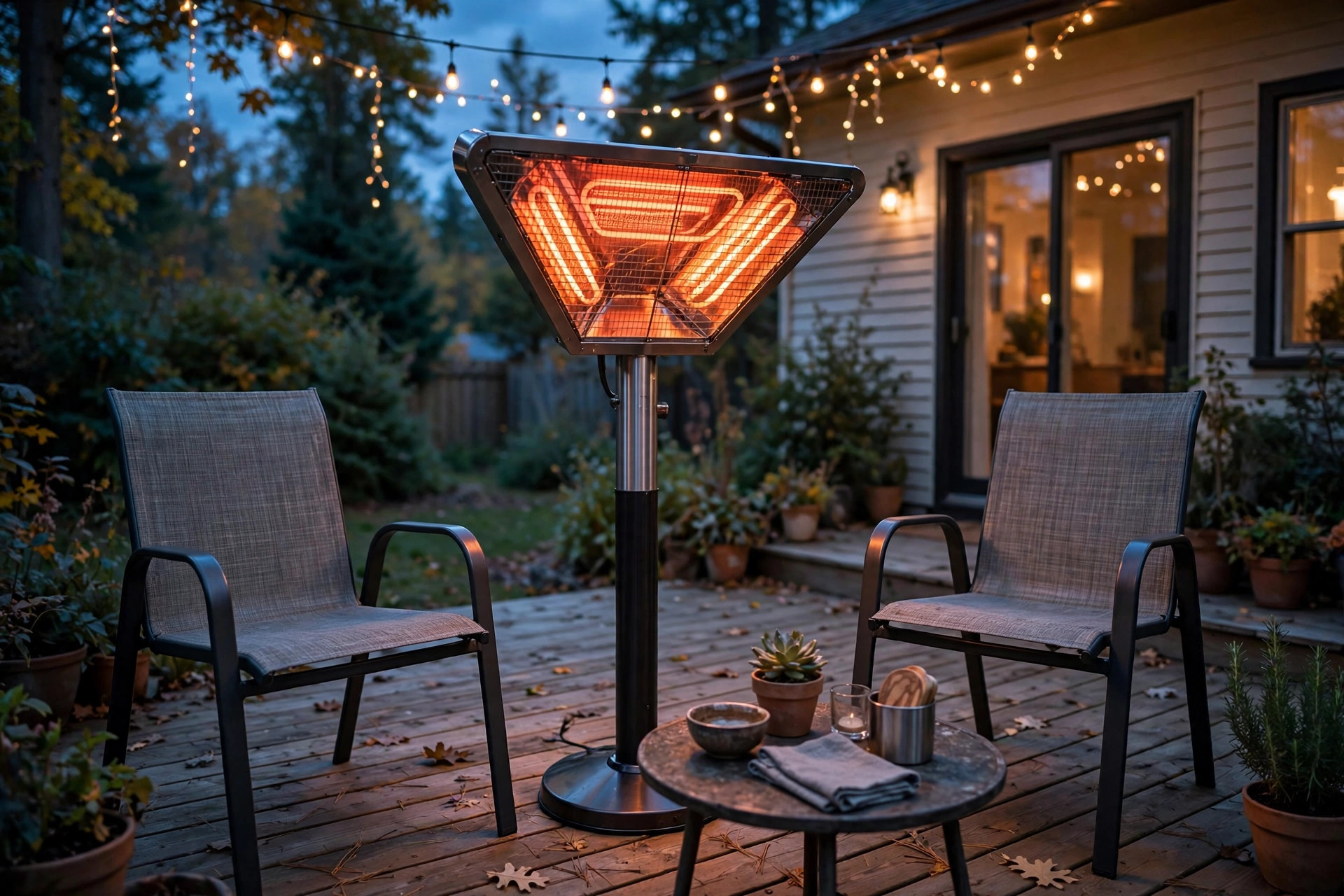
Most patio heaters warm the air first. Infrared heaters work in a different way. They send out waves of heat. The waves move in straight lines. When they strike a person, a chair, or a table, they warm that object. The air in between stays cool. This is much like the way the sun warms your face on a cold winter day. The sun may be far away, but you still feel warm in its light.
This method matters for one clear reason. Outdoors, the wind blows heated air away. A heater that warms air loses much of its power on a breezy night. An infrared heater does not depend on the air. Its waves reach you even when a light wind blows. This is why infrared models often work better in open yards and decks than older styles.
There are two main kinds of waves. Short-wave infrared feels hot right away. It is strong and fast. Both kinds serve homes well. Short-wave suits open spaces. Medium-wave suits covered patios where people sit close.
Why This Heater Suits Many Homes
People buy these heaters for plain reasons. First, they start fast. You flip a switch or press a button, and heat begins at once. You do not wait long for warmth. Second, they make little noise. There is no loud fan and no roaring flame. You can talk with friends in peace. Third, they cost little to run. Electric models turn most of their power into heat. Gas models use less fuel than many old heaters.
Renters also like these heaters. Many models stand on a base or hang on a wall. They need no big changes to the house. For full details on space limits, see our guide to top rated infrared outdoor heaters for small apartments.
Affordable models do the job well. You do not need the most costly unit to feel warm. A mid-range model with a solid build often lasts many seasons. The key is to pick the right size and the right type for your space.
What to Look for When You Shop
Heating Area and Power
Start with the size of your space. Measure the patio or deck. A small table for two needs less heat than a large deck with eight chairs. Electric models show power in watts. A 1,500-watt unit can warm about 100 to 150 square feet. Larger units of 3,000 to 6,000 watts can warm up to 300 square feet. Gas models show power in BTUs. More BTUs mean more heat.
Do not buy more power than you need. Too much heat in a small space feels harsh. Too little heat in a large space wastes money. Match the unit to the area you measured.
Fuel Type
Electric infrared heaters plug into a standard outlet. They are simple and clean. They make no smoke and no smell. They cost little to run each hour. Their only limit is the cord. You must place them near an outlet.
Natural gas models hook to a gas line. They run for hours at a low cost. They need a plumber for the first setup. After that, they are easy to use.
Propane models use a tank. They are free to move anywhere. The tank adds weight and needs refills. Check the price of propane in your town before you buy. If you want to compare other styles, our top rated outdoor patio heaters buying guide covers the full range.
Build and Weather Rating
Outdoor life is hard on machines. Rain, snow, and sun all wear down cheap parts. Look for a unit with a rust-proof case. Stainless steel and coated aluminum last longest. The electric parts should carry an IP rating. IP55 or higher means the unit can stand rain. You can find plain notes on safe outdoor ratings at EPA guides on home energy and product safety.
Mounting Style
Think about where the heater will live. Freestanding models stand on the floor and can move from place to place. Wall-mounted models save floor space and stay out of the way. Ceiling-hung models work well under a porch roof. Tripod stands suit parties and events. Pick the style that fits your patio layout.
Controls and Extras
Simple models have one heat setting and one switch. Better models offer two or three heat levels. This lets you turn the heat down on mild nights. A timer is a useful extra. It shuts the heater off after a set time. A remote control adds ease. Some units have a tip-over switch that cuts power if the heater falls. This is a wise safety feature for homes with children or pets.
Types and Options
Electric Infrared Heaters
Electric models are the most common affordable choice. They plug into a 120-volt outlet. Many sell for under two hundred dollars. They are quiet, clean, and simple. You can hang them on a wall or set them on a stand. Their heat starts in seconds. The cord length may limit where you place them. For long runs, a licensed electrician can add an outlet. Retailers such as The Home Depot and Lowe’s carry a wide range of these units at many price points.
Gas Infrared Heaters
Gas models give strong heat over a wide area. They suit large decks and open yards. A propane unit with 40,000 BTUs can warm a group with ease. The cost per hour depends on local fuel prices. These units are heavier and less simple to move. They need care around tanks and lines. Never use them in closed rooms.
Wall-Mounted and Ceiling-Mounted Units
Mounted units keep heat where people sit. They free up floor space for chairs and tables. Many mount under a porch roof or on a fence post. They need firm screws and solid wood or brick. Check that the mount can hold the weight. Once fixed, these units stay in place for years.
Tabletop Infrared Heaters
Small tabletop units warm two or four people. They sit in the middle of a table like a lamp. They cost the least of all types. They suit small balconies and quiet dinners. Their range is short, so guests should sit near them.
Quartz and Carbon Lamps
The heating element also matters. Quartz lamps give strong, quick heat. They glow with an orange light. Carbon fiber lamps give softer heat with less glare. They last longer in many cases. Pick the lamp that fits your mood.
Cost and Price
Affordable infrared outdoor heaters fit many budgets. Small electric tabletop models sell for fifty to one hundred dollars. Mid-size electric wall or stand models sell for one hundred to two hundred fifty dollars. Large gas models sell for two hundred to five hundred dollars.
Running costs stay low. A 1,500-watt electric heater uses about one and a half units of power per hour. At average rates, this costs near twenty to thirty cents per hour. A propane model may cost one to two dollars per hour, based on tank prices.
Look at the full cost, not just the price tag. A cheap unit that breaks in one year costs more than a solid unit that lasts five years. Read the warranty. One to three years is a good sign. Check what parts the warranty covers. A long warranty on the heating element shows trust in the build.
Sales often drop prices in spring and late summer. Stores clear stock before the cold months. Buying off-season can save twenty to forty percent. Compare prices across stores and brands before you decide.
Installation and Placement
Place the heater where people sit. The heat moves in straight lines, so the unit must face its target. Do not hide it behind a plant or a screen. Hang wall units seven to eight feet above the floor. This height spreads heat well and keeps heads clear.
Keep clear space around the unit. Most makers ask for at least three feet of space from walls, wood, and cloth. Read the manual for the exact numbers. Do not place the heater near low branches or fabric awnings. Heat can harm them over time.
For electric units, use a grounded outlet. Do not use a thin extension cord for long hours. A heavy-duty outdoor cord works for short use. For a fixed setup, ask an electrician to add an outlet near the heater.
Gas units need more care. Set them on level ground. Keep tanks upright and away from heat. Check lines for cracks each season.
Care and Upkeep
Infrared heaters need little care. Wipe the case with a damp cloth each month. Dust on the lamp can block heat. Clean the reflector behind the lamp with a soft cloth. A clean reflector throws more heat forward.
Cover the unit in harsh weather. A simple cover keeps rain and dust off. If your unit stands in snow, bring it under a roof or into a shed. Salt air near the coast can rust metal fast. Wipe metal parts more often in such places.
Check cords and plugs each year. Look for cracks, frays, and loose parts. A hurt cord can spark. Replace it before you plug the unit in again. For gas models, check the tank valve and hose.
At the end of the season, store the unit with care. Unplug it and let it cool fully. Wrap the cord in loose loops. Do not bend it hard. Store small units indoors if you can. They will last longer.
Safety
Safety comes first with any heater. Keep children and pets at a safe distance. The front of the heater grows very hot. Teach children not to touch it. A guard screen on the front adds a layer of care.
Never leave a heater running with no one near. Turn it off when you go inside. Do not use outdoor heaters in closed rooms, tents, or garages. They can lower oxygen and raise harm risk. Gas models must have open air around them.
Keep paper, cloth, and dry leaves away from the heater. A gust of wind can blow light items onto a hot surface. Sweep the patio before you turn the unit on. Keep a fire extinguisher close when you use any gas heater.
Follow local rules. Some towns limit outdoor heaters on balconies. Some ban open gas heat in tight spaces. A quick call to your local fire office can clear doubts. You can also read home safety notes from This Old House and Family Handyman for plain advice on safe setup.
Tip-over protection matters for standing models. If a unit falls, the switch should cut power at once. Test this feature when you first set the heater up. Tilt it gently and listen for the click. If you hear nothing, return the unit.
FAQ
How much does an affordable infrared outdoor heater cost to run each month?
It depends on use and fuel. An electric 1,500-watt unit run three hours a day costs about twenty to thirty dollars a month. A propane unit used the same way can cost sixty to one hundred dollars a month. Gas costs change by town and season.
Can I use an infrared heater in the rain?
Only if the unit is rated for wet use. Look for an IP55 or higher rating on the box or in the manual. Even then, avoid heavy storms. Bring portable units under cover when rain is hard. Water and electric parts do not mix well.
Are infrared heaters safe for pets?
They can be safe with care. Keep pets from lying against the hot front. Place the heater where animals do not walk into it. Wall-mounted units suit homes with active dogs. Always watch pets when the heater runs.
Do infrared heaters work in windy weather?
They work better than most other types in wind. The waves reach people and chairs even when air moves. Strong wind still cools your skin, so a windbreak helps. A fence, hedge, or screen cuts the chill and lets the heat do its work.
How long do these heaters last?
A well-made unit lasts five to ten years. The lamp may need a change after a few thousand hours. Quartz lamps wear faster than carbon lamps. Keep the unit clean and covered, and it will serve you longer.
Electric or gas, which is better for a small patio?
Electric suits small patios best. It is quiet, clean, and simple to place. Gas suits large open decks where strong heat is needed. If you compare fire-based choices too, read our notes on the best outdoor fire pits for humid climates to see how pits handle damp air.
A Short Final Word
An affordable infrared outdoor heater can add months of use to your patio. Pick the right size for your space. Choose a build that stands up to weather. Place it with care and keep it clean. Safety steps take only minutes and guard your home. With the right unit, cool evenings turn into warm, quiet hours outside. Shoppers who want to compare brands can browse guides at The Spruce, Napoleon, and Heatilator for more ideas on outdoor heating choices.
References
Family Handyman. (n.d.). DIY home repair and maintenance. https://www.familyhandyman.com Heatilator. (n.d.). Fireplaces and fireplace products. https://www.heatilator.com Lowe’s. (n.d.). Home improvement products. https://www.lowes.com Napoleon. (n.d.). Fireplaces, grills, and heating products. https://www.napoleon.com The Home Depot. (n.d.). Home improvement products. https://www.homedepot.com The Spruce. (n.d.). Home and garden advice. https://www.thespruce.com This Old House. (n.d.). Home renovation guidance. https://www.thisoldhouse.com U.S. Environmental Protection Agency. (n.d.). Protecting human health and the environment. https://www.epa.gov
Was this guide helpful?

About James Carter
The My Garden US editorial team writes practical, in-depth home and garden guides for American homeowners — tested advice, no fluff.
You May Also Like
Smart Fireplace Remote Controls for Sale: A Practical Guide
July 23, 2026 0 views
High Efficiency Fireplace Blowers and Fans for Sale: A Buyer’s Guide
February 26, 2026 0 views
Best Fireplace Glass Doors for Sale: A Guide to Choosing the Right Set
January 28, 2026 0 views