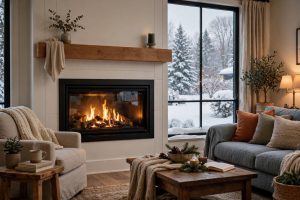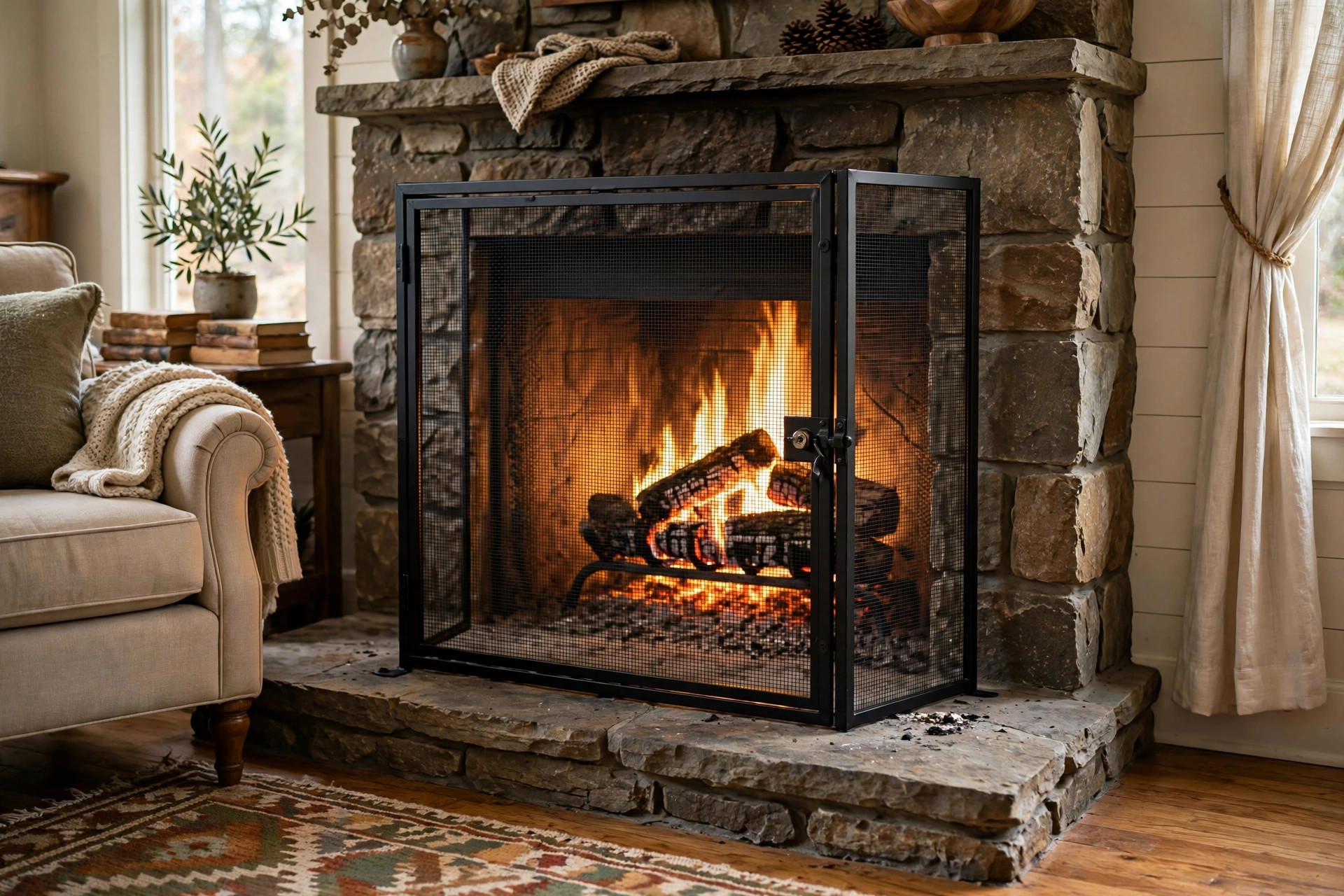

Every winter, families across the United States gather around the fireplace. The fire gives light and warmth. It makes a house feel like a home. Yet for parents of small children, the open fireplace brings worry. Toddlers learn to walk and then to run. They reach for everything they see. A glowing fire draws their eyes. High efficiency childproof fireplace screens for American homes answer this problem. They let the heat flow into the room while they keep little hands away from flames, sparks, and hot glass. This guide explains how these screens work, what to look for, and how to choose the right one for your home.
Why a Childproof Screen Matters
A wood fire can throw sparks across the room without warning. Popping logs send embers several feet. A burning log can even roll forward off the grate. For an adult, these are small risks that are easy to avoid. For a crawling baby or a curious toddler, the risk is far greater. A child does not know that fire hurts. A child reaches out of curiosity.
A proper screen creates a barrier. It stands between the child and the fire. It catches sparks and embers before they reach the carpet or the drapes. It also keeps the child from touching the hot frame of the fireplace or the scalding glass of a fireplace door. Many safety experts say that a physical barrier is the single most useful step a parent can take. Adult watchfulness matters, but no parent can watch every second. A screen works even when your back is turned.
Fires also send heat into the room in two ways. Radiant heat travels in straight lines, like light. Convected heat rides on moving air. A good screen lets both pass through with little loss. That is what the term high efficiency means in this context. The screen stops danger, not warmth.
How a Childproof Screen Keeps a Home Safe: High Efficiency Childproof Fireplace Screens for American Homes
The Barrier Principle
A childproof screen is taller and heavier than a simple spark guard. It often reaches thirty inches or more above the hearth. Some models fix to the wall with brackets. Others use a weighted base that a small child cannot tip over. The mesh is fine enough to stop sparks, yet open enough to show the fire. The frame uses steel or cast iron, never thin wire that bends under a tug.
Heat Passes Through
Heat-rated mesh is the key. Ordinary screens use loose woven wire that glows and weakens over time. High efficiency screens use dense, heat-resistant mesh that stays strong season after season. The mesh blocks burning embers and flying sparks. At the same time, it lets most of the radiant warmth through. Your room stays warm. Your heating bill stays lower. Families who pair such a screen with fireplace glass doors reviews and buying guide often find the best balance of safety and warmth.
Built to Resist Little Hands
A childproof screen has no sharp corners. Its door, if it has one, locks or latches in a way a toddler cannot open. Some screens use a magnetic catch. Others use a latch placed high on the frame, beyond a small child’s reach. The feet sit flat and wide. Many parents choose models that bolt to the fireplace surround for full peace of mind. When you read top rated childproof fireplace screens for sale, look closely at the locking method. It is the detail that matters most.
Types of Childproof Fireplace Screens
Freestanding Single Panel Screens
These are the simplest kind. One flat or bowed panel stands on two feet in front of the firebox. They suit small fireplaces and shallow hearths. A single panel is easy to move aside when you load wood. For child safety, choose a panel at least as wide as the firebox opening plus several inches on each side. A light panel that tips easily is no guard at all. Look for solid steel feet and a low center of gravity.
Three Panel Folding Screens
Three panels join with hinges. The side panels angle forward and give the screen a wide stance. This shape resists tipping better than a single panel. It also wraps the hearth corners, where a crawling child might slip around the edge. Three panel screens come in many styles, from plain black steel to decorative iron. The hinges should feel stiff and smooth. Loose hinges mean a wobbly screen.
Arched and Bowed Screens
Arched screens rise high in the middle. They suit tall fireplaces and rooms where children like to play near the hearth. The arch gives extra height above the flames without making the screen look heavy. Bowed screens curve gently toward the room. The curve adds depth and keeps the hot mesh farther from small fingers that press against the front.
Fixed and Wall Mounted Guards
For the highest level of safety, some families mount the screen to the wall or the fireplace face with steel brackets. These guards do not move. A child cannot push them aside or pull them down. They often include a small latched door for loading wood and cleaning ash. The United States Environmental Protection Agency offers guidance on safe home heating practices at epa.gov, which parents can review alongside these physical safeguards.
High Efficiency Features Worth Having
Heat Rated Mesh
The best screens use mesh rated to stand up to high heat for many years. Fine mesh blocks even small embers. It also dulls the glow of the fire a little, which some parents like because it makes the flames less tempting to young eyes. Ask about the mesh material before you buy. Stainless steel mesh lasts longer than plain black steel mesh.
Stay Cool Handles and Latches
You will open the screen door every time you add a log. Handles that stay cool save your hands from burns. Look for handles wrapped in heat resistant material or set away from the hot mesh. The latch should close with a firm click that you can feel. A door that swings open on its own is a hazard, not a help.
Adjustable Width
Some screens stretch to fit wider fireplaces. Adjustable panels slide to match your firebox. This matters because a screen that leaves a gap at the side is no screen at all. Children find gaps fast. Measure your opening first, then choose a screen that covers it fully with room to spare. Retailers such as Home Depot and Lowe’s carry sizing guides that help you match a screen to your fireplace.
Pairing With Doors for Efficiency
A screen alone keeps people safe. A screen paired with closed glass doors keeps heat in the house. Many American homes now use both. The doors close when the fire burns low. The screen stands guard when the doors are open and the fire is active. This pair gives safety at every hour. It also cuts the warm air loss up the chimney when the fire is not burning.
Cost and Price
Prices for high efficiency childproof fireplace screens vary with size, material, and maker. A basic freestanding steel screen may cost between thirty and eighty dollars. A sturdier three panel screen with a locking door often runs from one hundred to two hundred fifty dollars. Custom fitted or wall mounted guards can reach three hundred to five hundred dollars.
Materials drive much of the price. Plain steel is the least costly. Wrought iron costs more but lasts for decades. Stainless steel mesh adds to the price and adds years of life. Decorative finishes, such as bronze or nickel, raise the price further.
Shop around before you buy. Online stores often show customer photos that reveal how a screen looks in a real room. Local hearth shops let you lift the screen and test its weight. A heavy screen is a safer screen. Some specialty makers, including the brands featured at Napoleon and Heatilator, build screens to match their fireplace models, which can simplify fitting.
Care and Upkeep
A fireplace screen needs little care, but regular care keeps it safe. Check the mesh each fall before the first fire of the season. Look for thin spots, rust, or holes. Even a small hole lets an ember through. Replace damaged mesh or retire the screen.
Clean soot from the mesh with a stiff brush. Soot builds up and can dull the look of the fire. Wipe the frame with a damp cloth. Do not use water on a hot screen. Let the screen cool fully before you clean it.
Check the latch and hinges each season. Oil a stiff hinge with a drop of high heat oil. Test the latch with a firm pull. If a toddler in your house has learned to open it, the screen has failed its main job. Replace the latch or choose a different model.
Store a spare screen, if you keep one, in a dry place. Damp basements rust steel fast. Cover the screen with a cloth to keep dust off the mesh. The advice found at This Old House and Family Handyman on seasonal fireplace care is a helpful yearly reminder to inspect every part of the hearth, screen included.
Safety
Safety starts with the screen, but it does not end there. Keep the hearth clear. Rugs, toys, and blankets should sit at least three feet from the firebox. Teach children early that the fireplace zone is not a play zone. A simple rule, spoken the same way each time, works best. Say it calmly and repeat it often.
Never leave a fire burning when no adult is in the room. This rule holds even with the best screen in place. Screens reduce risk. They do not remove it. Close the screen door every time you step away, even for a minute.
Install smoke and carbon monoxide alarms on each floor of the home. Test them monthly. A working alarm saves more lives each year than any single piece of hearth equipment. When you maintain the chimney, follow the best chimney caps and covers buying guide to keep rain, animals, and debris out of the flue. A blocked flue can push smoke and fumes back into the room.
Burn only dry, seasoned wood. Green wood pops and throws more sparks. It also builds creosote in the chimney, which can catch fire. Store wood outside under cover, and bring in only what you need for the evening.
FAQ
At what age can I stop using a childproof screen?
Most safety experts say to keep a barrier in place until children are at least five or six years old. Even then, keep the screen up as a spark guard. Older children still trip and fall. A permanent screen is a simple habit that costs nothing once it is in place.
Will a childproof screen block too much heat?
A well made screen blocks very little heat. Fine mesh stops sparks but lets radiant warmth pass. If you notice the room feels cooler, check that the mesh is clean. Soot coated mesh blocks more heat. Also make sure the damper is open when the fire burns and closed when it does not.
Can I use a childproof screen with a gas fireplace?
Yes, but check the maker’s instructions first. Gas fireplaces produce steady heat that can make the screen frame very hot. Some makers sell screens sized for gas units. The glass front of a gas fireplace can reach high temperatures, so a screen adds a useful extra layer of protection for small children. The home project library at The Spruce covers gas fireplace safety in plain terms.
How do I keep a toddler from climbing on the hearth?
A tall screen helps, but a raised hearth is still a climbing target. Place the screen to cover the full hearth edge. Keep toys away from the area so children have no reason to linger there. Some families add a soft hearth pad under the screen to cushion falls. Never rely on the screen alone to stop a determined climber. Move the child gently and repeat the rule.
Is a screen enough, or do I need a full fireplace gate?
A screen stops sparks and blocks direct contact with the fire. A gate keeps the child several feet back from the whole hearth. For babies who pull up to stand and for new walkers, a gate gives more protection. Many families use both. The screen guards the fire. The gate guards the zone. As the child grows, the gate comes down first and the screen stays.
What size screen do I need?
Measure the width and height of the firebox opening. Add at least four inches to each side for overlap. The screen should stand at least a few inches taller than the top of the opening. For a wide fireplace, a three panel screen often fits better than a single panel. When in doubt, choose the larger size. A screen that is too small leaves gaps, and gaps defeat the purpose.
A Short Final Word
A fireplace should bring comfort, not fear. The right screen lets a family enjoy the fire through the long winter months. It holds back sparks. It holds back curious hands. It lets the warmth reach every corner of the room. Take time to measure, choose well, and check the screen each season. The cost is small. The peace of mind is large. With a high efficiency childproof fireplace screen in place, the hearth becomes what it should be: the warm heart of an American home.
References
Family Handyman. (n.d.). DIY home repair and maintenance. https://www.familyhandyman.com Heatilator. (n.d.). Fireplaces and fireplace products. https://www.heatilator.com Lowe’s. (n.d.). Home improvement products. https://www.lowes.com Napoleon. (n.d.). Fireplaces, grills, and heating products. https://www.napoleon.com The Home Depot. (n.d.). Home improvement products. https://www.homedepot.com The Spruce. (n.d.). Home and garden advice. https://www.thespruce.com This Old House. (n.d.). Home renovation guidance. https://www.thisoldhouse.com U.S. Environmental Protection Agency. (n.d.). Protecting human health and the environment. https://www.epa.gov
Was this guide helpful?

About Lisa Anderson
The My Garden US editorial team writes practical, in-depth home and garden guides for American homeowners — tested advice, no fluff.
You May Also Like
Smart Smart Electric Fireplaces Buying Guide
January 28, 2026 0 views
Heat Powered Stove Fans Price Comparison USA: What to Pay and What to Know
September 10, 2026 0 views
Ventless Heat Powered Stove Fans Buying Guide: Push Warm Air Where You Want It
July 20, 2026 0 views