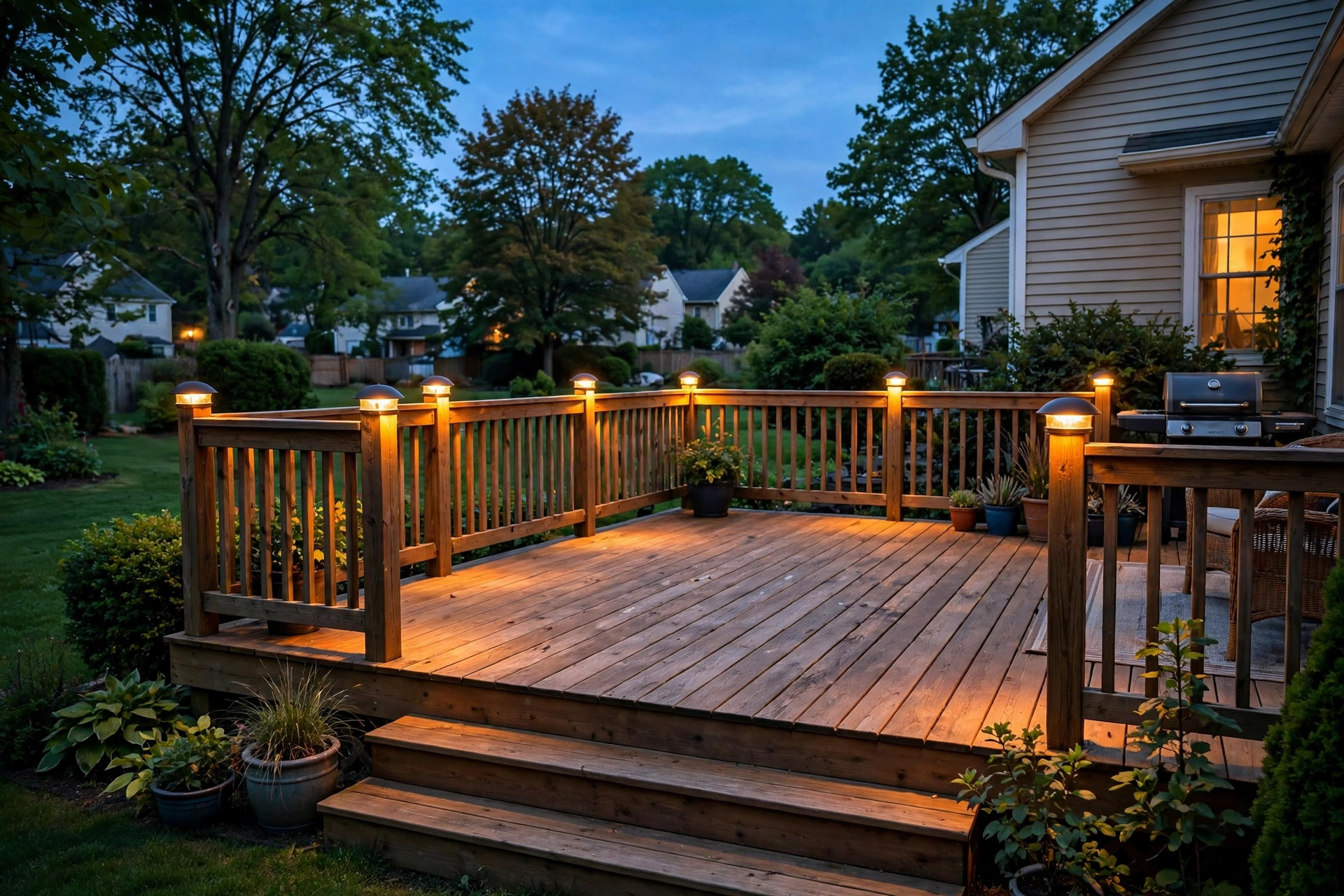

When the sun goes down in July, a deck can turn into a dark place. Steps vanish. Edges blur. A guest can miss the last step and fall hard. The fix is simple and cheap. When you look at deck cap lights for sale usa, you will find small lamps that sit on the caps of deck posts. They throw a soft ring of light over the boards. They mark the edges. They make the whole deck usable long after sunset.
This guide walks through the whole subject in plain words. It covers what these lights are, why they matter, the main types sold across the United States, what to check before you pay, what they cost, how to keep them working, and how to mount them in a safe way.
Why Deck Cap Lights Matter
A deck is an outdoor room. People eat there. They sit and talk. Kids run across it. But a bare deck at night is risky. The eye cannot judge depth in the dark. A white stair edge and a dark stair edge look the same until a foot finds nothing. Cap lights solve this. Each post becomes a small lamp. Together, a row of them outlines the deck like a dotted line. The light is low and close to the floor, so it does not blind anyone. It points down at the boards, where feet need it.
There is a second reason. Light sets the mood. A deck with warm, even light feels like a place to stay. Without light, people drift back inside. Homeowners who add these lights often say the deck gets used twice as much in the evening. It costs little to run them. Most models sip power. Many run on small solar cells and use no house power at all.
There is also a third reason, quiet but real. A lit deck is a safer deck. A porch or deck that glows at night is less inviting to a prowler. Light does not stop every crime, but a dark corner helps none. This point is worth a look in the planning guides at This Old House, which treat outdoor lighting as part of home safety, not just looks.
How to Choose: What to Look For: Deck Cap Lights for Sale Usa
Before you buy, learn the four facts that set good lights apart from poor ones. Shoppers who compare deck cap light reviews will see these points come up again and again.
Fit. The most common mistake is buying the wrong size. Deck posts in America are most often 4 by 4 inches or 6 by 6 inches, measured at the actual lumber size, which runs a little under the name size. A cap light made for a 4 by 4 post will wobble on a 6 by 6. Measure your posts first. Take a tape measure out to the deck. Write down the true width. Then match the light to that width.
Power source. You have three choices. Solar lights have a small panel on top. They charge by day and glow by night. They need no wiring, but they need sun. Wired low-voltage lights tie into a 12-volt transformer plugged into a house outlet. They are bright and steady but need a cable run. Battery lights use replaceable or rechargeable cells. They are easy but need fresh batteries often. For most buyers, solar or low-voltage wins.
Brightness and color. Light output is measured in lumens. Deck cap lights are accent lights, not floodlights. Ten to fifty lumens per light is plenty. More than that can glare. Color temperature is measured in kelvins. Warm white, around 2700K, looks like candlelight and suits wood decks. Cool white, around 5000K, looks bluish and suits modern metal decks. Pick one color for the whole deck. Mixing warm and cool looks messy.
Build quality. These lights live outside in rain, snow, and heat. Look for a weather rating. The label IP65 or better means the lamp can stand rain and dust. Cheap plastic housings crack in winter sun. Aluminum or heavy resin lasts longer. Screws should be stainless steel so they do not rust and stain the post.
Types and Options on the Market
Walk through the stores or the web and you will meet the same few styles. Knowing them keeps a deck cap lights buying guide short.
Solar cap lights. The panel sits on the top face of the light. By day it charges. At dusk a sensor switches the lamp on. Good models run eight hours or more on a full charge. They cost the least to run and are the easiest to mount. The catch is shade. A deck under a big tree or a north-facing deck may not charge them well. If your deck gets at least six hours of direct sun, solar is the easy answer.
Low-voltage wired cap lights. A thin cable runs from a transformer to each light. The transformer plugs into a normal outdoor outlet and steps the power down to 12 volts, which is safe to touch and safe in wet soil. These lights are the brightest and most even. They work in full shade. The work is in the cable. You bury or hide a low-voltage wire along the deck. For a large deck or a deck that hosts parties, wired lights are worth the effort.
Battery cap lights. These use AA or small rechargeable packs. You screw them on and walk away. The price is low and the mounting takes minutes. The trade-off is upkeep. Batteries fade, and the light dims with them. They suit renters or anyone who wants a quick test before wiring a full set.
LED versus older bulbs. Nearly every model sold today uses LEDs. The old small bulbs are gone from the shelves. LEDs last years, use little power, and run cool. A cool lamp matters because the light sits close to wood. A hot bulb can scorch a post cap over time. The U.S. Department of Energy keeps plain facts about LED lighting at energy.gov, and the federal ENERGY STAR site lists efficient outdoor models.
Style choices. Flat caps sit low like a lid. Pyramid caps rise to a small peak and shed rain better. Copper-look and bronze finishes blend with wood. Black suits modern decks. White suits coastal homes. Match the finish to the railing color so the lights look like part of the deck, not an add-on.
Cost and Price: What You Should Pay
Prices for deck cap lights for sale usa spread wide, so it helps to know the bands. These are street prices seen at American retailers, per light.
– Basic solar plastic cap lights: about $5 to $12 each. Fine for a small deck or a test run. – Better solar models with metal housings: about $12 to $25 each. – Low-voltage wired cap lights: about $15 to $40 each, plus a transformer at $40 to $120 and cable. – Designer or copper models: about $40 to $80 each.
A typical deck has 8 to 16 posts. So a full solar set can run $60 to $300, while a wired set with a transformer can run $250 to $700. Wiring cost rises if you hire an electrician, though low-voltage work is simple enough that many owners do it themselves. Keep an eye on seasonal deck cap light deals at the big home centers, where end-of-summer clearance can cut prices by a third. Lowe’s also runs regular outdoor lighting sales at lowes.com, and the lamp specialists at Lumens carry higher-end wired sets.
Watch the hidden costs. A solar light that dies in one season is not cheap; it is a repeat purchase. Check the warranty. One year is standard for budget lights. Three to five years marks a maker that trusts its product. Also count shipping if you buy online. A box of twelve lights is not heavy, but oversize fees can surprise you.
Care and Upkeep
Cap lights ask for little, but a small yearly routine keeps them bright.
Clean the panels. On solar models, dust and pollen film the panel and cut charging. Wipe each panel with a damp cloth in spring and again in midsummer. A film of grime can cut run time in half.
Check the fit. Wood moves with the seasons. Screws loosen. Once a year, give each light a gentle twist. If it rocks, tighten the screws. Replace any rusted screw with a stainless one before it stains the post.
Change batteries on schedule. Solar lights hide a small rechargeable cell. It lasts one to three years. When a light starts dying by midnight though the panel is clean, the cell is spent. Most makers sell the cells as standard AA or sub-C rechargeable packs, and swapping them is a two-minute job.
Mind the snow. In northern states, snow piles on post caps and buries solar lights for weeks. Brush snow off the lights when you clear the deck. For wired lights, the dark season does not matter, but check that ice has not cracked the housings in spring.
Trim the plants. A bush that grew over a solar light will starve it of sun. Cut growth back each spring so each light sees open sky.
Safety First
Cap lights are safe by design, but outdoor electricity still deserves care.
Low-voltage 12-volt systems are the safe standard for deck lighting. They cannot shock a child or a pet the way house current can. Still, the transformer must plug into a ground-fault protected outlet, the kind with test and reset buttons. Keep the transformer off the ground and out of standing water.
Do not overload the transformer. Add up the wattage of all your lights and stay under 80 percent of the transformer’s rating. A 100-watt transformer should carry no more than 80 watts of lights. This leaves room for wire losses and keeps the unit cool.
Keep cords out of walking paths. Low-voltage cable is thin and easy to trip on if it lies loose across a step. Run it under the deck, along joists, or buried a few inches deep where it crosses soil. The advice at Bob Vila on low-voltage landscape wiring is a sound reference before you dig.
For solar and battery lights there is almost no shock risk, but there is a fire point worth noting. Do not stack rags or leaves against a light, and do not let mulch pile onto the housing. LEDs run cool, yet any blocked lamp traps heat. Also, never wire a 12-volt light straight into a 120-volt house circuit. The lamp will burn out in seconds and can start a fire. If the wiring is not clear to you, call an electrician. An hour of a pro’s time is cheaper than a scorched deck.
Finally, think about the neighbors. Aim cap lights down at your own deck. A light that throws glare into a neighbor’s bedroom window will cause trouble no homeowner needs.
Frequently Asked Questions
How many deck cap lights do I need? One per post is the rule. Count your deck posts and stair posts. Most decks need 8 to 16 lights. Stair posts matter most, because steps are where falls happen.
Do solar deck cap lights work in winter? They work, but run shorter. Short days and low sun cut charging. In the deep north, expect two to four hours of light per night in December. Keep panels clean and the cells fresh. If winter light matters to you, choose wired low-voltage lights instead.
Can I mount cap lights on metal or vinyl posts? Yes, with the right model. Many makers sell versions for wood, vinyl, and metal posts, or include adapter rings. Check the product page for your post type before you order. The specialist lighting sites like Philips list which housings fit which posts.
How bright should deck cap lights be? Ten to fifty lumens each is the sweet spot. That is enough to see steps and boards clearly without glare. Brighter lights, over one hundred lumens, can hurt night vision and annoy neighbors. Remember, these are guide lights, not security floods.
Will cap lights fit my 4×4 and 6×6 posts? Only if you buy the right size. Measure the true width of your posts first. American 4 by 4 lumber actually measures about 3.5 inches. Buy lights listed for your true size. Some models include filler rings to fit two sizes.
How long do LED deck cap lights last? The LED chips themselves can last 25,000 to 50,000 hours, which is many years of nightly use. What fails first is usually the housing, the solar cell, or the battery. A well-built light with a three-year warranty is a fair bet for five or more years of service.
A Final Word
Deck cap lights are one of the smallest upgrades a homeowner can make, and one of the most felt. They cost little, they mount in an afternoon, and they change how a deck feels and how safe it is after dark. Measure your posts, pick the power source that fits your shade and budget, buy one color temperature for the whole deck, and keep the panels clean. Do that, and the deck becomes a night room the whole family can enjoy.
Related guides on this site include led recessed lights installation guide usa, dining room chandeliers buying guide usa, and kitchen island pendants buying guide usa.
References
Bob Vila. (n.d.). Home improvement advice. https://www.bobvila.com ENERGY STAR. (n.d.). Energy efficient products. https://www.energystar.gov Lamps Plus. (n.d.). Lighting and home decor. https://www.lampsplus.com Lowe’s. (n.d.). Home improvement products. https://www.lowes.com Lumens. (n.d.). Lighting and ceiling fans. https://www.lumens.com Philips. (n.d.). Lighting products. https://www.philips.com The Home Depot. (n.d.). Home improvement products. https://www.homedepot.com The Spruce. (n.d.). Home and garden advice. https://www.thespruce.com This Old House. (n.d.). Home renovation guidance. https://www.thisoldhouse.com U.S. Department of Energy. (n.d.). Energy efficiency and renewable energy. https://www.energy.gov
Was this guide helpful?

About Jennifer Lee
The My Garden US editorial team writes practical, in-depth home and garden guides for American homeowners — tested advice, no fluff.
You May Also Like
LED Recessed Lights Installation Guide USA
March 4, 2026 0 views
Kitchen Island Pendants California Homes USA
July 21, 2026 0 views
Garage Shop Lights for Florida Homes: A Plain Buyer’s Guide
June 21, 2026 0 views