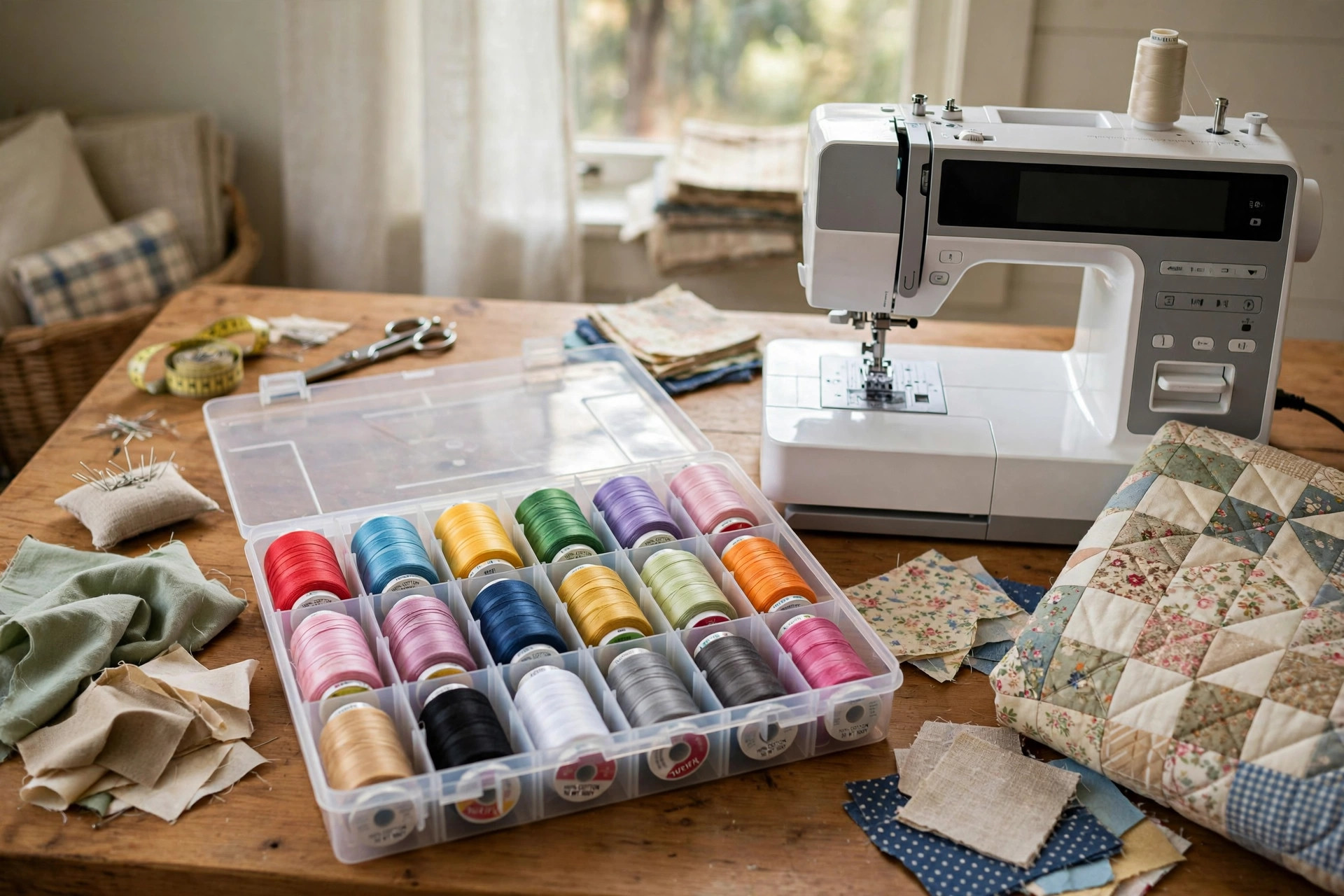

The best sewing thread set for machine quilting is the one that feeds smoothly, breaks rarely, and blends into the fabric while holding the quilt together for years. A good set brings together dozens of colors in a matched fiber and weight, so the quilter never has to stop a project to hunt down a single spool. It sounds simple, but the thread is doing more work than any other material in the quilt. It runs through the needle, through the feed dogs, through the sandwich of top, batting, and backing, thousands of times in a single session.
A poor thread set, by contrast, turns a pleasant afternoon into a battle. Lint builds up in the bobbin case. Needles snap. Stitches skip. Colors fade after one wash. The quilter blames the machine, but the fault usually sits in the cheap spools. The aim is simple: to help the home quilter choose a set that works the first time and keeps working.
Why the Right Thread Set Matters in Machine Quilting
Machine quilting asks more of thread than ordinary sewing. A seam in a garment is stitched once and then left alone. A quilt top is stitched through three layers, and the quilting lines themselves are the decoration. The thread must glide at high speed without fraying and hold tension across thick joins. It must also survive the wash, since quilts are made to be used.
A set matters because quilting uses many colors. A single quilt may call for ten or twenty shades. Buying one spool at a time is slow and costly, and colors from different brands rarely match. A matched set from one maker gives the quilter a working library at the bench.
There is also the matter of fiber consistency. One brand’s 50-weight cotton may behave nothing like another’s. Within a single set, the thread is made to one standard, so tension settings hold from spool to spool. That consistency is what a busy quilter feels most: fewer stops, fewer adjustments, and a cleaner finish across the whole quilt.
Thread Fibers: Cotton, Polyester, and Blends: Best Sewing Thread Set for Machine Quilting
The first choice in the best sewing thread set for machine quilting is the fiber. Cotton is the traditional choice, and for good reason. It has a soft, natural feel that matches cotton fabric. It takes dye well, so color ranges run deep and warm. Most quilters piece their tops with cotton thread, often in a 50-weight, because the finer thread sinks into the seams and lets the patchwork lie flat. The drawback of cotton is lint. It sheds fine fibers as it runs, and the bobbin area needs regular cleaning.
Polyester thread is the modern workhorse. It is stronger than cotton at the same size, which matters when quilting through thick layers or dense designs. It produces very little lint, so machines stay cleaner for longer. It also resists fading and stretching, and it keeps its color through hot washes. Guides from home and workshop publications note that low-lint thread also cuts down on routine machine cleaning. Some quilters prefer it for machine quilting patterns that cross many seam allowances, where the thread takes real punishment. The complaint against polyester is a slight sheen and a feeling that it is less natural in the hand, but modern thread makers have softened both points.
Blends split the difference. A cotton wrapped around a polyester core aims to give the softness of cotton with the strength of polyester. These threads cost more, but many serious quilters swear by them for free-motion work. For a beginner, either a quality cotton set or a quality polyester set will serve well. Buy a matched set in one fiber rather than mixing fibers, since tension behaves differently for each.
Thread Weight: What the Numbers Mean
Thread weight tells how thick the thread is, and the numbering runs backward: a higher number means a finer thread. A 50-weight thread is the standard all-round quilting thread, fine enough to disappear into piecing seams yet strong enough for quilting. A 40-weight is slightly heavier and shows more on the surface, which suits quilting lines meant to be seen. A 60-weight is very fine, good for delicate work like appliqué. The best sewing thread set for machine quilting usually centers on 50-weight, because that is where most quilting happens.
Weight also affects the needle. Finer threads want finer needles, and heavy threads want larger eyes. A common pairing is 50-weight thread with a size 80/12 or 90/14 quilting needle. When the needle matches the thread, the thread passes through the fabric without abrasion and the stitches form cleanly. New owners of a machine can get oriented with our guide to the best beginner sewing machine for home crafts.
What to Look for When You Shop a Thread Set
Color range comes first. A strong set offers twenty to forty colors that cover the main families: creams and whites, grays and blacks, reds, blues, greens, yellows, and a few pastels. Neutral shades do the most work, so check that the set includes several: an off-white, a light gray, a medium gray, and a dark charcoal. Craft and project guides agree that those four will carry half the quilting most people do.
Spool size matters more than it looks. Small spools of 200 to 300 yards are fine for trying new colors, but a quilter burns through neutrals fast. Better sets include large spools, often 500 yards or more, on the most-used colors. A storage case keeps the colors in order and protects the thread from dust and sunlight, which fades thread over time.
Consistency is the quiet test. Before committing to a big set, some quilters buy one spool from the brand and sew a test sandwich of scrap fabric. They watch for skipped stitches, shredding near the needle, and lint in the bobbin case. If one spool runs clean, the whole set usually runs the same, since the maker winds them to one standard. Well-reviewed brands sold through large craft retailers tend to pass this test. Shoppers can browse the best hot glue gun for craft projects home on the same kind of trip, since craft aisles often stock thread and tools side by side.
Types of Thread Sets on the Market
Most thread sets for machine quilting fall into a few clear types. The all-cotton starter set is the most common. It holds 25 to 60 spools of 50-weight cotton in a balanced color range and sits in a plastic tray or wooden box. These sets suit piecing and general quilting and make a fine first purchase.
The polyester performance set answers the need for strength and low lint. It often carries fewer colors but larger spools, since the buyer is quilting hard rather than collecting shades. Longarm quilters and those who quilt dense patterns favor these sets.
The variegated set is the artist’s choice. Variegated thread changes color along its length, so a single line of stitching shifts from shade to shade. Used with simple quilting patterns, it creates movement and depth that no single-color thread can match. They are a pleasure to use but harder to predict, so a test swatch is wise.
The neutral workhorse set skips the rainbow and stocks the colors a quilter reaches for daily: several whites and creams, several grays, black, navy, tan, and brown. For someone who quilts modern patterns in solid fabrics, this may be the most practical set of all. Beginners assembling a craft space may also want to read our roundup of the best sewing kit for beginners adults crafts to round out their supplies, and they can pick up paints and canvases from art supply stores on the same trip.
Cost and Price: What to Expect to Pay
Thread is one of the cheapest materials in quilting, which makes the price differences easy to read. A budget set of 60 small spools may cost less than a single yard of quality quilting cotton, and it can serve a beginner well for a season. The mid-range sets from established brands cost more but bring better dyeing, smoother winding, and fewer surprises in the machine. Premium sets, often in long-staple cotton or specialty blends, command the highest prices and are aimed at quilters who sew daily or sell their work.
The honest rule is to buy the best thread the budget allows and to avoid the cheapest no-name sets for machine work. Hand stitching can forgive a rough thread, but a machine at speed cannot. A mid-priced set from a known maker, bought during a craft store sale, is the sweet spot for most home quilters. Watch for the big seasonal sales, when thread sets are often marked down by a third or more, and stock up on neutrals then.
It is also worth comparing price per yard rather than price per set. A set that looks costly may hold twice the yardage of a cheaper one. Large spools of 500 or 1,000 yards bring the per-yard cost down sharply, as hardware and craft departments stocking bulk spools often show.
Care and Upkeep of Your Thread Collection
Thread lasts for decades if it is stored well and for much less if it is not. The enemies are sunlight, heat, dust, and damp. A closed drawer or a lidded box in a cool room is ideal. Spools left on a sunny windowsill will fade and weaken within a year or two. Garages and attics swing too far in heat and cold and are poor homes for thread.
Old thread deserves a test before it goes into a quilt. Hold a length between the hands and pull with moderate force. Good thread resists; old thread snaps with little effort. If it snaps easily, retire it to hand basting, or throw it away.
Cleaning the machine is part of thread care. Even low-lint polyester leaves some dust behind, and cotton leaves more. After a long quilting session, open the bobbin area and brush it out gently. A clean machine feeds thread more evenly, which means fewer skipped stitches and less wear on the thread itself.
Safety in the Quilting Room
Sewing thread is not a dangerous material, but the quilting room has its small risks. Thread cuttings and loose ends attract curious fingers and pets, and swallowed thread can harm cats and dogs. Keep a small bin for thread waste and empty it often, and store spools out of reach of small children and pets.
Needles are the sharper concern. When a needle breaks under a poor thread, the pieces can fly. Wearing simple glasses while sewing at speed is a sensible habit, and turning the handwheel by hand when starting a thick seam keeps breakage down. Good thread reduces needle stress in the first place.
Dust is worth a mention. Cotton thread gives off fine lint, and long hours of quilting stir it into the air. The room should have decent airflow, a point stressed in many home improvement guides, and anyone who quilts all day may want a small fan set to draw air away from the face. These are minor points, but the quilting room is a workshop, and workshops are kept safe by small habits.
Frequently Asked Questions
How much thread does one quilt use? A simple lap quilt often takes 1,000 to 2,000 yards of thread for piecing and quilting together. A large bed quilt with dense quilting can take far more. This is why large spools of neutral thread are the backbone of a good set.
Can I use regular sewing thread for machine quilting? Short answer: yes, if it is a quality thread of the right weight. What matters is how the thread behaves: smooth feeding, clean stitches, and color that holds. Many quilters piece and quilt with the same 50-weight set.
Is cotton or polyester better for a beginner? Both work. Cotton matches cotton fabric beautifully and is the traditional choice. Polyester is stronger, makes less lint, and is more forgiving of tension errors. Buy one fiber for the whole set, since tension behaves differently for each.
What does 50-weight mean? It is a measure of thread thickness, and higher numbers mean finer thread. A 50-weight thread is the standard middle ground for machine quilting: fine enough to blend into seams, strong enough to quilt through layers.
How many colors do I really need? Twenty to thirty well-chosen colors cover most quilting. Four or five neutrals do the heaviest work, and the rest fill in for specific fabrics. It is better to own thirty colors of good thread than sixty of poor thread.
Does thread go bad? Yes, slowly. Sunlight, heat, and damp weaken thread over the years. Thread stored in a cool, dark drawer can sew well for a decade or more. Test old thread by pulling it firmly between the hands; if it snaps easily, do not use it in a quilt.
A Short Final Word
The best sewing thread set for machine quilting is not the largest or the most expensive. It is the set whose colors suit the quilter’s fabric, whose weight suits the quilter’s machine, and whose quality holds stitch after stitch without a fight. Choose a trusted brand, test one spool, store the set out of the sun, and clean the machine after long sessions. Do that, and the thread will do its quiet work for years: holding the layers together, marking the quilting lines, and letting the quilt itself take the praise.
References
Amazon. (n.d.). Online shopping. https://www.amazon.com Blick Art Materials. (n.d.). Art and craft supplies. https://www.dickblick.com Bob Vila. (n.d.). Home improvement advice. https://www.bobvila.com Family Handyman. (n.d.). DIY home repair and maintenance. https://www.familyhandyman.com Fat Quarter Shop. (n.d.). Quilting fabric and sewing supplies. https://www.fatquartershop.com JOANN. (n.d.). Fabric and craft supplies. https://www.joann.com Michaels. (n.d.). Arts and crafts supplies. https://www.michaels.com The Home Depot. (n.d.). Home improvement products. https://www.homedepot.com This Old House. (n.d.). Home renovation guidance. https://www.thisoldhouse.com Walmart. (n.d.). Everyday low prices. https://www.walmart.com
Was this guide helpful?

About Michael Thompson
The My Garden US editorial team writes practical, in-depth home and garden guides for American homeowners — tested advice, no fluff.
You May Also Like
Best Spray Paint for Furniture DIY Makeover
September 19, 2026 0 views
Felt Craft Kit for Kids Sewing Projects Home: A Parent’s Guide
August 29, 2026 0 views
Best Heat Transfer Vinyl for Shirts Cricut: A Plain Guide to Choosing the Right Cut
February 7, 2026 0 views