Introduction
The search phrase uv light for hvac system pros cons usa shows up more often every year. Homeowners want cleaner air. They also want to know if a small lamp inside their heating and cooling system is worth the money. A UV light for an HVAC system is a lamp that gives off ultraviolet light. It sits inside the ductwork or near the indoor coil. Its job is to slow the growth of mold, bacteria, and other tiny organisms that like damp, dark places. This guide weighs the pros and cons in plain terms. It covers how the lights work, what they cost, and how to stay safe. By the end, you will know if one fits your home.
Why an HVAC UV Light Matters: Uv Light for Hvac System Pros Cons Usa
The indoor coil of an air conditioner stays wet for much of the summer. Warm air passes over cold metal. Water drips off the coil and drains away. But a thin film of moisture often remains. That film is a good home for mold and slime. Over time, the coil can grow a layer of buildup. The buildup blocks airflow. It can also give off a stale or musty smell when the system runs.
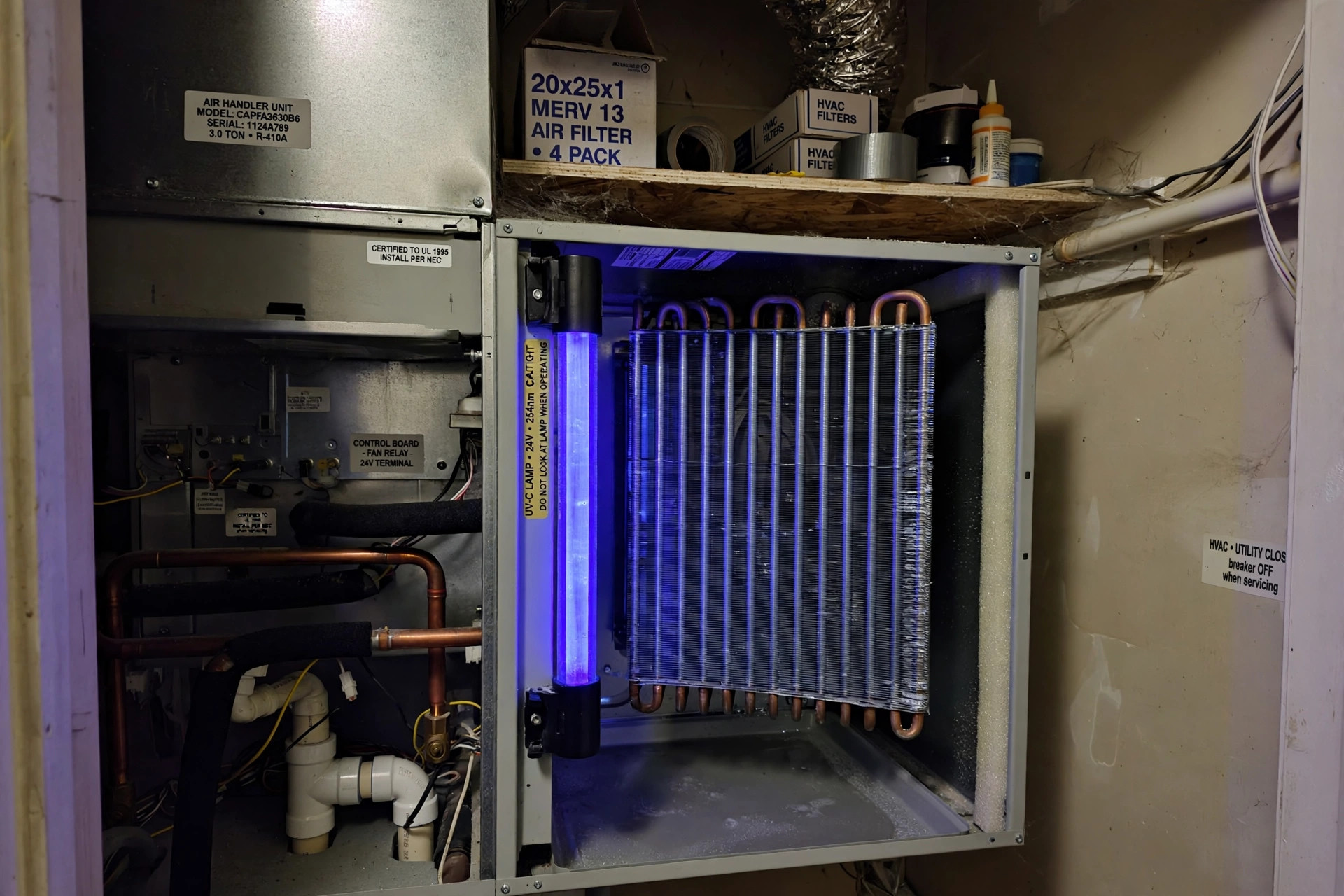
A UV light shines on the coil day and night. It does not remove dirt by itself. It makes it harder for living things to grow on the coil surface. A cleaner coil moves air more freely. It may also help the system keep its rated efficiency. The U.S. Department of Energy notes that a dirty coil can raise energy use, so anything that keeps the coil clean has real value. For families with allergies, the appeal is stronger. Less mold on the coil means fewer spores sent through the ducts.
How a UV Light Works Inside Your System
UV means ultraviolet. It is a form of light the human eye cannot see. The lamps used in HVAC systems give off UV-C light. UV-C has short waves. These waves can damage the cells of mold, bacteria, and viruses. The damage stops them from growing or spreading.
A technician mounts the lamp inside the air handler or in the duct near the coil. Air passes by as the system runs. The lamp stays on all day, even when the blower is off, in most setups. Its main target is the coil and the drain pan. These parts stay damp. They are where growth starts. The light does not filter dust. It does not remove smoke or chemical smells. A standard air filter still handles particles. The two tools work side by side.
The Pros of a UV Light for HVAC System Use
Cleaner Coils Over Time
The strongest case for a UV lamp is coil health. Studies and field reports show that UV-C can keep a coil nearly free of new growth. A clean coil transfers heat better. It also drains water more freely. Homeowners who have fought a slimy coil often notice the difference within one cooling season.
Less Mold and Odor
Mold on a coil can send a musty smell through the house. UV light attacks the problem at its source. It will not fix mold that is already deep in duct lining, but it can stop new colonies on the coil. Many users report that the stale smell fades after a lamp is installed. If odors worry you, it also helps to learn whether air duct cleaning is worth it for your home.
Low Upkeep Once Installed
A UV lamp has no filter to wash. It has no tank to empty. Once a professional mounts it, the lamp simply runs. Bulbs last about one to two years. A yearly swap is the main chore. That is less work than most other indoor air upgrades.
Small Running Cost
A typical lamp draws between 15 and 60 watts. That is about the same as a small light bulb. Running it all year adds only a few dollars to the electric bill. ENERGY STAR guidance on efficient homes favors low-wattage add-ons that do not strain the system, and a UV lamp fits that bill.
The Cons of a UV Light for HVAC System Use
It Does Not Sterilize Moving Air
This is the point most ads skip. Air moves fast through a duct. It passes the lamp in a fraction of a second. That brief flash is not enough to kill most germs in the air stream. The lamp is strong against growth on surfaces it shines on. It is weak against things flying past. Anyone who buys a lamp expecting hospital-clean air from every vent will be let down.
Limited Proof for Health Claims
Sellers often claim fewer colds or fewer allergy attacks. Hard proof is thin. UV does cut mold on the coil. But no large study proves that a coil lamp makes a healthy family healthier. People with mold allergies may feel better. That is likely. It is not a cure. Good filtration and source control matter more. Guides from This Old House remind readers to treat UV as one part of an air quality plan, not the whole plan.
Bulb Replacements Add Up
A replacement bulb costs 30 to 150 dollars, depending on the brand. You need a new one every 12 to 24 months. Over ten years, bulbs alone can cost 300 to 1,000 dollars. That is on top of the install price. Some lamps use pricey brand-only bulbs. Check the bulb price before you buy the unit.
Possible Damage to Plastic Parts
UV-C can break down some plastics and rubber over time. Drain pans, wire insulation, and duct liners near the lamp may age faster. A good installer shields these parts or places the lamp with care. A poor install can shorten the life of nearby parts. Major makers such as Carrier and Trane warn that lamps must be placed so they do not harm system parts.
Types of HVAC UV Lights
Two main types are sold for home use. Coil sanitizing lamps are the common kind. They mount near the indoor coil and shine on its surface. Their goal is to stop growth on the coil and drain pan. Most homes that get a UV lamp get this type.
Air sterilizing lamps mount inside the return duct. They aim to treat the air as it passes. They need more power and longer exposure to do much good. In a fast-moving home duct, their effect is modest. Some units combine both jobs in one housing. These combo units cost more. For most homes, the coil type gives the best value for the money.
What to Look for When You Choose One
Start with lamp type and size. The lamp must fit your air handler or duct. Measure the space before you shop. Next, check the bulb type. Look for a lamp with easy-to-find replacement bulbs at a fair price. Brand-only bulbs lock you into high costs.
Look at the power draw and the rated bulb life. A 9,000-hour bulb needs a change each year. A 16,000-hour bulb can go nearly two years. Check for a sight glass or an indicator light. These let you see that the lamp is on without opening the unit. A door safety switch is a smart feature. It turns the lamp off when the access panel opens. That protects eyes and skin from UV exposure.
Finally, check the warranty. Good units carry a two to five year warranty on parts. Keep the receipt. Some makers, including Lennox and Goodman, list approved accessories for their air handlers. Using an approved lamp keeps your system warranty safe.
Cost and Price in the USA
A basic UV lamp kit costs 60 to 300 dollars online. A pro install adds 100 to 400 dollars in labor. All in, most homeowners pay 200 to 600 dollars for one lamp. Two-lamp setups for larger systems can reach 800 dollars or more. To get local numbers, compare HVAC UV light installation costs in your area before you book.
Running costs are small. At 30 watts and average rates, a lamp costs about 25 to 40 dollars a year in power. Bulbs are the real repeat cost. Plan on 50 to 100 dollars a year for bulbs on average. Over a decade, the total can reach 1,000 to 1,800 dollars with install included. Weigh that against the pros and cons above. If your coil stays clean and your system runs well, many owners call it fair.
Care and Upkeep
Care is simple but must be steady. Mark the bulb install date on the unit with a tag. Set a reminder for the change date. A bulb can still glow blue after its UV output has faded. Glow is not proof of power. Change it on schedule.
Wipe the bulb with a clean, dry cloth when you change it. Oils from fingers can create hot spots on the glass. Check the drain pan and drain line at the same visit. A UV lamp slows growth. It does not clear a clogged drain. The Family Handyman site offers clear step-by-step drain care that pairs well with a UV setup. Also check that the safety switch still works each year. Open the panel and confirm the lamp goes dark.
Safety Notes
UV-C light harms eyes and skin. Never look straight at a lit lamp. Never run it with the access panel open. Keep children and pets away during a bulb change. Let the lamp cool before you touch it. The glass runs hot.
Some cheap lamps give off ozone. Ozone is a lung irritant. It can worsen asthma. Buy a lamp labeled ozone-free. Ask the installer to confirm. If you smell a sharp, electric odor after install, call the installer back. That smell can signal ozone or an electrical fault.
Lamp disposal needs care too. Many UV bulbs hold a small amount of mercury, like old fluorescent tubes. Do not toss them in the trash. Take spent bulbs to a local hazardous waste drop-off. Rheem and other makers note this in their lamp manuals.
FAQ
Does a UV light replace my air filter?
No. A UV lamp and a filter do different jobs. The filter traps dust, pet hair, and pollen. The lamp slows growth on the coil. You still need to change your filter on schedule. A clogged filter hurts airflow and can undo the gains of a clean coil.
Will a UV lamp kill viruses in my home?
It can kill germs on the surfaces it shines on. It does little to the air rushing past. It should not be sold as virus protection for the whole house. Ventilation, filtration, and standard hygiene matter far more for illness.
Can I install a UV light myself?
A handy owner can mount some kits. But the work involves cutting into ductwork and wiring near high voltage. A pro install is safer and often keeps the system warranty valid. Poor placement can damage plastic parts or aim the lamp where it does little good. Get quotes from two or three shops. Compare them with the best duct cleaning service costs near you if you plan a full air quality refresh.
How long do the bulbs last?
Most last 9,000 to 16,000 hours. That is one to two years of steady use. Output drops long before the bulb dies. Follow the maker schedule, not the glow. Write the change date on the unit so you do not guess later.
Is a UV lamp worth it for a new system?
New coils are clean coils. A lamp helps keep them that way from day one. Many owners of new systems add one for this reason. On an old system with heavy buildup, clean the coil first. A lamp cannot scrub years of grime. It only guards a clean surface.
A Final Word
A UV light for an HVAC system is a modest tool with a clear job. It keeps the coil and drain pan cleaner. It cuts mold and stale smells at the source. It does not purify fast-moving air. It does not replace a filter. The costs are real but small year to year. If you want a cleaner coil with little upkeep, the pros win. If you want germ-free air from every vent, the cons rule it out. Match the tool to the job, and you will not be let down.
References
Carrier. (n.d.). Heating and cooling systems. https://www.carrier.com ENERGY STAR. (n.d.). Energy efficient products. https://www.energystar.gov Family Handyman. (n.d.). DIY home repair and maintenance. https://www.familyhandyman.com Goodman. (n.d.). Heating and cooling equipment. https://www.goodmanmfg.com Lennox. (n.d.). Heating and cooling systems. https://www.lennox.com Rheem. (n.d.). Heating, cooling, and water heating. https://www.rheem.com This Old House. (n.d.). Home renovation guidance. https://www.thisoldhouse.com Trane. (n.d.). Heating and air conditioning. https://www.trane.com U.S. Department of Energy. (n.d.). Energy efficiency and renewable energy. https://www.energy.gov
Was this guide helpful?

About Emily Rodriguez
The My Garden US editorial team writes practical, in-depth home and garden guides for American homeowners — tested advice, no fluff.