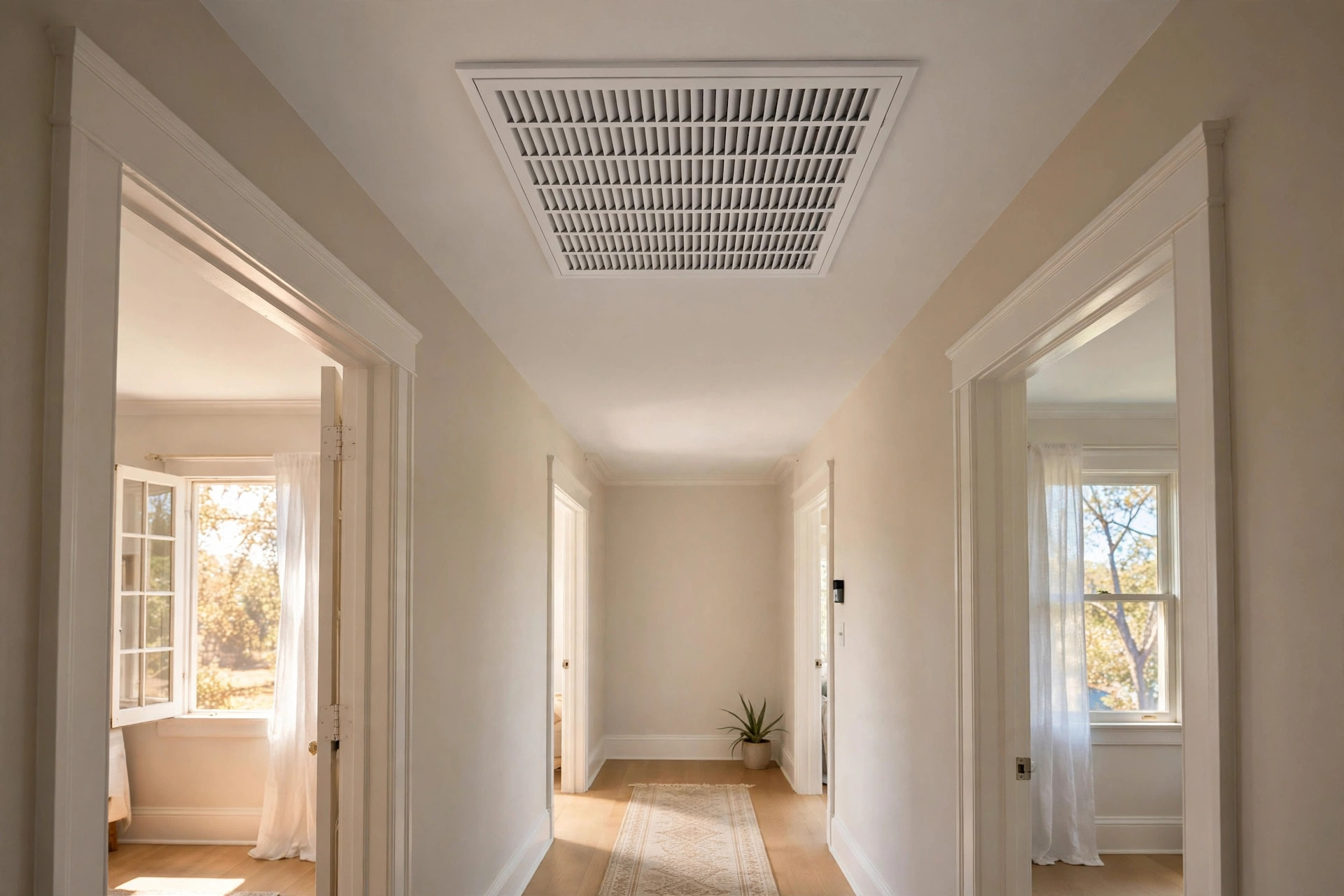

A whole house fan is a simple and honest piece of equipment. It pulls cool evening air through open windows and pushes hot air out of the attic. The whole house fan installation cost usa homeowners face in 2026 runs from about $1,200 to $4,000 for a typical single family home. Most families pay around $2,000 to $2,800 for the fan, the labor, and the electrical work together. The final number depends on the size of the house, the type of fan, and how much attic work is needed. This guide walks through every part of the price, so you know what to expect before you call a contractor.
Why a Whole House Fan Still Matters
Air conditioning cools a house well, but it costs money every hour it runs. A whole house fan offers a cheaper way to cool a home during the mild parts of the day and night. It works best in the evening, when the outside air drops below the inside air. Open the windows, turn on the fan, and the whole house fills with fresh outdoor air within minutes.
Energy experts note that moving air this way can cut cooling bills by a large margin. On many spring and fall nights, a fan alone keeps the house cool enough that the air conditioner never turns on. In summer, running the fan in the late evening pre-cools the house, so the air conditioner starts the next day from a lower temperature. The U.S. energy efficiency program lists fans and ventilation as one of the plainest ways to reduce home energy use.
The fan also helps the attic. Attics trap heat during the day, and that heat seeps down into the rooms below. A whole house fan drives that hot air out through the attic vents. The result is a cooler attic and a house that stays cool longer into the night. Even in humid regions, it works well on cool dry nights. If you are weighing it against other cooling options, our guide to mini split vs central ac cost comparison usa puts the price of powered cooling in perspective.
Types of Whole House Fans: Whole House Fan Installation Cost Usa
Not all whole house fans are built the same. Knowing the types helps you read any price quote with a clear head.
Traditional belt-drive fans
The oldest design uses a large blade driven by a belt and a motor. These fans move a great deal of air and cost the least to buy. They are loud, however. The hum can be heard through the house. Many owners run them only when no one is trying to sleep. Unit prices run from $200 to $600 before installation.
Direct-drive fans
Direct-drive models mount the blade straight on the motor shaft. They are smaller, simpler, and quieter than belt-drive fans. They move less air per fan, so large homes may need two of them. Prices run from $300 to $900 per unit.
Insulated quiet fans
The newest style seals itself with an insulated door when it is off. The door opens only when the fan runs. This stops warm attic air from leaking into the house in winter and cold air from leaking in summer. These fans are the quietest of the three and often carry speed controls and remote switches. They cost $800 to $2,000 for the unit alone. Brands carried by major retailers, such as those sold through The Home Depot, now stock several of these models.
Power attic ventilators
A power attic ventilator is not a whole house fan, though the two are often confused. An attic ventilator cools only the attic, not the living space. It does not need open windows. The difference matters when you compare quotes. Our page on whole house fan vs attic fan comparison explains the gap in plain terms. Make sure your contractor quotes the machine you actually want.
How to Choose the Right Size
Size is the first thing a good installer will ask about. A fan too small will run for hours and never cool the house. A fan too large will waste money and pull air through the house too fast.
The rule of thumb is simple. A whole house fan should move enough air to change the air in the house three to six times per hour. To find your number, multiply the square feet of living space by the ceiling height. That gives the cubic feet of air in the home. Divide by the number of minutes you want for one full change. Most guides suggest a full change every 10 to 20 minutes.
For example, a 2,000 square foot home with eight foot ceilings holds 16,000 cubic feet of air. A full change every 10 minutes needs a fan rated at 1,600 cubic feet per minute. A full change every 20 minutes needs 800 cubic feet per minute. Most installers aim for the middle of the range. Manufacturer sizing charts from companies like Carrier and Trane follow this same math.
The attic needs enough vent space to let the hot air escape. The rule is one square foot of net free vent area for every 750 cubic feet per minute of fan capacity. If the attic has too little venting, the fan will push against pressure and perform poorly. An installer should check the soffit and roof vents before quoting the job. Adding vents adds cost, so this check belongs in the written quote.
Noise matters too. Fans carry a sone or decibel rating. Quiet models rate near 50 decibels or less at low speed, about the sound of a calm conversation. Loud models can reach 70 decibels, like a vacuum cleaner. If the fan sits above a bedroom hallway, pay for the quiet model. The product testing organization publishes fan noise ratings that help buyers compare.
Whole House Fan Installation Cost: The Full Breakdown
Here is where the money goes. A standard whole house fan installation has four parts: the fan unit, the labor to cut and mount it, the electrical wiring, and any attic vent work.
For most American homes in 2026, the national range looks like this:
– Budget installation, basic belt-drive fan: $1,200 to $1,800 – Typical installation, direct-drive or mid-range fan: $1,800 to $2,800 – Premium installation, insulated quiet fan with controls: $2,800 to $4,000
The fan unit itself is often the smallest part of the bill. Labor and electrical work make up half or more of the total. A licensed electrician must wire the fan to a dedicated circuit in many areas, and local codes often require a permit and an inspection. Permit fees run from $50 to $200 depending on the city.
Several factors push the price up or down:
House size. Larger homes need bigger fans or two fans, which doubles the unit cost and adds labor.
Attic access. A roomy attic with a clear path to the hallway ceiling makes the job easy. A tight attic full of ductwork slows the crew and raises labor hours.
Electrical panel. If the panel has open space for a new breaker, wiring is quick. If the panel is full or old, the electrician may need to add a subpanel, which can add $300 to $800.
Vent upgrades. Adding soffit or roof vents to meet the airflow rule adds $150 to $500.
Controls. A simple pull switch costs little. A timer, multi-speed wall control, or smart remote adds $100 to $300 to the parts bill.
Region. Labor rates differ by state. The same job costs more in California or New York than in the Midwest. Get at least three written quotes. Guides from Bob Vila and the Family Handyman both stress comparing itemized quotes line by line.
Compared with a full air conditioner replacement, the price is modest. Our article on central ac replacement cost near me 2026 shows central systems often cost $5,000 to $12,000 installed. A whole house fan will not replace air conditioning in every climate, but where it fits, the savings are real.
Some homeowners ask about doing the work themselves. A skilled do-it-yourselfer can mount the fan and cut the ceiling opening, but the electrical wiring should go to a licensed electrician in most jurisdictions. A mistake in wiring can void the warranty and create a fire risk. The permit office in your city can tell you what the local code allows.
Care and Upkeep
A whole house fan asks little in return for its work. A few simple habits keep it running for 15 to 25 years.
Clean the intake grille and louvers once a year. Dust builds up on the blades and the grille, and the fan moves less air when it is dirty. Turn off the breaker, remove the grille, and wipe the blades with a damp cloth. Vacuum the grille slats.
Check the belt on belt-drive models every two years. A loose or cracked belt slips and makes noise. Replacement belts cost a few dollars and take minutes to change.
Oil the motor if the manual calls for it. Many modern motors are sealed and need no oil. Older motors may have oil ports that take a few drops of light machine oil each year.
Seal the fan in winter. Traditional fans leak warm air into the attic all winter, which wastes heat. Fit an insulated cover over the ceiling grille from late fall to early spring. Insulated quiet models seal themselves, but a cover still helps on the coldest nights.
Listen for changes. A new rattle or hum often means a loose mounting screw or a worn bearing. Tighten the frame screws first. If the noise stays, call the installer before a small problem becomes a large one. Maintenance advice from Lennox, Rheem, and Goodman all follows this same pattern: clean, inspect, and fix small issues early.
Safety Points Every Owner Should Know
A whole house fan is safe when it is installed and used the right way. These rules matter.
Open windows before you turn the fan on. The fan pulls air from the house into the attic. If no window is open, it will pull air down the chimney or through gaps, which can draw smoke or fumes into the living space.
Be careful with fuel-burning appliances. In homes with a gas furnace, gas water heater, or fireplace, the fan can pull carbon monoxide back down the flue if the house is sealed too tight. This is called backdrafting. Always open several windows on the cool side of the house before starting the fan. If anyone in the home feels dizzy or sick while the fan runs, turn it off at once and open all windows.
Keep the attic vents clear. Blocked vents force the fan to work harder and can push moist air into wall spaces. Check soffit vents each spring.
Use a licensed electrician for the wiring. The fan draws real current, and the circuit must be sized and grounded to code. A proper disconnect switch near the unit lets service workers cut power safely.
Teach children not to touch the grille. The blades spin fast and sit just above the ceiling grille. Keep the grille screws tight so it cannot be pulled down.
Frequently Asked Questions
How long does installation take?
Most jobs take one day. The crew cuts the ceiling opening, frames the mount, sets the fan, and wires the controls. If the panel needs work or new vents must be added, the job can stretch to two days.
Will a whole house fan work in a humid climate?
It helps on cool dry nights but cannot replace air conditioning where summers stay hot and humid. Many owners in humid states run the fan in spring and fall and rely on air conditioning in high summer. The two systems work well as a pair.
How much does it cost to run?
Very little. Most whole house fans draw between 200 and 700 watts, about the same as a few light bulbs. Running one for eight hours costs only a few dozen cents at average electric rates. Compare that with a central air conditioner, which can draw 3,000 to 5,000 watts.
Does it need a permit?
Often yes. Many cities treat the new circuit as electrical work that needs a permit and an inspection. The fee is small, and the inspection protects you. Ask your contractor to pull the permit.
Can it cool a two-story house?
Yes, and it works especially well there. Hot air rises, so the upstairs is usually the warmest part of the house. Mount the fan in the upstairs hallway ceiling. Open downstairs windows and let the cool air rise through the house on its way to the attic.
What is the lifespan of a whole house fan?
A well-kept fan lasts 15 to 25 years. Belt-drive models may need a new belt or motor sooner. Direct-drive and insulated models have fewer wear parts and often last longer with almost no service.
A Short Final Word
The whole house fan installation cost USA homeowners pay in 2026 is modest next to most home cooling projects. For $1,200 to $4,000, a family gains a machine that cools the house with evening air, trims electric bills, and lasts for decades. The keys to a good result are the right size, enough attic venting, and safe wiring by a licensed pro. Get three itemized quotes, check the noise rating if the fan sits near bedrooms, and plan on sealing it for winter. Done right, it is one of the plainest bargains in home comfort.
References
Bob Vila. (n.d.). Home improvement advice. https://www.bobvila.com Carrier. (n.d.). Heating and cooling systems. https://www.carrier.com Consumer Reports. (n.d.). Product reviews and ratings. https://www.consumerreports.org ENERGY STAR. (n.d.). Energy efficient products. https://www.energystar.gov Family Handyman. (n.d.). DIY home repair and maintenance. https://www.familyhandyman.com Goodman. (n.d.). Heating and cooling equipment. https://www.goodmanmfg.com Lennox. (n.d.). Heating and cooling systems. https://www.lennox.com Rheem. (n.d.). Heating, cooling, and water heating. https://www.rheem.com The Home Depot. (n.d.). Home improvement products. https://www.homedepot.com Trane. (n.d.). Heating and air conditioning. https://www.trane.com
Was this guide helpful?

About Emily Rodriguez
The My Garden US editorial team writes practical, in-depth home and garden guides for American homeowners — tested advice, no fluff.
You May Also Like
Two Stage vs Single Stage AC Comparison USA
May 19, 2026 0 views
Best Portable Humidifier for Bedroom USA: A Simple Buying Guide
August 19, 2026 0 views
How Much Does an Outdoor Wood Boiler Cost Installed in the USA?
October 5, 2026 1 views